Side Plank Step Through
Vasisthasana Step Through
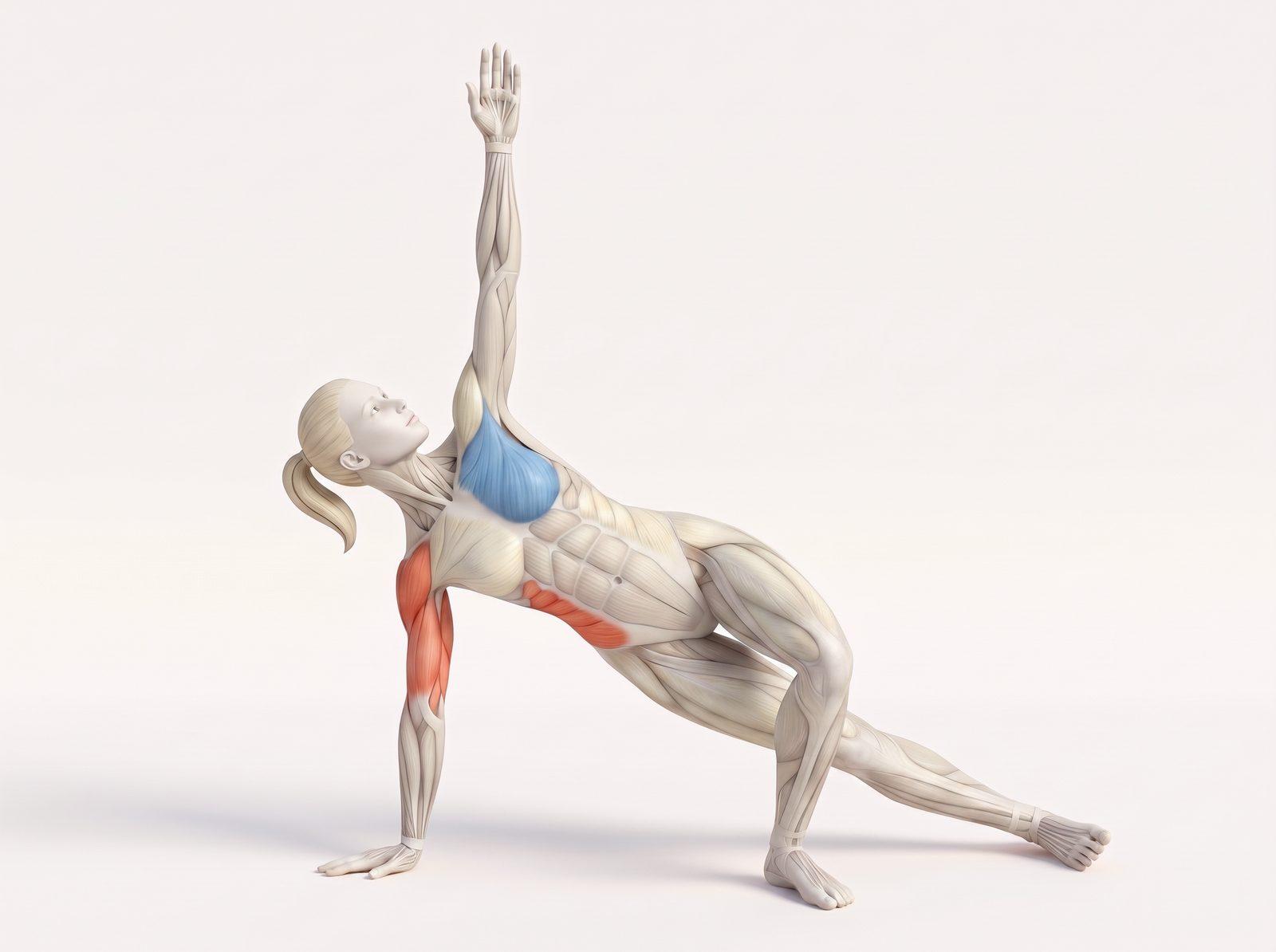
Working: Bottom-arm shoulder, Triceps, Bottom-side obliques, Glutes
Stretching: Top-side chest
Full muscle breakdown ↓About This Pose
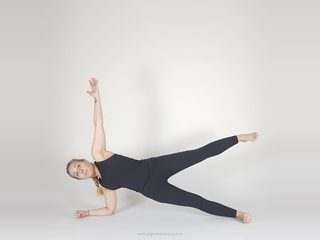
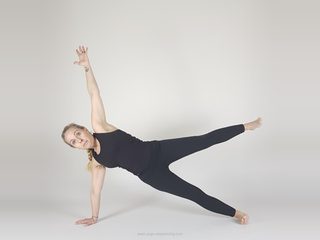
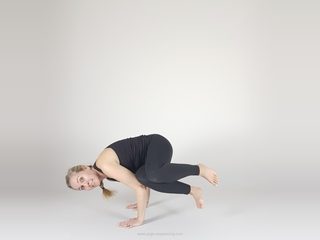
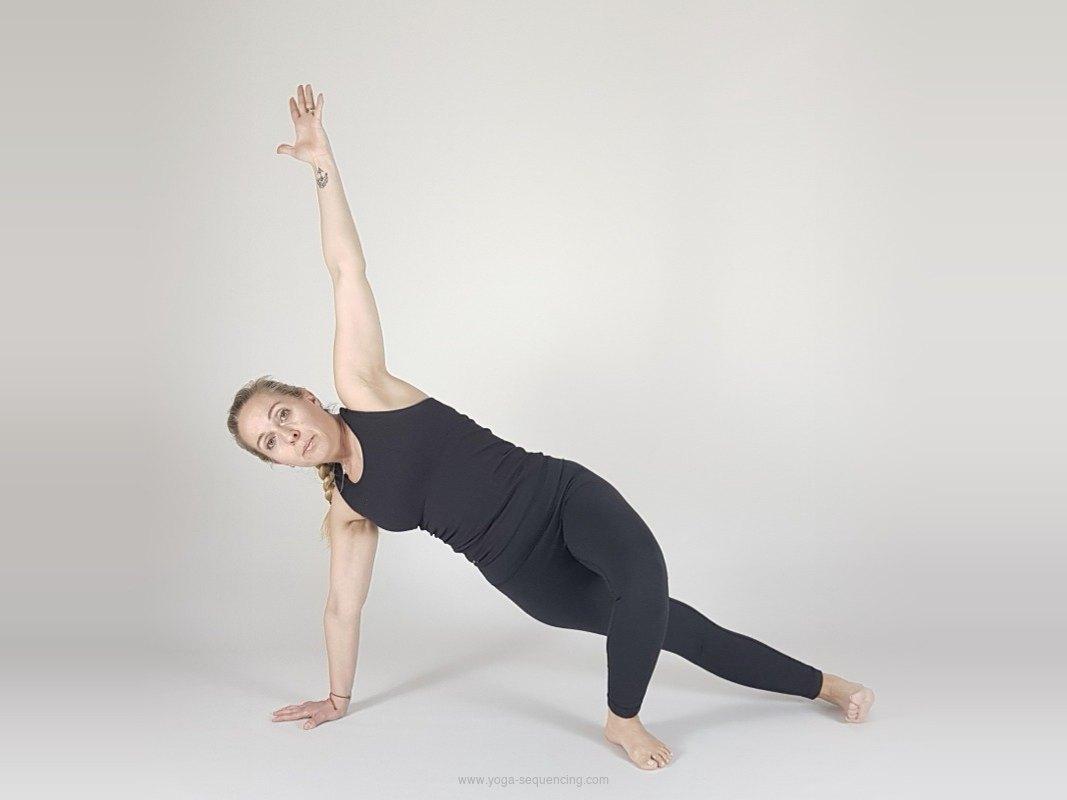
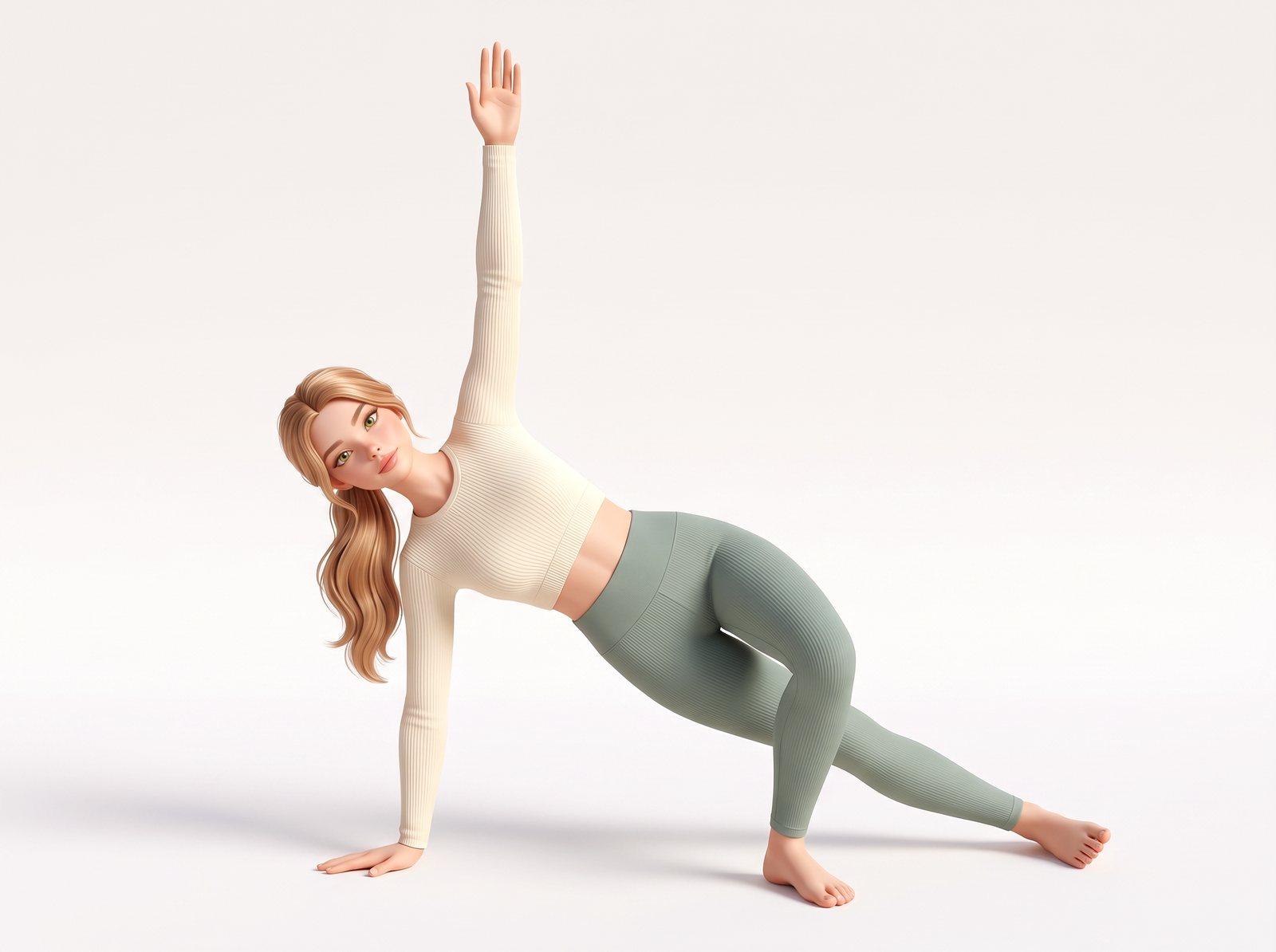
Side Plank Step Through is a dynamic movement that threads the top leg under and through the body while maintaining side plank. This flowing variation builds coordination, core strength, and mobility simultaneously. It's commonly used in creative vinyasa sequences to add movement variety and challenge.
Muscles Worked in Side Plank Step Through
A Side Plank (Vasisthasana) variation with the top foot stepped down behind the bottom foot for a wider base, bottom hand under the shoulder and the top arm reaching up. The bottom-arm shoulder, bottom-side obliques and glutes hold the hips up.
Working
- Bottom-arm shoulder (deltoids, serratus anterior)
- Triceps (triceps brachii)
- Bottom-side obliques (external and internal obliques, quadratus lumborum)
- Glutes (gluteus medius, gluteus maximus)
Stretching
- Top-side chest (pectoralis major)
Also holding you steady: your rotator cuff, core, the muscles of your feet and ankles and wrist and forearm muscles of the supporting hand.
Variations and joint actions
- Bottom knee down: Lowering the bottom knee takes most of the load off the supporting arm.
- Wild Thing: Lifting the hips and arching the chest open turns it into Camatkarasana.
- Bottom shoulder abduction, stacked over the wrist
- Bottom elbow extension
- Top shoulder abduction, arm up
- Hips near neutral, lifted, top foot stepped behind
- Knees slight flexion
- Spine neutral, slight lateral flexion
Roles are qualitative — this section does not measure how hard any muscle works. References: Leslie Kaminoff & Amy Matthews, Yoga Anatomy (Human Kinetics); Ray Long, The Key Muscles of Yoga (Bandha Yoga).
Step-by-Step Instructions
- 1
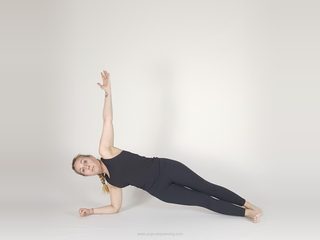
Begin in Side Plank position
- 2
Lift the top leg slightly
- 3
Thread the top leg under your body
- 4
Rotate the torso as the leg moves through
- 5
Return to starting position
- 6
Repeat 5-8 times with control
- 7
Switch sides
Alignment Cues
- Move slowly with control
- Keep the supporting arm stable
- Breathe with the movement
- Engage the core throughout
Benefits
- Builds coordination
- Dynamic core work
- Adds movement variety
- Challenges mobility
- Creative flow option
- Full body engagement
Modifications
- Keep the movement smaller
- Lower bottom knee for support
Variations
- Hold at the threaded position
Cautions & Contraindications
Cautions
- Avoid rushing the movement
- Maintain shoulder stability
Avoid this pose if you have:
- Shoulder injury
- Hip pain
Quick Facts
Primary Focus
full bodySecondary Focus
Suggested Hold
30 seconds
Tags
Equipment