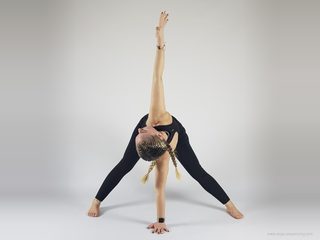
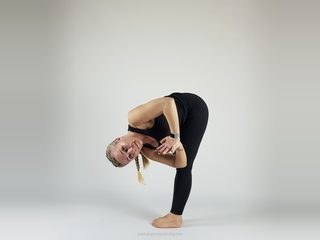
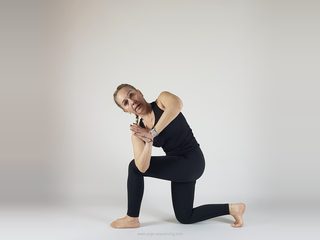
Seated Twist Variation
Bound Seated Twist
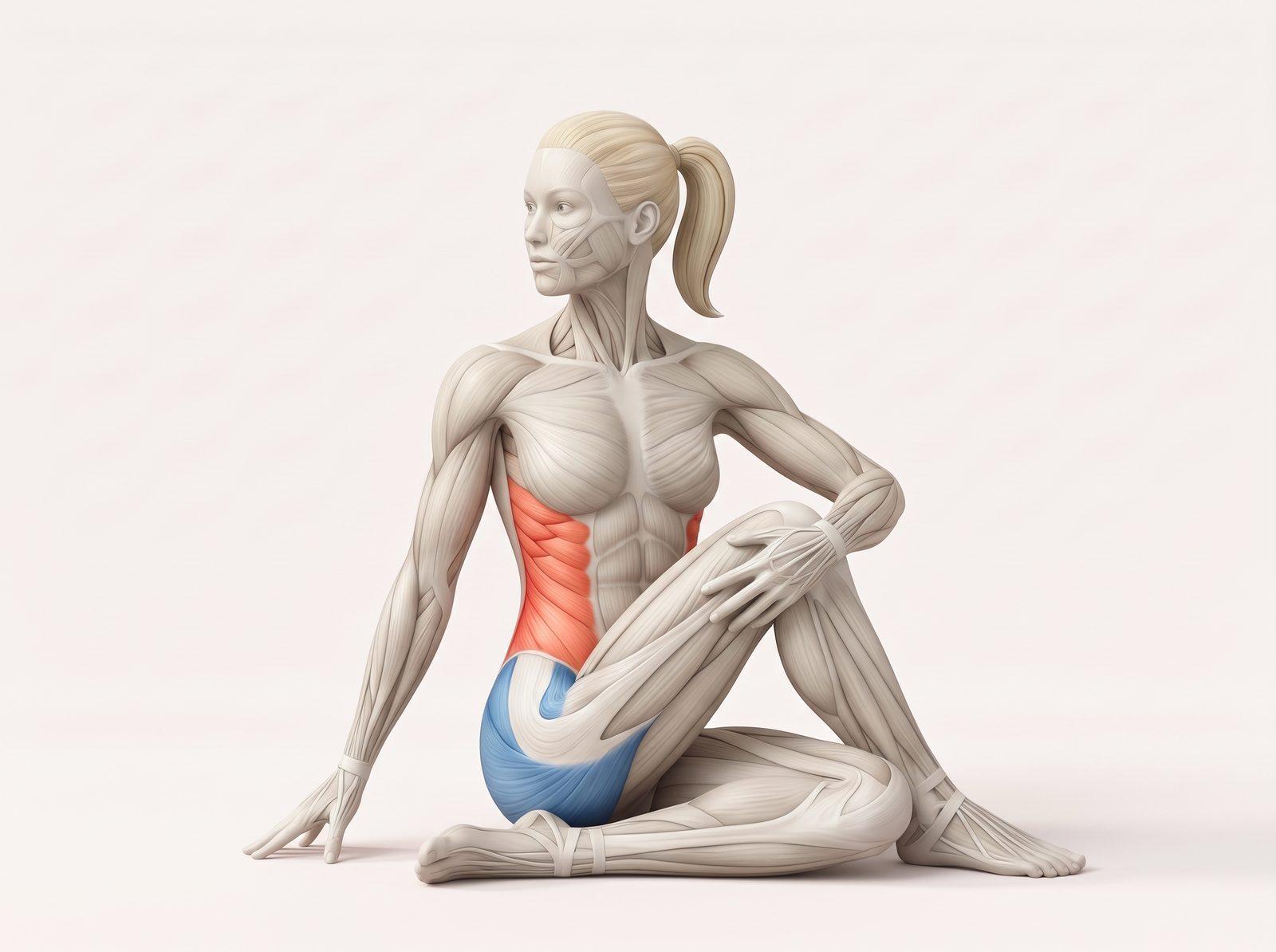
Working: Obliques, Back muscles
Stretching: Raised-leg outer hip, Raised-leg glute
Full muscle breakdown ↓About This Pose
Seated Twist Variation offers a modified approach to spinal rotation that accommodates different body types and flexibility levels. This accessible twist maintains all the benefits of traditional twisting poses while allowing for greater comfort and sustainability. The variation can be adjusted based on individual needs, making it perfect for practitioners working with limitations or those seeking a gentler practice. Regular practice improves spinal mobility and supports digestive health.
Muscles Worked in Seated Twist Variation
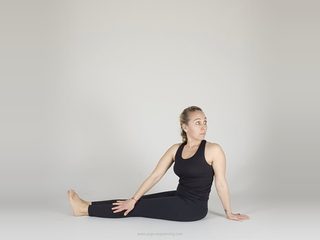
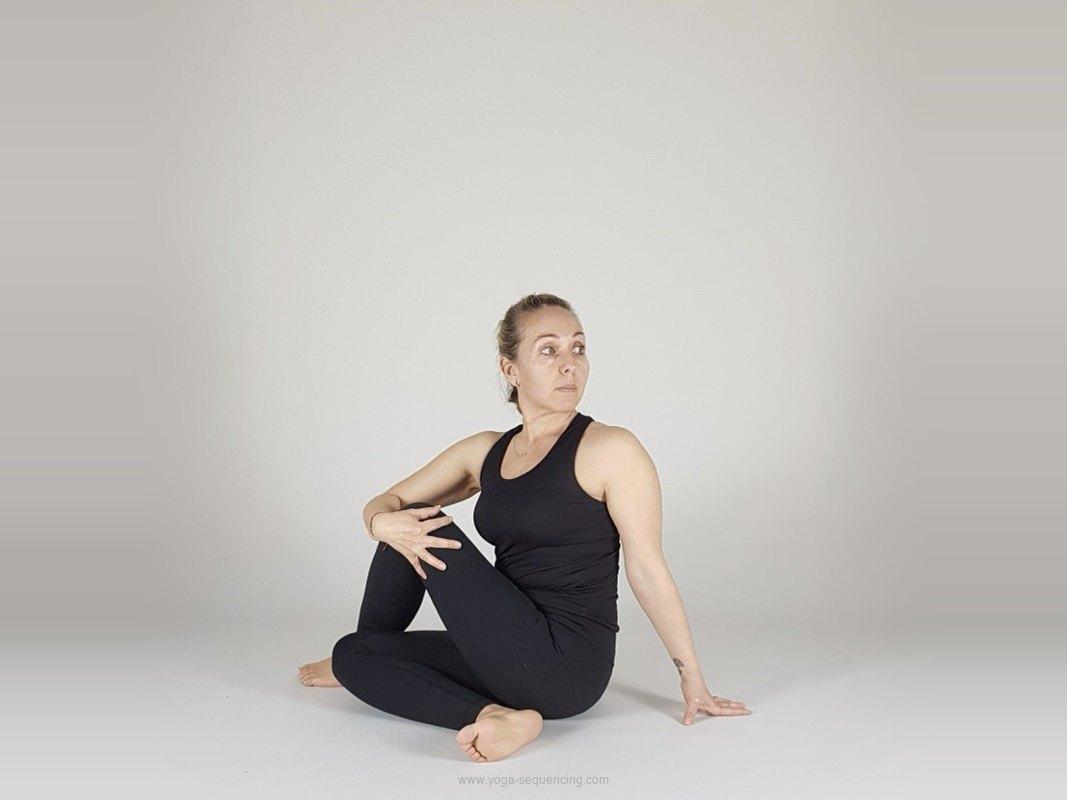
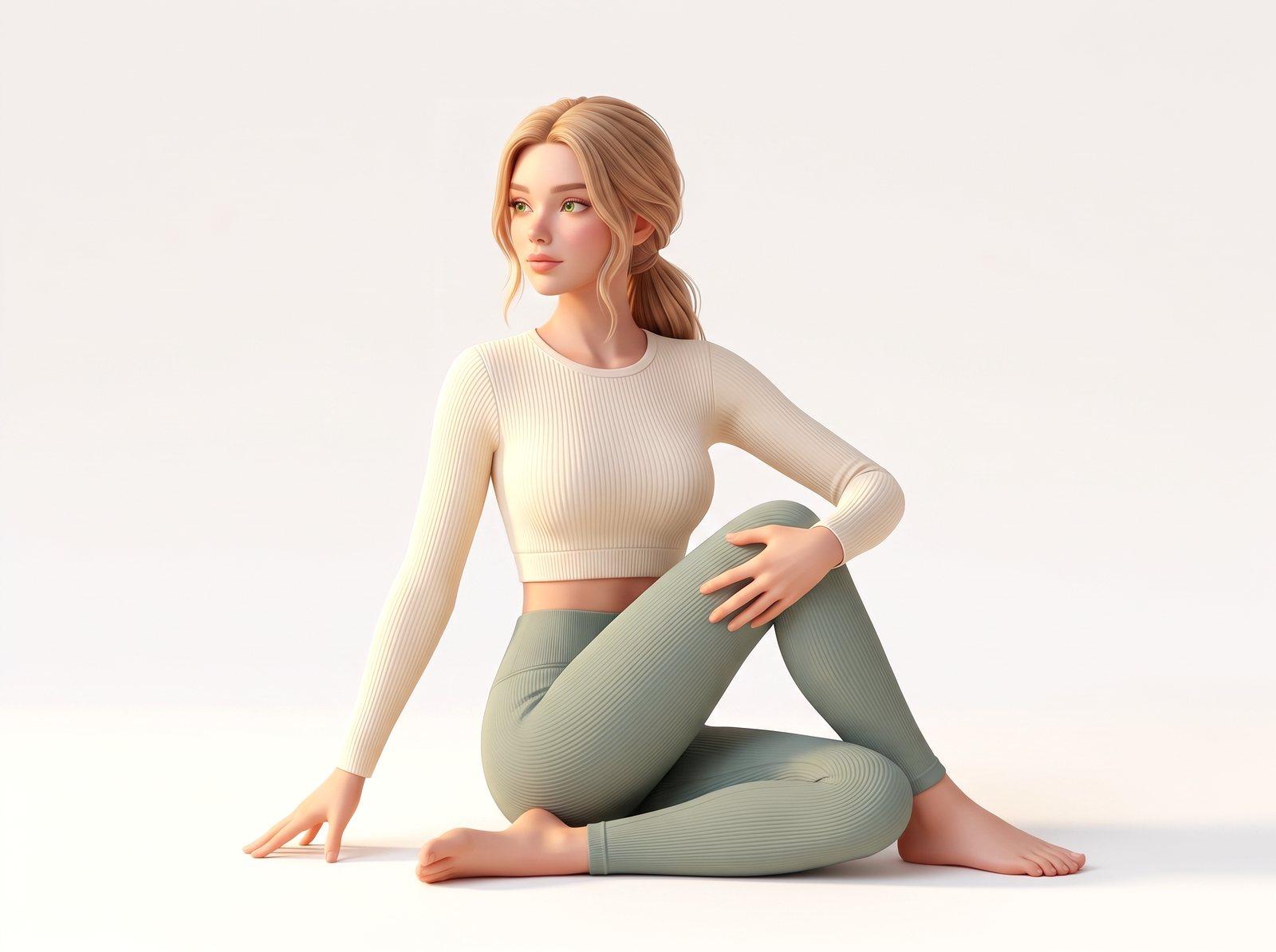
The photo shows a gentle seated twist close to Half Lord of the Fishes (Ardha Matsyendrasana): one leg folded on the floor, the other knee bent up with the foot planted outside it, one hand on the raised knee and the other hand on the floor behind. The obliques turn the torso and the outer hip of the raised leg is stretched.
Working
- Obliques (internal and external obliques)
- Back muscles (erector spinae)
Stretching
- Raised-leg outer hip (piriformis, gluteus medius)
- Raised-leg glute (gluteus maximus)
Also holding you steady: your core and back arm pressing into the floor.
Variations and joint actions
- Bottom leg straight: Keeping the lower leg straight is easier on the knees.
- Hug the knee: Wrapping the arm around the raised knee instead of hooking the elbow keeps the twist gentle.
- Spine rotation toward the raised knee, upright
- Raised hip flexion and adduction
- Raised knee flexion, foot on the floor
- Folded hip and knee flexion, external rotation
Roles are qualitative — this section does not measure how hard any muscle works. References: Leslie Kaminoff & Amy Matthews, Yoga Anatomy (Human Kinetics); Ray Long, The Key Muscles of Yoga (Bandha Yoga).
Step-by-Step Instructions
- 1
Sit comfortably with spine tall
- 2
Bend one knee and place foot on floor
- 3
Keep other leg extended or bent
- 4
Twist gently toward bent knee
- 5
Use arms to support the rotation
- 6
Hold with steady breathing
Alignment Cues
- Find stable seated base first
- Rotate spine progressively
- Keep shoulders relaxed down
- Gaze over back shoulder
Benefits
- Accessible spinal rotation
- Accommodates different flexibility levels
- Supports digestive function
- Relieves gentle back tension
- Maintains spinal mobility
- Suitable for limited mobility
Modifications
- Skip bind
Variations
- Bound twist option
Cautions & Contraindications
Cautions
- Avoid strain
- Enter slowly
Avoid this pose if you have:
- Shoulder injuries
Quick Facts
Primary Focus
spineSecondary Focus
Suggested Hold
30 seconds
Tags
Equipment