Low Lunge Prayer Twist
Parivrtta Anjaneyasana
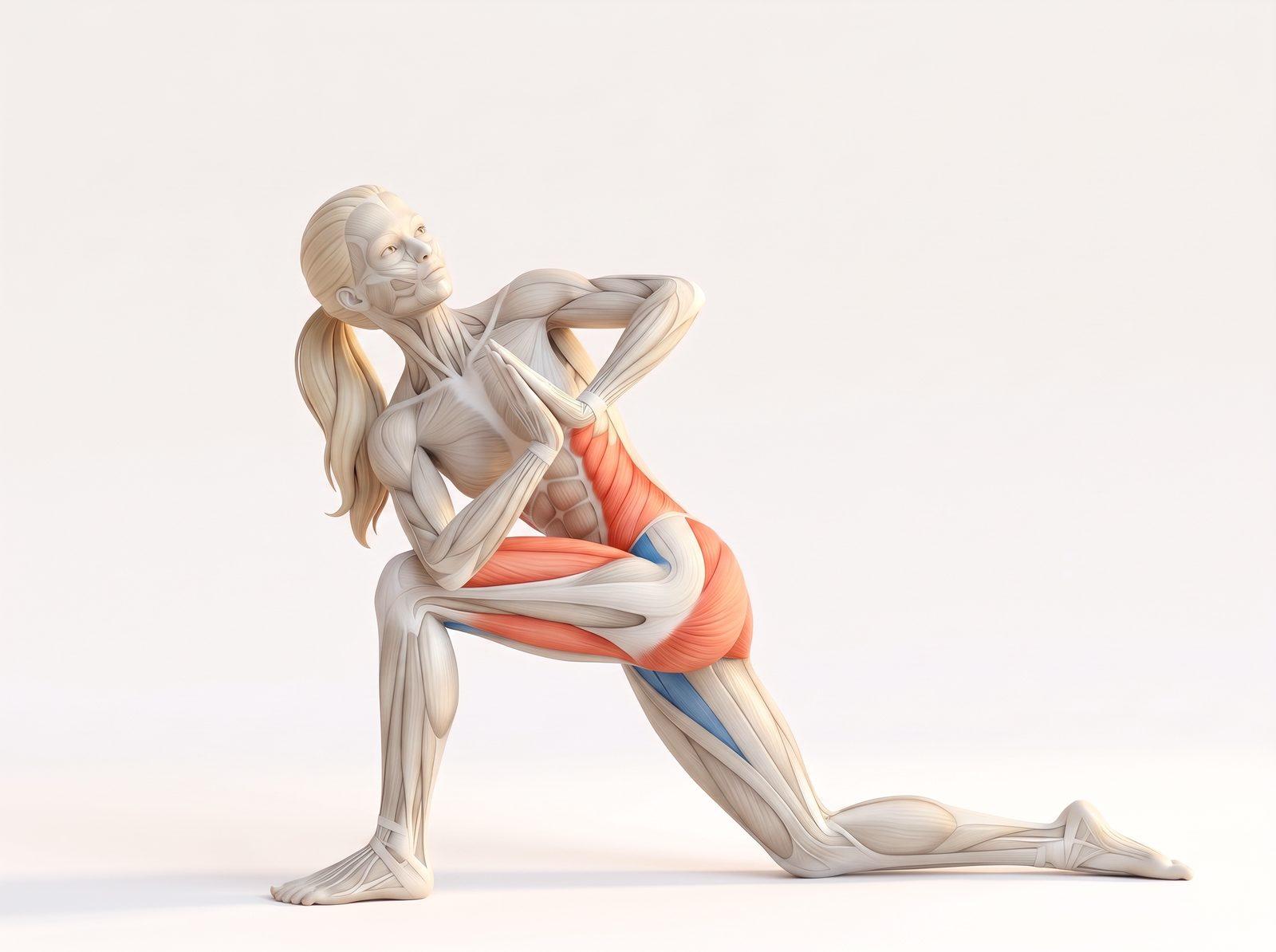
Working: Obliques, Front-leg quadriceps, Front-leg glutes
Stretching: Back-leg hip flexors
Full muscle breakdown ↓About This Pose
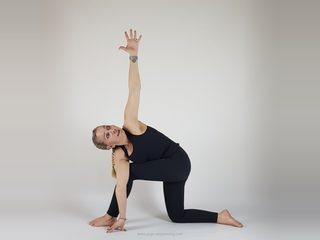
Low Lunge Prayer Twist (Parivrtta Anjaneyasana) combines the hip-opening benefits of a low lunge with the detoxifying twist of a prayer rotation. With the back knee grounded for stability, practitioners can focus on deepening both the lunge and the twist without balance concerns. The prayer position creates leverage as the elbow hooks outside the front thigh, allowing for a deeper rotation of the spine. This pose is a staple in many yoga sequences, offering a powerful combination of hip flexor stretch, spinal rotation, and chest opening. The grounded position makes it accessible while still providing significant benefits for flexibility and digestion.
Muscles Worked in Low Lunge Prayer Twist
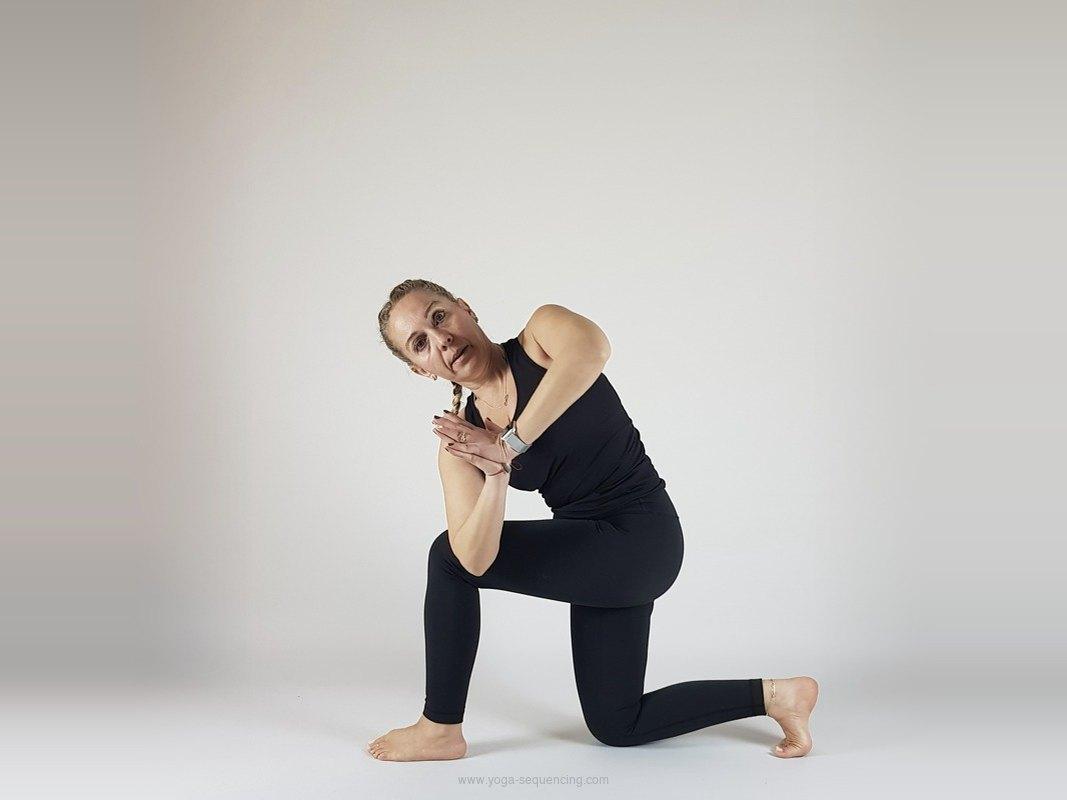
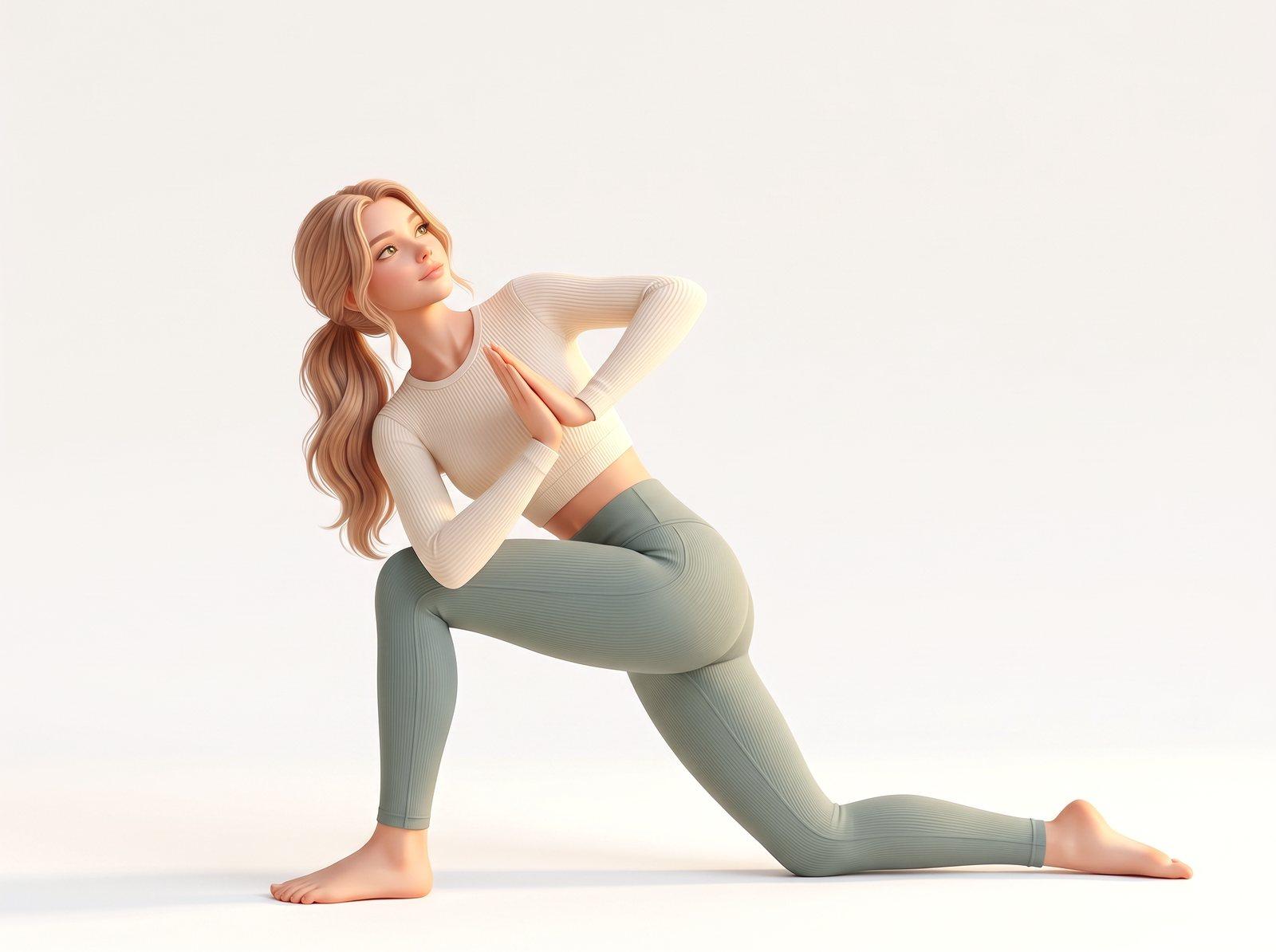
Low Lunge Prayer Twist in the photo has the back knee down and the front knee bent over the ankle, the palms pressed together at the chest and the torso turning toward the front leg, one elbow pointing down toward the front thigh and the other up, with the gaze lifted. The obliques work to turn the torso and the front thigh carries the weight, while the back-leg hip flexors stretch.
Working
- Obliques (external and internal obliques, turning the torso)
- Front-leg quadriceps (quadriceps femoris)
- Front-leg glutes (gluteus maximus)
Stretching
- Back-leg hip flexors (iliopsoas, rectus femoris)
Also holding you steady: your core, inner thighs, which keep the knees in line and the muscles along your spine.
Variations and joint actions
- Elbow outside the knee: Hooking the lower elbow outside the front knee turns the twist deeper and adds leverage.
- Blanket under the back knee: Padding takes pressure off the kneecap so the hips can sink forward.
- Front hip flexion, about 90°
- Front knee flexion, about 90°, over the ankle
- Back hip extension
- Back knee resting on the floor, slight flexion
- Spine axial rotation toward the front leg with slight extension
- Shoulders adduction, palms pressed at the chest
- Elbows flexion
- Neck rotation and slight extension, gaze up
Roles are qualitative — this section does not measure how hard any muscle works. References: Leslie Kaminoff & Amy Matthews, Yoga Anatomy (Human Kinetics); Ray Long, The Key Muscles of Yoga (Bandha Yoga).
Step-by-Step Instructions
- 1
From Low Lunge with right foot forward, lower the back knee
- 2
Ensure the front knee is over the ankle
- 3
Bring hands to prayer at the heart
- 4
Inhale to lengthen the spine
- 5
Exhale and rotate the torso to the right
- 6
Hook the left elbow outside the right thigh
- 7
Press the palms together to create leverage
- 8
Use the pressure to deepen the twist
- 9
Stack the shoulders and open the chest
- 10
Gaze upward or keep the neck neutral
- 11
Hold for 5-8 breaths
- 12
Release and switch sides
Alignment Cues
- Front knee directly over the ankle
- Back knee comfortable on the floor
- Spine lengthens before twisting
- Elbow hooks outside the opposite thigh
- Palms press firmly together
- Hips sink forward and down
- Chest opens toward the ceiling
Benefits
- Opens hip flexors and quadriceps
- Creates deep spinal rotation
- Stimulates digestion through abdominal twist
- Stretches the groin and inner thighs
- Opens the chest and shoulders
- Builds strength in the front leg
- Improves balance and coordination
- Detoxifies through twisting action
Modifications
- Place a blanket under the back knee
- Keep hands separated if prayer is difficult
- Reduce twist depth if needed
- Keep the torso more upright
Variations
- Work toward binding the arms
- Tuck the back toes for added stability
- Lift the back knee for Crescent Twist
- Add a backbend component
Cautions & Contraindications
Cautions
- Pad the back knee if needed
- Keep the front knee over the ankle
- Don't force the twist—use breath to deepen
- Maintain length in the spine
- Keep the neck comfortable
Avoid this pose if you have:
- Knee injuries
- Spinal disc problems
- SI joint dysfunction
- Hip injuries
- Pregnancy (modify)
Quick Facts
Primary Focus
spineSecondary Focus
Suggested Hold
30 seconds
Tags
Equipment