Seated Cross-Legged Twist
Parivrtta Sukhasana
About This Pose
Seated Cross-Legged Twist is a grounded spinal rotation that maintains the stability of a cross-legged base while improving thoracic mobility. This accessible twist releases tension in the back and sides of the torso while supporting digestive health. The cross-legged position keeps the hips stable, allowing the twist to focus on the mid and upper spine. Regular practice maintains spinal mobility and creates release throughout the entire back.
Muscles Worked in Seated Cross-Legged Twist
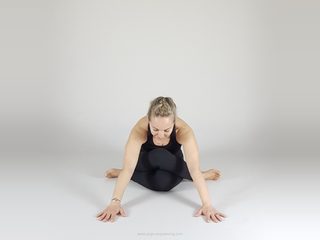
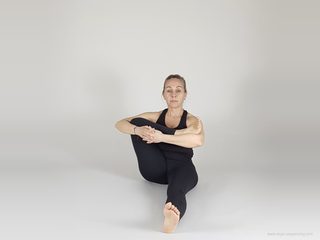
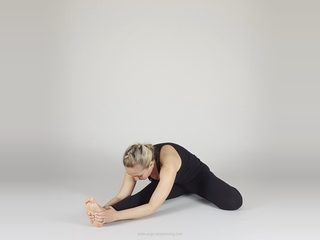
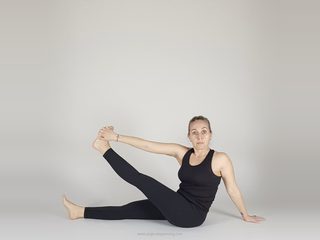
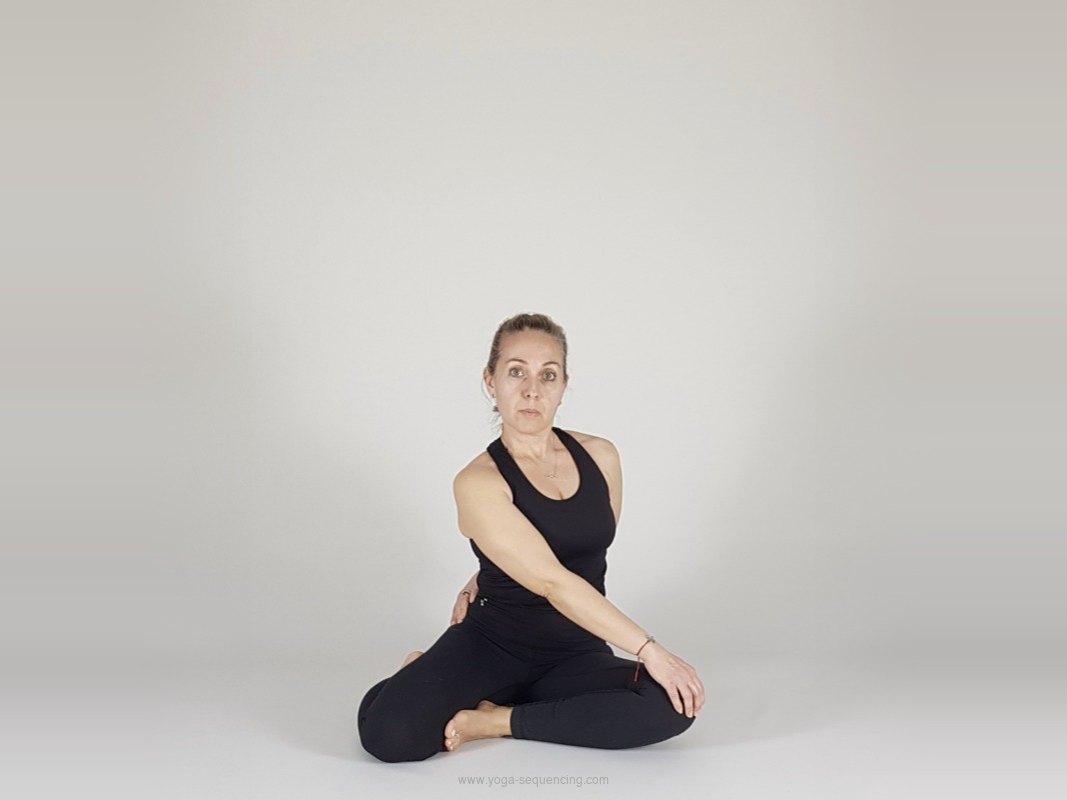
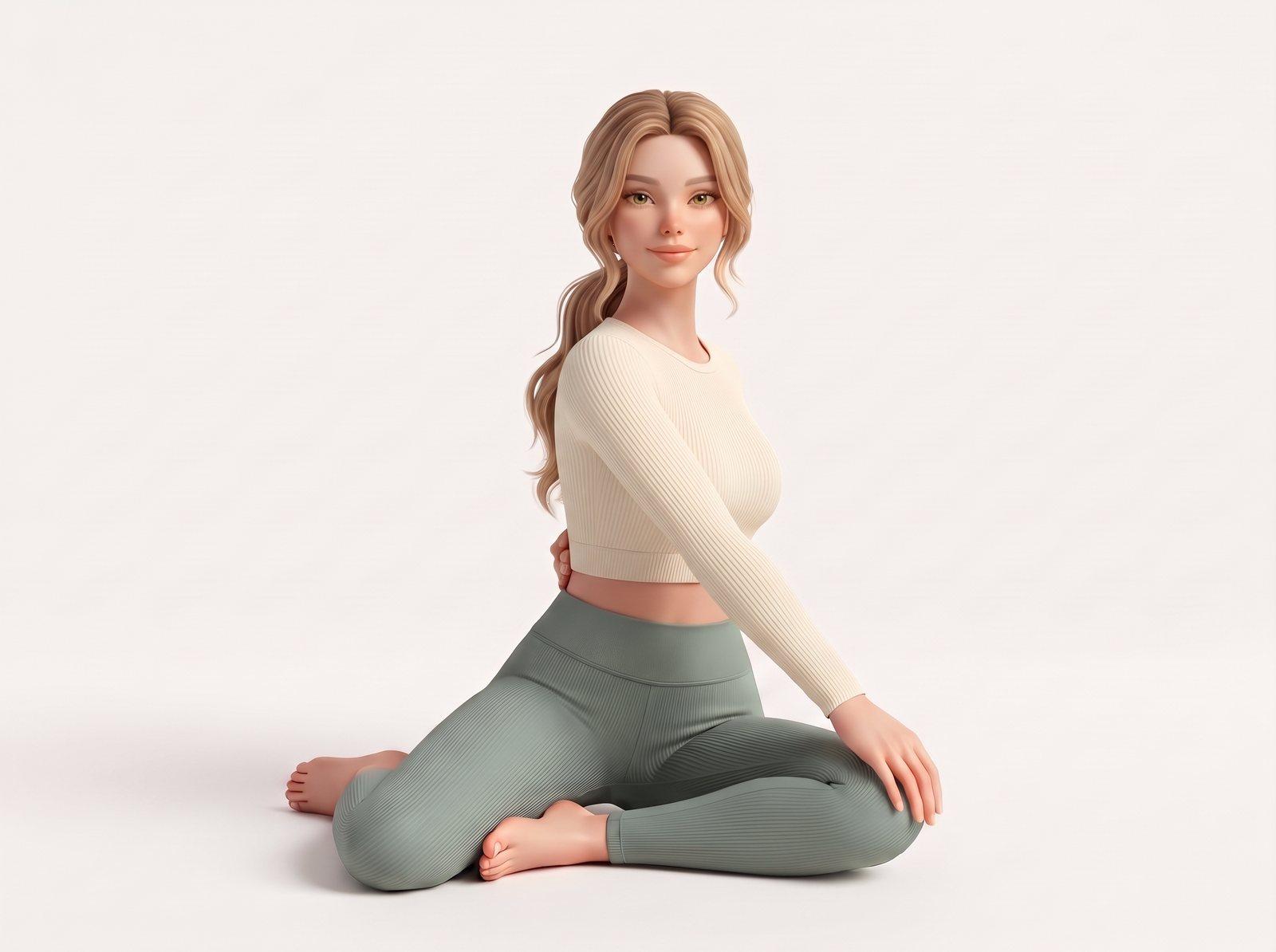
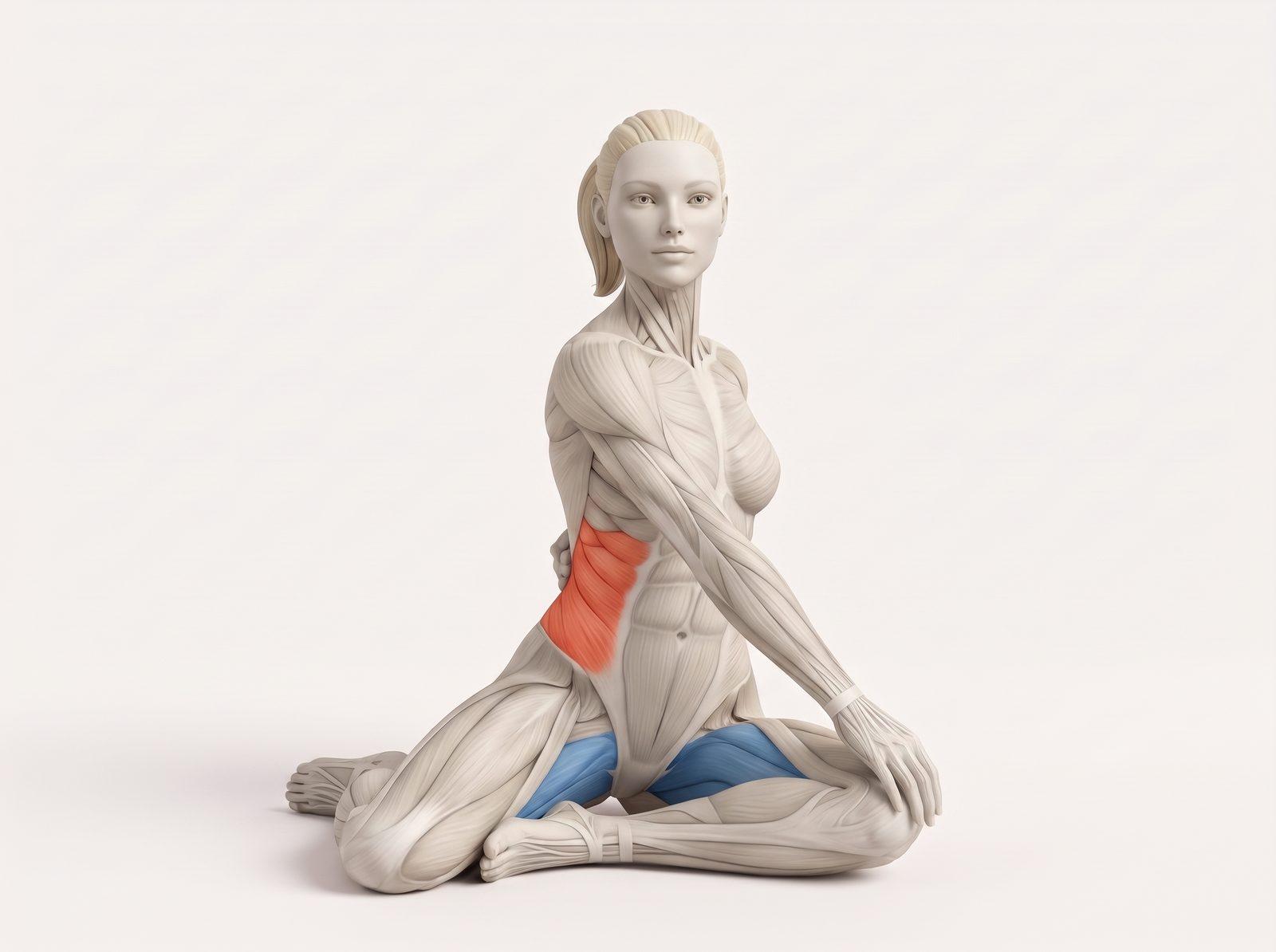
Easy Pose Twist (Parivrtta Sukhasana) in the photo sits cross-legged facing the camera, the left hand resting on the left knee and the right hand tucked behind the back at the waist, the chest turned slightly to the right while the face stays toward the camera. The obliques make the small turn and the inner thighs open gently in the cross-legged seat.
Working
- Obliques (left external and right internal oblique, turning the ribcage to the right)
Stretching
- Inner thighs (adductors, mild in the cross-legged seat)
Also holding you steady: your core, the muscles along your spine and arms, which steady the turn.
Variations and joint actions
- Hand on the opposite knee: Moving the left hand to the right knee and the right hand to the floor behind turns this into the full twist.
- Sit on a blanket: Raising the hips makes it easier to lift the spine before turning, which is where the twist should come from.
- Head turning with the chest: Letting the gaze follow the twist adds neck rotation; keep it small for a sensitive neck.
- Spine slight rotation to the right, upright
- Neck slight rotation back to the left, face toward the camera
- Left shoulder flexion, hand resting on the left knee
- Right shoulder extension and internal rotation, hand behind the back
- Hips flexion, abduction and external rotation, shins crossed
- Knees deep flexion
Roles are qualitative — this section does not measure how hard any muscle works. References: Leslie Kaminoff & Amy Matthews, Yoga Anatomy (Human Kinetics); Ray Long, The Key Muscles of Yoga (Bandha Yoga).
Step-by-Step Instructions
- 1
Sit in cross-legged position
- 2
Inhale and grow spine tall
- 3
Exhale and twist to the right
- 4
Place right hand behind you
- 5
Rest left hand on right knee
- 6
Initiate twist from the core
Alignment Cues
- Cross legs at shins
- Twist gently to side
- Keep sitting bones even
- Lengthen crown up
Benefits
- Improves thoracic mobility
- Maintains stable hip base
- Releases back tension
- Supports digestive health
- Focuses mid-upper spine
- Accessible for all levels
Modifications
- Sit on block
Variations
- Gentle twist option
Cautions & Contraindications
Cautions
- Do not force twist
Avoid this pose if you have:
- Spinal injury
Quick Facts
Primary Focus
spineSecondary Focus
Suggested Hold
30 seconds
Tags
Equipment