Seated Side Stretch
Parivrtta Janu Sirsasana
Stretching: Raised-arm-side waist, Raised-arm lats, Hamstrings
Full muscle breakdown ↓About This Pose
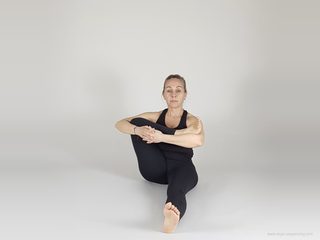
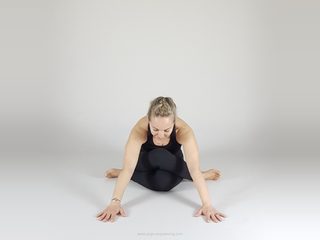
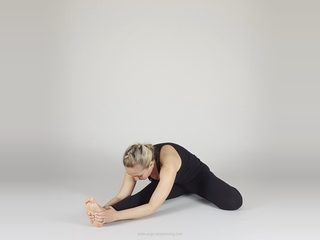
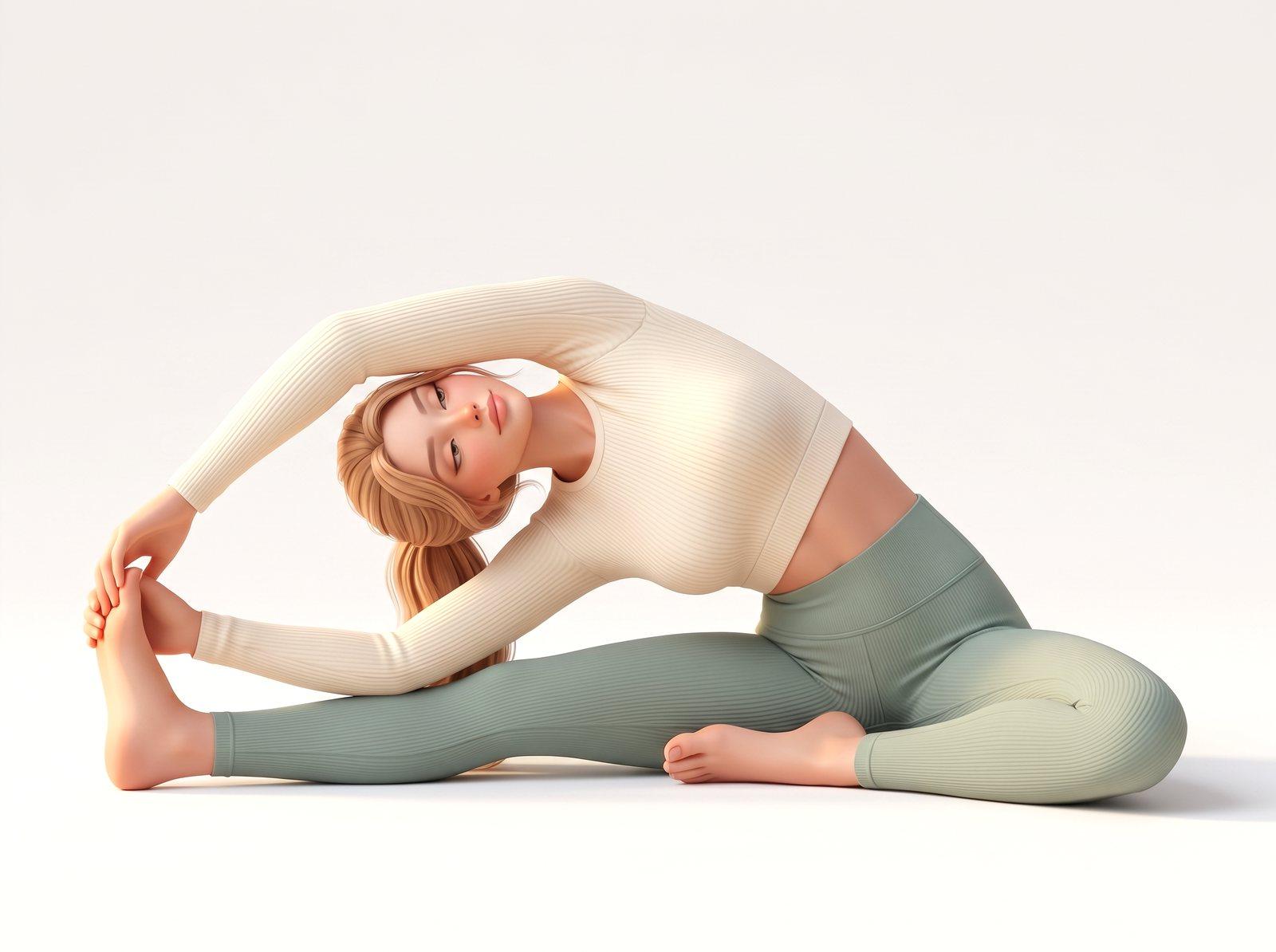
Seated Side Stretch (Parivrtta Janu Sirsasana) is a beautiful pose that combines lateral flexion with gentle spinal rotation to create deep opening along the entire side body. This pose stretches the intercostal muscles between the ribs, the quadratus lumborum, and the latissimus dorsi while improving spinal mobility. The seated position provides stability for exploring the stretch safely. Regular practice enhances breathing capacity, improves posture, and releases tension accumulated from daily activities.
Muscles Worked in Seated Side Stretch
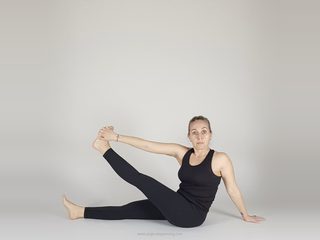
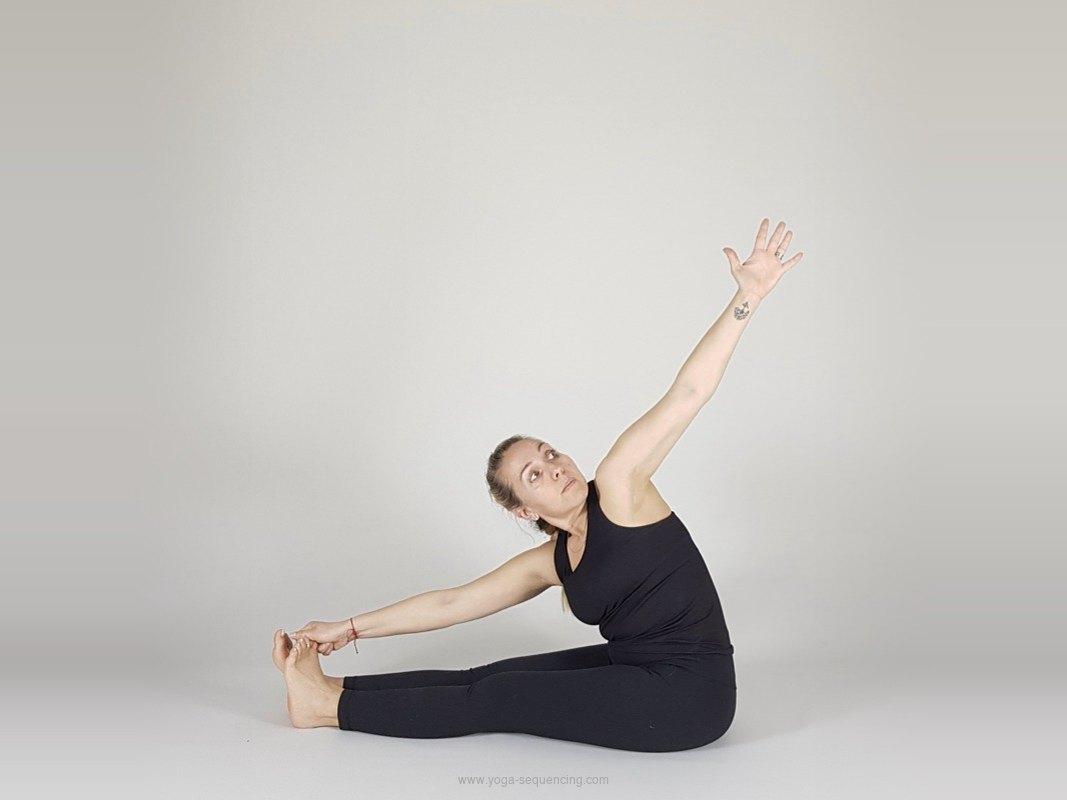
A seated side bend with both legs straight in front: one hand holds the toes, the other arm sweeps up and over and the chest turns to look up. It stretches the raised-arm side of the waist and the hamstrings.
Working
This is a stretch; muscles only work lightly to hold the arm up.
Stretching
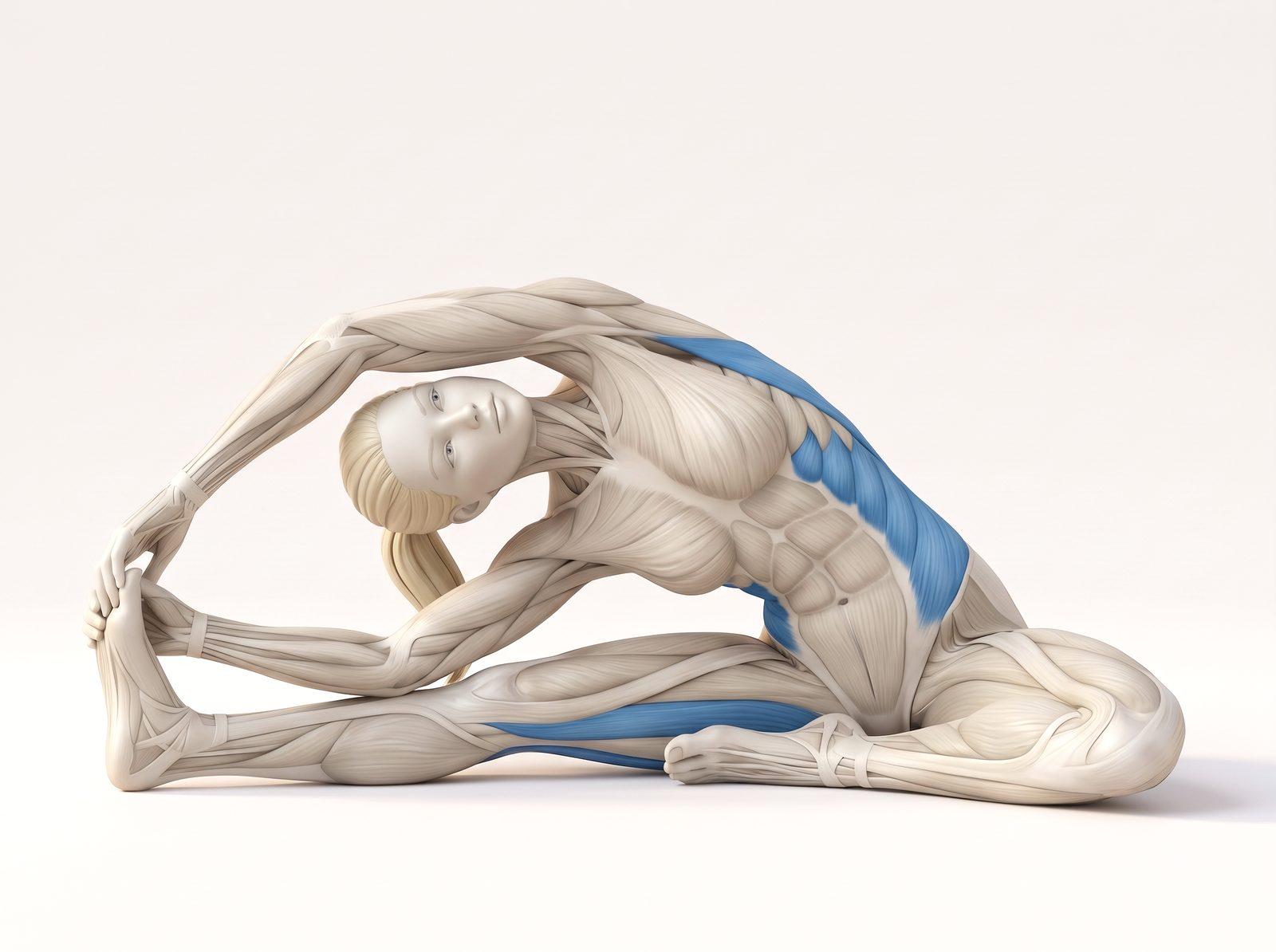
- Raised-arm-side waist (obliques, quadratus lumborum)
- Raised-arm lats (latissimus dorsi)
- Hamstrings (biceps femoris, semitendinosus, semimembranosus)
Also holding you steady: your core and raised-arm shoulder.
Variations and joint actions
- Bend the knees: Softening the knees takes the hamstrings out so the side body can stretch.
- Hand on the shin: Holding the shin instead of the toes shortens the reach.
- Hips flexion, legs straight ahead
- Knees extension
- Spine lateral flexion toward the legs with slight rotation upward
- Raised shoulder full flexion, arm over the ear
- Neck rotation and extension, gaze up
Roles are qualitative — this section does not measure how hard any muscle works. References: Leslie Kaminoff & Amy Matthews, Yoga Anatomy (Human Kinetics); Ray Long, The Key Muscles of Yoga (Bandha Yoga).
Step-by-Step Instructions
- 1
Sit with one leg extended to the side
- 2
Bend the opposite knee with foot near inner thigh
- 3
Inhale and reach the arm on the extended leg side overhead
- 4
Exhale and lean toward the extended leg
- 5
Rotate the chest slightly upward
- 6
Hold while breathing into the lengthened side
Alignment Cues
- Lift through spine
- Rotate chest upward
- Relax neck
Benefits
- Deeply stretches the side body
- Improves spinal mobility and flexibility
- Opens intercostal muscles for better breathing
- Releases shoulder and neck tension
- Enhances posture awareness
- Creates space in the ribcage
Modifications
- Use a block under hip
- Keep bottom arm bent
Variations
- Gentle side bend variation
Cautions & Contraindications
Cautions
- Avoid collapsing chest
- Keep sitting bones grounded
Avoid this pose if you have:
- Acute lower back pain
- Recent spinal injury
Quick Facts
Primary Focus
spineSecondary Focus
Suggested Hold
30 seconds
Tags
Equipment