Seated Side Bend
Parsva Upavistha Konasana
Stretching: Top-side waist, Straight-leg hamstrings, Bent-leg inner thigh
Full muscle breakdown ↓About This Pose
Seated Side Bend (Parsva Upavistha Konasana) is a wide-legged lateral stretch that opens the hips while creating length along the side body. This pose emphasizes lengthening over depth, creating space in the ribs and waist without strain. The wide-legged position stretches the inner thighs while the side bend opens the intercostal muscles. Regular practice improves hip flexibility, breathing capacity, and creates balanced flexibility throughout the torso.
Muscles Worked in Seated Side Bend
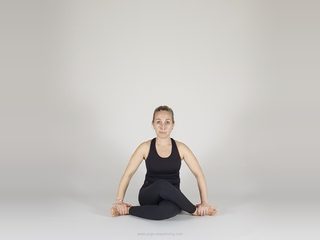
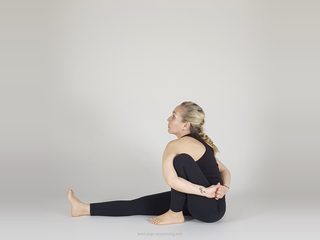
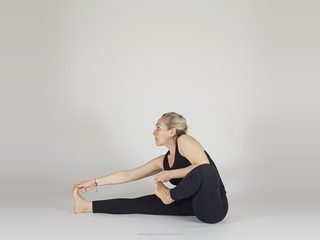
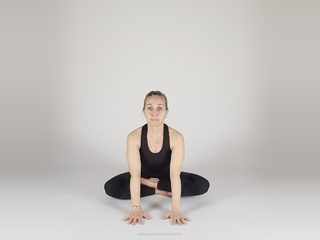
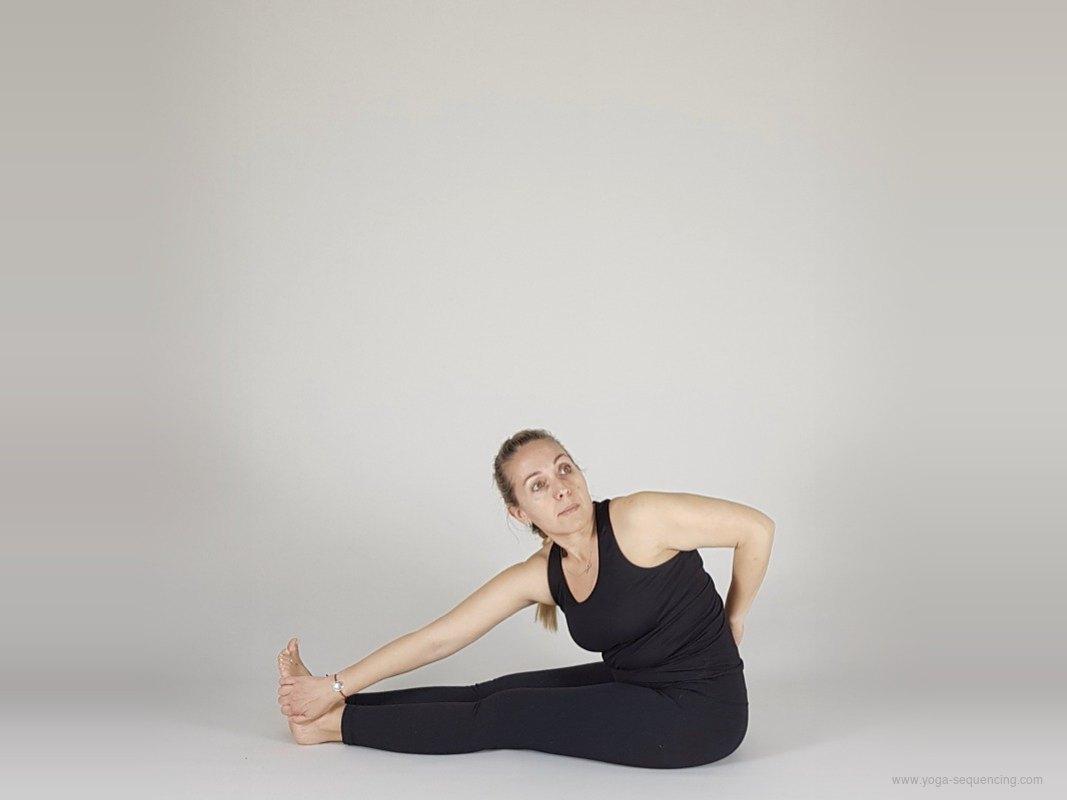
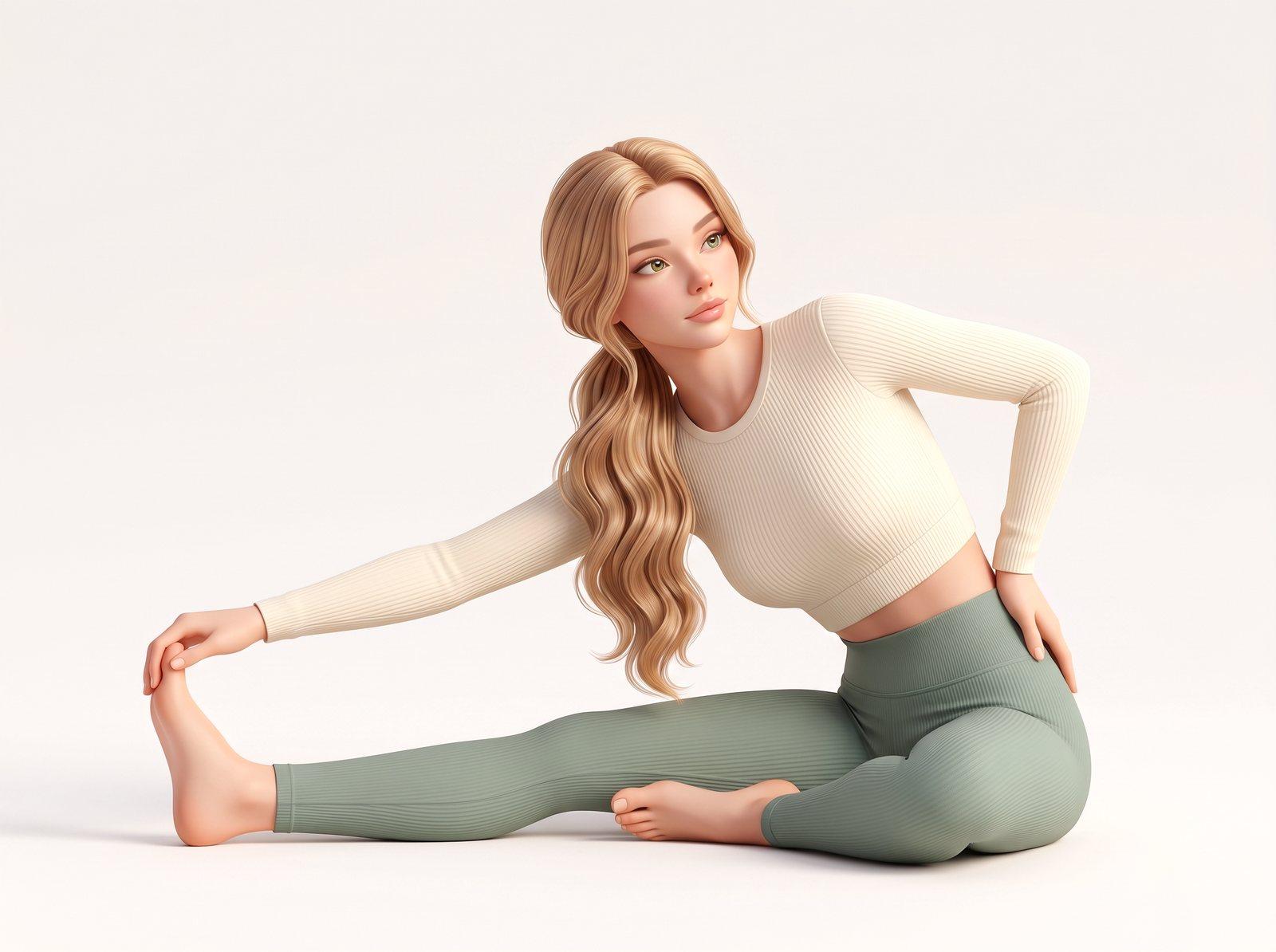
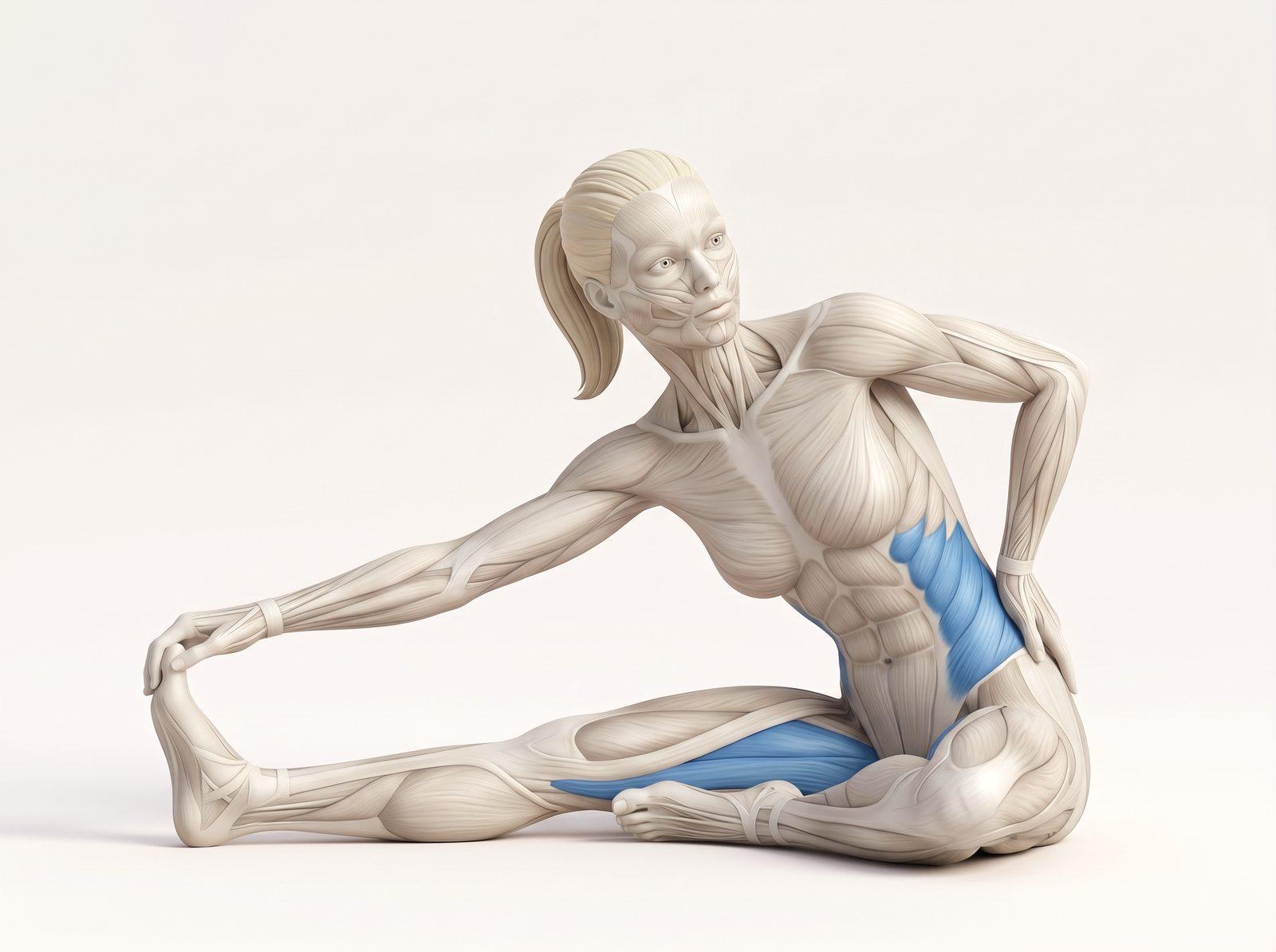
The photo shows a Seated Side Bend from a Head-to-Knee leg position: one leg straight, the other knee bent out to the side with the sole against the inner thigh, the hand on the straight-leg side holding that foot and the other hand resting on the bent-leg hip as the torso tips toward the straight leg. It stretches the far side of the waist, the straight-leg hamstrings and the bent-leg inner thigh.
Working
This is a gentle seated stretch; the hand on the foot and the floor do the holding, so no muscle group works hard.
Stretching
- Top-side waist (obliques, quadratus lumborum)
- Straight-leg hamstrings (biceps femoris, semitendinosus, semimembranosus)
- Bent-leg inner thigh (adductors)
Also holding you steady: your core and straight-leg quadriceps, keeping the knee straight.
Variations and joint actions
- Top arm overhead: Sweeping the top arm over the ear toward the foot adds the lats and moves toward Revolved Head-to-Knee Pose.
- Hand on the shin: Resting the lower hand on the shin instead of the foot keeps the spine long when the hamstrings are tight.
- Straight-leg hip flexion with slight abduction
- Straight knee extension
- Bent-leg hip flexion, abduction and external rotation
- Bent knee deep flexion, sole against the inner thigh
- Spine lateral flexion toward the straight leg
- Reaching shoulder flexion, hand holding the foot
- Top elbow flexion, hand on the hip
Roles are qualitative — this section does not measure how hard any muscle works. References: Leslie Kaminoff & Amy Matthews, Yoga Anatomy (Human Kinetics); Ray Long, The Key Muscles of Yoga (Bandha Yoga).
Step-by-Step Instructions
- 1
Sit with legs spread wide apart
- 2
Flex feet with toes pointing upward
- 3
Inhale and reach one arm overhead
- 4
Exhale and lean toward the opposite leg
- 5
Keep both sitting bones pressing down
- 6
Breathe into the lengthened side body
Alignment Cues
- Keep both sitting bones grounded
- Lengthen through reaching arm
- Stack shoulders vertically
- Breathe into stretched side ribs
Benefits
- Opens hips and inner thighs
- Stretches the entire side waist
- Improves breathing capacity
- Creates balanced torso flexibility
- Lengthens the spine laterally
- Enhances overall posture
Modifications
- Bend knee slightly
- Use bolster
Variations
- Wide-leg side stretch
Cautions & Contraindications
Cautions
- Do not collapse forward
- Maintain length
Avoid this pose if you have:
- Hip injuries
- Lower back pain
Quick Facts
Primary Focus
hipsSecondary Focus
Suggested Hold
30 seconds
Tags
Equipment