Low Chaturanga
Chaturanga Dandasana
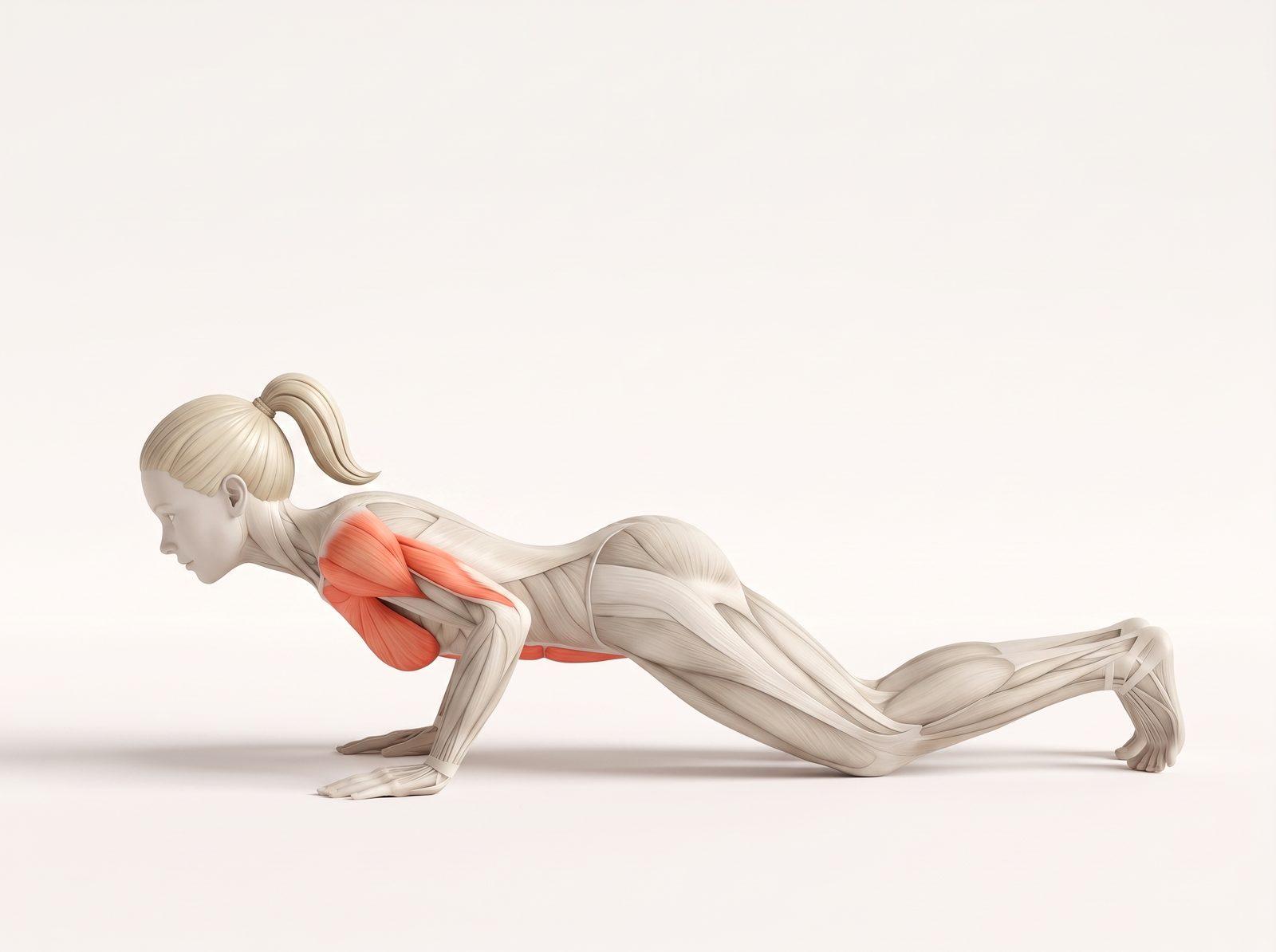
Working: Chest, Triceps, Front of the shoulders, Abdominals
Full muscle breakdown ↓About This Pose
Low Chaturanga (Chaturanga Dandasana) is a challenging pose that builds upper body and core strength. This low plank position with elbows bent requires significant arm, shoulder, and core engagement. It's a key transition pose in Sun Salutations and essential for developing the strength needed for arm balances.
Muscles Worked in Low Chaturanga
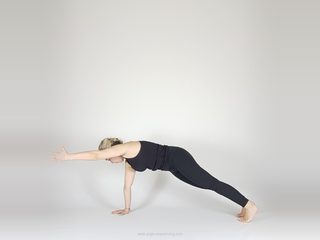
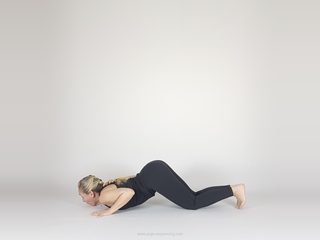
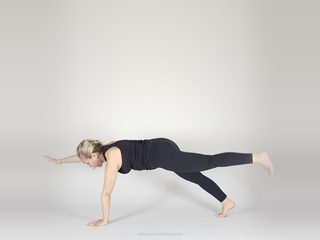
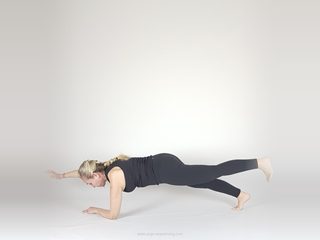
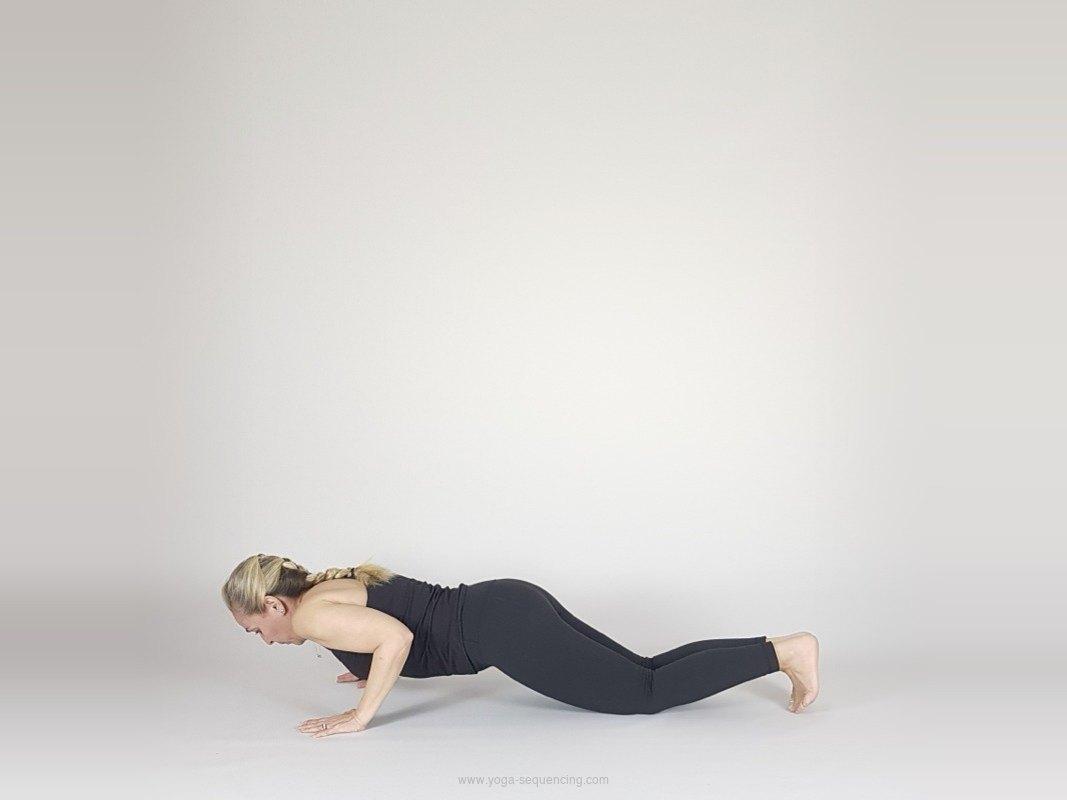
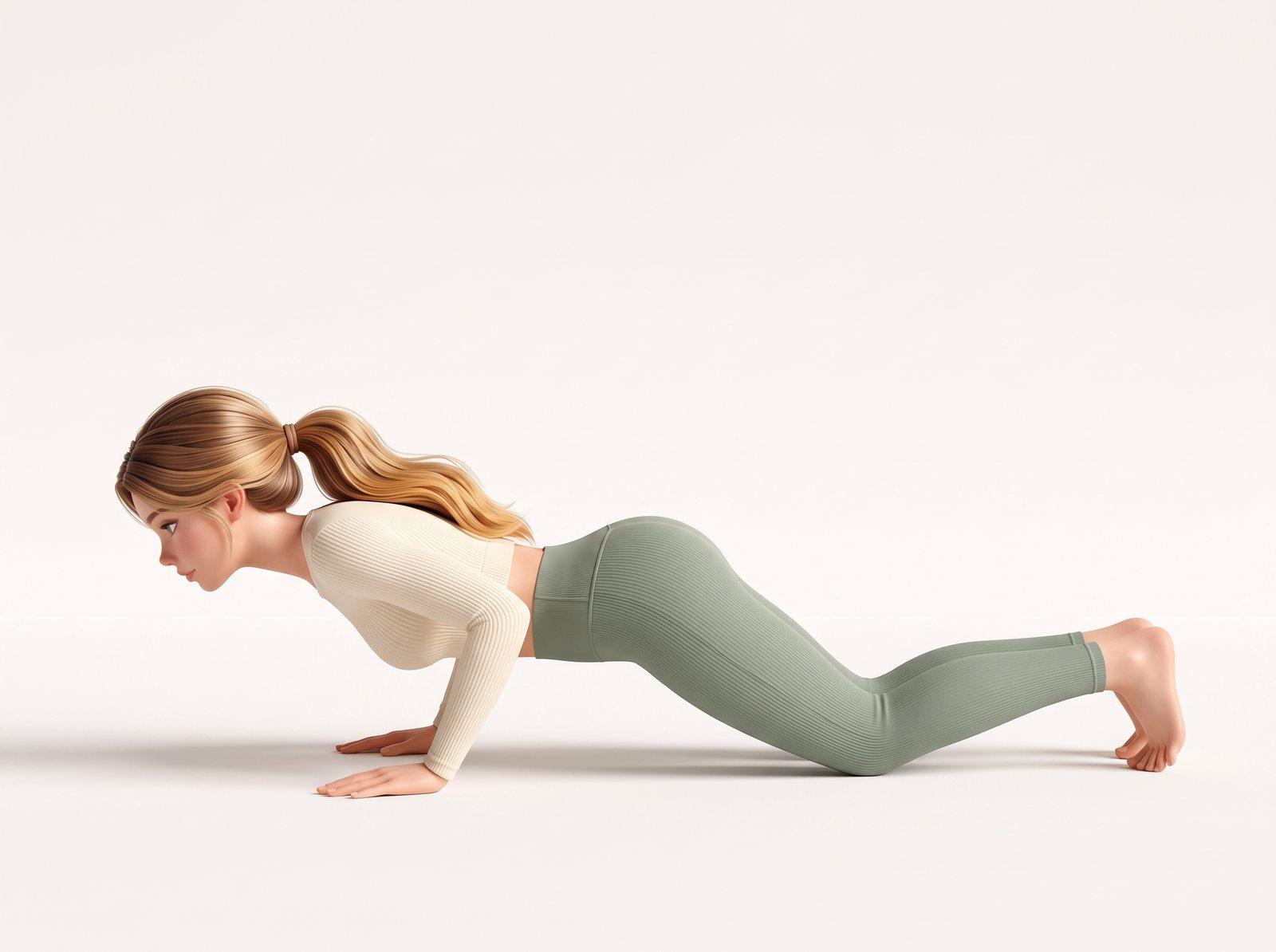
The photo shows Four-Limbed Staff Pose (Chaturanga Dandasana): balanced on the hands and toes with the elbows bent and the body lowered close to the floor in one long line. The chest, triceps and front shoulders do most of the work while the abdominals keep the hips from sagging.
Working
- Chest (pectoralis major)
- Triceps (triceps brachii)
- Front of the shoulders (anterior deltoid, pectoralis minor)
- Abdominals (rectus abdominis, transversus abdominis)
Stretching
This is an upper-body and core strength hold with no major stretch.
Also holding you steady: your Serratus anterior, rotator cuff, Quadriceps and Glutes.
Variations and joint actions
- Knees down: Lowering with the knees on the floor halves the load on the arms.
- Half-way only: Stopping higher, with the shoulders above elbow height, protects the front of the shoulders.
- Elbows flexion, about 90°, hugging the ribs
- Shoulders slight extension, at elbow height
- Wrists extension
- Hips and knees extension, body in one line
- Ankles dorsiflexion, toes tucked
Roles are qualitative — this section does not measure how hard any muscle works. References: Leslie Kaminoff & Amy Matthews, Yoga Anatomy (Human Kinetics); Ray Long, The Key Muscles of Yoga (Bandha Yoga).
Step-by-Step Instructions
- 1
Begin in High Plank position
- 2
Shift weight slightly forward
- 3
Bend elbows straight back, keeping them close to ribs
- 4
Lower until upper arms are parallel to floor
- 5
Keep the entire body in one line
- 6
Hold briefly or transition through
- 7
Press up or lower to floor
Alignment Cues
- Elbows at 90 degrees
- Shoulders no lower than elbows
- Hug elbows to ribs
- Engage the core fully
Benefits
- Strengthens arms, shoulders, and wrists
- Builds powerful core stability
- Develops tricep strength
- Essential for flow transitions
- Prepares for arm balances
Modifications
- Lower knees to floor
- Don't lower as deeply
Variations
- Hold for longer duration
Cautions & Contraindications
Cautions
- Avoid dropping shoulders below elbows
- Keep elbows close to the ribs
Avoid this pose if you have:
- Shoulder injury
- Wrist pain
- Rotator cuff issues
Quick Facts
Primary Focus
shouldersSecondary Focus
Suggested Hold
10 seconds
Tags
Equipment