High Plank
Phalakasana
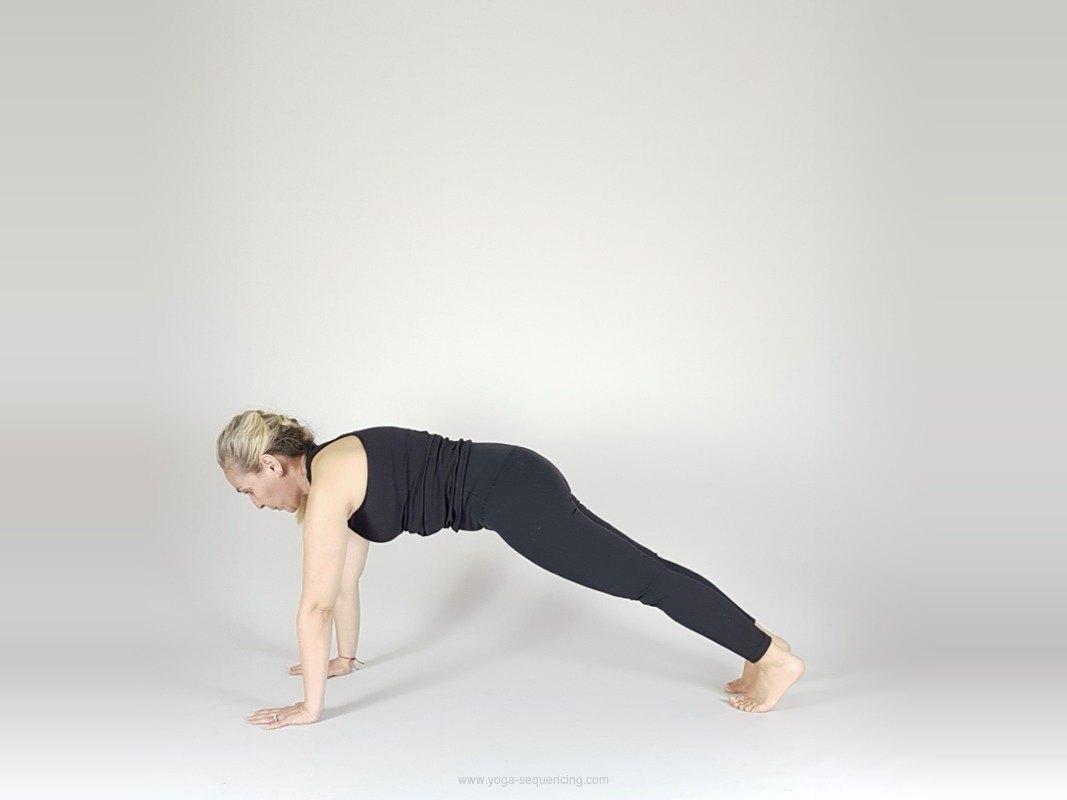
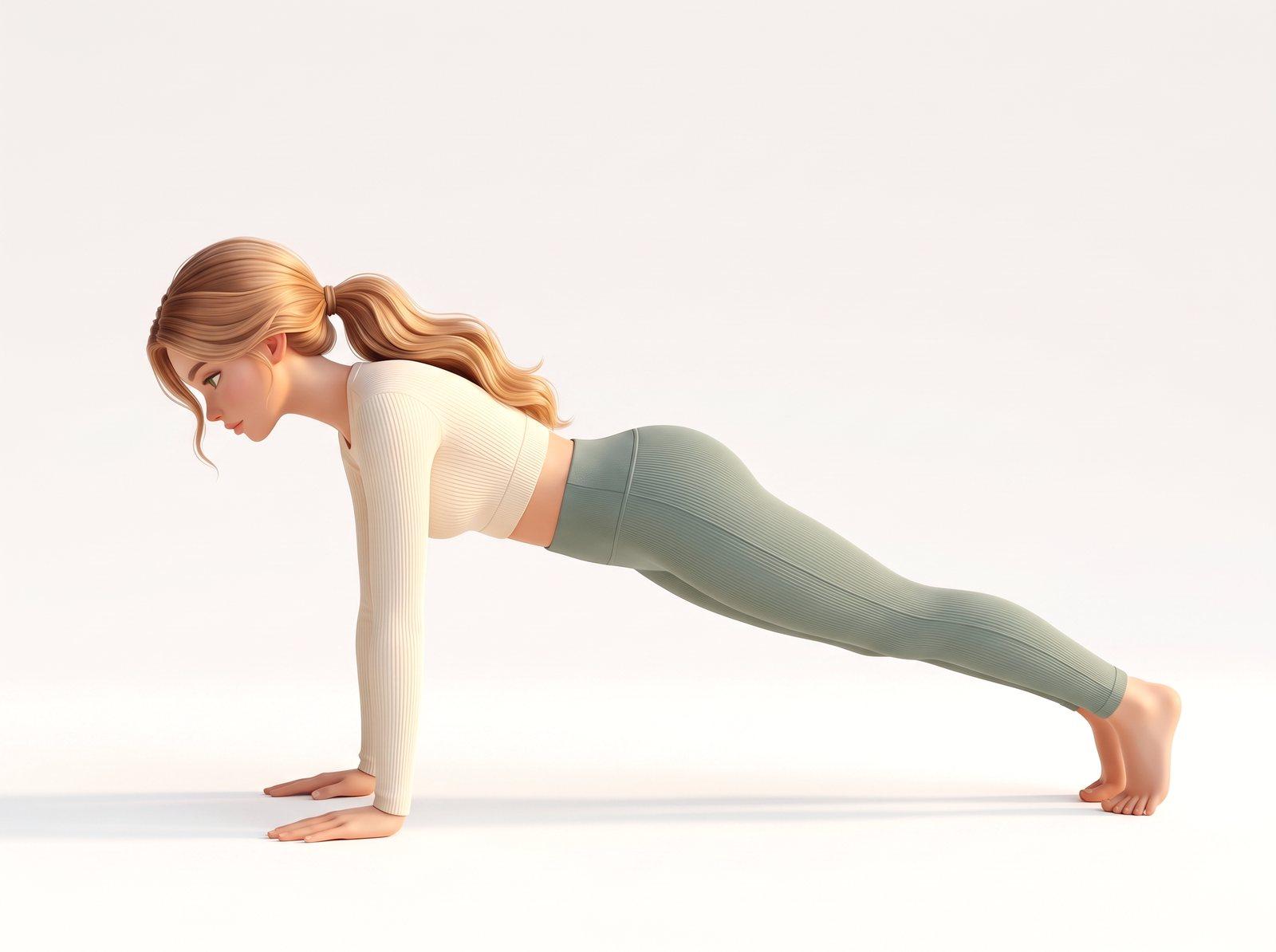
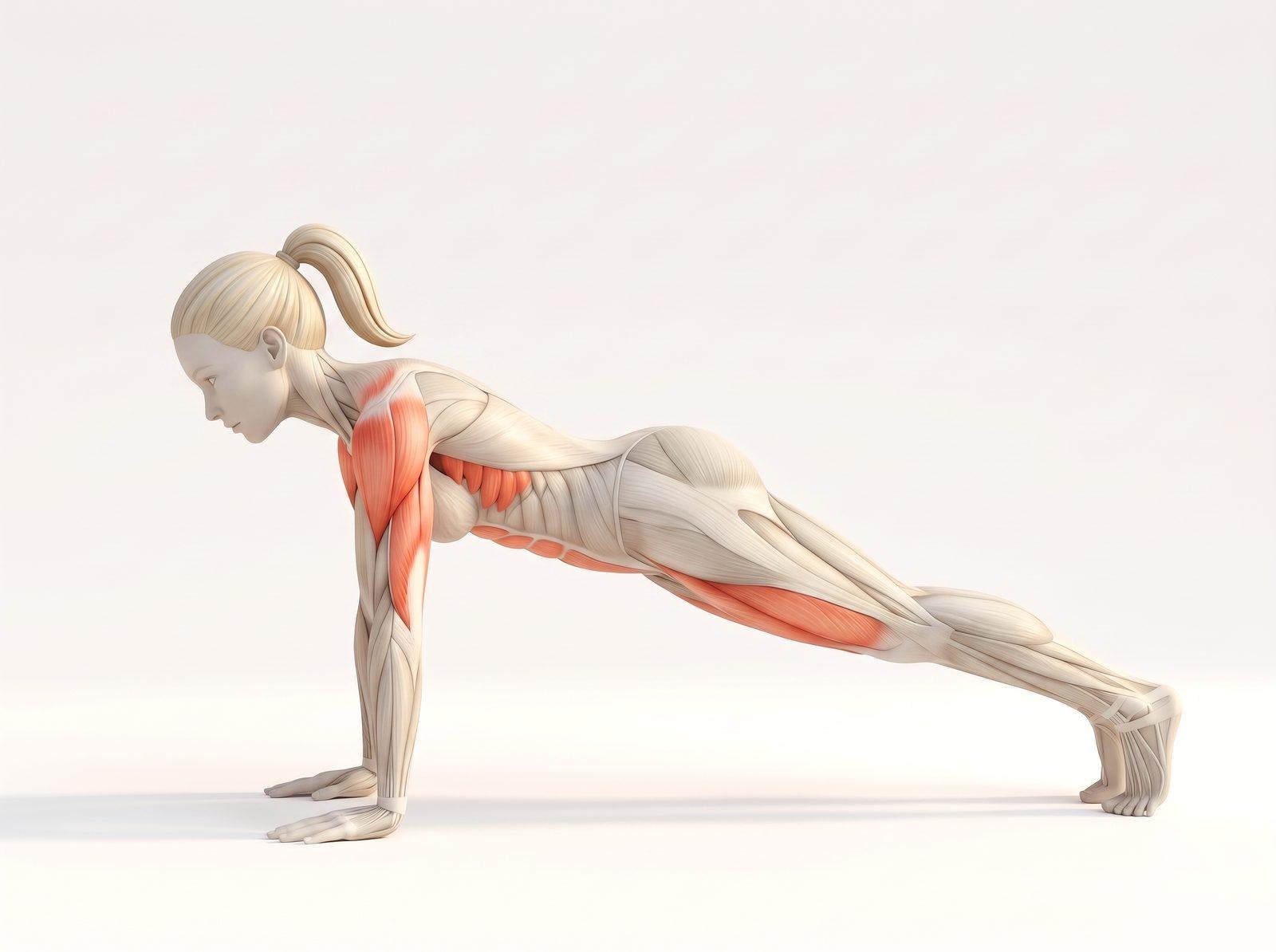
Working: Abdominals, Chest, Shoulders, Triceps, Serratus anterior, Quadriceps
Full muscle breakdown ↓About This Pose
High Plank (Phalakasana) is yoga's fundamental strength-building pose, forming a straight line from head to heels with arms extended. This position engages virtually every muscle in the body, building core strength, shoulder stability, and postural endurance. It's essential preparation for arm balances, transitions in flow sequences, and overall functional fitness.
Muscles Worked in High Plank
High Plank is a whole-body strength hold: the abdominals keep the body in one long line, the chest, shoulders, triceps and serratus anterior support the upper body over straight arms, and the quadriceps keep the legs straight.
Working
- Abdominals (rectus abdominis, transversus abdominis)
- Chest (pectoralis major)
- Shoulders (deltoids)
- Triceps (triceps brachii)
- Serratus anterior
- Quadriceps (quadriceps femoris)
Stretching
High Plank is a strength hold with no major stretch.
Also holding you steady: your glutes, the muscles along your spine and forearm and wrist muscles.
Variations and joint actions
- Knees down: A shorter lever and much less load on the core.
- Forearm Plank: Takes the load off the wrists; the core works at least as hard.
- Shoulders flexion, hands under the shoulders
- Elbows extension
- Wrists extension
- Spine neutral
- Hips neutral to slight flexion
- Knees extension
- Ankles dorsiflexion, toes tucked
Roles are qualitative — this section does not measure how hard any muscle works. References: Leslie Kaminoff & Amy Matthews, Yoga Anatomy (Human Kinetics); Ray Long, The Key Muscles of Yoga (Bandha Yoga).
Step-by-Step Instructions
- 1
Begin in tabletop position
- 2
Step your feet back one at a time
- 3
Create one straight line from head to heels
- 4
Spread your fingers wide and press firmly through the hands
- 5
Engage your core by drawing the navel in
- 6
Keep your gaze slightly forward
- 7
Hold for 30-60 seconds while breathing steadily
Alignment Cues
- One line from head to heels
- Shoulders over wrists
- Engage the quadriceps
- Don't let the head drop
Benefits
- Builds core strength
- Develops shoulder stability
- Engages full body
- Foundation for arm balances
- Improves posture
- Builds endurance
Modifications
- Drop knees to the floor
- Use forearms instead of hands
Variations
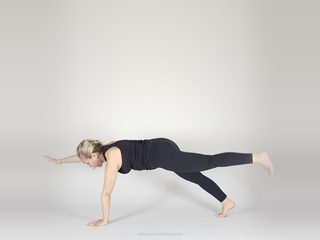
- Lift one leg for added challenge
Cautions & Contraindications
Cautions
- Avoid sagging or piking the hips
- Don't lock the elbows
Avoid this pose if you have:
- Wrist pain
- Shoulder injury
- Carpal tunnel syndrome
Quick Facts
Primary Focus
coreSecondary Focus
Suggested Hold
30 seconds
Tags
Equipment