Wide-Angle Seated Balance (Big Toe Hold)
Upavistha Konasana B
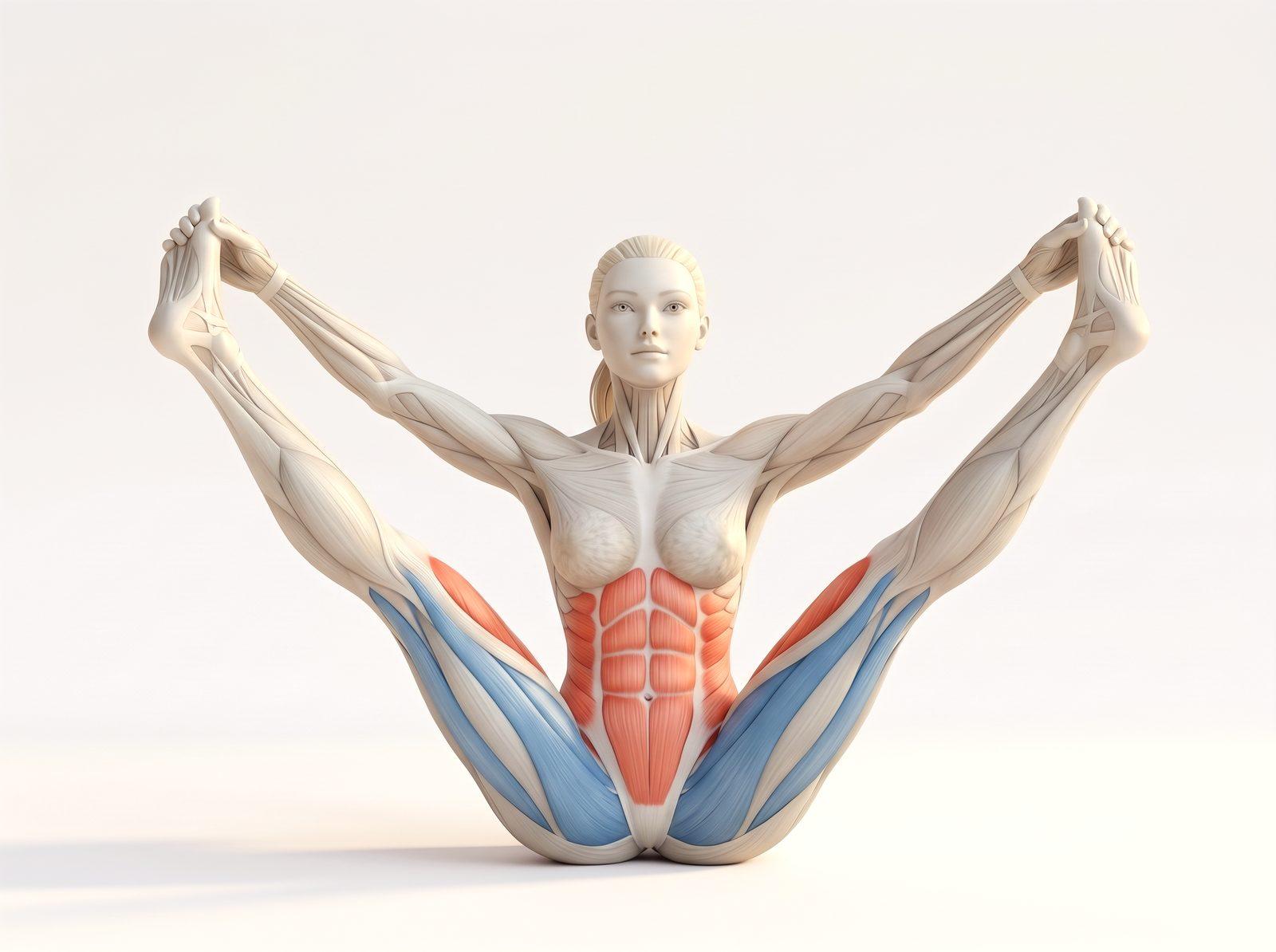
Working: Hip flexors, Abdominals, Back muscles, Quadriceps
Stretching: Hamstrings, Inner thighs
Full muscle breakdown ↓About This Pose
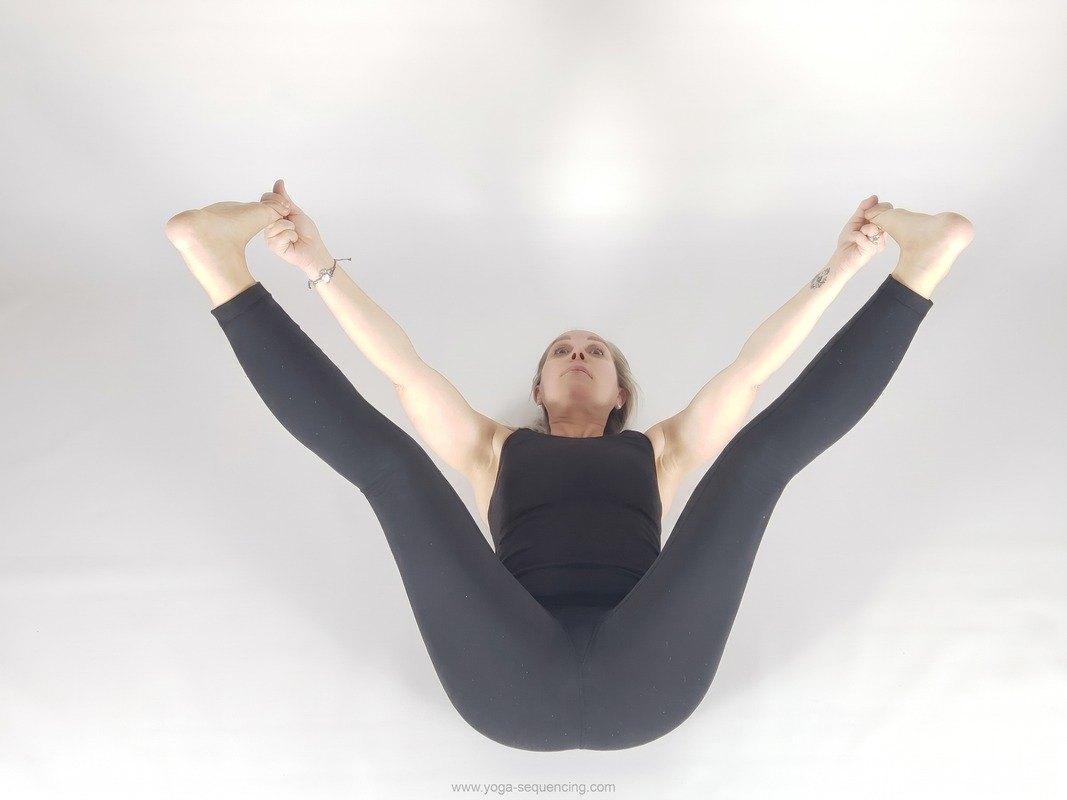
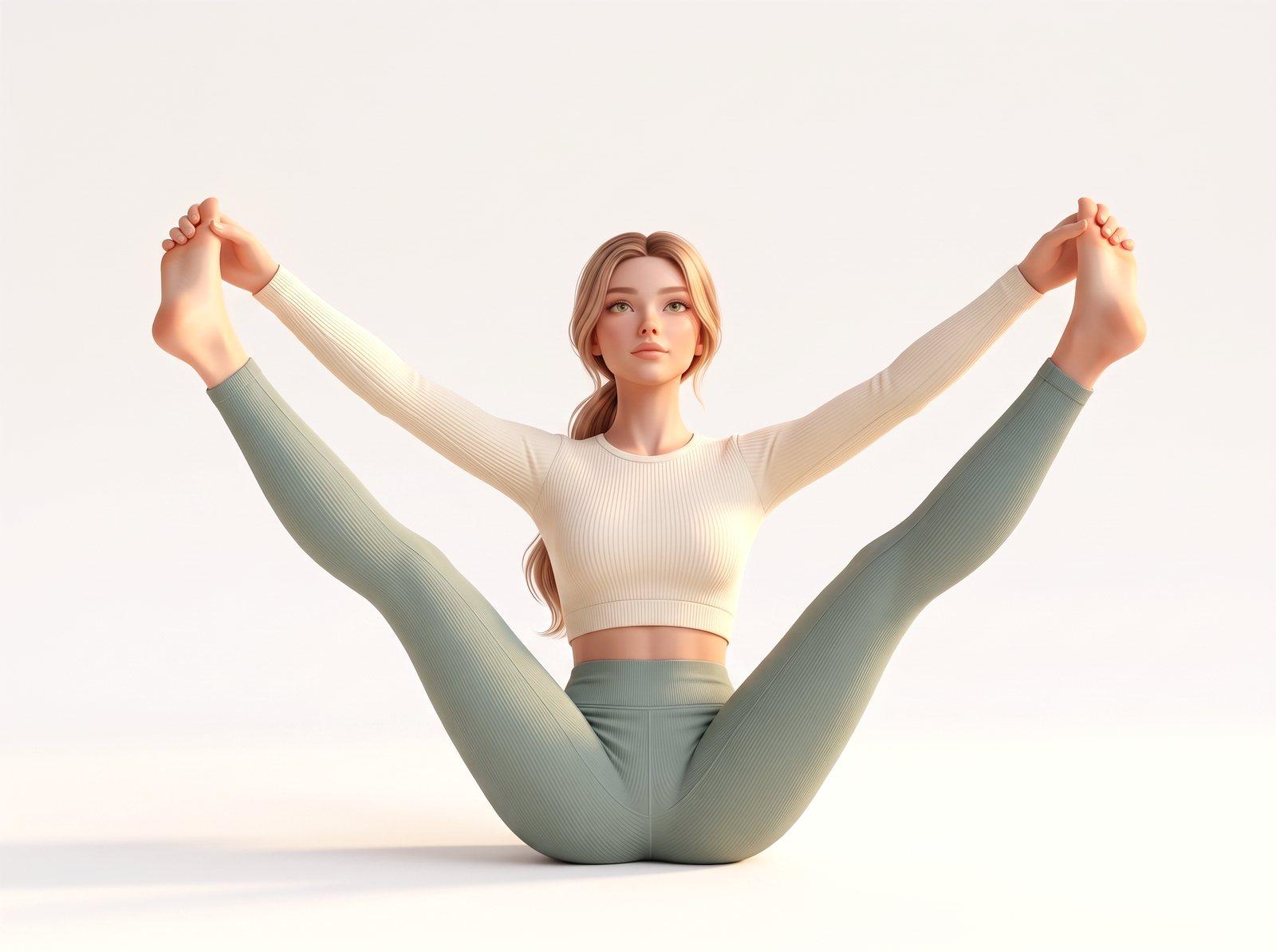
Wide-Angle Seated Balance lifts both straight legs wide apart while the hands hold the big toes and the body balances just behind the sitting bones. The chest lifts and the spine stays long, so the core, hip flexors and back muscles all work together. It also stretches the hamstrings and inner thighs strongly. In the Ashtanga primary series it follows the wide-angle forward fold as Upavistha Konasana B.
Muscles Worked in Wide-Angle Seated Balance (Big Toe Hold)
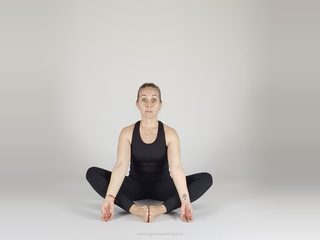
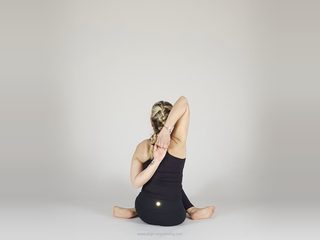
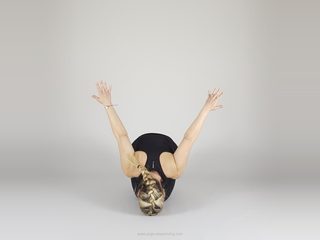
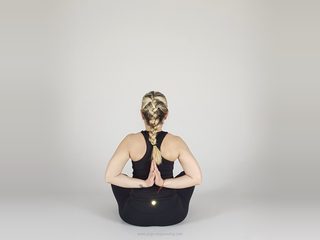
The photo shows Wide-Angle Seated Balance (Upavistha Konasana B): balancing just behind the sitting bones with both straight legs lifted wide in a V, the hands holding the big toes and the chest lifted. The hip flexors, abdominals and back muscles work together while the hamstrings and inner thighs stretch.
Working
- Hip flexors (iliopsoas, rectus femoris)
- Abdominals (rectus abdominis, transversus abdominis)
- Back muscles (erector spinae, along the whole spine)
- Quadriceps (quadriceps femoris)
Stretching
- Hamstrings (biceps femoris, semitendinosus, semimembranosus)
- Inner thighs (adductors)
Also holding you steady: your Upper back, Shoulders and rotator cuff.
Variations and joint actions
- Bent knees: Holding the toes with bent knees makes the balance easier and spares the lower back.
- Strap on each foot: Two straps let the legs stay straight when the hands do not reach the toes.
- Hips flexion with wide abduction
- Knees extension
- Spine long, chest lifted
- Shoulders flexion with abduction, arms reaching out to the feet
Roles are qualitative — this section does not measure how hard any muscle works. References: Leslie Kaminoff & Amy Matthews, Yoga Anatomy (Human Kinetics); Ray Long, The Key Muscles of Yoga (Bandha Yoga).
Step-by-Step Instructions
- 1
Sit with the knees bent and the feet wide on the mat
- 2
Hold the big toes with the first two fingers
- 3
Lean back slightly to find the balance point behind the sitting bones
- 4
Lift the feet off the mat
- 5
Straighten the legs wide into a V
- 6
Lift the chest and draw the shoulders back
- 7
Hold for 3-5 breaths, then bend the knees and lower the feet
Alignment Cues
- Spine long, chest open
- Legs straight and active
- Shoulders down the back
- Gaze forward or slightly up
Benefits
- Strengthens the core and hip flexors
- Stretches the hamstrings and inner thighs
- Improves balance and concentration
- Strengthens the back muscles
- Builds coordination
Modifications
- Keep the knees bent
- Hold the backs of the knees or calves
- Use straps around the feet
Variations
- Boat Pose with Big Toe Hold
- Wide-Angle Seated Forward Fold
- Boat Pose
Cautions & Contraindications
Cautions
- Keep the chest lifted rather than rounding
- Bend the knees if the hamstrings pull sharply
- Lower the legs with control
Avoid this pose if you have:
- Hamstring or groin injury
- Acute lower back pain
- Pregnancy
- Recent abdominal surgery
Quick Facts
Breath Cue
Inhale to lift the chest and lengthen the spine; exhale to steady the balance.
Primary Focus
shouldersSecondary Focus
Suggested Hold
30 seconds
Tags
Equipment