Seated Reverse Prayer Pose
Paschima Namaskarasana in Sukhasana
About This Pose
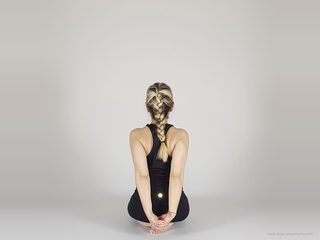
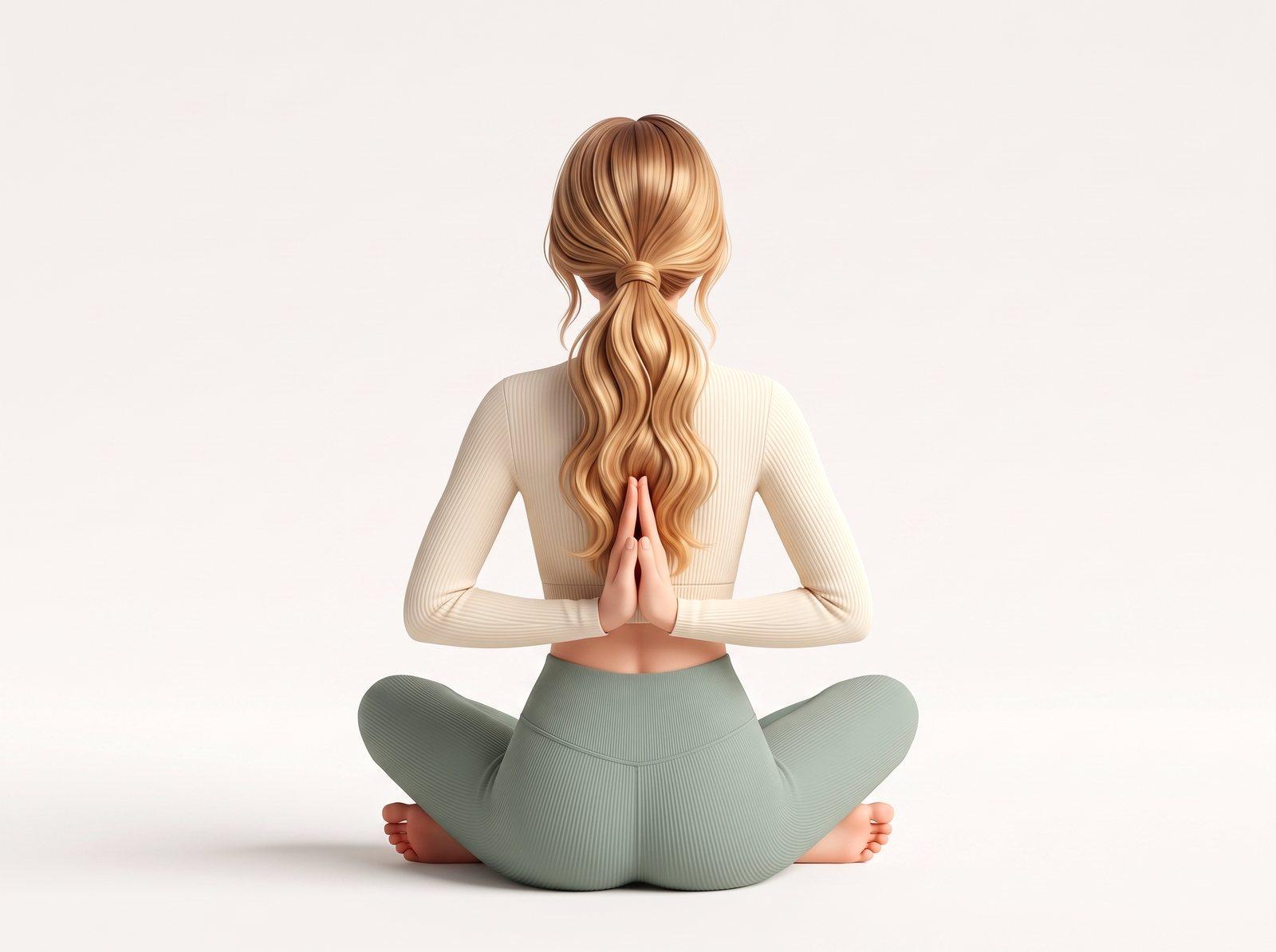
Seated Reverse Prayer Pose places the hands in Paschima Namaskarasana, palms together behind the back, while sitting in an easy cross-legged seat. The shoulders internally rotate and the chest broadens, while the wrists move into strong extension. Sitting removes the balance and hamstring demand of standing versions, so attention can stay on the shoulders and breath. If the palms do not meet, hold the opposite elbows; the chest opening is the point, not the hand shape.
Muscles Worked in Seated Reverse Prayer Pose
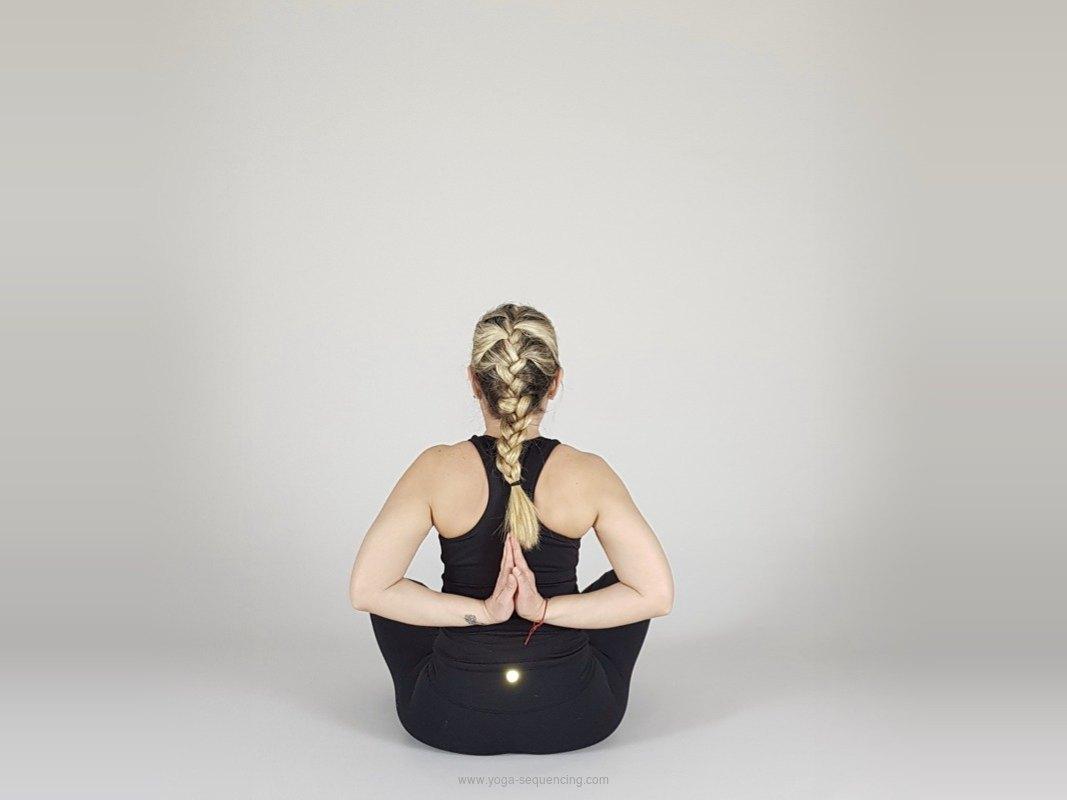
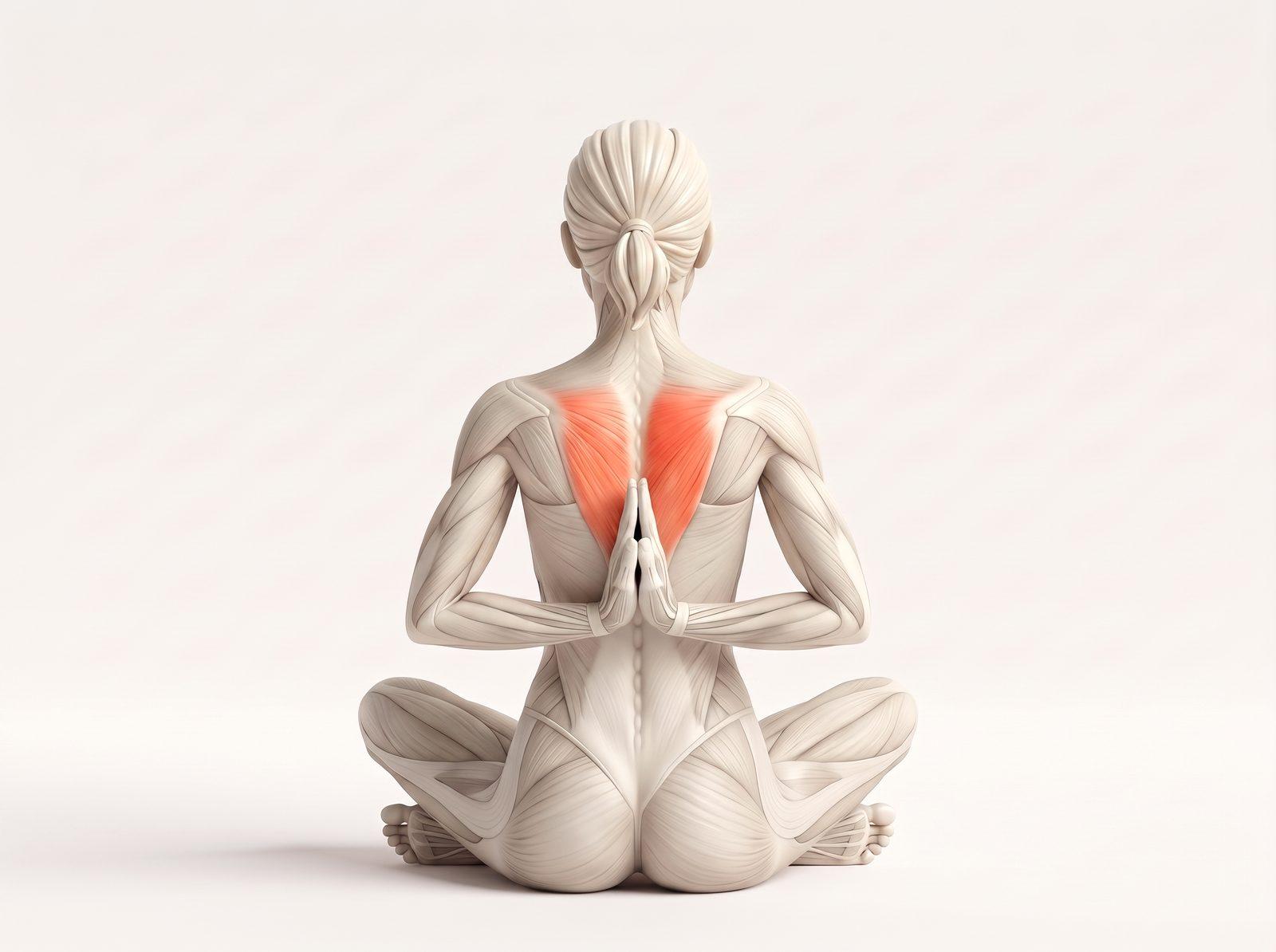
The photo, taken from behind, shows a cross-legged seat with the palms pressed together behind the back in Reverse Prayer (Paschima Namaskarasana); the feet are not bound. The fronts of the shoulders and chest stretch while the upper back draws the shoulder blades together.
Working
- Upper back (rhomboids, trapezius)
Stretching
- Front of the shoulders (anterior deltoid, pectoralis minor)
- Chest (pectoralis major)
Also holding you steady: your the muscles along your spine, rotator cuff and core.
Variations and joint actions
- Hold the elbows: Clasping opposite elbows or forearms behind the back gives a similar shoulder stretch without the wrist strain.
- Bound Lotus (Baddha Padmasana): The full pose wraps the arms behind and catches the big toes in Lotus; it needs open hips and healthy knees.
- Shoulders internal rotation and extension, hands behind the back
- Shoulder blades retraction
- Elbows flexion, pointing out to the sides
- Wrists extension, palms together
- Spine upright, neutral
- Hips flexion and external rotation, legs crossed
Roles are qualitative — this section does not measure how hard any muscle works. References: Leslie Kaminoff & Amy Matthews, Yoga Anatomy (Human Kinetics); Ray Long, The Key Muscles of Yoga (Bandha Yoga).
Step-by-Step Instructions
- 1
Sit cross-legged on the mat or a folded blanket
- 2
Lengthen the spine and settle the sitting bones
- 3
Bring the hands behind the back, fingertips pointing down
- 4
Turn the fingertips in and then up, bringing the palms together
- 5
Slide the hands up between the shoulder blades as far as is comfortable
- 6
Draw the elbows back and widen the chest
- 7
Hold for 5-8 breaths, then release and shake out the wrists
Alignment Cues
- Spine tall, crown lifting
- Elbows draw gently back
- Palms press evenly together
- Shoulders stay away from the ears
Benefits
- Opens the front of the chest and shoulders
- Stretches the wrists and forearms
- Encourages an upright seated posture
- Counteracts rounded desk posture
- Calm, low-effort way to work shoulder mobility
Modifications
- Hold opposite elbows or forearms behind the back
- Make fists and press the knuckles together
- Sit on a cushion or block
- Kneel instead of sitting cross-legged
Variations
- Reverse prayer in Mountain Pose
- Reverse Prayer Forward Fold
- Reverse prayer in Pyramid Pose
Cautions & Contraindications
Cautions
- Back off at any sharp wrist or shoulder pain
- Do not force the palms higher between the shoulder blades
- Sit on a cushion if the lower back rounds
Avoid this pose if you have:
- Shoulder or rotator cuff injury
- Wrist injury or carpal tunnel syndrome
- Acute knee pain in cross-legged sitting
Quick Facts
Breath Cue
Inhale to widen the collarbones; exhale to soften the shoulders down the back.
Primary Focus
shouldersSecondary Focus
Suggested Hold
40 seconds
Tags
Equipment