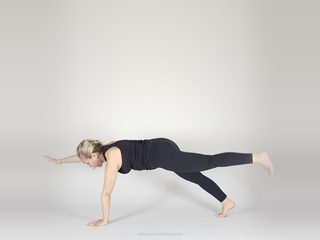
Forearm Plank Arm Reach
Makara Adho Mukha Svanasana Arm Reach
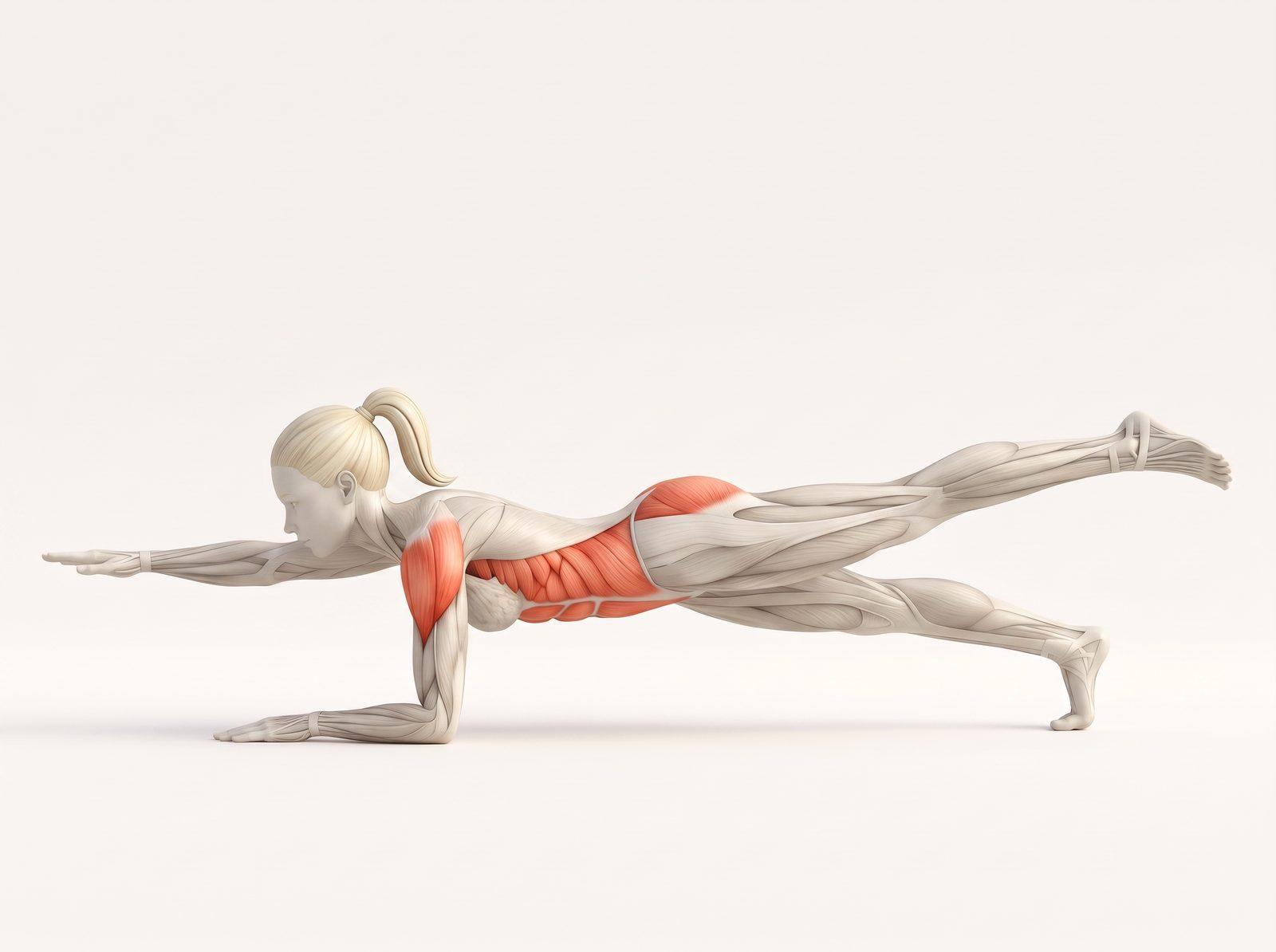
Working: Abdominals, Obliques, Lifted-leg glutes, Supporting-arm shoulder
Full muscle breakdown ↓About This Pose
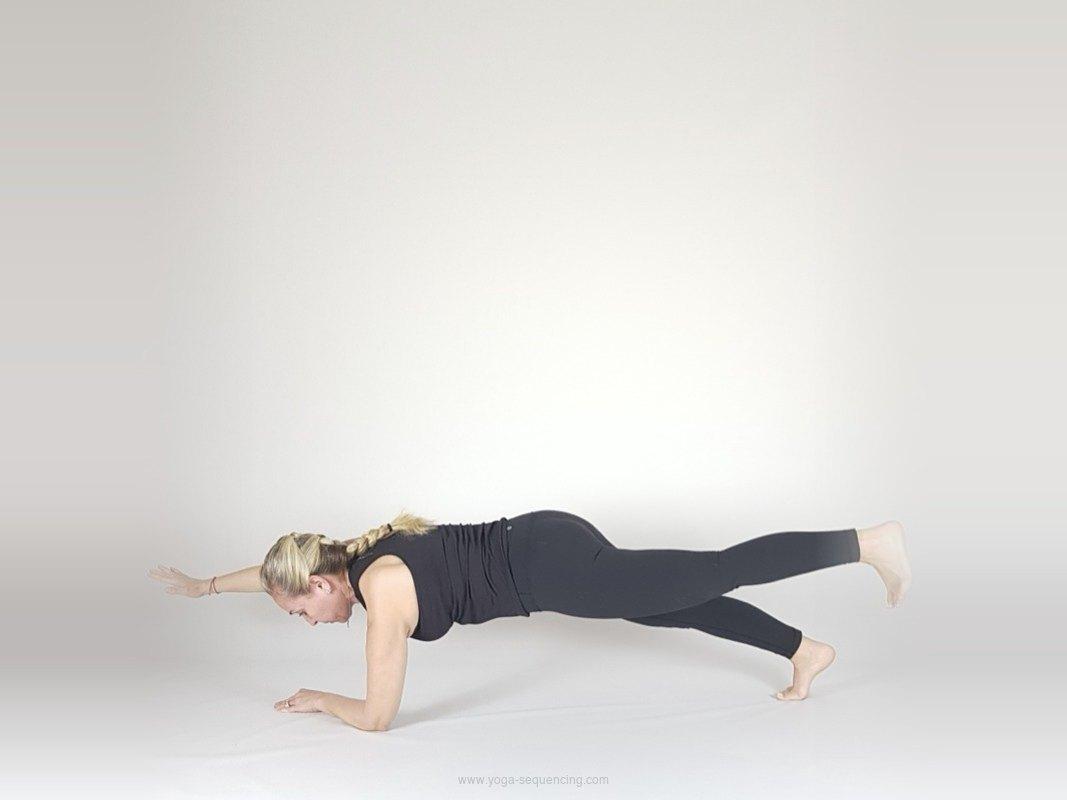
Forearm Plank Arm Reach extends one arm forward while maintaining forearm plank, creating an anti-rotation challenge without loading the wrists. This variation is ideal for building the core stability needed for more advanced poses while accommodating wrist limitations. The reaching arm creates a significant stability demand.
Muscles Worked in Forearm Plank Arm Reach
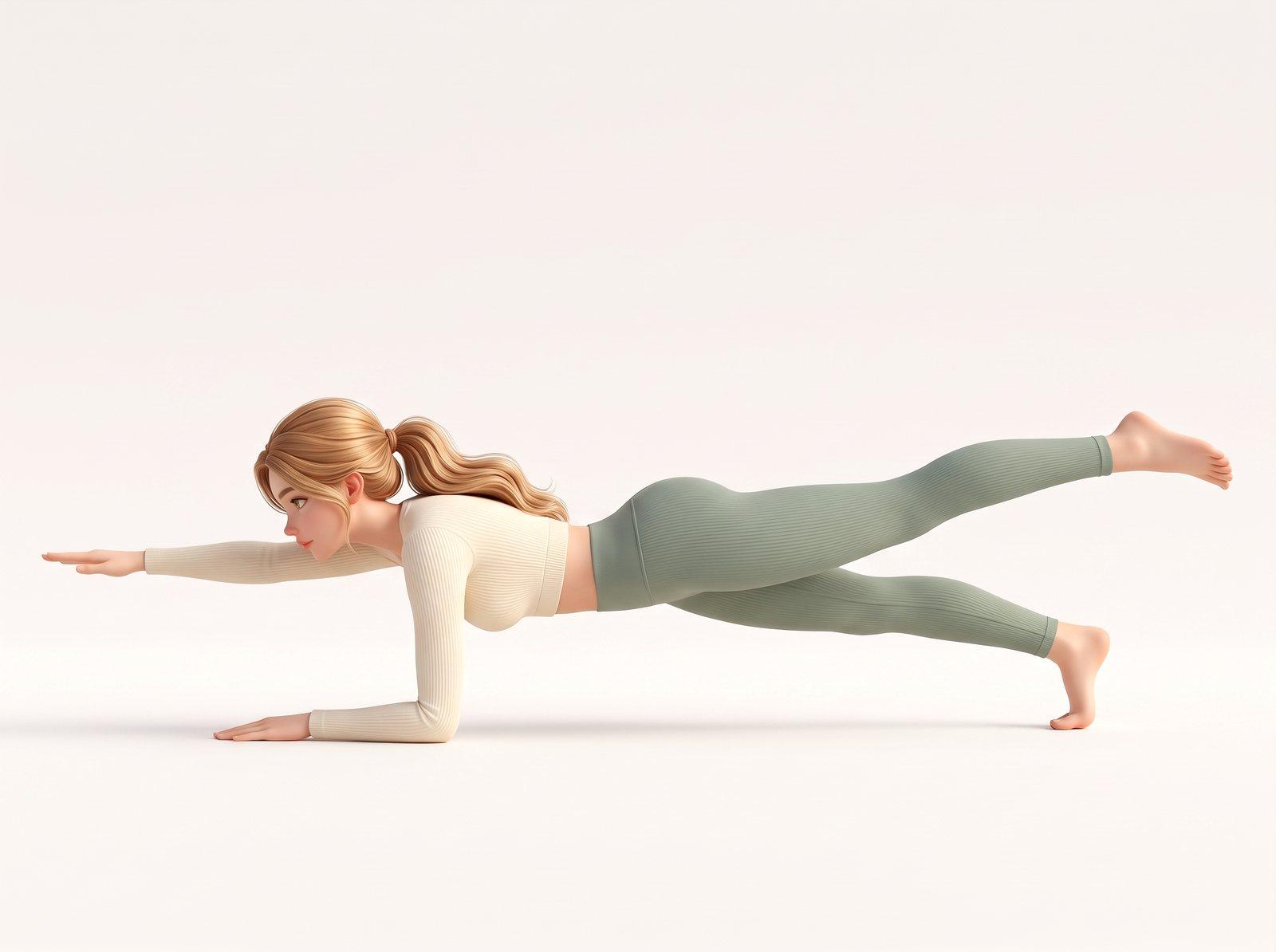
The photo shows a forearm plank balancing on one forearm, with the opposite arm reaching forward and the opposite leg lifted behind. The abdominals and obliques resist rotation while the lifted-leg glutes and supporting shoulder work hard.
Working
- Abdominals (rectus abdominis, transversus abdominis)
- Obliques (internal and external obliques)
- Lifted-leg glutes (gluteus maximus)
- Supporting-arm shoulder (deltoids, serratus anterior)
Stretching
This is a core-strength balance with no major stretch.
Also holding you steady: your rotator cuff, the muscles along your spine, standing-leg hip stabilisers (gluteus medius) and reaching-arm shoulder.
Variations and joint actions
- Both forearms down: Lifting only the leg makes the balance much easier.
- Knee down: Dropping the standing knee to the floor turns it into a forearm bird-dog.
- Supporting shoulder flexion, elbow under the shoulder
- Supporting elbow flexion, about 90°
- Reaching shoulder flexion, arm forward
- Lifted hip extension
- Spine neutral, resisting rotation
Roles are qualitative — this section does not measure how hard any muscle works. References: Leslie Kaminoff & Amy Matthews, Yoga Anatomy (Human Kinetics); Ray Long, The Key Muscles of Yoga (Bandha Yoga).
Step-by-Step Instructions
- 1
Begin in Forearm Plank with stable base
- 2
Shift weight slightly to the left forearm
- 3
Slowly reach the right arm forward
- 4
Extend fully while keeping hips level
- 5
Hold for 3-5 breaths
- 6
Return to forearm plank
- 7
Repeat on the other side
Alignment Cues
- Keep hips square to the floor
- Engage obliques to prevent rotation
- Move slowly and with control
- Breathe steadily
Benefits
- Anti-rotation challenge
- Wrist-friendly option
- Builds core stability
- Accommodates limitations
- Prepares for advanced poses
- Significant stability demand
Modifications
- Keep hand on the floor and just lift
- Reduce reach distance
Variations
- Add opposite leg lift for full challenge
Cautions & Contraindications
Cautions
- Avoid rocking or twisting the body
- Control the movement slowly
Avoid this pose if you have:
- Shoulder injury
- Severe balance issues
Quick Facts
Primary Focus
coreSecondary Focus
Suggested Hold
30 seconds
Tags
Equipment