Supported Fish Pose
Salamba Matsyasana
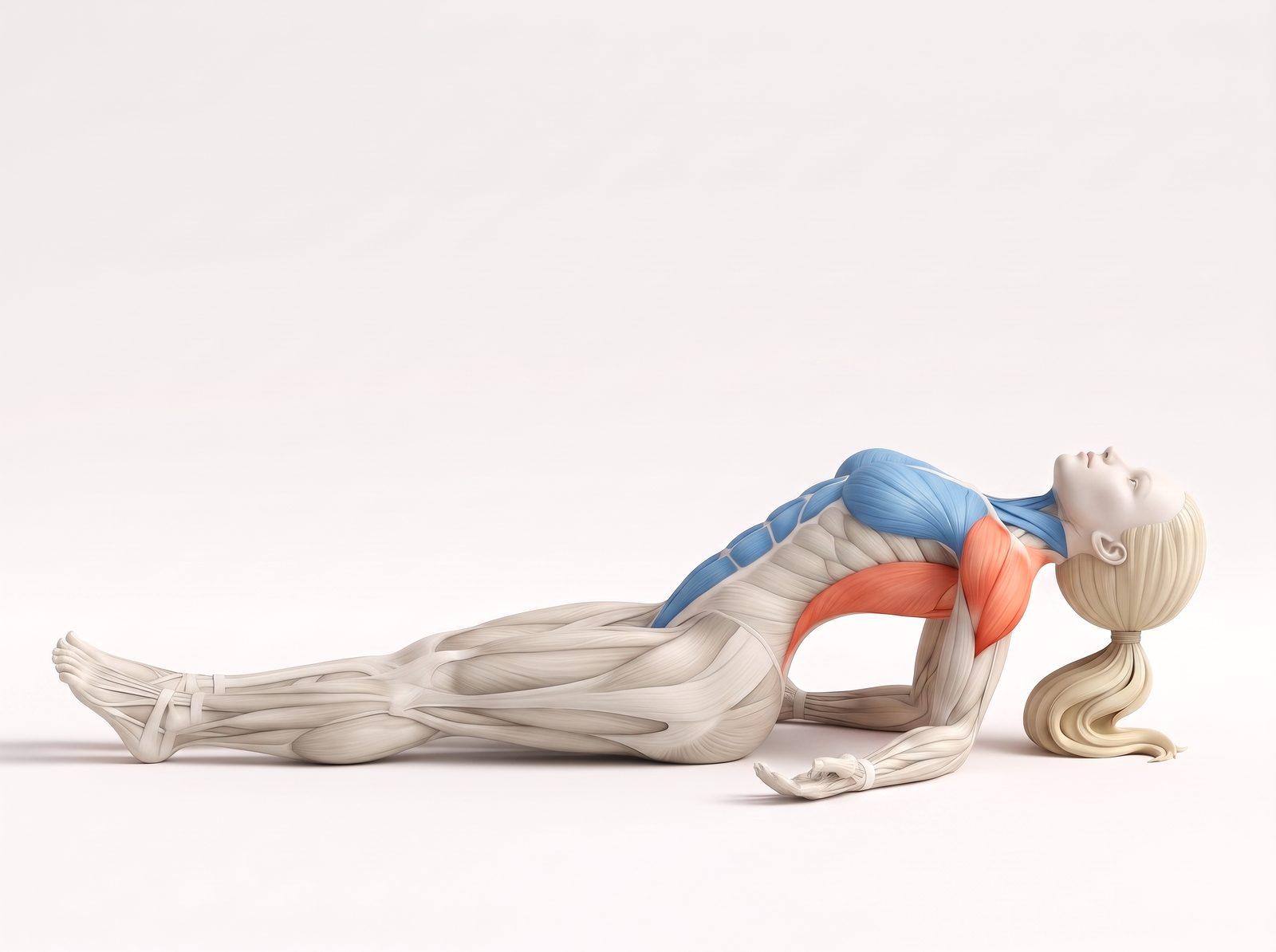
Working: Upper back, Back muscles, Backs of the shoulders
Stretching: Chest, Abdominals, Front of the neck
Full muscle breakdown ↓About This Pose
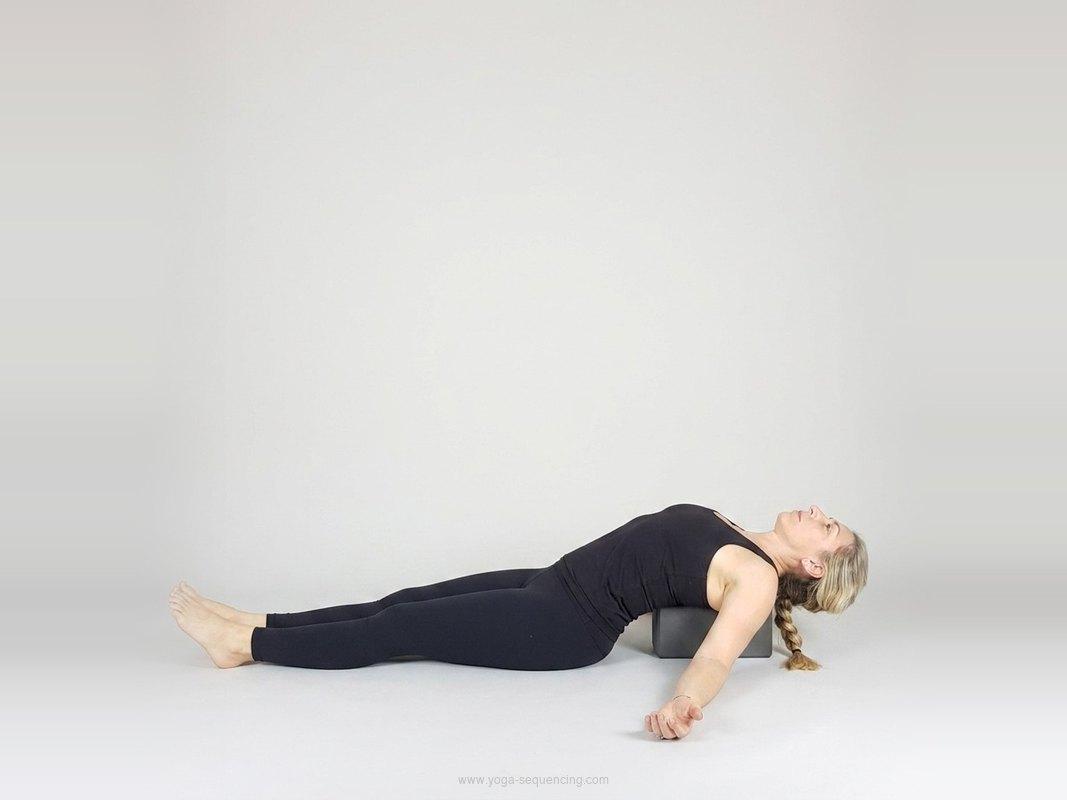
Supported Fish Pose (Salamba Matsyasana) is the gentlest, most accessible stage of Fish Pose. Reclining back over a yoga block placed lengthwise under the upper back, the chest opens passively while the head rests softly toward the floor and the arms relax open to the sides. There is no muscular effort here, gravity and the prop do the work, making it a soothing chest and shoulder opener that counters rounded posture and can be held comfortably for several minutes. It is ideal for beginners, tight shoulders, or a restorative cool-down.
Muscles Worked in Supported Fish Pose
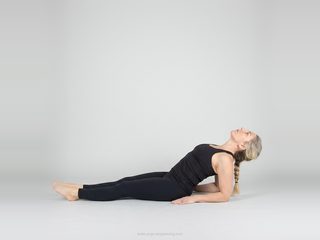
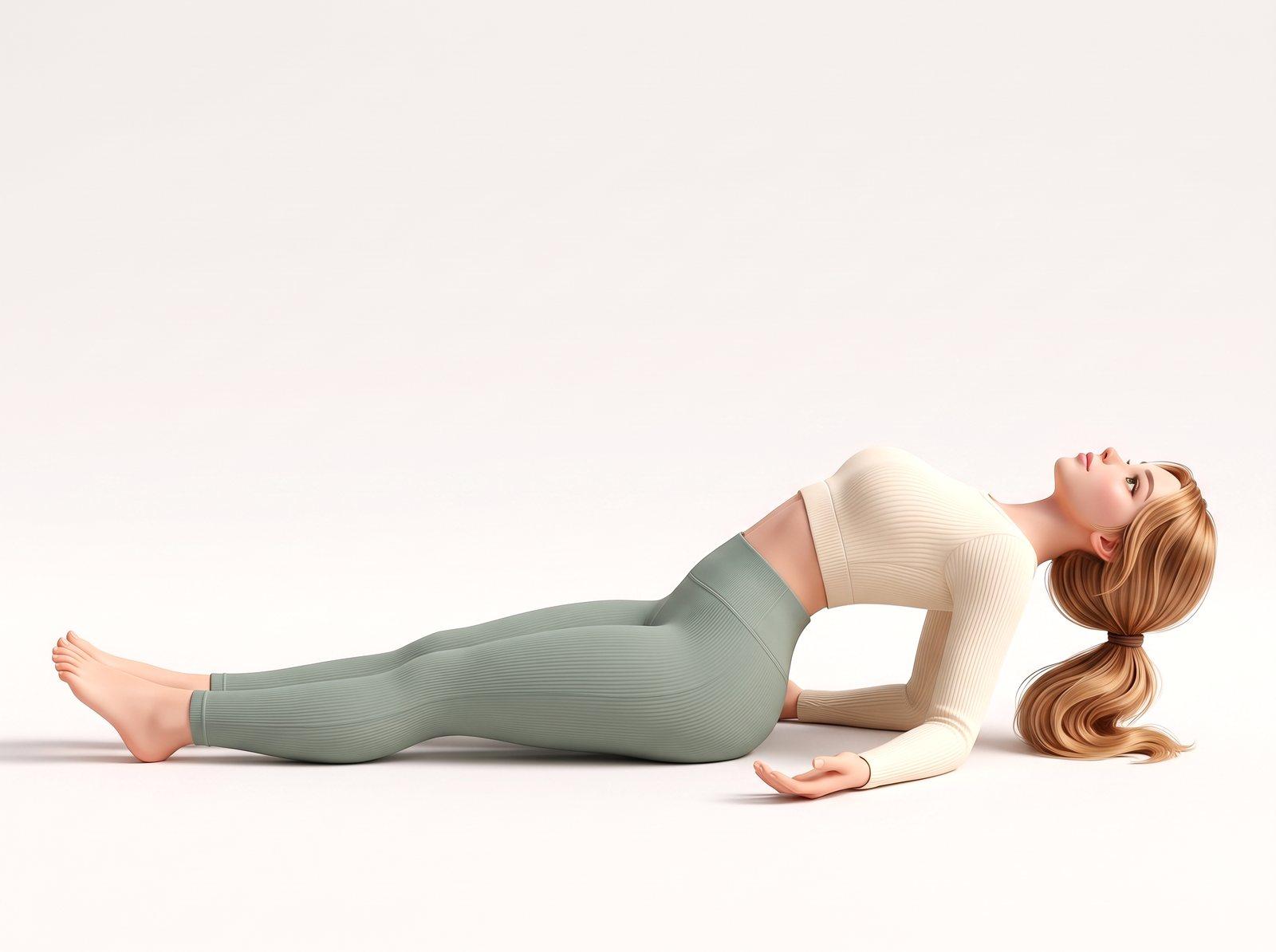
The photo shows Fish Pose (Matsyasana) supported on the forearms: lying with the legs straight, the elbows and forearms pressing into the floor to lift and arch the chest and the head tipped back. The chest, abdominals and front of the neck stretch while the upper back and arms hold the lift.
Working
- Upper back (rhomboids, trapezius)
- Back muscles (erector spinae)
- Backs of the shoulders (posterior deltoids, pressing the elbows down)
Stretching
- Chest (pectoralis major)
- Abdominals (rectus abdominis)
- Front of the neck (sternocleidomastoid, deep neck flexors)
Also holding you steady: your rotator cuff and Quadriceps.
Variations and joint actions
- Block under the upper back: A block along the spine supports the arch so you can fully relax.
- Chin slightly in: Keeping the head off the floor protects a sensitive neck.
- Spine upper-back extension, chest lifted
- Shoulders extension, elbows under the shoulders
- Elbows flexion, forearms on the floor
- Neck extension, head tipped back
- Hips and knees extension, legs long
Roles are qualitative — this section does not measure how hard any muscle works. References: Leslie Kaminoff & Amy Matthews, Yoga Anatomy (Human Kinetics); Ray Long, The Key Muscles of Yoga (Bandha Yoga).
Step-by-Step Instructions
- 1
Sit with a yoga block placed behind you
- 2
Position the block lengthwise where the upper back will rest
- 3
Lower down over the block between the shoulder blades
- 4
Let the chest drape open over the prop
- 5
Rest the head gently back toward the floor
- 6
Relax the arms open to the sides, palms up
- 7
Extend the legs long and soften
- 8
Breathe slowly for several breaths or minutes
- 9
To exit, roll gently to one side
- 10
Rest before sitting up
Alignment Cues
- Block under the upper back, not the neck
- Chest open and passive
- Head supported and relaxed
- Shoulders melting toward the floor
- Whole body soft and heavy
Benefits
- Passively opens the chest and shoulders
- Counters rounded-shoulder posture
- Encourages slow, full breathing
- Soothes the nervous system
- Gentle and accessible on the neck
- Can be held for several minutes
Modifications
- Use a lower block height or a rolled blanket
- Add a block under the head
- Bend the knees with the feet flat
Variations
- Progress to Fish Pose Preparation on the forearms
- Use a bolster instead of a block for more support
- Add gentle overhead arm variations
Cautions & Contraindications
Cautions
- Set the block at a comfortable height
- Support the head if it hangs uncomfortably
- Come up slowly to one side
Avoid this pose if you have:
- Acute neck injury
- Recent spinal injury
- Uncontrolled blood pressure
Quick Facts
Primary Focus
chestSecondary Focus
Suggested Hold
120 seconds
Tags
Equipment