Extended One Arm Plank
Utthita Eka Hasta Phalakasana
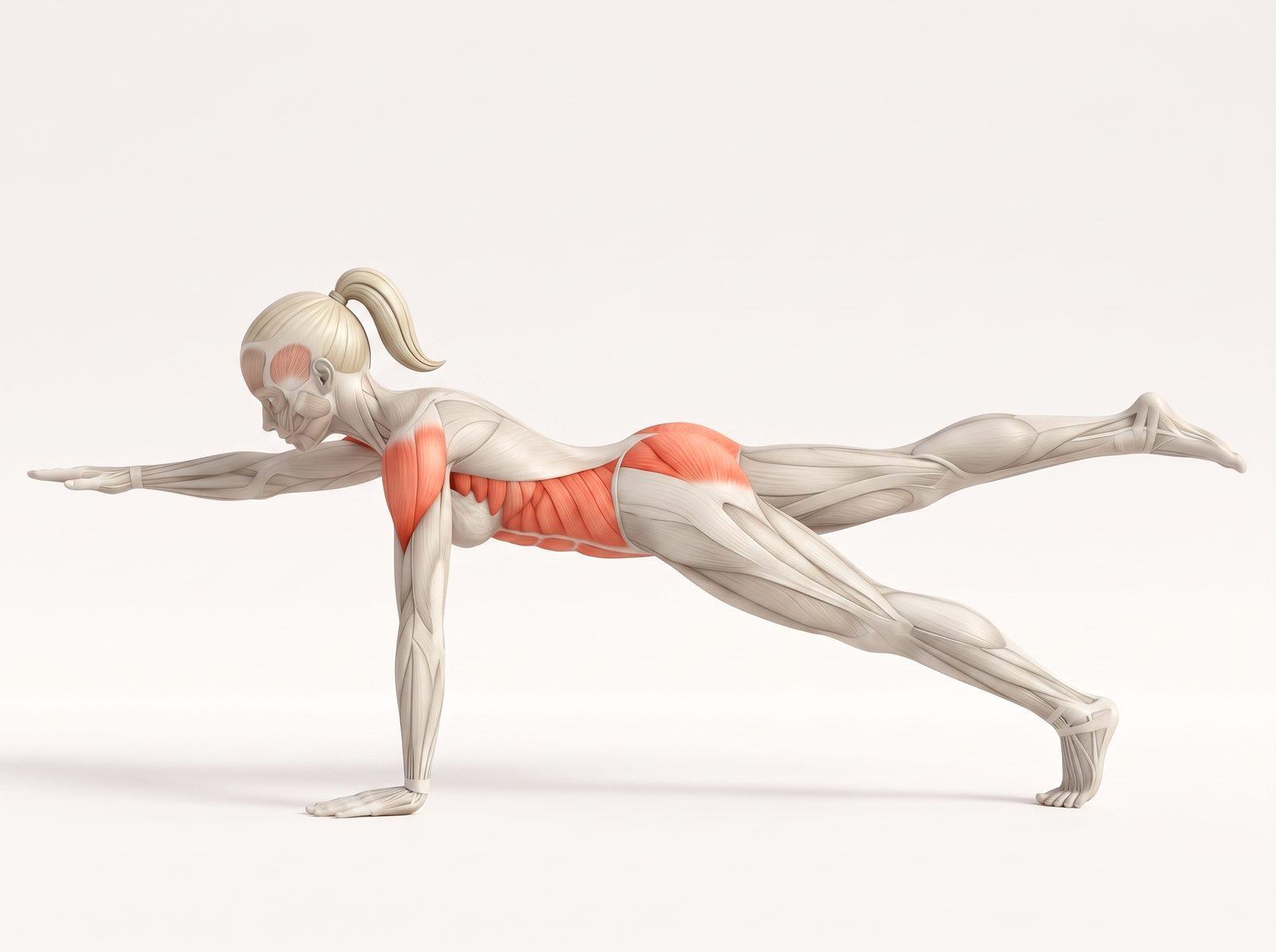
Working: Abdominals, Sides of the waist, Supporting-arm serratus and shoulder, Lifted-leg glutes
Full muscle breakdown ↓About This Pose
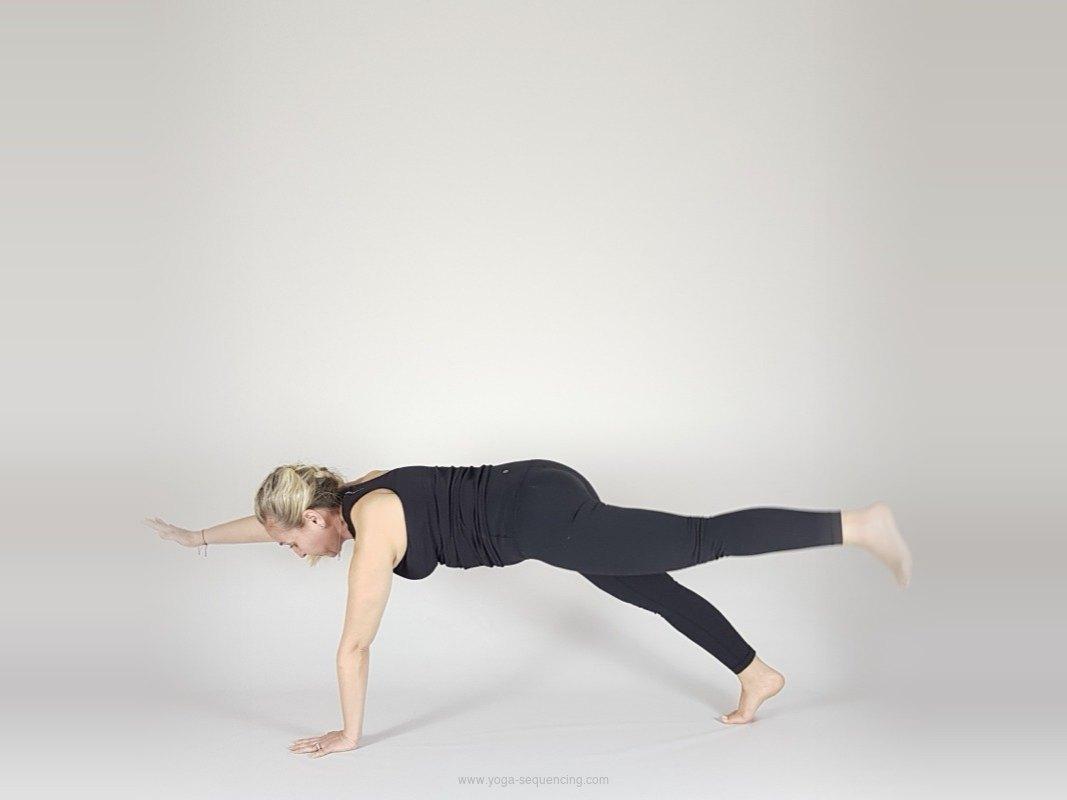
Extended One Arm Plank takes the arm reach to its fullest expression, extending as far as possible while maintaining plank integrity. This demanding variation represents a high level of core control and shoulder stability. The extended reach increases the lever arm, making the core work dramatically harder to maintain position.
Muscles Worked in Extended One Arm Plank
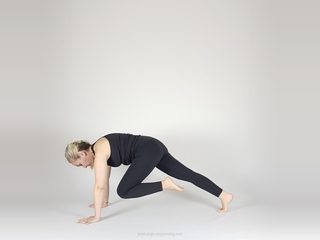
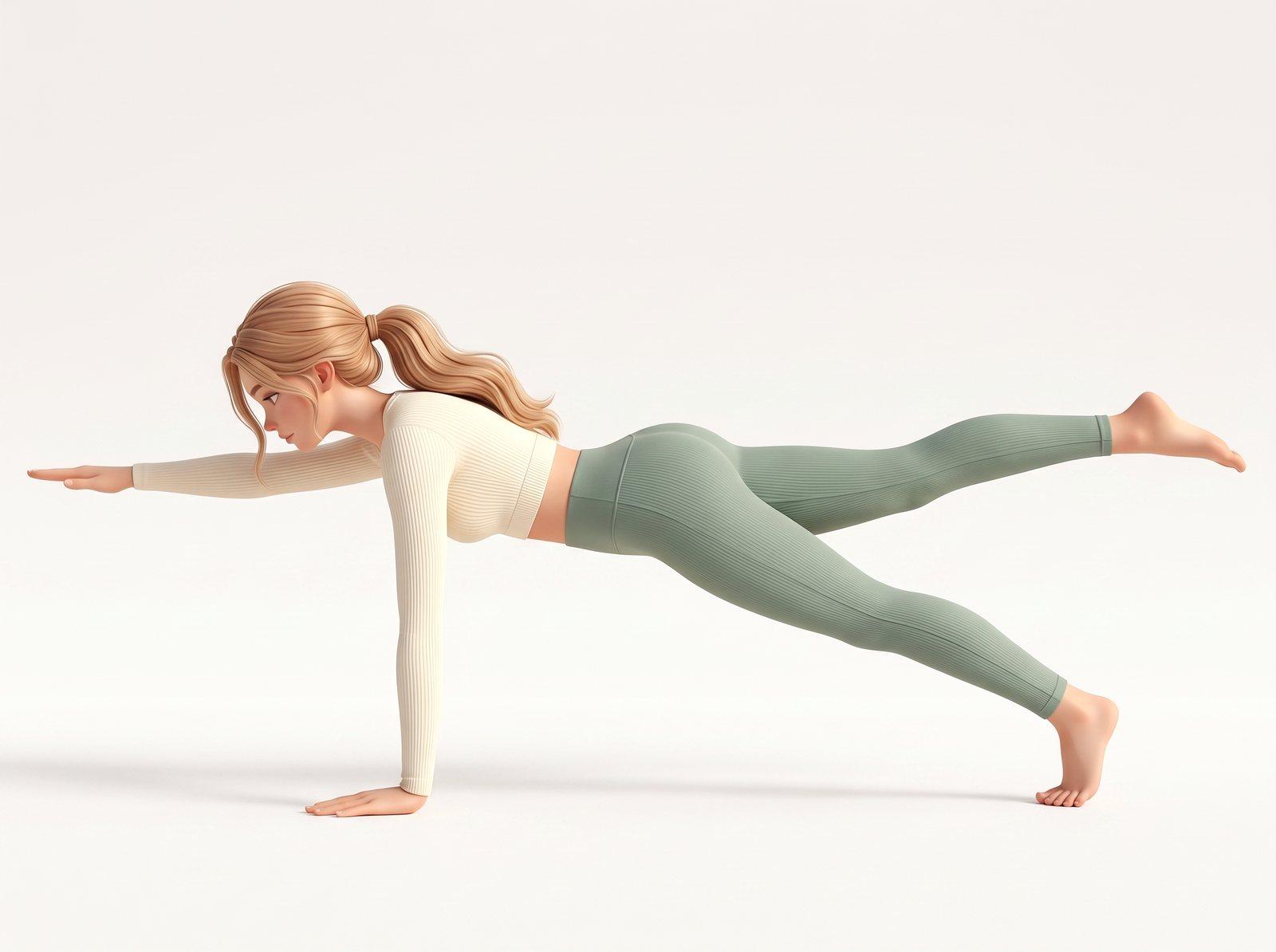
The photo shows a plank balance: from High Plank, one arm reaches straight forward and the opposite leg lifts behind, leaving one hand and one foot on the floor. The core resists twisting while the standing arm, shoulder and the glutes of the lifted leg work.
Working
- Abdominals (rectus abdominis, transversus abdominis)
- Sides of the waist (obliques)
- Supporting-arm serratus and shoulder (serratus anterior, deltoids)
- Lifted-leg glutes (gluteus maximus)
Stretching
This is a strength and balance hold with no major stretch.
Also holding you steady: your rotator cuff, hip stabilisers (gluteus medius), Quadriceps and forearm muscles, which steady the wrists.
Variations and joint actions
- Knee down: Doing it from all fours is Bird-Dog, the beginner version.
- Arm only or leg only: Lifting just one limb keeps three points down and is far steadier.
- Supporting shoulder flexion, arm straight under the shoulder
- Reaching shoulder full flexion, arm forward by the ear
- Lifted hip extension, leg in line with the body
- Knees extension
- Spine neutral, no rotation
Roles are qualitative — this section does not measure how hard any muscle works. References: Leslie Kaminoff & Amy Matthews, Yoga Anatomy (Human Kinetics); Ray Long, The Key Muscles of Yoga (Bandha Yoga).
Step-by-Step Instructions
- 1
From One Arm Three-Legged Plank
- 2
Begin to extend the reach through the arm
- 3
Simultaneously reach the lifted leg longer
- 4
Create maximum length through the body
- 5
Maintain core engagement throughout
- 6
Hold for 3 breaths
- 7
Return with control and switch
Alignment Cues
- Reach in opposite directions
- Keep core strongly engaged
- Breathe steadily
- Maintain control over extension
Benefits
- Maximum core demand
- Full shoulder stability
- Increased lever arm
- Demands complete control
- Advanced expression
- Tests limits safely
Modifications
- Reduce the length of reach
- Keep both limbs lower
Variations
- Add gentle pulses at full extension
Cautions & Contraindications
Cautions
- Avoid overreaching
- Maintain stable shoulder
Avoid this pose if you have:
- Wrist injury
- Shoulder pain
Quick Facts
Primary Focus
coreSecondary Focus
Suggested Hold
20 seconds
Tags
Equipment