Low Sphinx Pose (Hands Forward)
Salamba Bhujangasana Variation
About This Pose
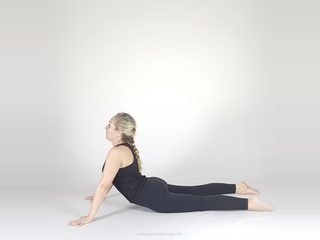
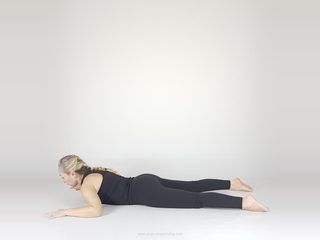
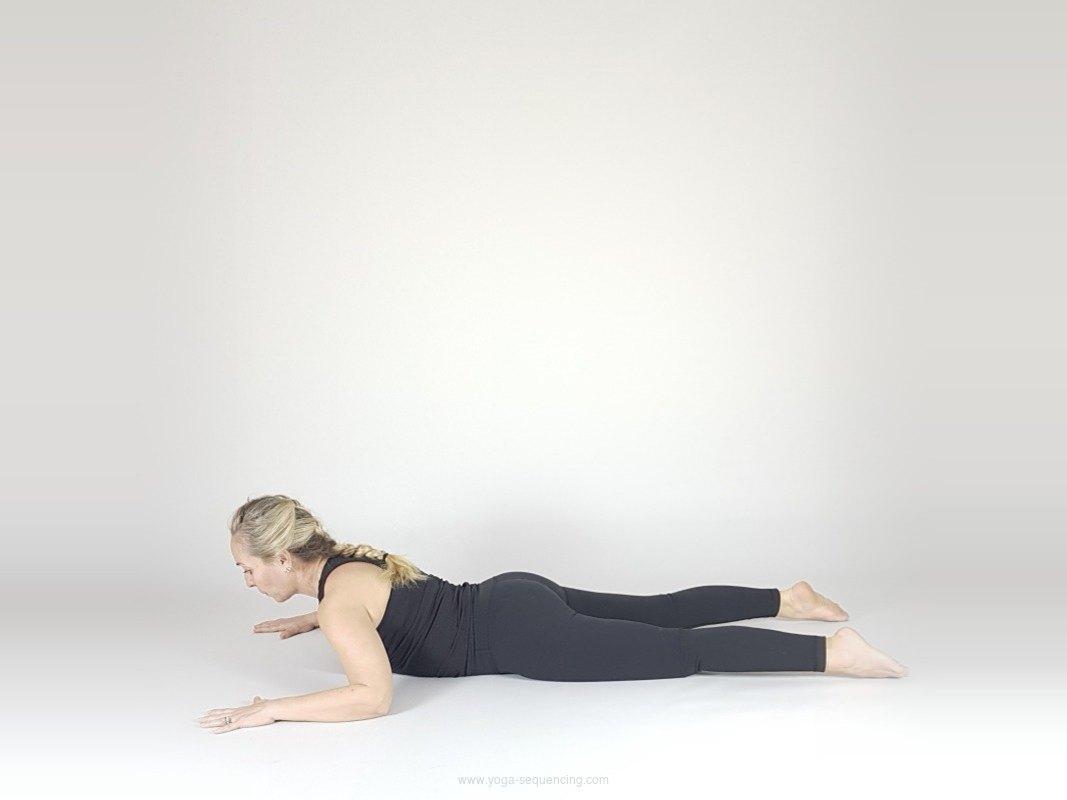
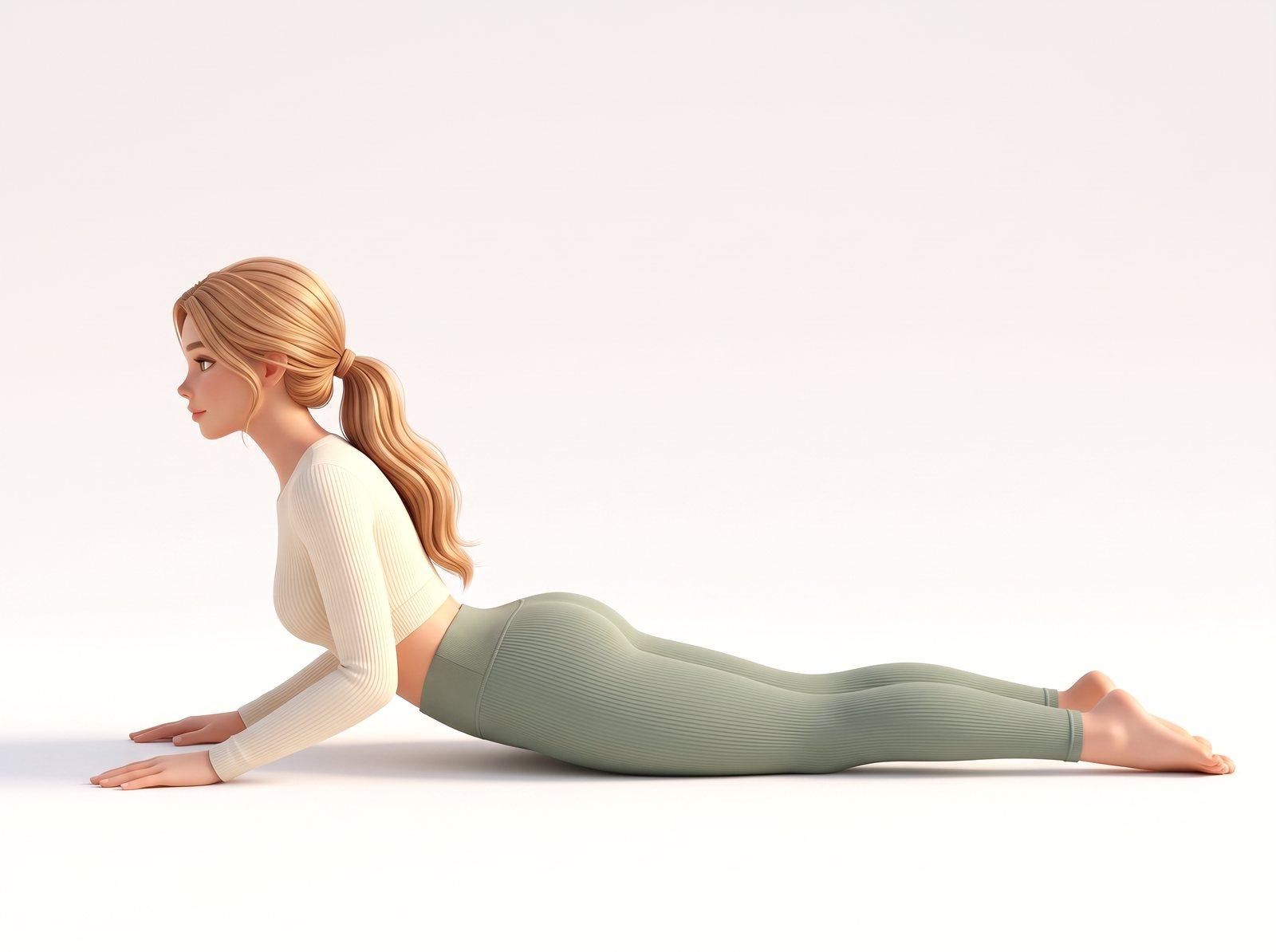
Low Sphinx Pose is the softest version of Sphinx. You lie on the belly with the legs long, the forearms rest on the mat reaching forward with palms down, and the chest lifts only a little. The low lift keeps the backbend in the upper back and gives the lower back very little load, so it suits beginners, the start of a practice, or anyone easing back into backbends. Press the pubic bone gently into the mat and let the back muscles do the lifting.
Muscles Worked in Low Sphinx Pose (Hands Forward)
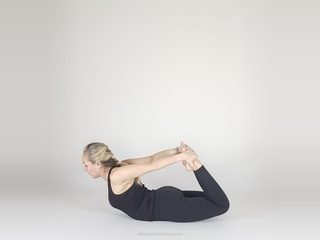
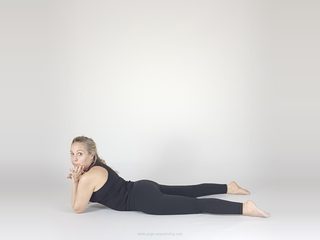
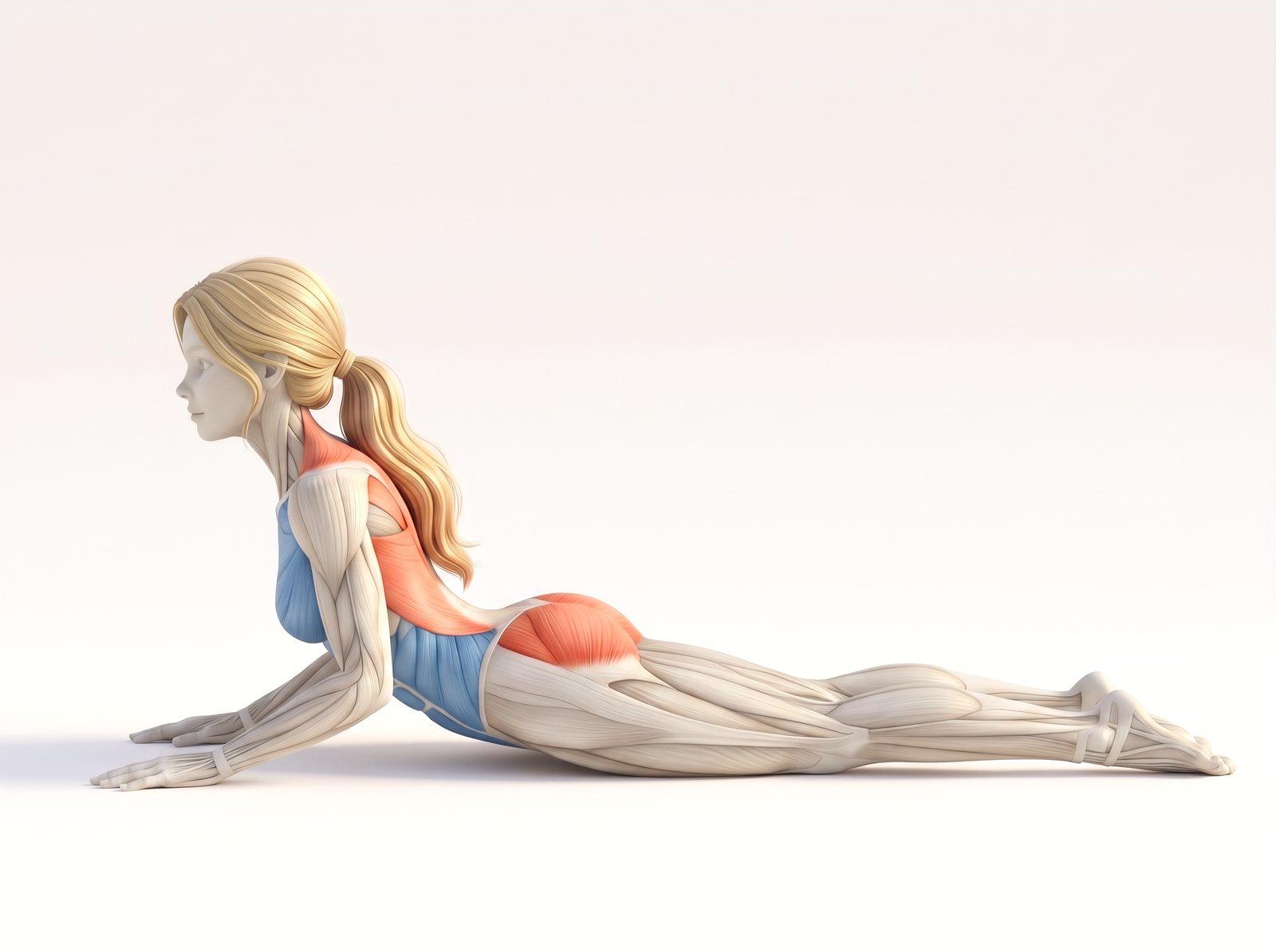
The photo shows Low Sphinx Pose: lying on the belly with the legs long, the forearms reaching forward on the mat with the palms down and the chest lifted only a little. The back muscles lift the chest gently while the front of the chest and abdomen lengthen slightly.
Working
- Back muscles (erector spinae, along the whole spine)
- Glutes (gluteus maximus)
- Upper back (rhomboids, lower trapezius, drawing the shoulders down)
Stretching
- Abdominals (rectus abdominis)
- Chest (pectoralis major)
Also holding you steady: your inner thighs, rotator cuff and neck muscles, which keep the head in line.
Variations and joint actions
- Classic Sphinx: Bringing the elbows under the shoulders lifts the chest higher for a deeper backbend.
- Forehead down between lifts: Resting the forehead on the hands between short lifts suits a sensitive lower back.
- Spine mild extension, mostly in the upper back
- Shoulders flexion, forearms reaching forward on the floor
- Elbows flexion, forearms resting on the mat
- Hips extension, front of the pelvis on the floor
- Ankles plantar flexion, tops of the feet down
Roles are qualitative — this section does not measure how hard any muscle works. References: Leslie Kaminoff & Amy Matthews, Yoga Anatomy (Human Kinetics); Ray Long, The Key Muscles of Yoga (Bandha Yoga).
Step-by-Step Instructions
- 1
Lie on the belly with the legs hip-width apart
- 2
Place the forearms on the mat, elbows slightly in front of the shoulders
- 3
Spread the palms on the mat
- 4
Press the tops of the feet and the pubic bone down
- 5
Lift the chest a few centimeters
- 6
Draw the shoulders down the back and keep the gaze down and slightly forward
- 7
Hold for 5-8 breaths, then lower and rest
Alignment Cues
- Legs long and active
- Elbows in front of the shoulders for a low lift
- Shoulders away from the ears
- Back of the neck long
Benefits
- Gently strengthens the back muscles
- Opens the chest with very little lower-back load
- Prepares for Sphinx, Cobra and Bow
- Encourages a calm, even breath
- Counteracts slouched sitting posture
Modifications
- Rest the forehead on the stacked hands between lifts
- Place a folded blanket under the hips
- Lift and lower with the breath instead of holding
Variations
- Sphinx Pose with elbows under the shoulders
- Low Cobra Pose
- Sphinx Pose with chin in hands
Cautions & Contraindications
Cautions
- Keep the lift small; it should feel easy
- Lengthen the tailbone toward the heels so the lower back does not pinch
- Keep the neck in line with the spine
Avoid this pose if you have:
- Late pregnancy
- Recent abdominal surgery
- Acute lower back injury that flares with extension
Quick Facts
Breath Cue
Inhale to lengthen the chest forward; exhale to soften the shoulders away from the ears.
Primary Focus
spineSecondary Focus
Suggested Hold
30 seconds
Tags
Equipment