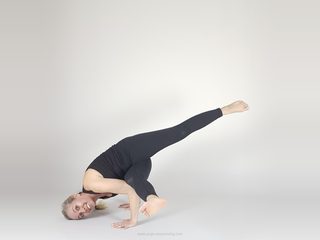
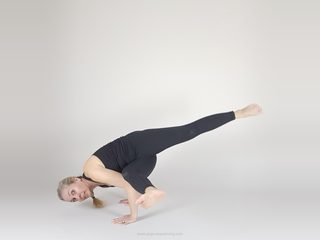
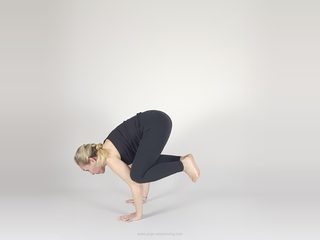
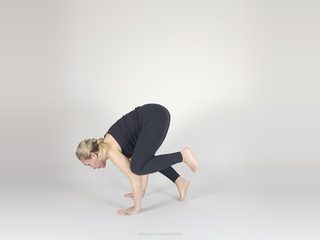
Crow Pose Variation
Bakasana
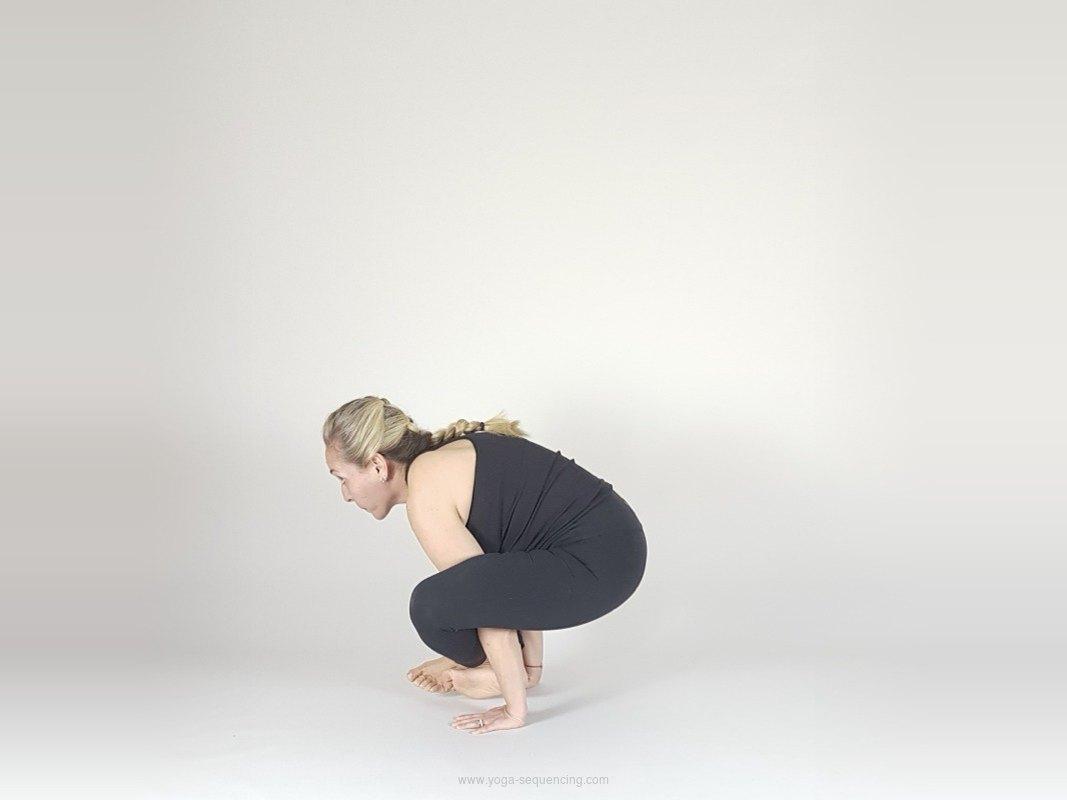
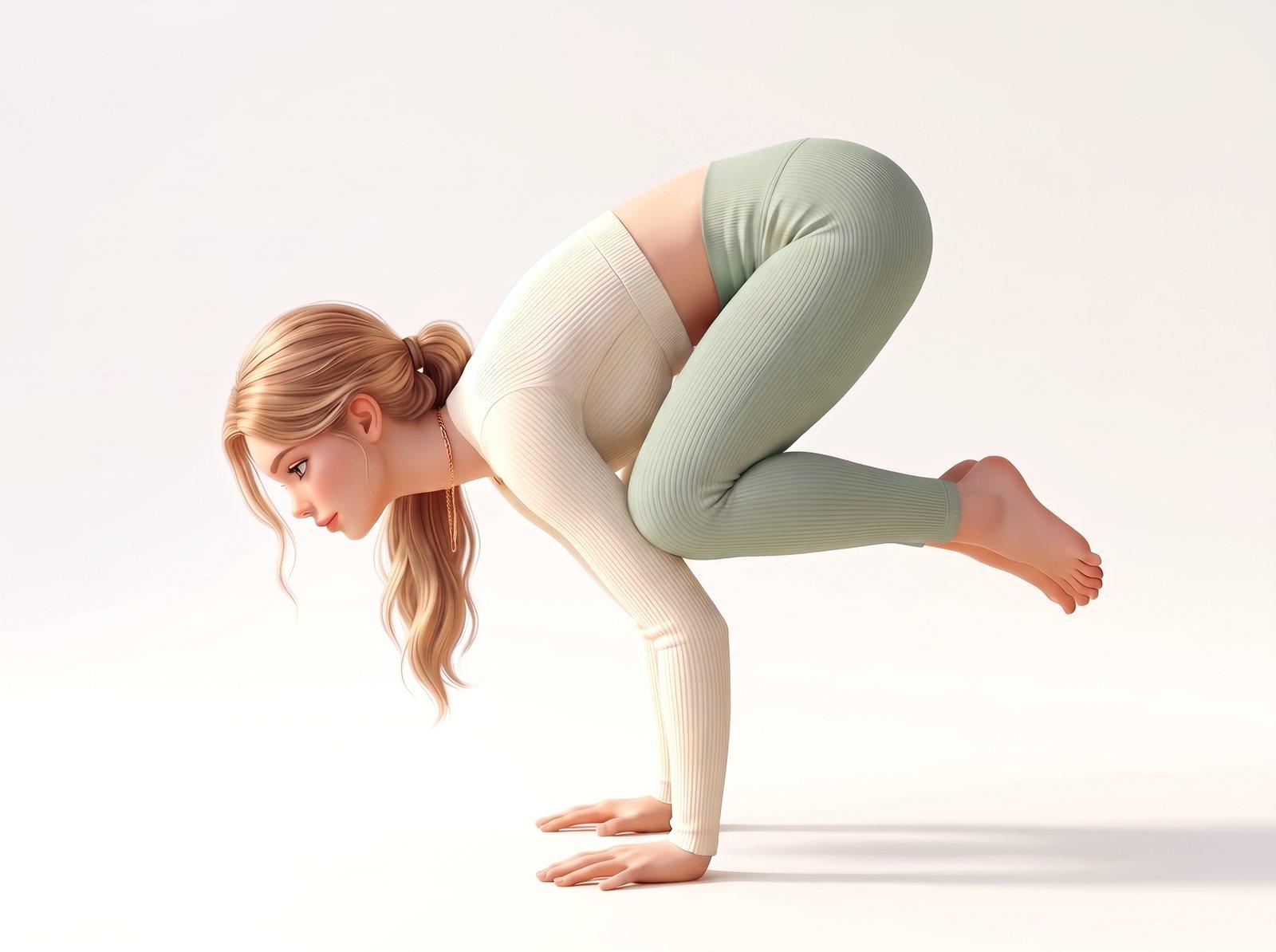
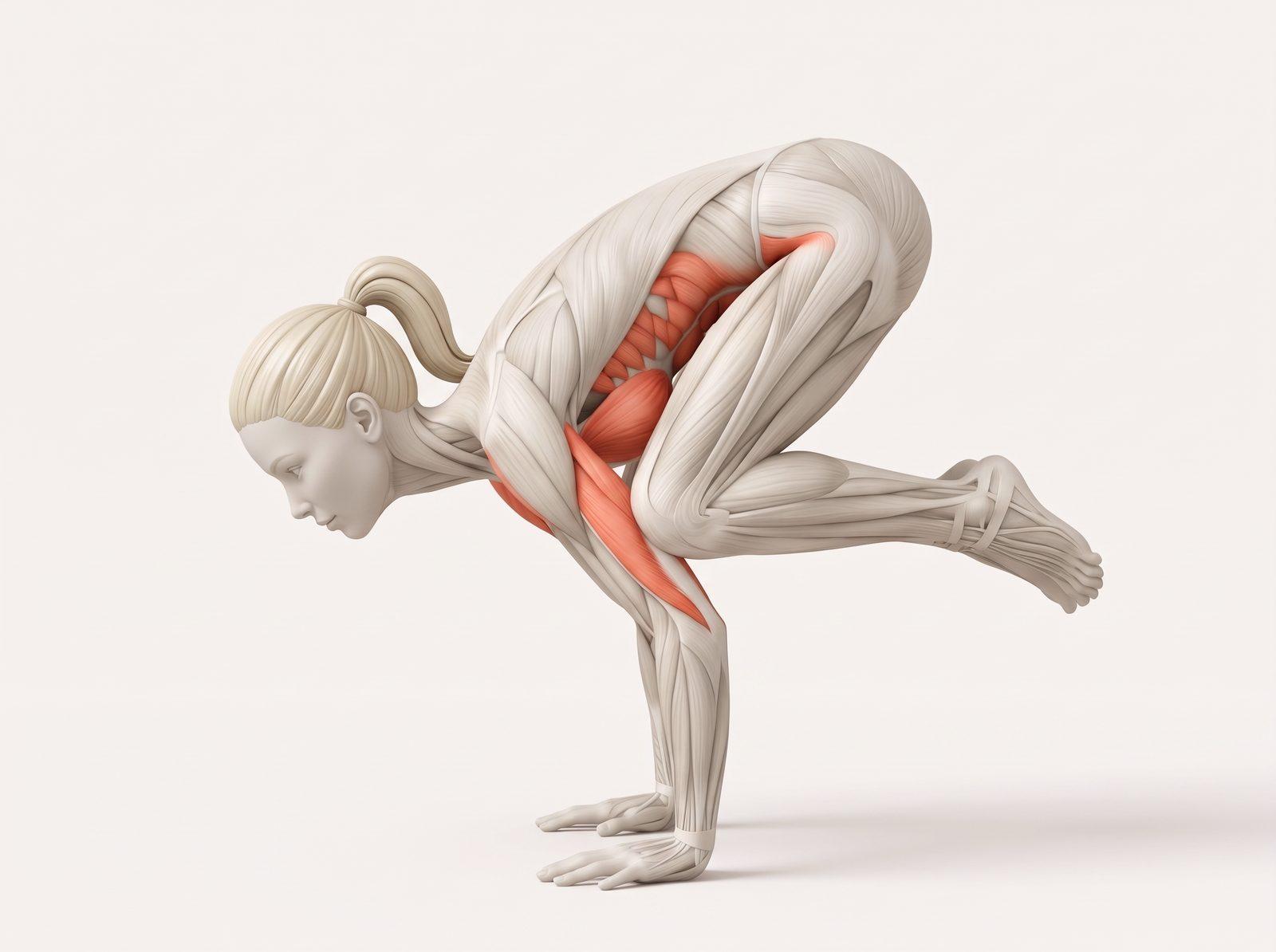
Working: Triceps, Chest, Serratus anterior, Abdominals, Hip flexors
Full muscle breakdown ↓About This Pose
Crow Pose Variation refines the basic Bakasana with adjusted knee placement, higher hip position, or straighter arms. These variations demonstrate advancing arm balance skills and prepare the body for more challenging poses like Side Crow or Flying Crow. Each variation builds specific strength or flexibility elements.
Muscles Worked in Crow Pose Variation
Crow Pose Variation is an arm balance that works the triceps, chest and serratus anterior to hold you up on bent arms, and the abdominals and hip flexors that keep the knees drawn high onto the upper arms. It is a strength pose with no major stretch.
Working
- Triceps (triceps brachii)
- Chest (pectoralis major)
- Serratus anterior
- Abdominals (rectus abdominis)
- Hip flexors (iliopsoas, rectus femoris)
Stretching
Crow is a strength and balance pose — no major muscle is stretched.
Also holding you steady: your inner thighs, rotator cuff and forearm and wrist muscles.
Variations and joint actions
- One foot down: Keeps part of the weight on the feet while you learn to shift forward.
- Straight arms: Straightening the arms lifts the hips higher, so the core, hip flexors, serratus anterior and front of the shoulders work harder to keep the knees high on the arms.
- Wrists extension, bearing weight
- Elbows flexion
- Shoulders flexion, blades drawn wide
- Spine flexion, back rounded
- Hips deep flexion
- Knees deep flexion
Roles are qualitative — this section does not measure how hard any muscle works. References: Leslie Kaminoff & Amy Matthews, Yoga Anatomy (Human Kinetics); Ray Long, The Key Muscles of Yoga (Bandha Yoga).
Step-by-Step Instructions
- 1
Enter Crow Pose
- 2
Engage core deeply
- 3
Lift hips higher
- 4
Draw feet toward glutes
- 5
Create a compact shape
- 6
Hold with steady breath
Alignment Cues
- Press palms firmly
- Round upper back slightly
- Keep breath steady
Benefits
- Demonstrates advanced control
- Refines technique
- Prepares for harder poses
- Builds specific skills
- Shows progression
- Deepens practice
Modifications
- Use block for support
- Practice near wall
Variations
- With leg extension
- Transition to headstand
Cautions & Contraindications
Cautions
- Engage shoulders actively
- Avoid wrist collapse
Avoid this pose if you have:
- Wrist injury
- Shoulder pain
Quick Facts
Primary Focus
shouldersSecondary Focus
Suggested Hold
30 seconds
Tags
Equipment