Crossed Arms Forward Fold
Uttanasana
About This Pose
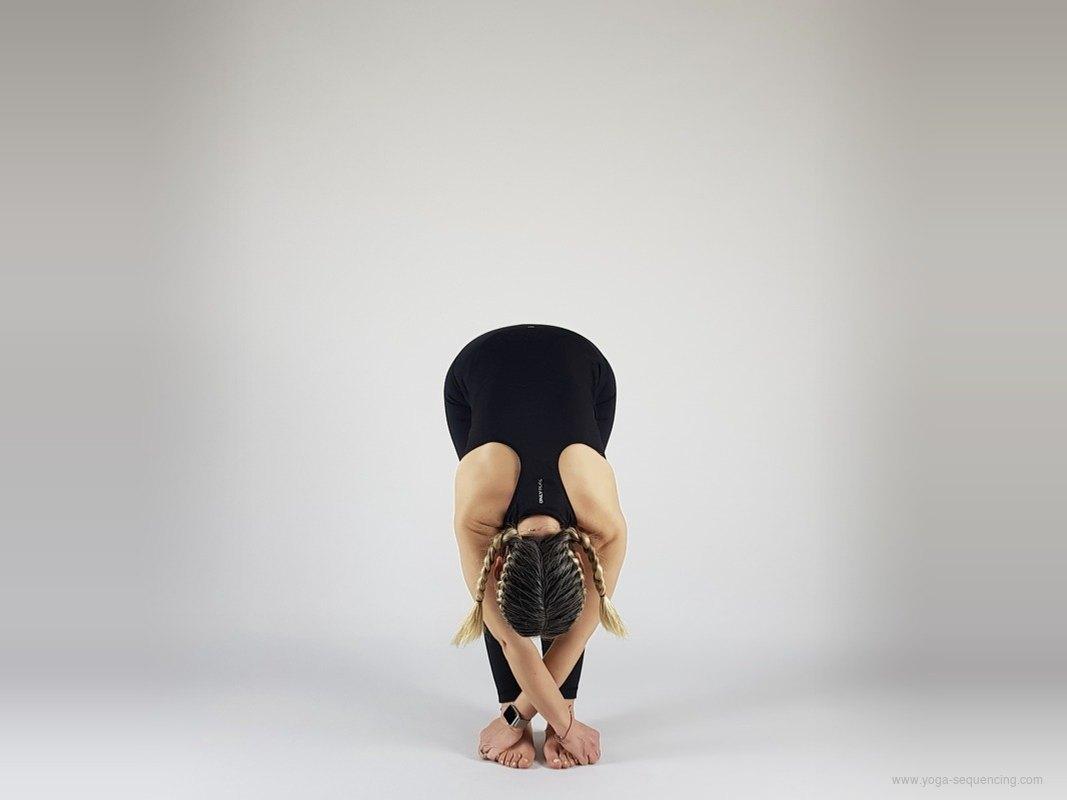
Crossed Arms Forward Fold, often called Ragdoll Pose, is one of the most relaxing expressions of Uttanasana. By holding opposite elbows with the arms crossed, the upper body becomes heavy and pendulous, encouraging complete release in the neck, shoulders, and spine. The weight of the hanging arms provides gentle traction for the spine. This version invites gentle swaying side to side, which releases tension in the lower back and creates a meditative, almost hypnotic quality. The pose is particularly beneficial after long periods of sitting or working at a computer, as it counteracts shoulder and neck tension while stretching the back body.
Muscles Worked in Crossed Arms Forward Fold
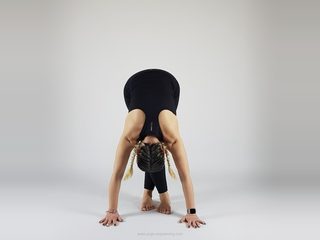
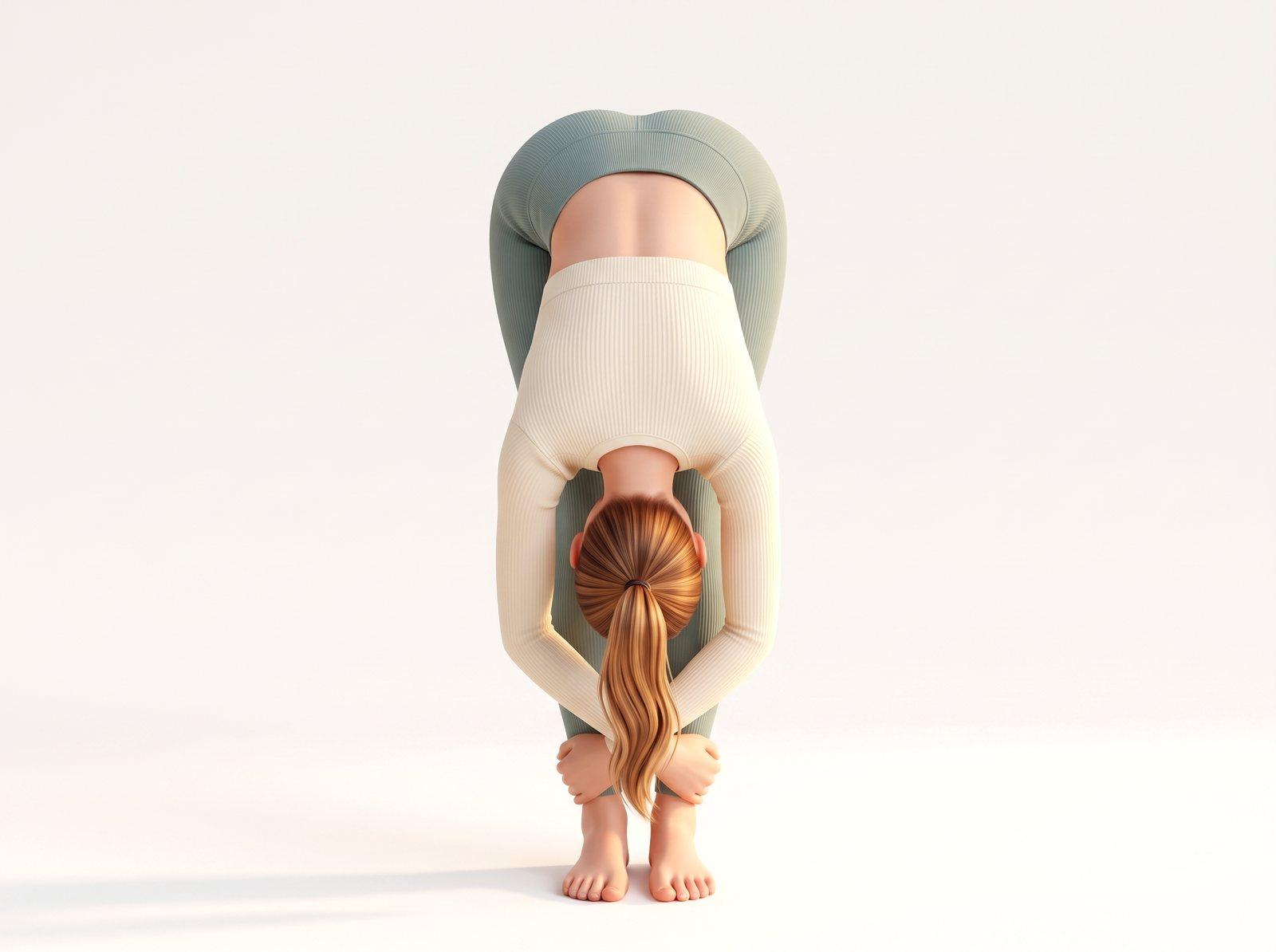
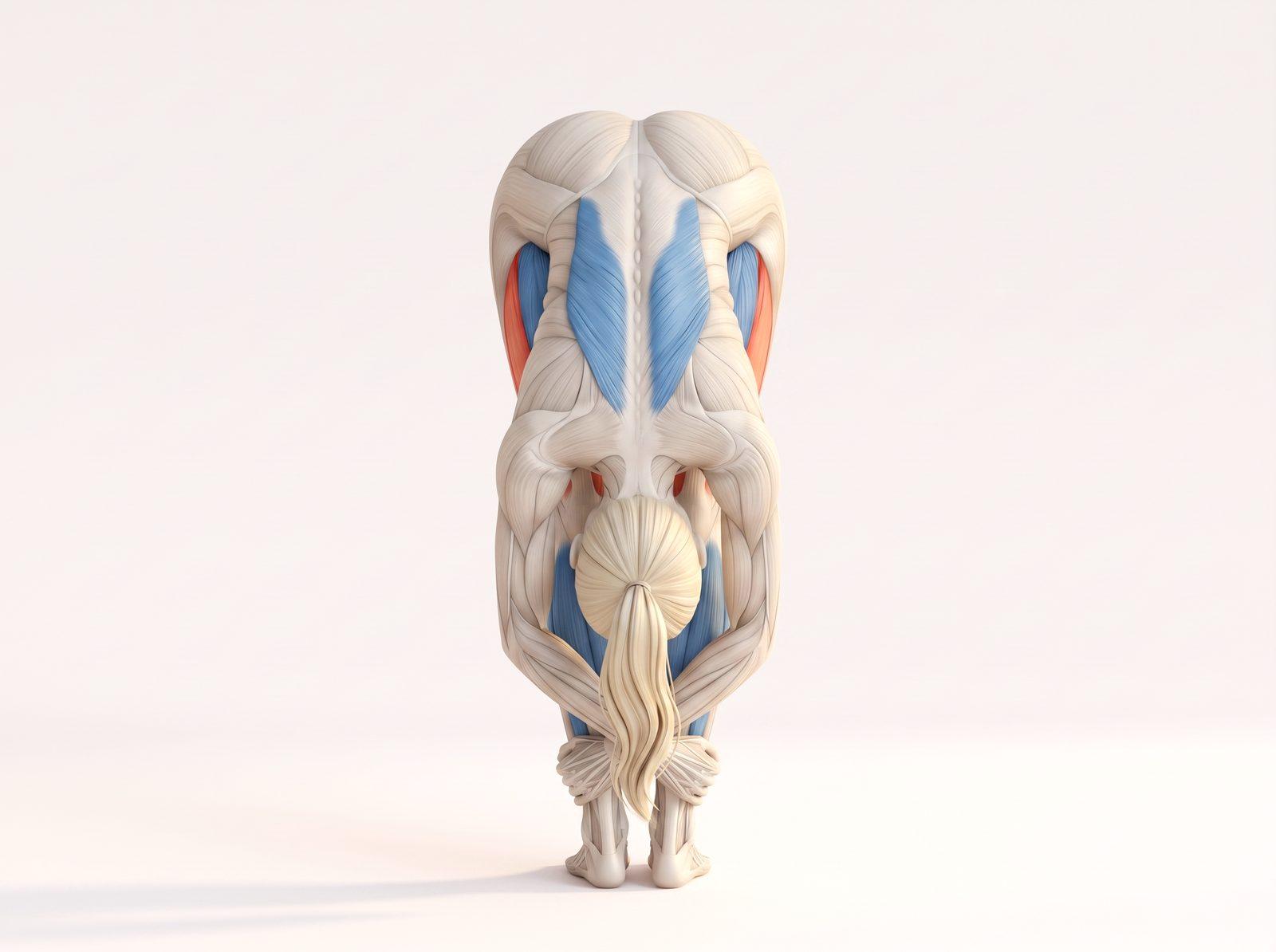
The photo shows a Standing Forward Fold seen from the front, the head hanging between the legs and the arms wrapped around the backs of the lower legs with the hands at the ankles. The hamstrings, calves and back get the stretch.
Working
- Quadriceps (quadriceps femoris)
Stretching
- Hamstrings (biceps femoris, semitendinosus, semimembranosus)
- Calves (gastrocnemius, soleus)
- Back muscles (erector spinae)
Also holding you steady: your the muscles of your feet and ankles and arms, which hold the legs.
Variations and joint actions
- Ragdoll: Holding opposite elbows with the knees soft is a gentler hang.
- Bent knees: Bending the knees lets tight hamstrings release without straining the back.
- Hips deep flexion
- Knees extension
- Spine flexion, head hanging
- Elbows flexion, arms wrapped around the legs
Roles are qualitative — this section does not measure how hard any muscle works. References: Leslie Kaminoff & Amy Matthews, Yoga Anatomy (Human Kinetics); Ray Long, The Key Muscles of Yoga (Bandha Yoga).
Step-by-Step Instructions
- 1
Stand with feet hip-width apart
- 2
Fold forward with soft knees
- 3
Cross one arm over the other
- 4
Hold opposite elbows
- 5
Let the weight of arms pull you down
- 6
Allow head to hang completely
- 7
Sway gently side to side if desired
- 8
Let all tension release
- 9
Breathe slowly and deeply
- 10
Hold for 5-10 breaths or longer
- 11
Uncross arms and rise very slowly
Alignment Cues
- Knees stay soft and bent
- Arms cross and hold elbows
- Upper body weight hangs
- Head releases completely
- Gentle sway is encouraged
- No holding or gripping in body
- Surrender to gravity
Benefits
- Deeply relaxes neck and shoulders
- Provides gentle spinal traction
- Encourages complete release
- Allows soothing side-to-side sway
- Releases upper body tension
- Counteracts computer posture
- Creates meditative state
- Stretches hamstrings gently
Modifications
- Bend knees more for lower back ease
- Stand with feet wider
- Practice against wall
- Keep holds shorter
Variations
- Switch arm cross halfway through
- Circle gently instead of sway
- Nod head yes/no while hanging
- Extend into deeper fold from here
Cautions & Contraindications
Cautions
- Sway gently—no aggressive movements
- Keep knees soft
- Rise slowly to avoid dizziness
- Breathe naturally
- Don't hang too long if dizzy
Avoid this pose if you have:
- Low blood pressure
- Vertigo
- Eye conditions
- Sinus infection
- Pregnancy (later stages)
Quick Facts
Primary Focus
spineSecondary Focus
Suggested Hold
45 seconds
Tags