Staff Pose
Dandasana
About This Pose
Staff Pose (Dandasana) is the foundational seated posture that establishes proper alignment for all seated yoga poses. This deceptively challenging pose requires significant core engagement and postural awareness to maintain correctly. Staff Pose strengthens the back muscles, stretches the hamstrings, and builds the muscular endurance needed for meditation. Regular practice improves posture both on and off the mat while developing core stability.
Muscles Worked in Staff Pose
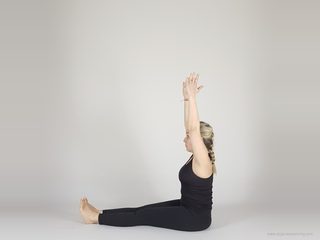
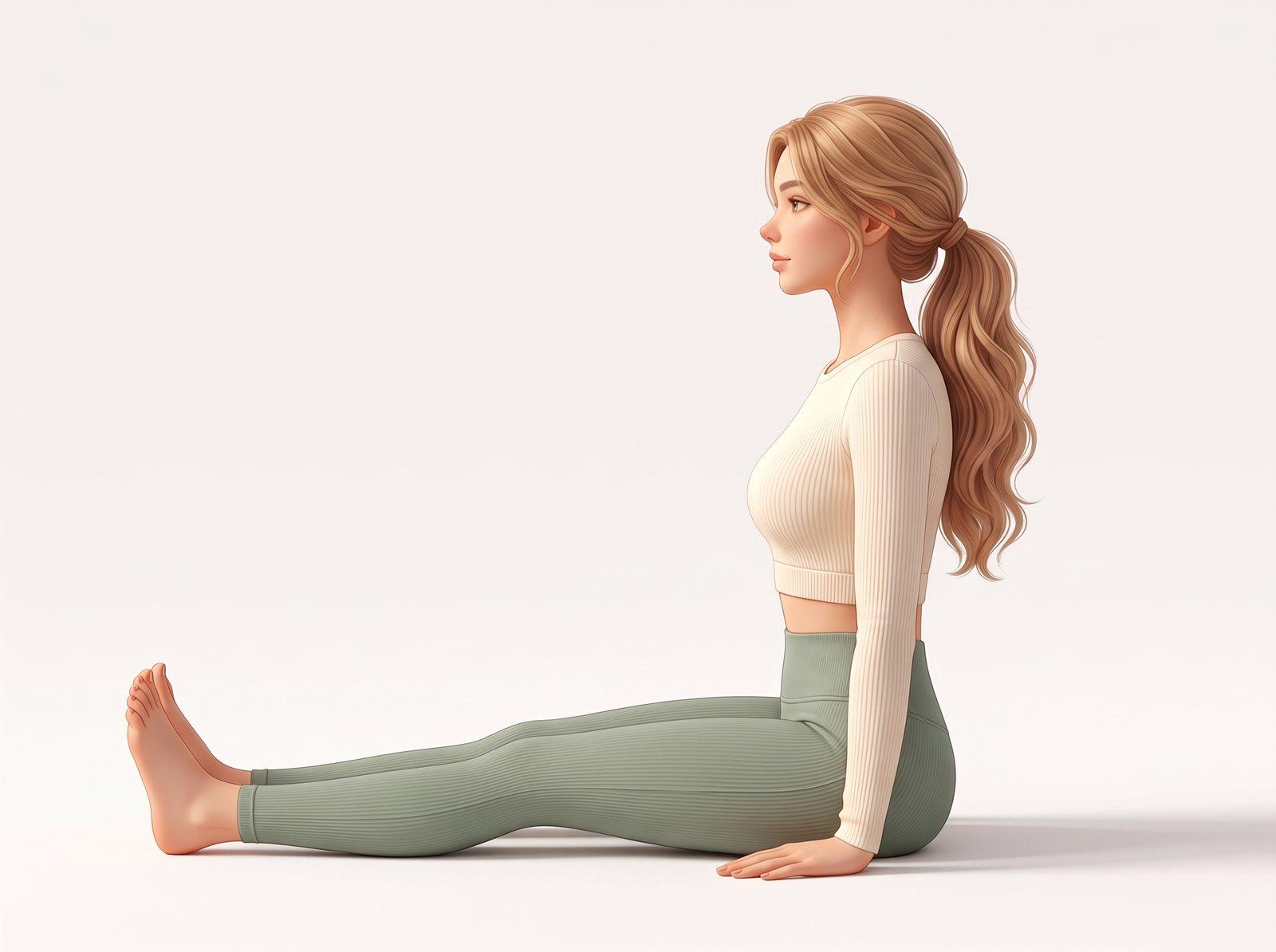
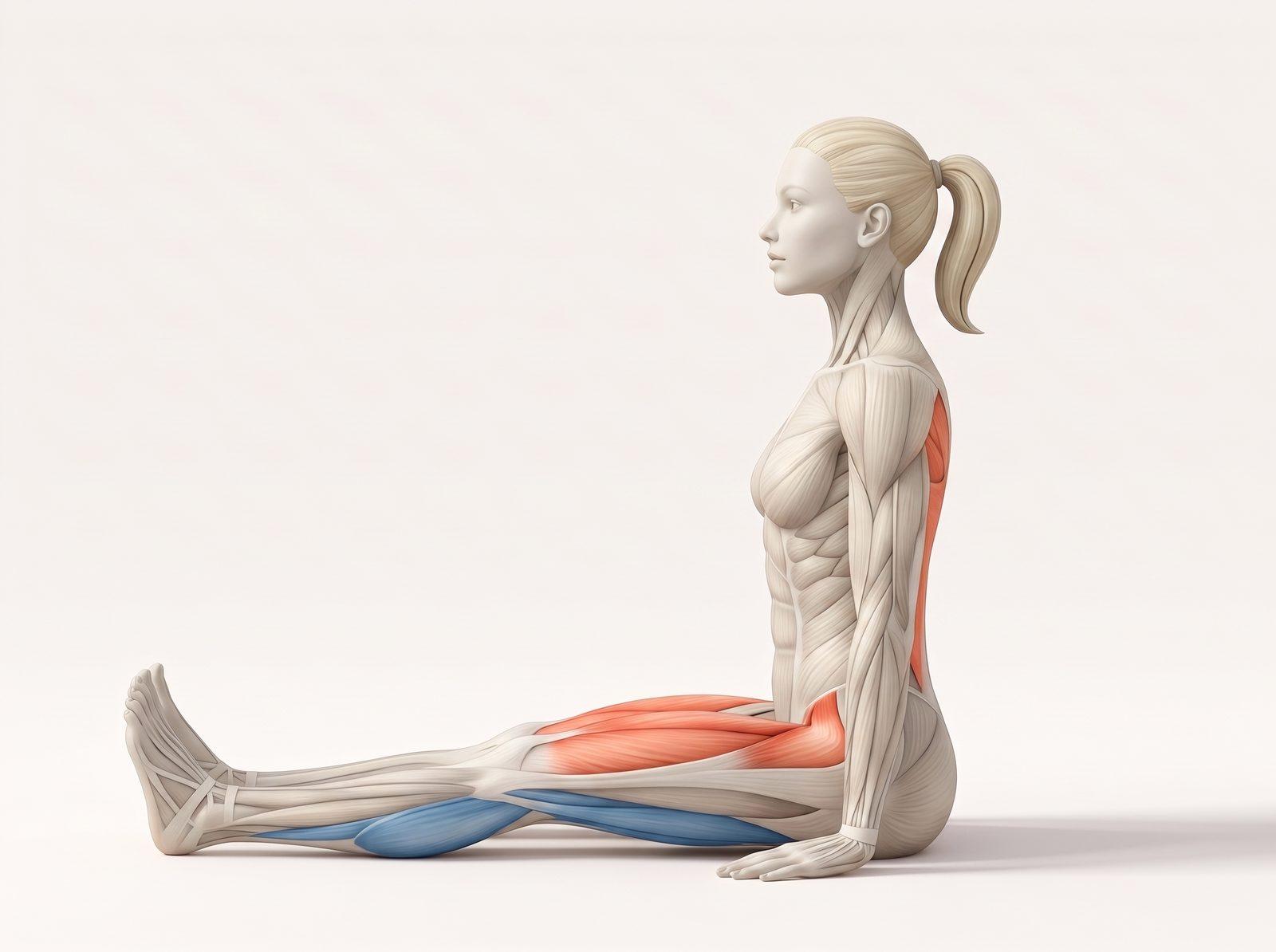
The photo shows Staff Pose (Dandasana): sitting upright with both legs straight and together in front, the feet flexed and the hands on the floor beside the hips. The back muscles hold the spine tall, the quadriceps keep the legs active and the hamstrings get a mild stretch.
Working
- Back muscles (erector spinae)
- Quadriceps (quadriceps femoris)
- Hip flexors (iliopsoas, rectus femoris)
Stretching
- Hamstrings (biceps femoris, semitendinosus, semimembranosus)
- Calves (gastrocnemius, soleus)
Also holding you steady: your core, Upper back and arms, which press the hands down.
Variations and joint actions
- Sit on a blanket: Raising the hips helps if the lower back rounds or the pelvis tips back.
- Bent knees: A slight bend in the knees lets tight hamstrings stay comfortable while the spine stays tall.
- Hips flexion, about 90°
- Knees extension
- Ankles dorsiflexion, toes pointing up
- Spine long and upright
- Shoulders neutral, hands beside the hips
Roles are qualitative — this section does not measure how hard any muscle works. References: Leslie Kaminoff & Amy Matthews, Yoga Anatomy (Human Kinetics); Ray Long, The Key Muscles of Yoga (Bandha Yoga).
Step-by-Step Instructions
- 1
Sit with legs extended straight forward
- 2
Flex feet with toes pointing toward ceiling
- 3
Place palms on floor beside hips
- 4
Press sitting bones firmly into floor
- 5
Lengthen spine from tailbone to crown
- 6
Engage quadriceps and breathe steadily
Alignment Cues
- Flex feet actively with toes pointing up
- Press backs of legs into mat
- Stack shoulders directly over hips
- Engage core to maintain upright spine
Benefits
- Establishes foundational seated alignment
- Strengthens back and core muscles
- Stretches hamstrings and calves
- Builds postural muscle endurance
- Prepares for meditation practice
- Improves overall posture
Modifications
- Sit on block
Variations
- Arms overhead variation
Cautions & Contraindications
Cautions
- Avoid slouching
Avoid this pose if you have:
- Lower back pain
Quick Facts
Primary Focus
spineSecondary Focus
Suggested Hold
30 seconds
Tags
Equipment