Side-Lying Vertical Leg Raise
Anantasana Variation
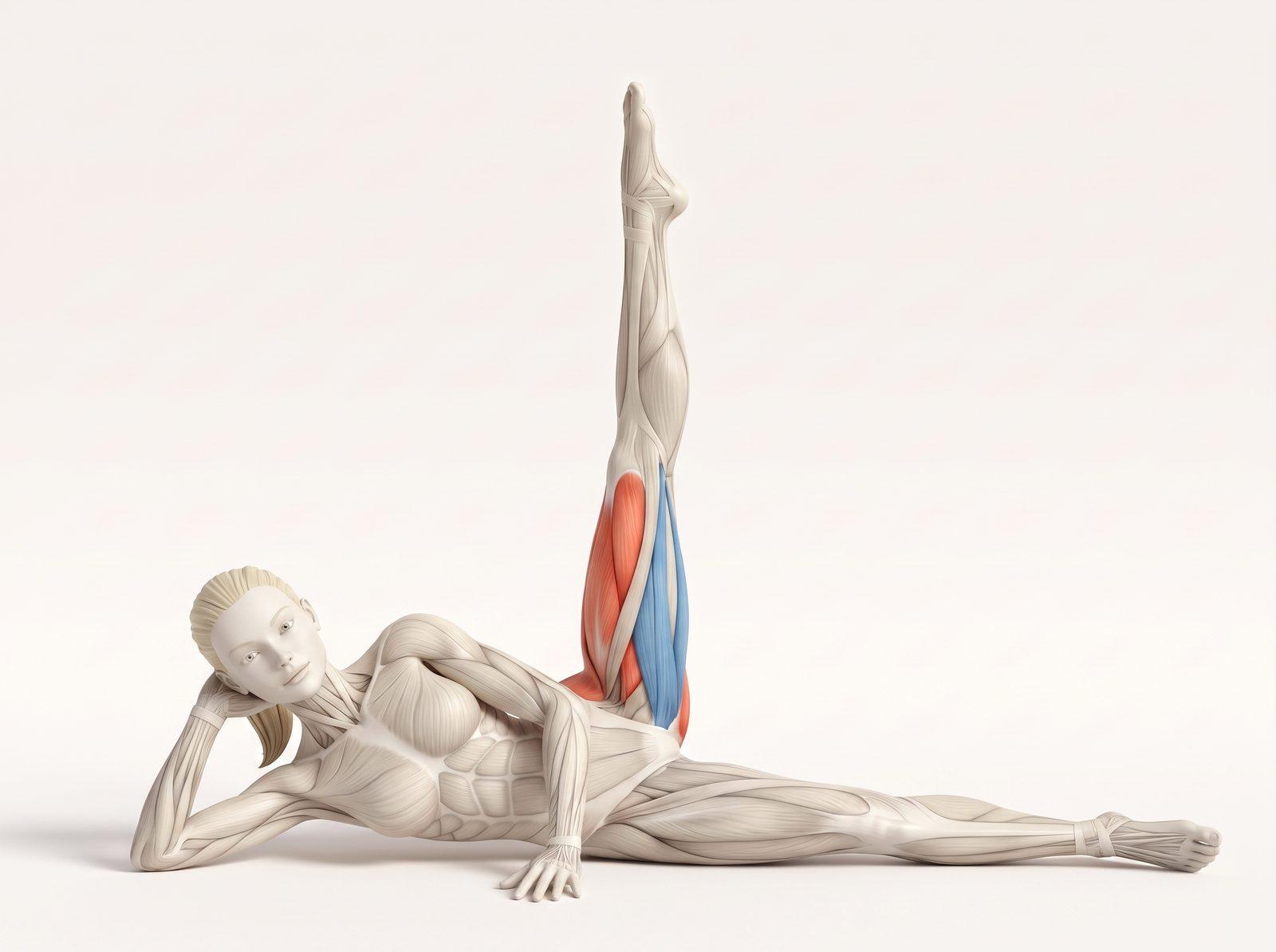
Working: Outer hip, Lifted-leg hip flexors, Lifted-leg quadriceps
Stretching: Lifted-leg hamstrings, Lifted-leg inner thigh
Full muscle breakdown ↓About This Pose
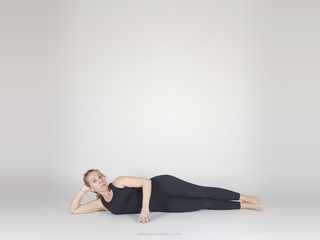
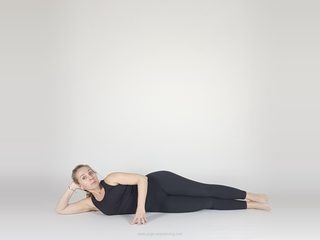
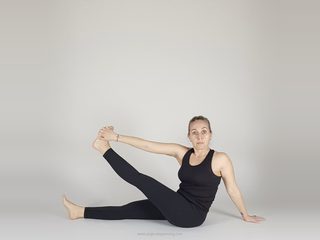
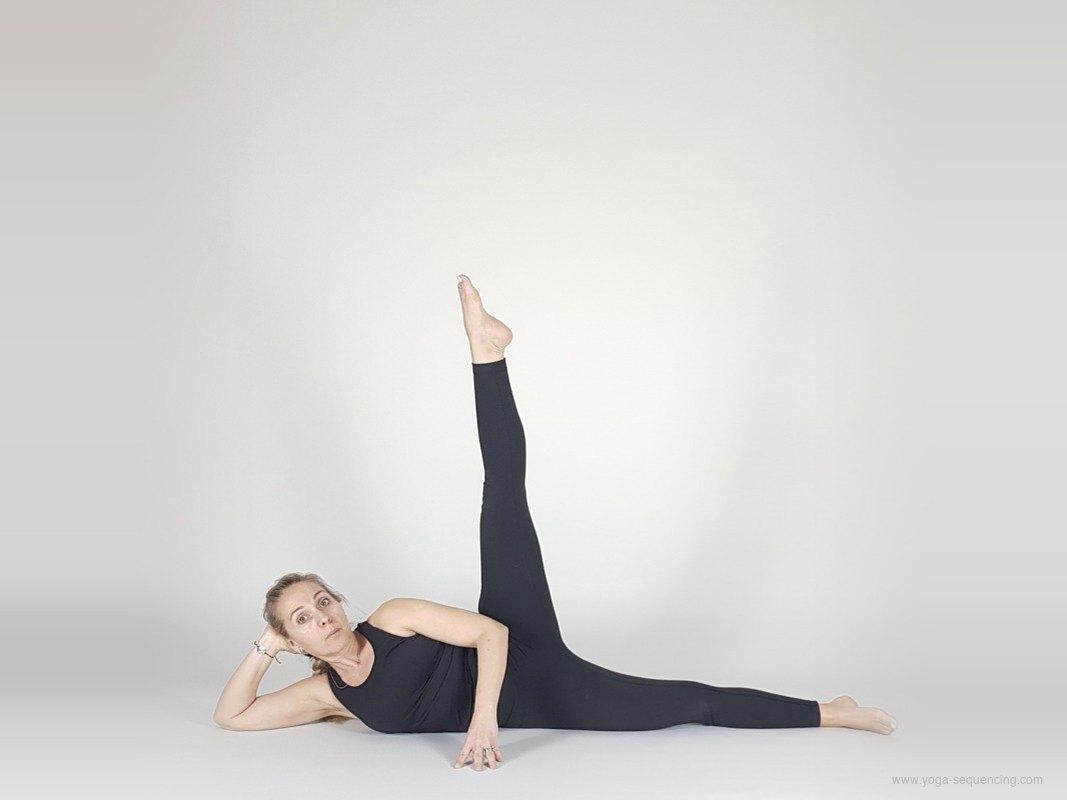
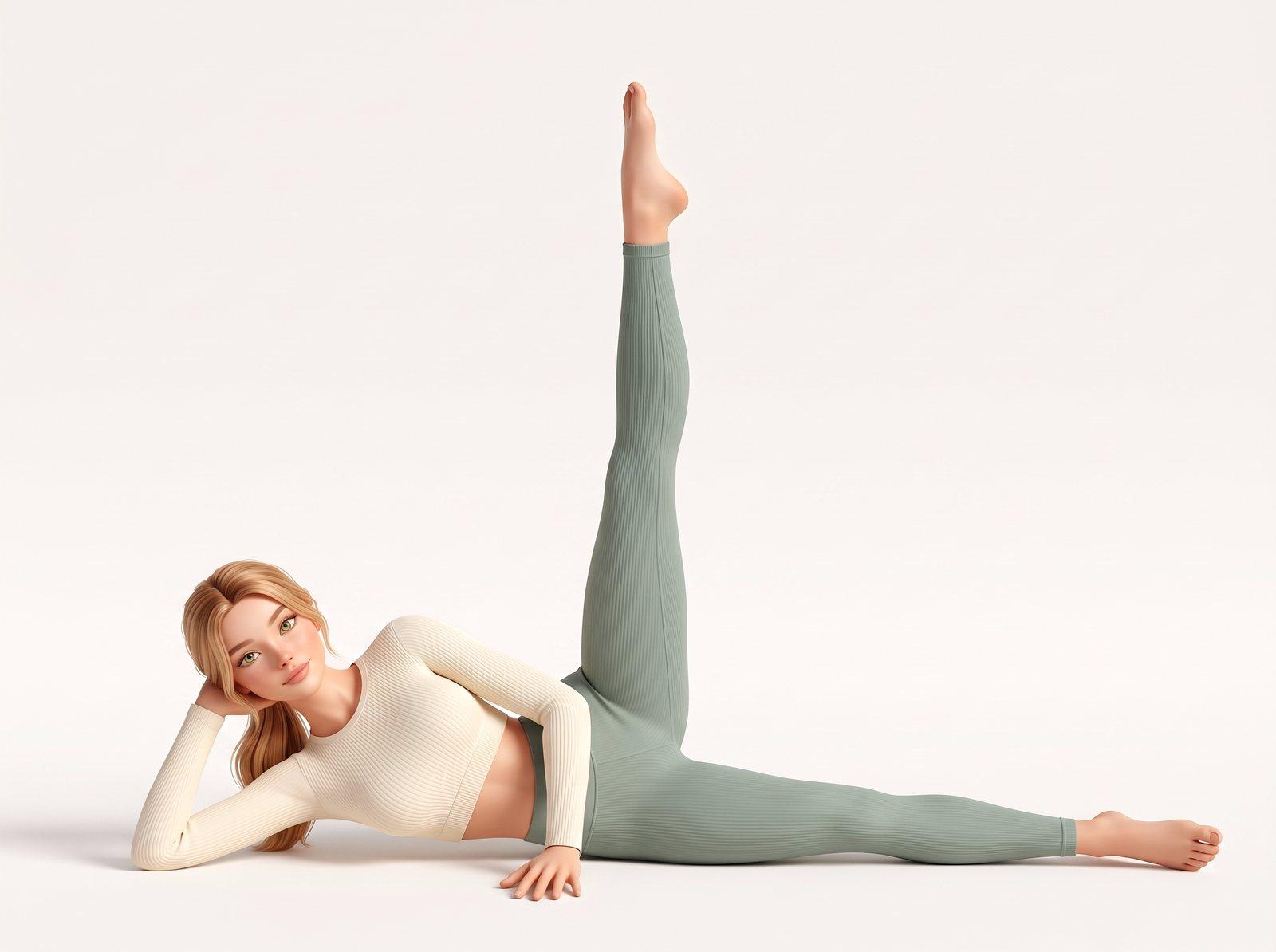
Side-Lying Vertical Leg Raise is a hands-free version of Anantasana. You lie on one side with the head in the bottom hand, the top hand on the floor in front for balance, and lift the top leg straight up toward vertical. Without a toe hold, the outer hip and hip flexors hold the leg up while the core stops the body from rolling. It builds active flexibility in the hamstrings and inner thigh and strength in the outer hip.
Muscles Worked in Side-Lying Vertical Leg Raise
The photo shows Side-Lying Vertical Leg Raise: lying on one side with the head in the bottom hand and the top hand on the floor in front, the top leg lifted straight up toward vertical without holding it. The outer hip and hip flexors of the lifted leg hold it up while the hamstrings and inner thigh stretch.
Working
- Outer hip (gluteus medius, gluteus minimus)
- Lifted-leg hip flexors (iliopsoas, rectus femoris)
- Lifted-leg quadriceps (quadriceps femoris, keeping the knee straight)
Stretching
- Lifted-leg hamstrings (biceps femoris, semitendinosus, semimembranosus)
- Lifted-leg inner thigh (adductors)
Also holding you steady: your core, sides of the waist, which stop the body rolling and rotator cuff.
Variations and joint actions
- Hold the big toe: Holding the big toe with the top hand gives full Anantasana and lets the leg go higher.
- Bent top knee: Bending the lifted knee shortens the lever and suits tight hamstrings.
- Top hip abduction with flexion, leg near vertical
- Top knee extension
- Bottom hip and knee neutral and extension, leg long on the floor
- Bottom elbow flexion, head resting in the hand
- Spine neutral, side of the body on the floor
Roles are qualitative — this section does not measure how hard any muscle works. References: Leslie Kaminoff & Amy Matthews, Yoga Anatomy (Human Kinetics); Ray Long, The Key Muscles of Yoga (Bandha Yoga).
Step-by-Step Instructions
- 1
Lie on your right side with the legs long and stacked
- 2
Prop the head in the right hand
- 3
Place the left hand on the mat in front of the chest
- 4
Flex the left foot
- 5
Lift the left leg slowly toward the ceiling
- 6
Keep the hips stacked and the bottom leg active
- 7
Hold for 3-5 breaths or lift and lower 5-8 times, then switch sides
Alignment Cues
- Hips stacked vertically
- Both legs straight
- Top foot flexed
- Body does not roll back
Benefits
- Strengthens the outer hip and glutes
- Builds active hamstring and inner-thigh flexibility
- Improves core stability in side-lying
- Prepares for Anantasana with a toe hold
- Accessible for those who cannot balance standing
Modifications
- Lift the leg only to hip height
- Bend the top knee
- Loop a strap around the top foot
Variations
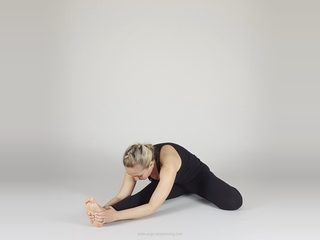
- Anantasana with big toe hold
- Side-Lying Pose (Head Propped)
- Side-Lying Leg Raise to hip height
Cautions & Contraindications
Cautions
- Do not let the body roll back as the leg rises
- Lift only as high as you can keep both legs straight
- Keep the neck relaxed
Avoid this pose if you have:
- Hip injury or recent hip replacement (check range of motion with your provider)
- Shoulder injury on the lower side
- Hamstring tear
Quick Facts
Breath Cue
Exhale to lift the leg; inhale to lengthen through both heels.
Primary Focus
spineSecondary Focus
Suggested Hold
120 seconds
Tags
Equipment