Crow Pose with Lift
Bakasana
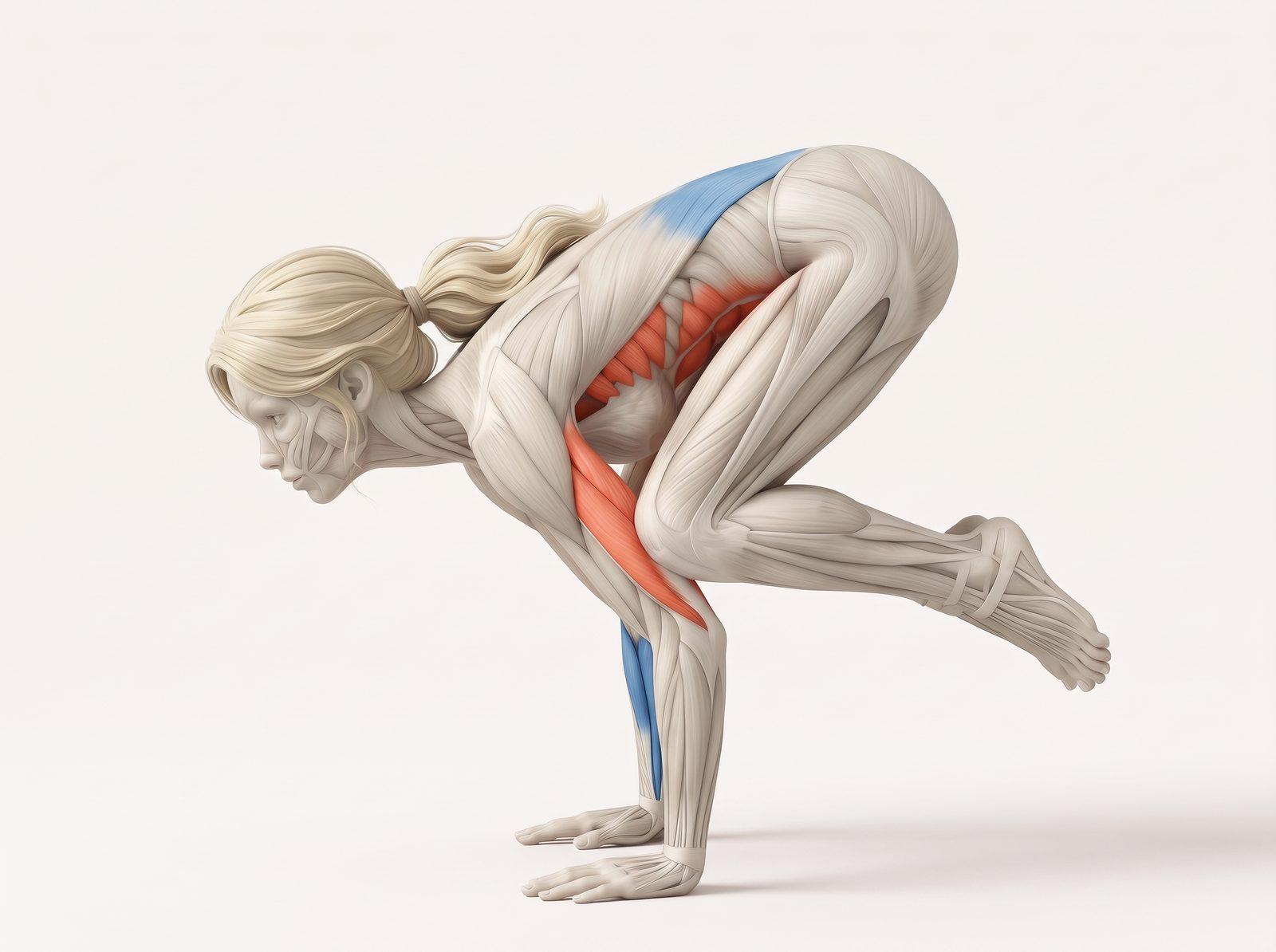
Working: Abdominals, Serratus anterior, Triceps, Inner thighs
Stretching: Lower back, Wrist flexors
Full muscle breakdown ↓About This Pose
Crow Pose with Lift (sometimes called Flying Crow or Crane Pose) elevates the basic position by lifting the hips higher and potentially straightening the arms more. This expression requires greater strength and control than basic Crow and demonstrates mastery of arm balance fundamentals. The lifted position feels like floating.
Muscles Worked in Crow Pose with Lift
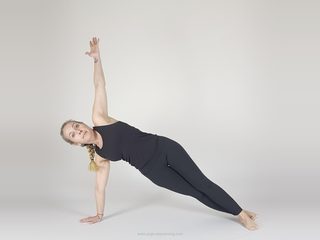
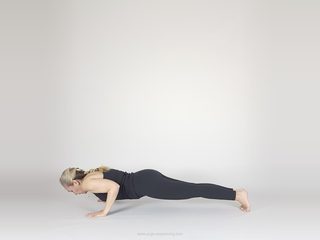
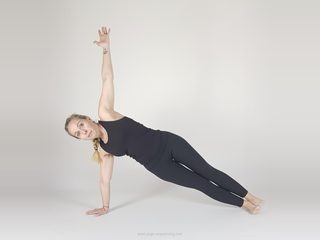
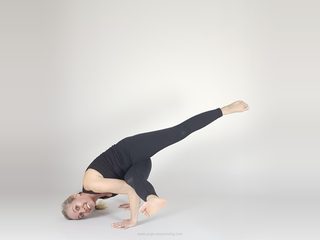
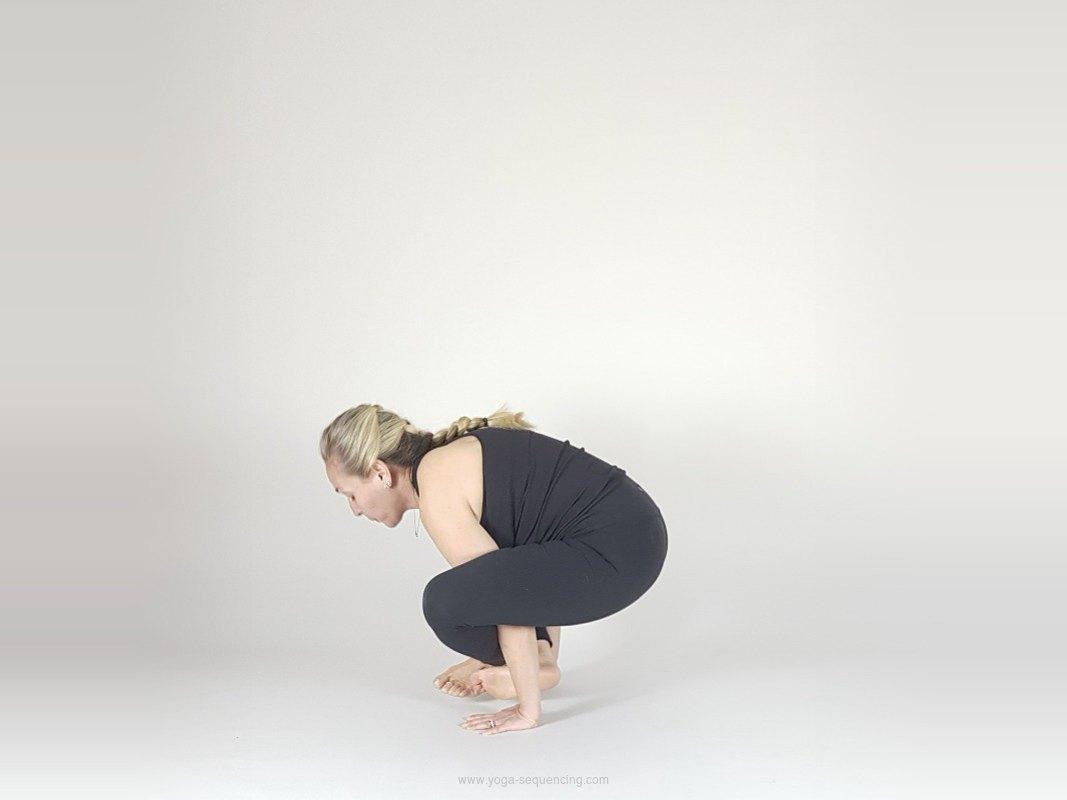
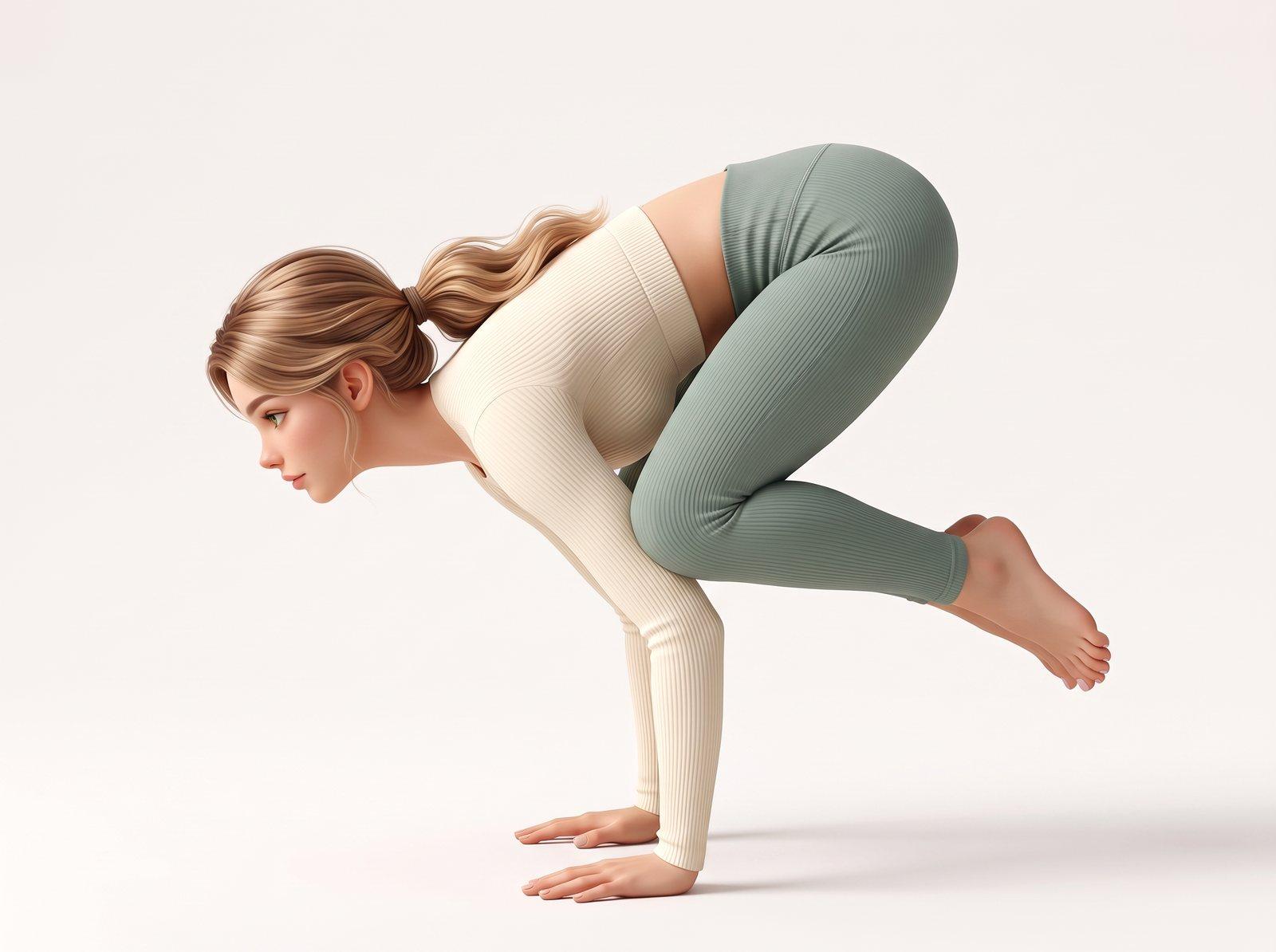
The photo shows Crow Pose (Bakasana) from the side: balancing on the hands with the knees high on the upper arms, the feet lifted and the gaze forward. The abdominals, serratus anterior and triceps hold it.
Working
- Abdominals (rectus abdominis, transversus abdominis)
- Serratus anterior
- Triceps (triceps brachii)
- Inner thighs (adductors)
Stretching
- Lower back (erector spinae, rounded)
- Wrist flexors (forearm flexors, wrists in deep extension)
Also holding you steady: your rotator cuff, Chest and forearm muscles, which steady the wrists.
Variations and joint actions
- Block under the feet: Starting with the feet on a block puts the hips higher and makes lifting off easier.
- One foot at a time: Lifting one foot and then the other builds the forward weight shift gradually.
- Wrists deep extension, palms flat
- Elbows slight flexion, upper arms forming a shelf for the shins
- Shoulders flexion with protraction, shoulder blades wide
- Spine flexion, back rounded
- Hips and knees deep flexion, knees squeezed high on the upper arms
Roles are qualitative — this section does not measure how hard any muscle works. References: Leslie Kaminoff & Amy Matthews, Yoga Anatomy (Human Kinetics); Ray Long, The Key Muscles of Yoga (Bandha Yoga).
Step-by-Step Instructions
- 1
Enter Crow Pose
- 2
Shift weight slightly more forward
- 3
Lift feet higher toward hips
- 4
Engage core to stabilize
- 5
Find lightness in the pose
- 6
Breathe with confidence
Alignment Cues
- Engage core deeply
- Steady the breath
- Maintain forward gaze
Benefits
- Shows arm balance mastery
- Requires greater strength
- Feels like floating
- Demonstrates control
- Advanced expression
- Builds toward Crane
Modifications
- Use blocks under hands
- Practice near cushion
Variations
- With extended leg
- Transition to tripod
Cautions & Contraindications
Cautions
- Keep gaze forward
- Protect wrists
Avoid this pose if you have:
- Wrist injury
- Elbow strain
Quick Facts
Primary Focus
coreSecondary Focus
Suggested Hold
30 seconds
Tags
Equipment