Boat Pose Release
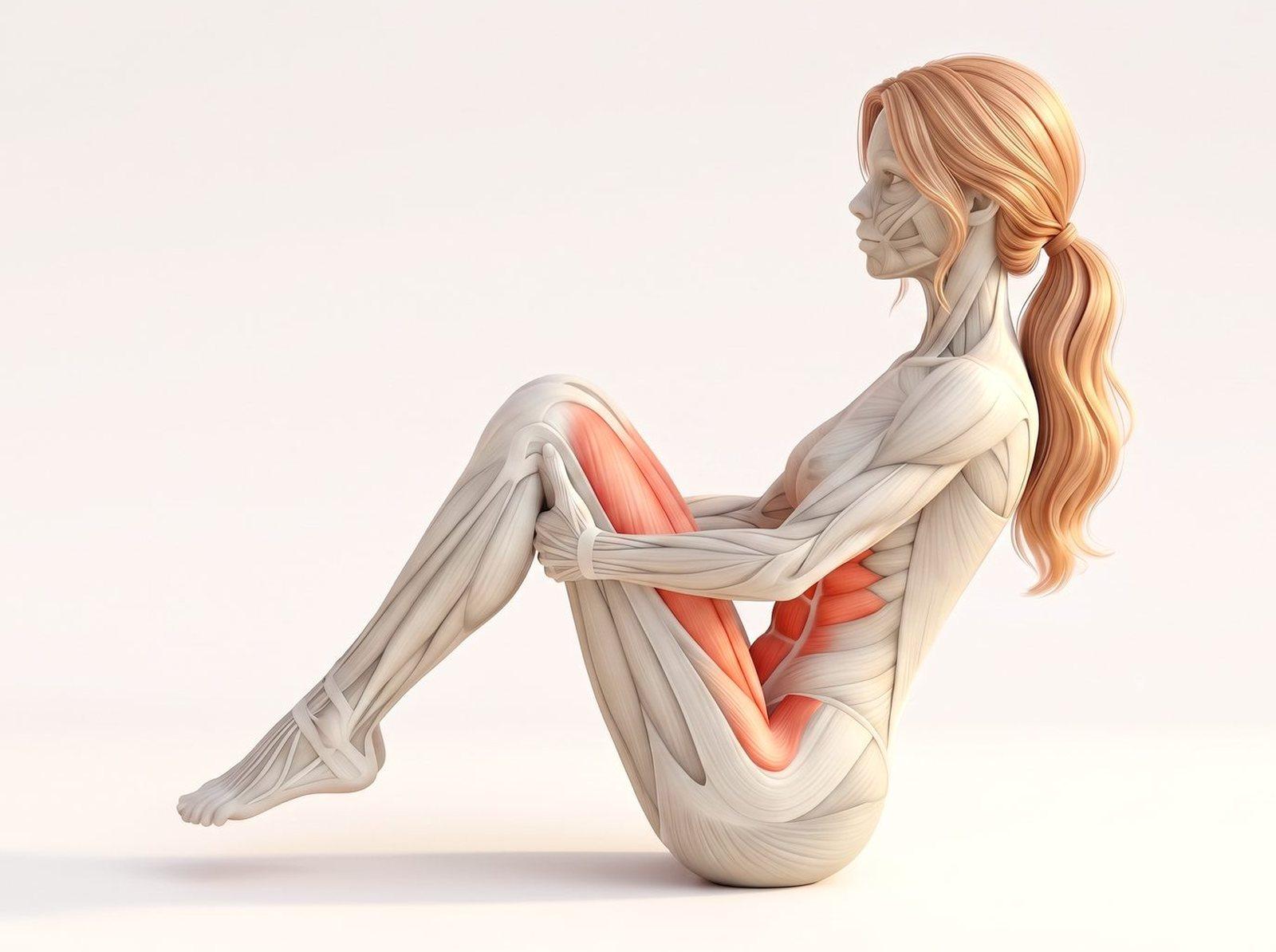
Working: Hip flexors, Abdominals
Full muscle breakdown ↓About This Pose
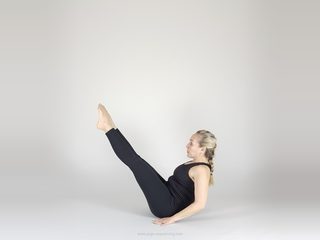
Boat Pose Release teaches the controlled exit from Navasana with awareness and engagement. Rather than simply dropping out of the pose, this mindful release maintains core activation while lowering, building strength in the eccentric phase. It's an important practice for protecting the lower back and maximizing the benefits of the pose.
Muscles Worked in Boat Pose Release
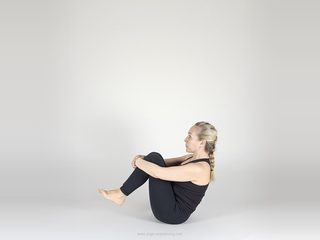
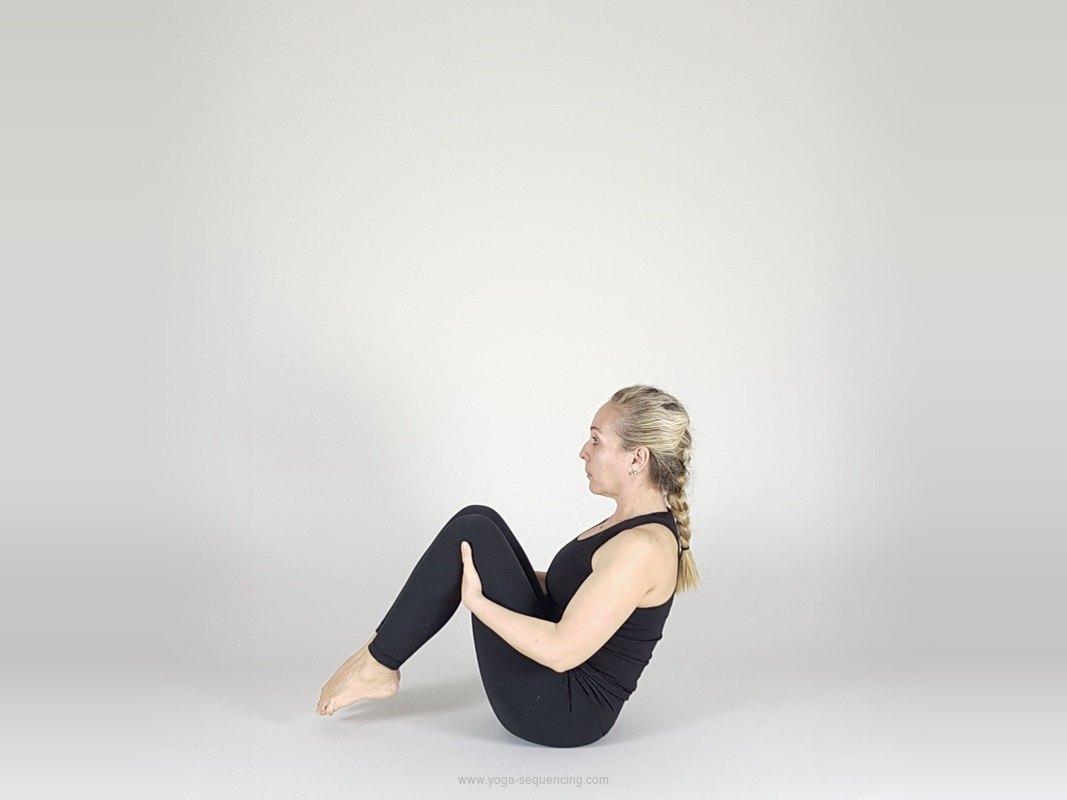
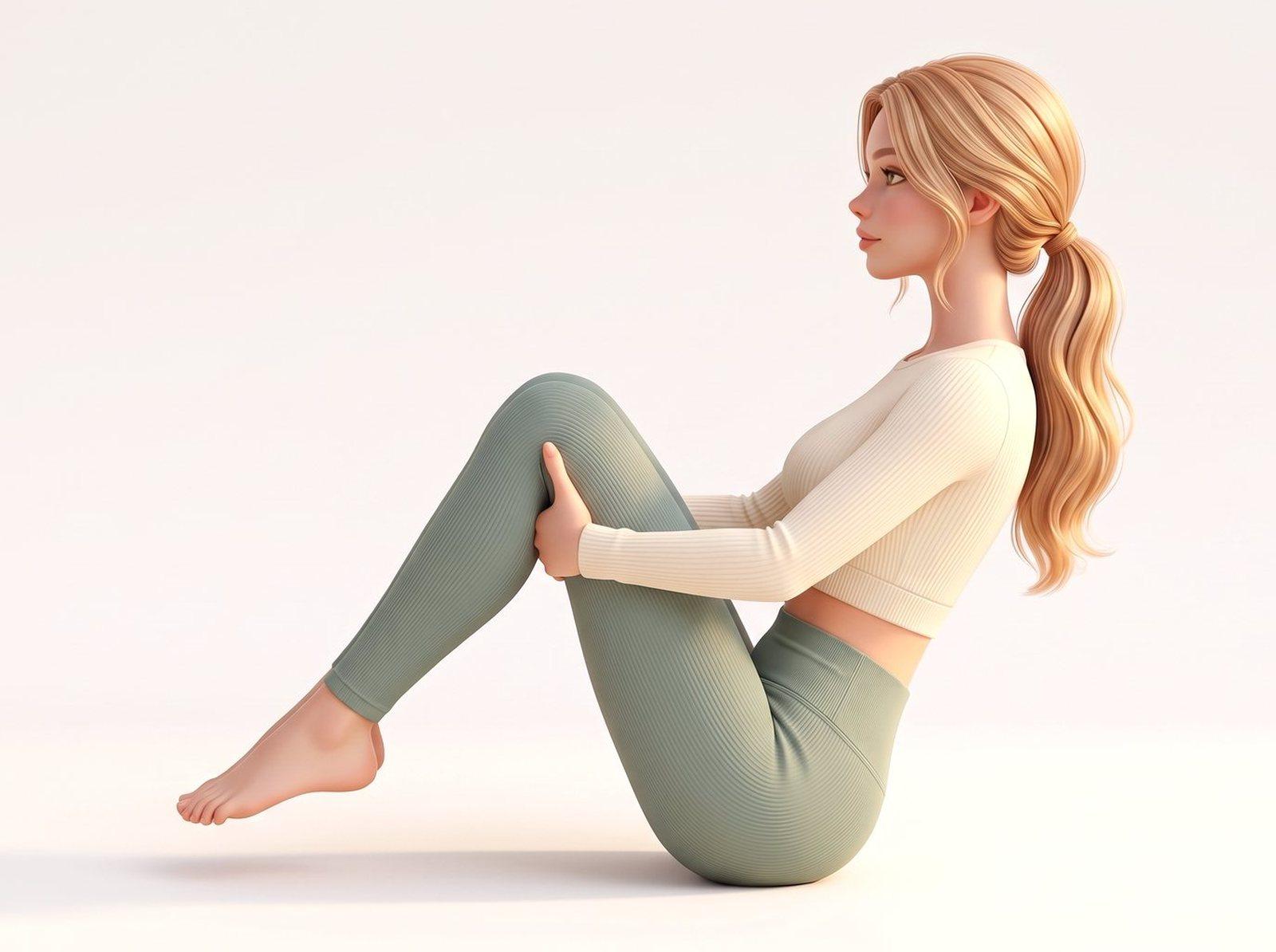
The photo shows a Boat Pose preparation: sitting with the knees bent, feet on the floor and the hands holding the backs of the thighs while leaning back slightly with a tall chest. The hip flexors and abdominals start to work, but the feet are still down so the load is light.
Working
- Hip flexors (iliopsoas, rectus femoris)
- Abdominals (rectus abdominis, transversus abdominis)
Stretching
This is a light core set-up; nothing is put on a clear stretch.
Also holding you steady: your the muscles along your spine and arms holding the thighs, which take some of the weight.
Variations and joint actions
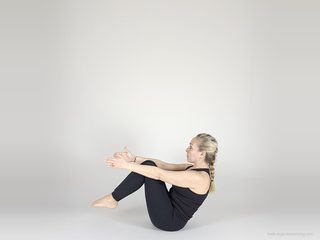
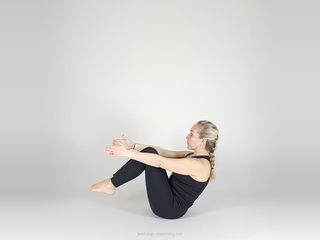
- Lift the feet: Raising the shins parallel to the floor turns this into Half Boat and makes the abdominals work much harder.
- Hands on the floor behind: Fingertips on the mat behind the hips support a tired or sensitive lower back.
- Hips flexion, torso leaning back slightly
- Knees flexion, feet on the floor
- Spine neutral and long, chest lifted
- Elbows flexion, hands behind the thighs
Roles are qualitative — this section does not measure how hard any muscle works. References: Leslie Kaminoff & Amy Matthews, Yoga Anatomy (Human Kinetics); Ray Long, The Key Muscles of Yoga (Bandha Yoga).
Step-by-Step Instructions
- 1
From Boat Pose, prepare to release mindfully
- 2
Keep core engaged throughout the movement
- 3
Slowly begin to lower legs and torso simultaneously
- 4
Maintain control—move as slowly as possible
- 5
Option to hover above the mat before releasing
- 6
Keep lower back pressing toward the mat
- 7
Release completely or return to Boat for rounds
Alignment Cues
- Don't let the back arch as you lower
- Keep chin slightly tucked
- Breathe throughout the release
- Move with control, not momentum
Benefits
- Builds eccentric strength in the core
- Protects the lower back during exit
- Maintains the benefits of engagement longer
- Teaches body control and awareness
- Can be used for dynamic core exercises
Modifications
- Sit tall
Variations
- Boat release
Cautions & Contraindications
Cautions
- Lower slowly
Avoid this pose if you have:
- Back injury
Quick Facts
Primary Focus
coreSecondary Focus
Suggested Hold
20 seconds
Tags
Equipment