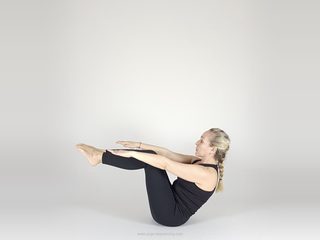
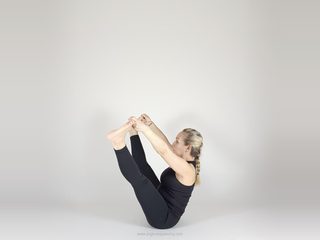
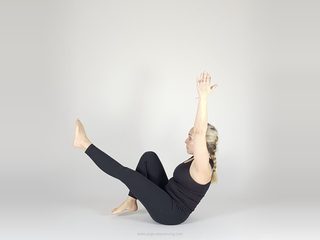
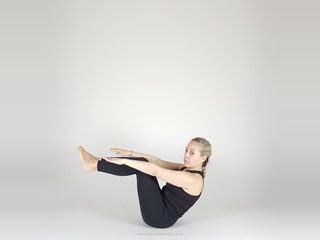
Both Big Toes Pose (Legs Near Vertical)
Ubhaya Padangusthasana
About This Pose
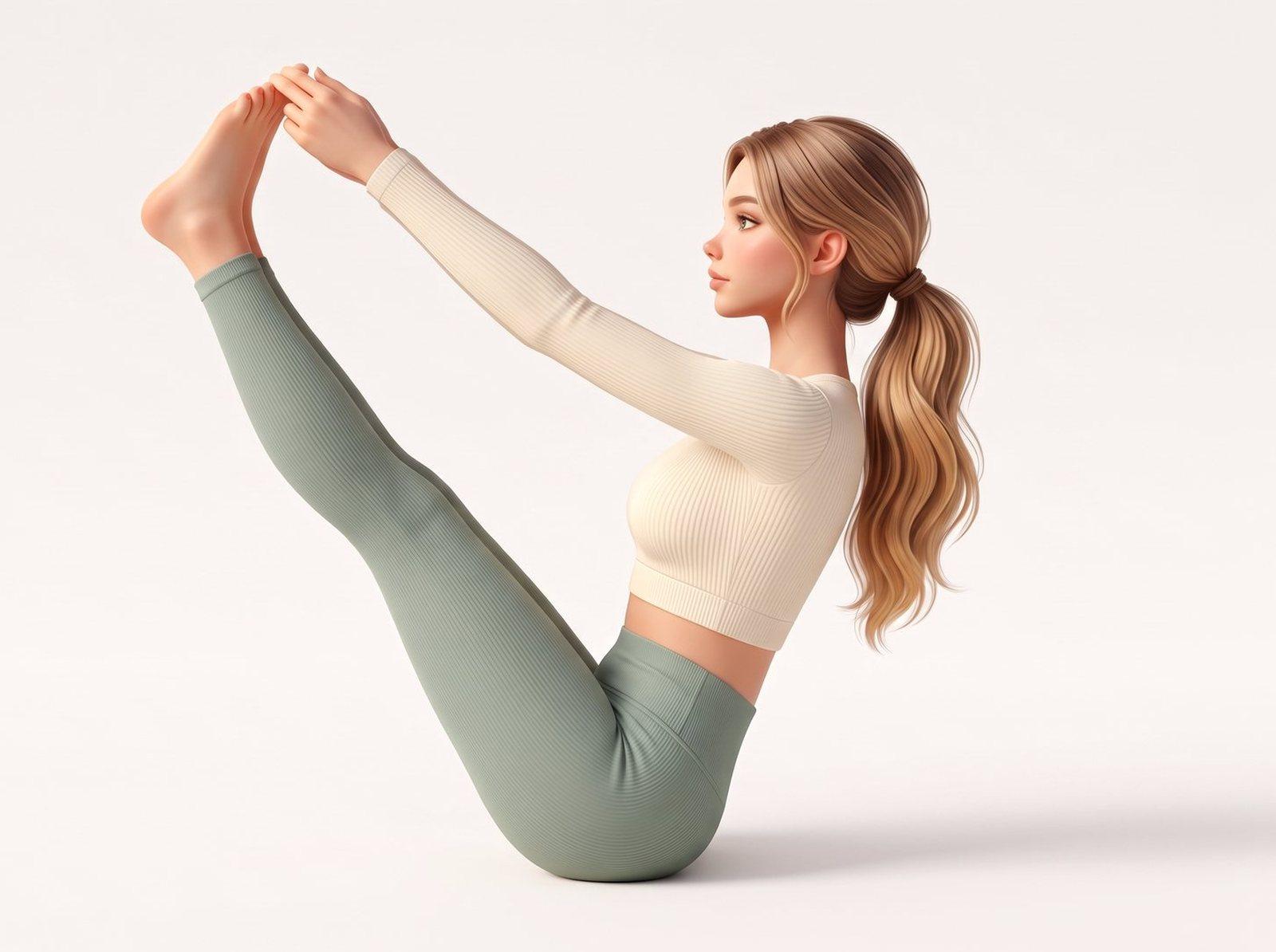
Both Big Toes Pose (Ubhaya Padangusthasana) is a seated balance from the Ashtanga primary series. You balance just behind the sitting bones with both legs straight and together, holding the big toes or the outer feet. The hamstrings lengthen while the hip flexors and abdominals hold the legs up and the back muscles keep the chest lifted. It asks for both hamstring length and core control, so most students work it with bent knees first.
Muscles Worked in Both Big Toes Pose (Legs Near Vertical)
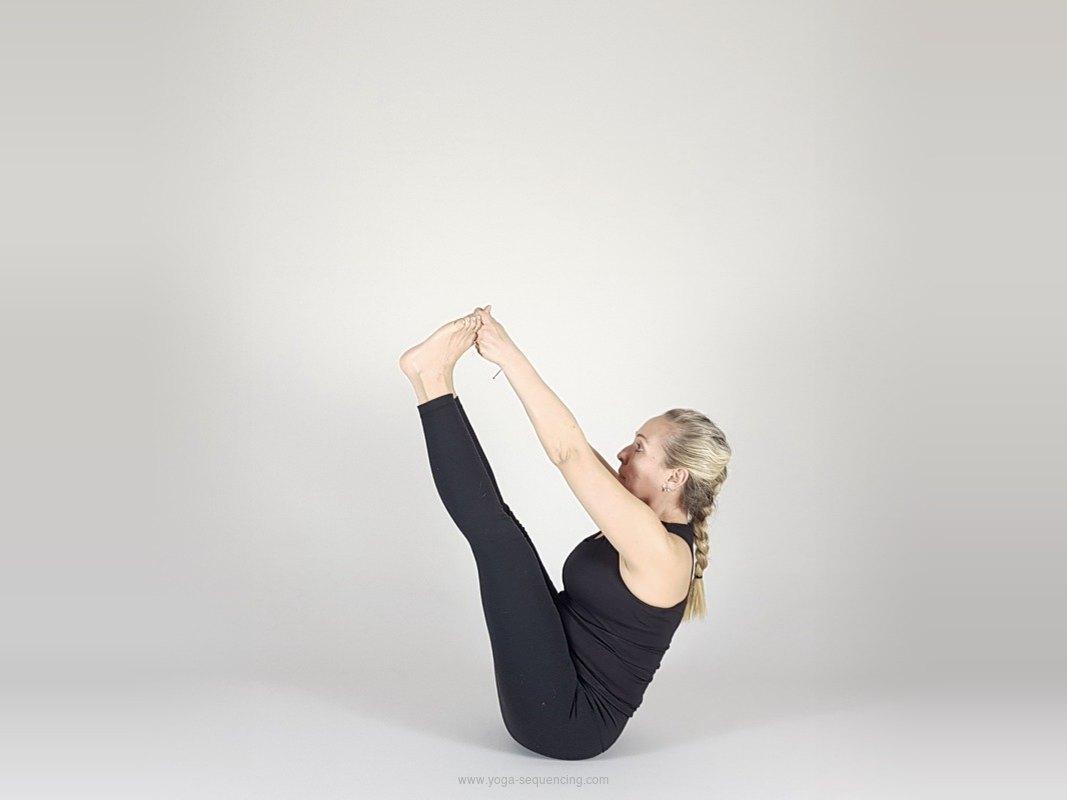
The photo shows a Boat Pose variation balancing on the sit bones with the straight legs held together near vertical and both hands holding the feet (similar to Ubhaya Padangusthasana). The abdominals and hip flexors hold the balance while the hamstrings and calves stretch.
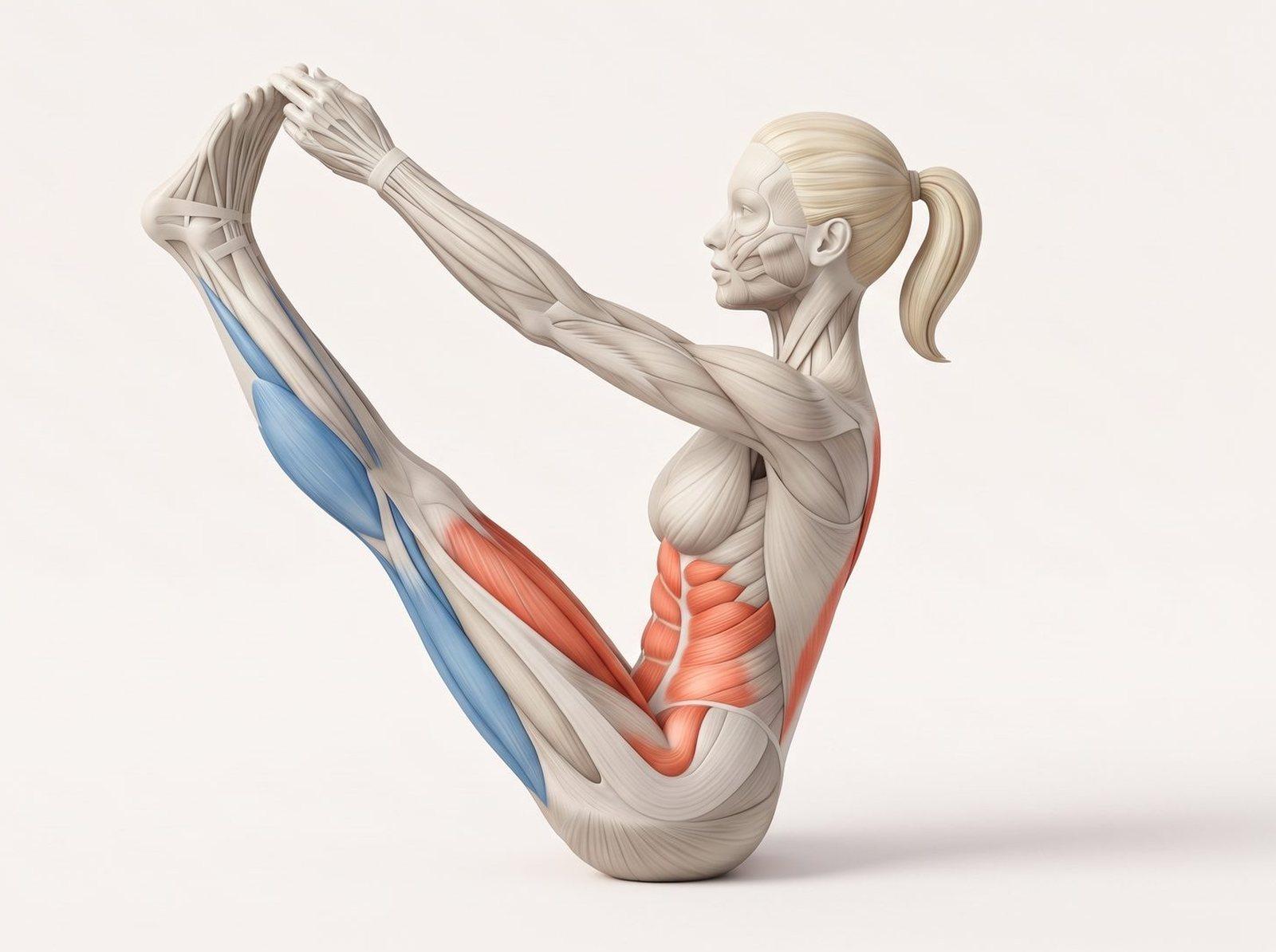
Working
- Abdominals (rectus abdominis, transversus abdominis)
- Hip flexors (iliopsoas, rectus femoris)
- Back muscles (erector spinae)
Stretching
- Hamstrings (biceps femoris, semitendinosus, semimembranosus)
- Calves (gastrocnemius, soleus)
Also holding you steady: your arms, holding the feet, quadriceps, keeping the knees straight and inner thighs.
Variations and joint actions
- Hold the shins: Taking the hands lower on the legs lets the back stay straight.
- Legs wide: Opening the legs into a V and holding the big toes adds an inner-thigh stretch.
- Hips deep flexion, legs near vertical
- Knees extension
- Ankles dorsiflexion
- Spine neutral, chest lifted
- Shoulders flexion, hands at the feet
Roles are qualitative — this section does not measure how hard any muscle works. References: Leslie Kaminoff & Amy Matthews, Yoga Anatomy (Human Kinetics); Ray Long, The Key Muscles of Yoga (Bandha Yoga).
Step-by-Step Instructions
- 1
Sit with the knees bent and feet on the mat
- 2
Hold the big toes with the first two fingers, or hold the outer feet
- 3
Lean back slightly to balance just behind the sitting bones
- 4
Lift the feet off the mat with the knees bent
- 5
Slowly straighten the legs toward the ceiling, keeping them together
- 6
Lift the chest and lengthen the spine toward the feet
- 7
Hold for 5 breaths, then bend the knees and lower the feet
Alignment Cues
- Legs stay together, inner thighs engaged
- Chest lifts; the lower back does not collapse
- Shoulders draw away from the ears
- Gaze toward the toes or straight ahead
Benefits
- Stretches the hamstrings and calves
- Strengthens the hip flexors and abdominals
- Trains balance on the sitting bones
- Builds back-extensor endurance to keep the chest lifted
- Prepares for deeper seated forward folds
Modifications
- Keep the knees bent
- Loop a strap around the soles
- Hold the backs of the calves instead of the toes
Variations
- Boat Pose (Navasana) with arms forward
- Upward Facing Intense Stretch (Urdhva Mukha Paschimottanasana) from the back
Cautions & Contraindications
Cautions
- Bend the knees before you round the lower back
- Do not yank the feet toward the face
- Roll down with control rather than falling back
Avoid this pose if you have:
- Acute hamstring tear or strain
- Acute low-back or disc injury
- Tailbone (coccyx) pain
- Pregnancy
Quick Facts
Breath Cue
Inhale to lift the chest toward the feet; exhale to steady the balance without gripping.
Primary Focus
coreSecondary Focus
Suggested Hold
45 seconds
Tags
Equipment