Extended Hand to Big Toe Pose (Vertical)
Utthita Hasta Padangusthasana
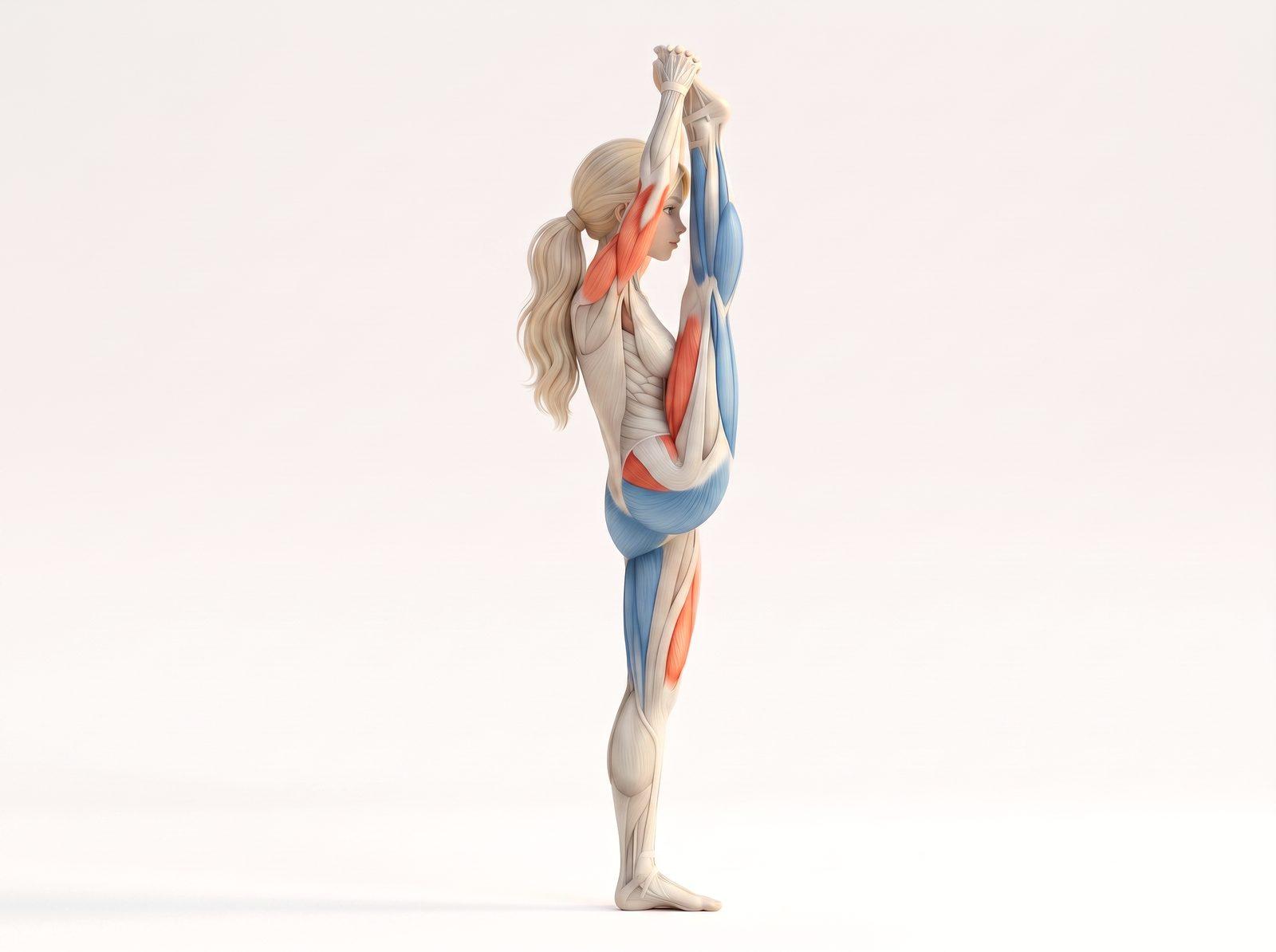
Working: Standing-leg quadriceps, Standing-leg hip stabilisers, Arms
Stretching: Lifted-leg hamstrings, Lifted-leg calf, Lifted-leg glutes
Full muscle breakdown ↓About This Pose
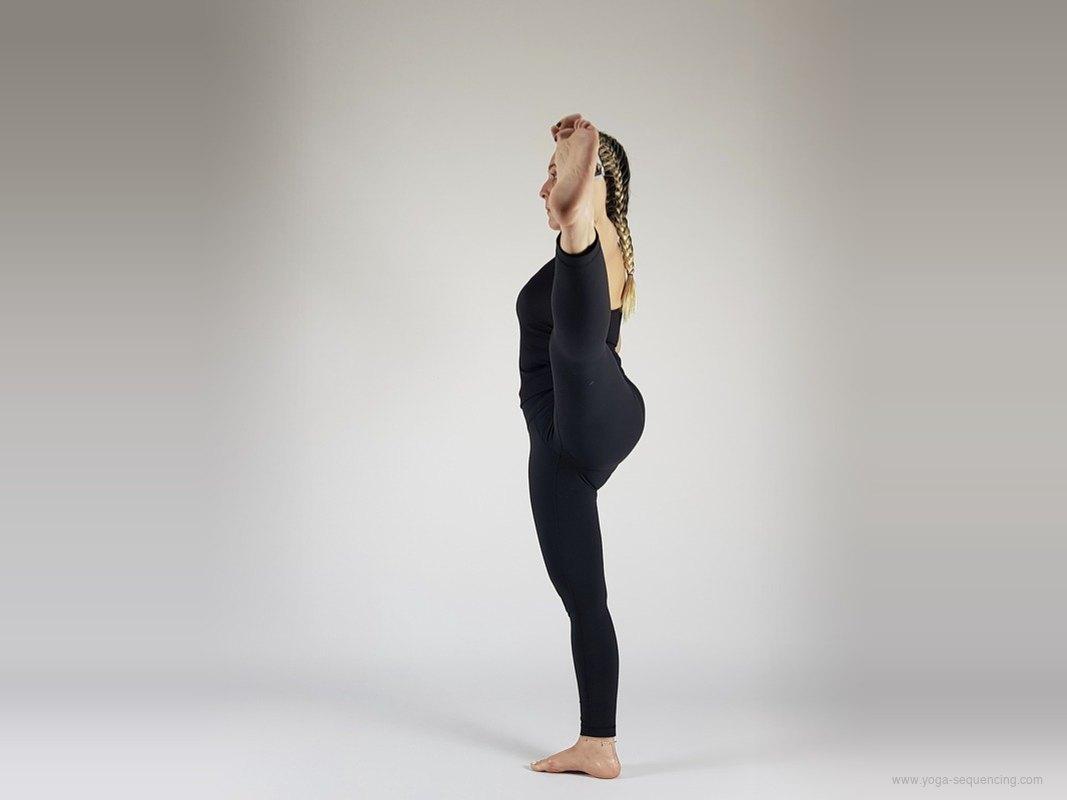
Extended Hand to Big Toe Pose Vertical represents the most demanding expression of this standing balance series, with the extended leg lifted toward a vertical position—approaching or achieving a standing split. This advanced variation requires extraordinary hamstring flexibility, exceptional hip mobility, and profound core strength to maintain the vertical leg while balancing on one foot. The pose demonstrates the pinnacle of flexibility and balance work, often taking years of dedicated practice to achieve. Beyond physical demands, this pose requires mental steadiness and the ability to maintain calm breathing while the body is at its edge. It serves as both an aspirational goal and a demonstration of what consistent, patient practice can achieve.
Muscles Worked in Extended Hand to Big Toe Pose (Vertical)
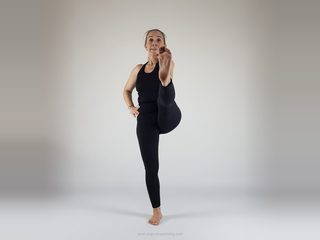
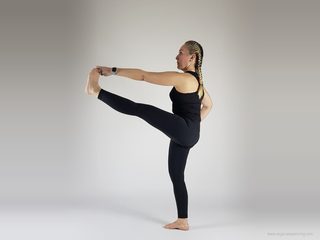
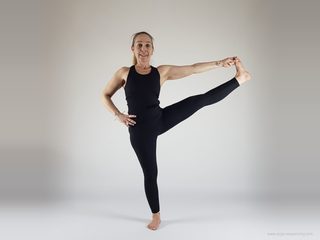
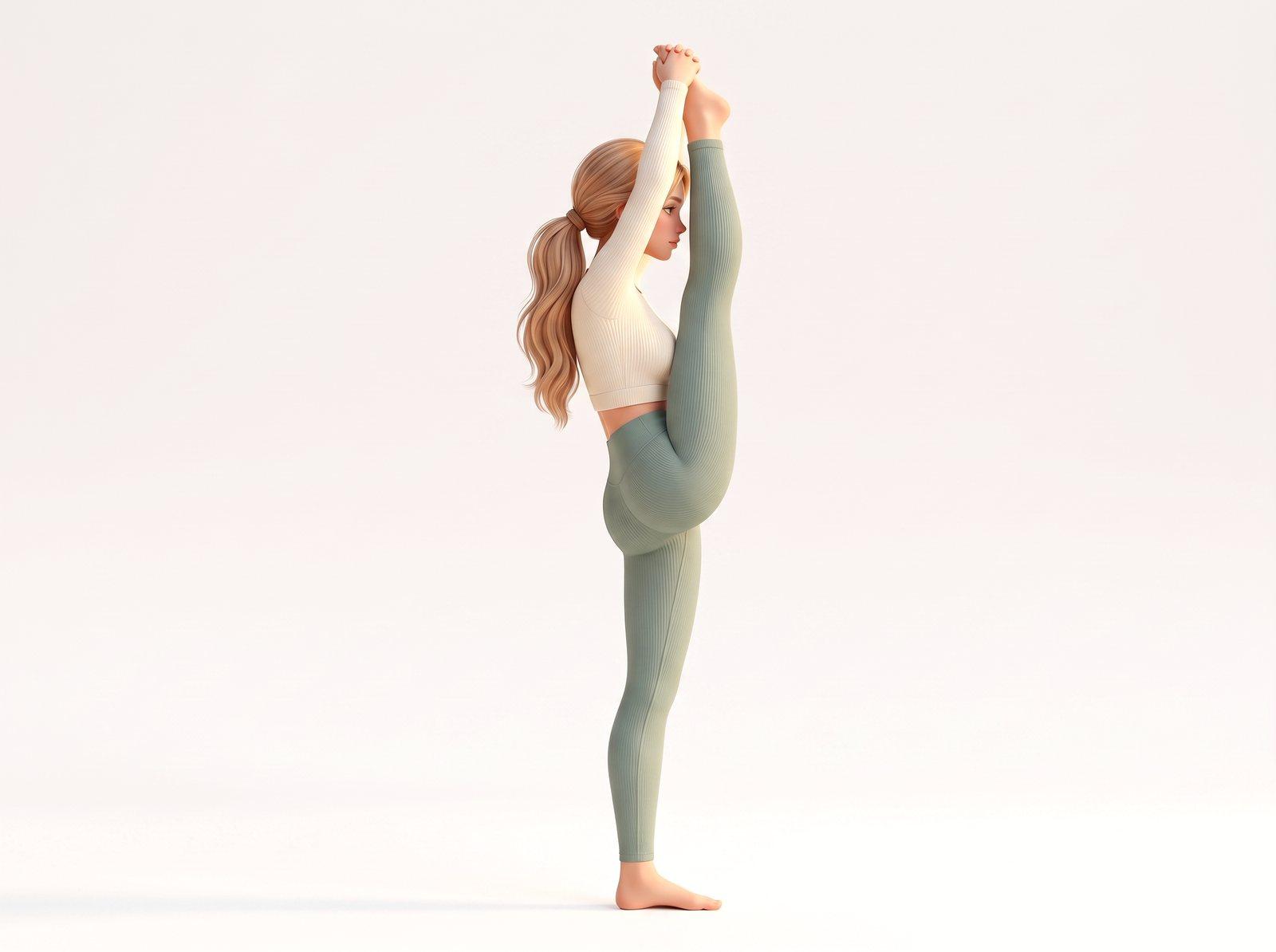
The photo shows a vertical Standing Hand-to-Big-Toe Pose: standing on one straight leg with the other leg lifted straight up beside the head and both hands holding the lifted foot. The lifted-leg hamstrings get a deep stretch while the standing leg and hip stabilisers keep you balanced.
Working
- Standing-leg quadriceps (quadriceps femoris)
- Standing-leg hip stabilisers (gluteus medius)
- Arms (biceps brachii, drawing the leg in)
Stretching
- Lifted-leg hamstrings (biceps femoris, semitendinosus, semimembranosus)
- Lifted-leg calf (gastrocnemius)
- Lifted-leg glutes (gluteus maximus)
Also holding you steady: your the muscles of your feet and ankles, core and the muscles along your spine.
Variations and joint actions
- Strap and lower leg: A strap with the leg held forward at hip height is where most people start.
- Bent lifted knee: Holding the knee instead of the foot takes the hamstring stretch out and keeps the balance work.
- Lifted hip extreme flexion, leg vertical
- Knees extension, both legs straight
- Standing hip neutral
- Shoulders full flexion, hands at the lifted foot
Roles are qualitative — this section does not measure how hard any muscle works. References: Leslie Kaminoff & Amy Matthews, Yoga Anatomy (Human Kinetics); Ray Long, The Key Muscles of Yoga (Bandha Yoga).
Step-by-Step Instructions
- 1
Begin with thorough warm-up including hamstring and hip stretches
- 2
Start in Mountain Pose, grounding through the left foot
- 3
Lift the right knee toward the chest
- 4
Hook the big toe with the yogi toe lock
- 5
Begin to extend the leg forward
- 6
Gradually walk the hand higher on the foot or use a strap
- 7
Draw the leg closer to the torso as you extend
- 8
Work toward bringing the leg alongside the ear
- 9
Keep the spine tall—avoid rounding forward
- 10
Hold at your maximum expression for 3-5 breaths
- 11
Lower slowly with control
- 12
Repeat on the second side
Alignment Cues
- Keep the standing leg strong but not locked
- Maintain a tall spine—do not collapse forward
- Keep both hips level and facing forward
- Engage the hip flexor of the lifted leg to assist
- Draw the shoulder blade down on the holding arm side
- Keep the extended foot flexed
- Breathe steadily despite the intensity
Benefits
- Develops exceptional hamstring flexibility
- Builds profound balance and stability
- Strengthens the standing leg and core significantly
- Improves hip flexor strength and control
- Enhances body awareness and proprioception
- Builds mental focus and patience
- Demonstrates the fruits of dedicated practice
- Opens the entire back line of the body
Modifications
- Use a strap for extended reach
- Practice lying on the back first (Supta Padangusthasana)
- Keep the knee bent at any degree
- Use a wall for balance support
- Rest the lifted foot on a high surface
Variations
- Both hands holding the foot overhead
- Arms-free variation with leg held vertically
- Adding a forward fold with the leg vertical
- Taking the leg behind the head (very advanced)
Cautions & Contraindications
Cautions
- Only attempt after mastering previous variations
- Warm up thoroughly before practicing
- Progress gradually over months or years
- Never force the leg higher than flexibility allows
- Keep the standing knee soft to protect the joint
Avoid this pose if you have:
- Hamstring injuries or strains
- Hip injuries or labral tears
- Lower back pain or disc issues
- Knee injuries in either leg
- Balance disorders
- Pregnancy
- High blood pressure
Quick Facts
Primary Focus
hamstringsSecondary Focus
Suggested Hold
20 seconds
Tags
Equipment