FLOW Yoga Sequence BuilderFLOW Yoga Sequence Builder
45 min · all-levels

A 45-Minute Yoga Sequence for Tight Hips That Actually Holds

A teacher-tested yoga sequence for tight hips that opens the deep external rotators without forcing range. Includes cues, props and 12 ordered poses.

Share
Yoga practitioner in pigeon pose on a sunlit mat

Most people who walk into my class saying their hips are tight don't have tight hips. They have one tight hip, one cranky SI joint, and a pelvis that has spent eight hours hinged over a laptop. That distinction matters, because the sequence you design changes completely. If both hips are genuinely stiff in external rotation, you can hold deeper shapes for longer. If only one side is restricted, holding pigeon for two minutes per side is how students injure their lateral knee or their lower back.

This sequence targets the deep six external rotators (piriformis, gemelli, obturators, quadratus femoris), the adductors, and the psoas as a single coordinated unit. I rarely teach a hip-focused class without warming the psoas first. Cold hip flexors lock the pelvis into anterior tilt, and every "hip opener" you layer on top of that just compresses the lumbar spine. So we start standing, on the feet, and only drop to the floor once the front of the hip is awake.

Plan on 45 minutes. The pacing is slow on purpose: long enough to find the position, then long enough for the nervous system to let go. Rushing pigeon is the most common teaching error I see in studio classes. The shape happens in the first 30 seconds. The opening happens between minute one and minute three.

Who this sequence is for

Office workers, runners, cyclists and anyone rebuilding mobility after a long stretch of sitting. It's also useful for students with mild lower-back complaints whose pain is actually downstream of hip restriction, not a spinal issue.

Skip or modify heavily for: students with acute SI joint pain, anyone post hip replacement (cleared by surgeon only), pregnancy past the first trimester (the relaxin makes deep external rotation risky), and hypermobile students who already have 90+ degrees of external rotation — they need stability work, not more opening.

How to teach (or practice) it

Teach this as a stand-alone 45-minute class or pull the floor sequence (pose 7 onward) as a 20-minute cool-down after a stronger practice. I cue every pigeon variation with two non-negotiables: front shin angled toward whatever feels honest (forget the 90-degree ideal), and a blanket or block under the lifted-side hip if the seat doesn't reach the floor. Without that prop, students compensate by twisting the pelvis, which is where the SI joint pain comes from.

Vocally, slow down. Count breaths out loud during long holds — students hold their breath in deep hip work and you'll see shoulders creep toward ears around breath three. Cue an audible exhale.

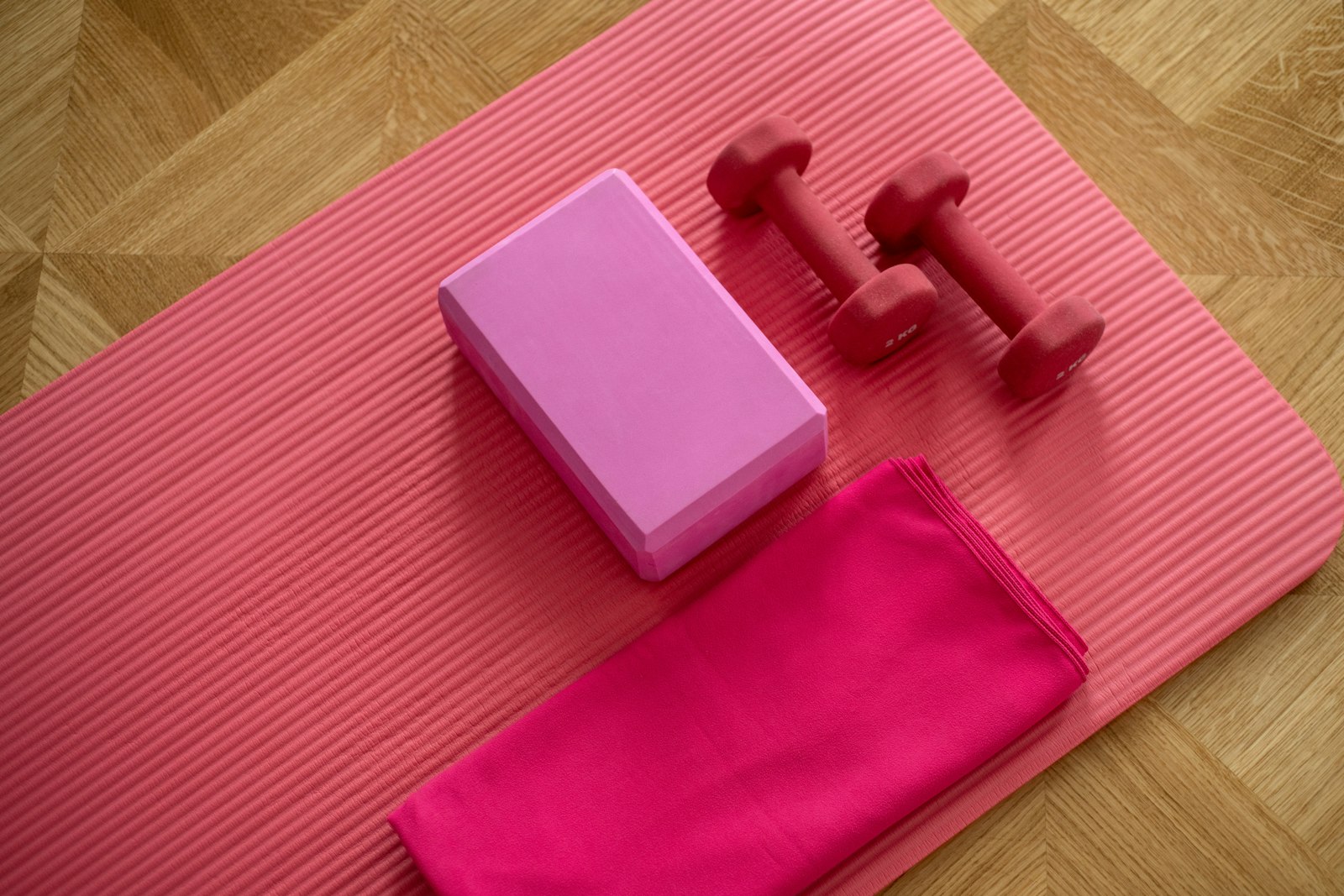
Props per student: two blocks, one bolster or rolled blanket, one folded blanket. If you have a strap, useful for reclined figure-four to keep the head and shoulders on the floor. For larger or stiffer students I default to a bolster under the front-leg hip in pigeon, which lets them stay for the full hold without bailing at 45 seconds. The bolster is not a cheat. It's the difference between holding the pose and gripping through it.

The Sequence

12 poses · 45 min

  1. 1
    Reclined Constructive Rest
    Salamba Apanasana
    8 breaths

    Feet hip-width, knees stacked over ankles, soften the psoas before anything else.

  2. 2
    Supine Knee-to-Chest
    Apanasana
    5 breaths each side

    Draw the knee toward the same-side armpit, not the midline, to keep the SI joint neutral.

  3. 3
    Reclined Figure-Four
    Supta Eka Pada Utkatasana
    8 breaths each side

    Flex the top foot strongly to protect the knee.

  4. 4
    Cat-Cow
    Marjaryasana-Bitilasana
    6 rounds

    Move the breath through the pelvis, not just the spine.

  5. 5
    Low Lunge
    Anjaneyasana
    8 breaths each side

    Tuck the tailbone slightly — psoas length comes from posterior tilt, not lumbar extension.

  6. 6
    Lizard Pose
    Utthan Pristhasana
    10 breaths each side

    Block under the front foot if the inner thigh cramps; forearms come down only when the back is long.

  7. 7
    Half Pigeon
    Eka Pada Rajakapotasana (prep)
    90 sec each side

    Blanket under the front-leg hip if the seat lifts; square the ASIS to the front of the mat.

  8. 8
    Double Pigeon
    Agnistambhasana
    60 sec each side

    If the top knee floats more than four inches above the bottom ankle, add a block under it.

  9. 9
    Malasana (Yogi Squat)
    Malasana
    8 breaths

    Blanket under the heels if they lift; press elbows into inner knees to widen.

  10. 10
    Seated Wide-Leg Forward Fold
    Upavistha Konasana
    90 sec

    Lead with the chest, not the head; bend the knees slightly if the lower back rounds.

  11. 11
    Reclined Bound Angle
    Supta Baddha Konasana
    2 min

    Blocks under the outer thighs so the adductors actually release instead of bracing.

  12. 12
    Savasana
    Savasana
    5 min

    Bolster under the knees keeps the psoas quiet for the integration phase.

Coaching notes

Watch the ASIS. In pigeon and lizard, if one ASIS points to the floor and the other to the ceiling, the pelvis is rotated, the front-leg knee is loaded laterally and the SI joint is being pulled apart. Fix it with a block or blanket under the high hip until the front of the pelvis squares to the mat — even if the pose looks less dramatic.

Knee pain in pigeon almost always means the front shin is too parallel to the front edge of the mat for that student's femur shape. Walk the front foot back toward the opposite hip. Lateral knee pinching means back off entirely — switch to reclined figure-four.

In malasana, students with stiff ankles will roll to the outer edges of the feet. Put a rolled blanket under the heels. Don't let them grind through it; the goal is a stable squat, not a heroic one. For students with hypermobile hips, cue micro-engagement of the inner thighs in every seated opener — they need to leave the practice feeling integrated, not loose.

FAQ

How often can a student safely repeat a deep hip-opening sequence like this?+

Two to three times a week is the sweet spot. Daily deep hip work, especially long pigeon holds, can over-stretch the ligaments around the hip capsule and destabilise the joint. Alternate with a sequence that loads the hips actively — standing balances, warrior shapes — so the surrounding muscles keep their integrity.

Why does my student's knee hurt in pigeon even when I cue 90 degrees?+

Because 90 degrees is anatomy, not alignment. Femoral neck angle varies by 15 to 25 degrees between individuals — some students will never get the shin parallel to the front of the mat without compressing the knee. Cue them to walk the front foot in toward the opposite hip until the lateral knee feels neutral, then add a blanket under the front hip.

Can I teach this sequence to a prenatal student?+

In the first trimester, with modifications, yes — skip double pigeon and lizard, replace half pigeon with reclined figure-four against a wall. From the second trimester on, I drop the deep external rotation entirely. Relaxin makes the hip ligaments lax, and stretching into that laxity is how postpartum SI joint pain starts.

My class includes hypermobile students. What do I change?+

Cut the hold times in half and add a co-contraction cue in every seated opener: press the front shin lightly into the floor in pigeon, hug the legs toward midline in bound angle. Hypermobile students don't need more range. They need to feel the end of their range and stop there.

Should I include any standing poses, or is this purely floor-based?+

I always teach at least three standing shapes before the floor — low lunge, lizard and either crescent or warrior II — because the psoas and hip flexors respond better to length under load than to passive stretching. Going straight to pigeon from savasana is how students leave class feeling looser but moving worse.

FLOW Yoga Sequence Builder

Build your own body focus sequence in minutes

Drag-and-drop in the FLOW builder. Set per-pose duration, side, and notes. Save, share, and export to PDF. Free to start; Pro from $5/mo billed yearly with a 3-day trial.