FLOW Yoga Sequence BuilderFLOW Yoga Sequence Builder
40 min · all-levels

A Yoga Sequence for Tight Hamstrings That Lengthens Without Forcing

A teacher-tested yoga sequence for tight hamstrings using progressive loading, props and 12 ordered poses. Cues, modifications and FAQs included.

Share
Person in standing forward fold with bent knees

The hamstrings are the second most lied-to muscle group in yoga, after the hip flexors. We tell them to relax and lengthen, and then we lock the knees, hinge from the lower back, and wonder why the lower back hurts more than the hamstrings ever did. A real hamstring sequence keeps a soft bend in the knee until very late, asks the muscle to lengthen actively under load, and never sacrifices the spine to chase a fingertip-to-toe metric.

There's also the question of why the hamstrings feel tight in the first place. For most students it's not actual shortness — it's a neural protective response. The hamstrings are gripping because the glutes aren't firing, or because the lumbar spine is unstable and the hamstrings are doing the work of the deep core. Stretch the muscle in that state and it tightens harder the next day. So this class builds eccentric load before it builds range.

I keep bent knees as the default in every forward shape until pose nine. The shape may look less Instagram-friendly, but it's how the hamstring belly actually lengthens instead of the muscle yanking on its insertion at the sit bones. Proximal hamstring tendinopathy — that nagging pain right at the ischial tuberosity — is the most common over-stretching injury I see, and it comes from straight-leg forward folds cued to a stiff body.

Who this sequence is for

Runners, cyclists, desk workers, students with proximal hamstring sensitivity who are out of the acute phase, and anyone whose forward folds have plateaued for years. Also good as a recovery class after a hard lower-body strength day.

Modify heavily for: pregnancy past the first trimester (skip deep forward folds and seated wide-leg folds), students with acute proximal hamstring tendinopathy (no straight-leg work at all, even gentle), and hypermobile students with anterior pelvic tilt — they need posterior chain strength, not more hamstring length.

How to teach (or practice) it

Teach this as a stand-alone 40-minute class or insert the supine portion (poses 1 through 4) at the end of any vinyasa class as a cool-down. The supine work is where most of the actual lengthening happens — gravity is on your side, the spine is supported, and you can isolate one hamstring at a time without the other compensating.

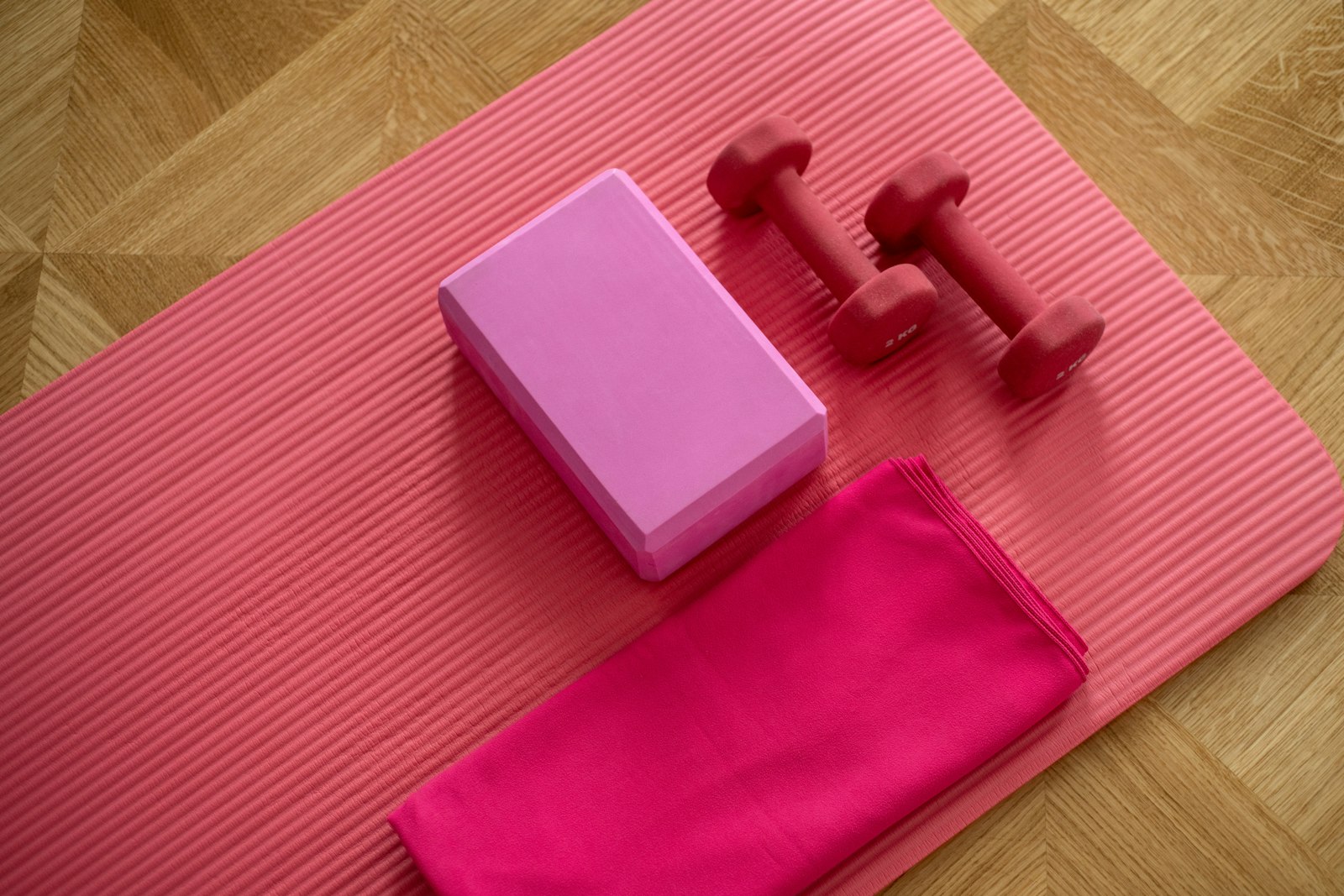
Every student needs a strap and two blocks. The strap turns supta padangusthasana from a hopeful goal into an honest one — I tell students that if they can touch their foot without the strap, they don't need this class, they need a balance class. Blocks come under the hands in standing forward folds so the spine stays long.

Pacing-wise, I hold the supine and seated shapes for two minutes per side. Hamstrings respond to time, not intensity. Shorter, harder holds just trigger the stretch reflex and the muscle clamps down. Two minutes at 70% of end-range is more useful than thirty seconds at 95%.

When students ask why we're not doing standing wide-leg forward fold (prasarita) early, the answer is that it loads the proximal hamstring tendon at end range without warmup. I save it for the back end of class, after the muscle has lengthened from easier shapes.

The Sequence

12 poses · 40 min

  1. 1
    Constructive Rest
    Salamba Apanasana
    2 min

    Let the hamstrings switch off completely before we ask them to lengthen.

  2. 2
    Supine Hamstring Stretch with Strap
    Supta Padangusthasana A
    2 min each side

    Strap around the arch; press the down-leg thigh into the floor as much as you lift the top leg.

  3. 3
    Supine Hamstring Stretch (leg out to side)
    Supta Padangusthasana B
    90 sec each side

    Opposite hip stays grounded; block under the outer thigh if it lifts.

  4. 4
    Eccentric Bridge Drops
    5 slow rounds

    Lower the hips slowly over 4 counts — this loads the hamstring eccentrically, which is what actually changes its length.

  5. 5
    Downward-Facing Dog (bent knees)
    Adho Mukha Svanasana
    8 breaths

    Bend the knees deeply; the goal is a long spine, not straight legs.

  6. 6
    Half Splits
    Ardha Hanumanasana
    90 sec each side

    Hands on blocks; back heel stacks under the back knee; flex the front foot.

  7. 7
    Pyramid Pose (with blocks)
    Parsvottanasana
    8 breaths each side

    Hands on blocks at the highest setting; soften the front knee until the lower back stays long.

  8. 8
    Standing Forward Fold (knees bent)
    Uttanasana
    10 breaths

    Hands or forearms on blocks; let the head hang; this is rest, not effort.

  9. 9
    Wide-Leg Standing Forward Fold
    Prasarita Padottanasana
    90 sec

    Heels slightly wider than toes; hinge from the hips, hands on blocks.

  10. 10
    Seated Forward Fold (bent knees, bolster on thighs)
    Paschimottanasana
    2 min

    Knees bent enough that the lower back stays neutral — chest to thighs, not nose to knees.

  11. 11
    Head-to-Knee Pose
    Janu Sirsasana
    90 sec each side

    Bend the extended-leg knee slightly; turn the chest to face the extended leg before folding.

  12. 12
    Legs-Up-the-Wall
    Viparita Karani
    5 min

    Bolster under the sacrum if the hamstrings still grip; let the back of the knees soften.

Coaching notes

Watch the pelvis in every forward fold. The moment the sit bones tuck under and the lower back rounds, the hamstrings stop lengthening and the spinal ligaments take the load. Cue 'lift the sit bones to the ceiling' on inhale, 'maintain the length' on exhale — the fold deepens by hinging at the hips, not by collapsing the spine.

In supta padangusthasana, the down leg is doing as much work as the up leg. Cue the down-leg quadriceps to engage and press the back of that thigh into the floor. Without that anchor, the pelvis tips and the up-leg hamstring 'stretch' is just pelvic tilt.

Proximal hamstring tendon (right at the sit bone) is the place students injure. If anyone reports a pulling, deep-ache sensation right at the ischial tuberosity, especially mid-stretch, back them out immediately. That sensation is not lengthening — it's a tendon under load it doesn't want.

In half splits (ardha hanumanasana), keep the front foot flexed and the heel of the back leg directly under the back knee. Pelvis square to the front of the mat. Most students rush past 70% of range to chase the floor; the magic is in the slow third minute, not the dramatic first.

FAQ

How long until a student notices real hamstring length change?+

If they practice this two or three times a week alongside any kind of glute strengthening, six to eight weeks is realistic. Stretching alone tends to plateau because the muscle just rebounds — the neurological permission to lengthen comes when the surrounding stabilisers (glutes, deep core) are strong enough that the hamstring doesn't need to grip.

A runner says their hamstrings get tighter after yoga, not looser. Why?+

Usually because the class held passive end-range stretches without any eccentric loading. Runners need length under load, not just length. Add the eccentric bridge drops and half-splits with slow descent, drop the long passive holds in seated forward folds, and the response changes within a few weeks.

When is it safe to teach straight-leg forward folds?+

Once a student can hinge from the hips, keep the lumbar spine neutral, and feel the stretch in the belly of the hamstring rather than at the sit bone or the lower back. For most adult students that's around weeks four to six of regular practice. Before that, bent knees stay the default.

My student gets a pulling sensation right at the sit bone in forward folds — is that normal?+

No, and I treat it as a stop sign. That's the proximal hamstring tendon. Pulling sensation there in a stretch is the first warning of tendinopathy. Back the student out, switch them to supine work with a strap, and have them see a physio if it persists across sessions. This is the most common over-stretching injury in yoga.

Can I use this sequence for prenatal students?+

First trimester yes, with bent knees throughout. Second and third trimester, I'd skip the deep supine work after the first trimester (lying flat is uncomfortable), drop seated forward folds, and replace them with standing wide-leg work and supported squats. The hormonal laxity already gives plenty of range — adding more is how postpartum SI joint pain begins.

FLOW Yoga Sequence Builder

Build your own body focus sequence in minutes

Drag-and-drop in the FLOW builder. Set per-pose duration, side, and notes. Save, share, and export to PDF. Free to start; Pro from $5/mo billed yearly with a 3-day trial.