Wide-Legged Forward Fold Bind
Baddha Prasarita Padottanasana
About This Pose
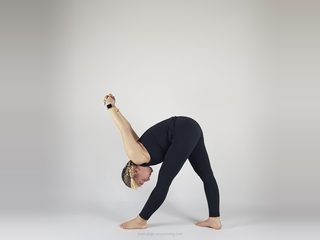
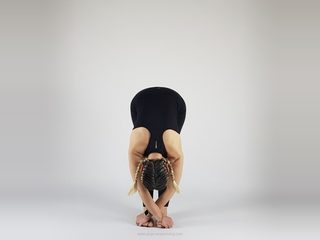
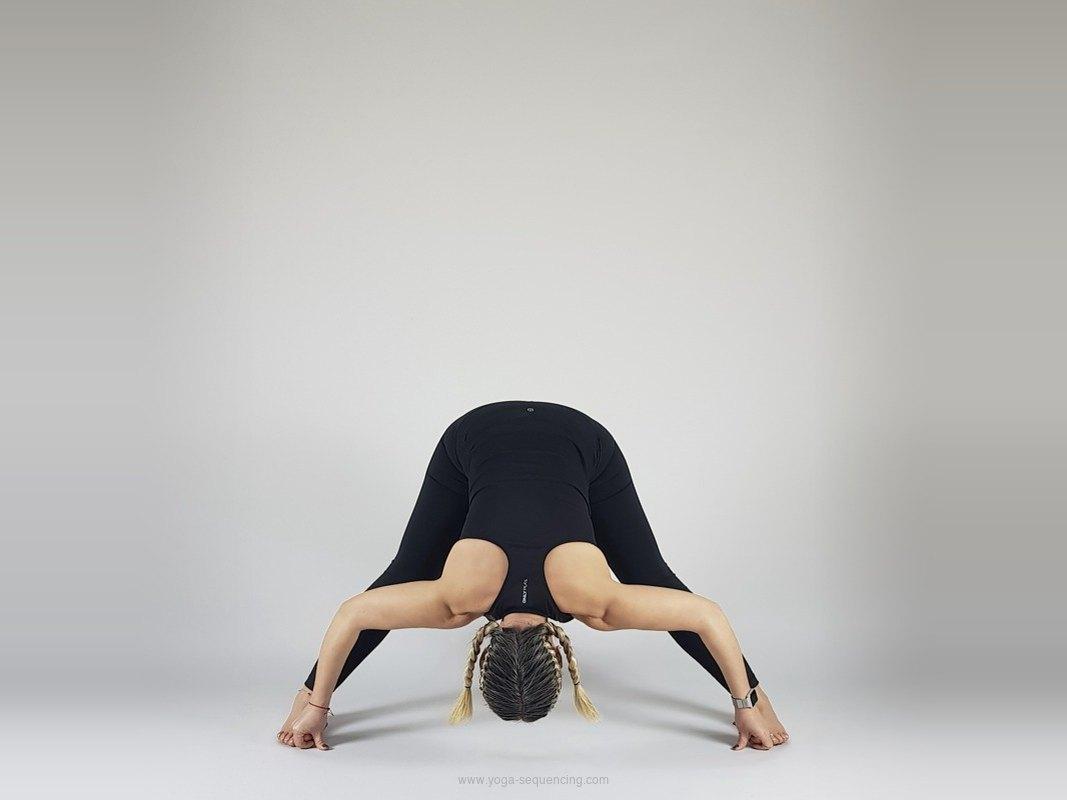
Wide-Legged Forward Fold Bind (Baddha Prasarita Padottanasana) is an advanced variation that adds a bind to the wide-stance fold. The bind typically involves threading arms around the legs and clasping hands behind the back, requiring significant flexibility in the shoulders, hips, and hamstrings. This binding action deepens the fold and creates additional shoulder opening. Binds in yoga represent the joining of opposites and creating wholeness. This advanced variation demands patience, consistent practice, and often years of preparation. When accessible, it offers a profound sense of integration and completion.
Muscles Worked in Wide-Legged Forward Fold Bind
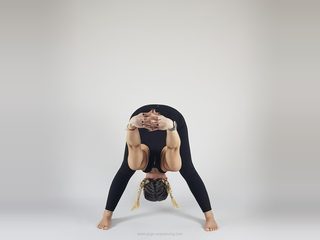
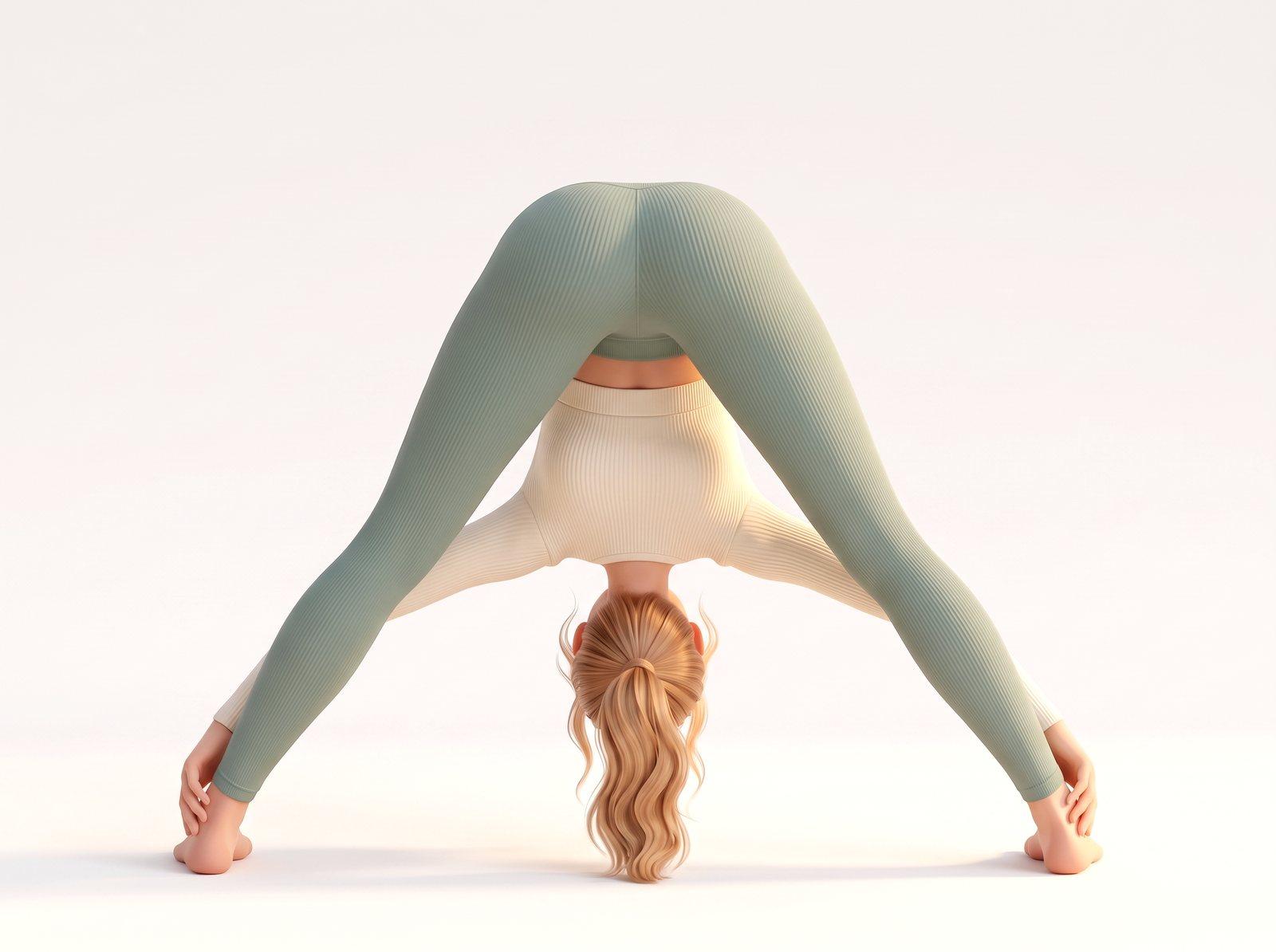
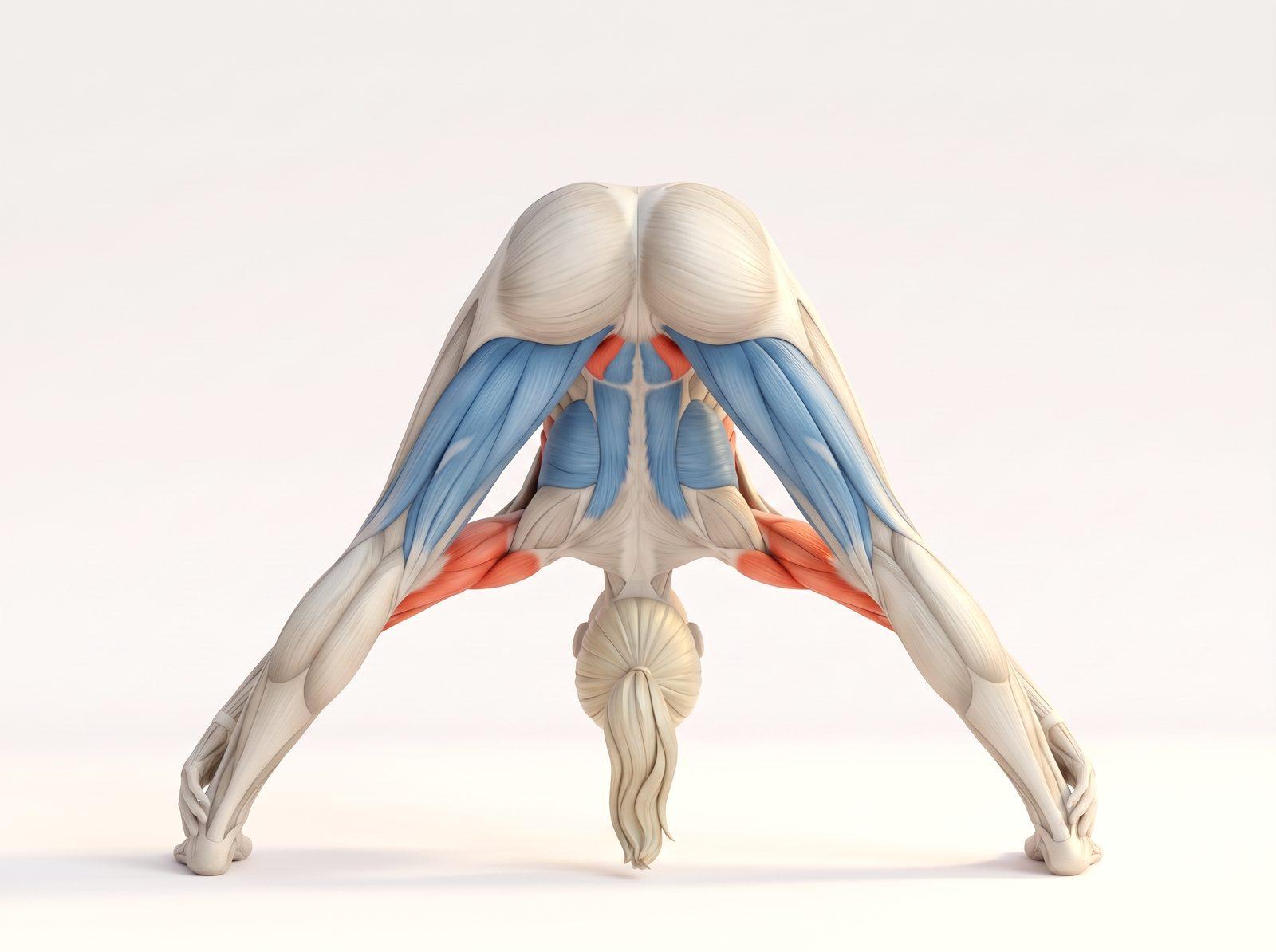
The photo shows a Wide-Legged Forward Fold (Prasarita Padottanasana) seen from behind, head hanging between the feet and both hands holding the ankles. Pulling gently on the ankles draws the torso deeper, stretching the hamstrings and inner thighs.
Working
- Arms (biceps, forearm flexors, pulling on the ankles)
- Hip flexors (iliopsoas, drawing the torso down)
Stretching
- Hamstrings (biceps femoris, semitendinosus, semimembranosus)
- Inner thighs (adductors)
- Back muscles (erector spinae)
Also holding you steady: your Quadriceps and the muscles of your feet and ankles.
Variations and joint actions
- Hands on blocks: Blocks under the hands suit tight hamstrings.
- Big-toe hold: Holding the big toes instead of the ankles is Prasarita D.
- Hips deep flexion and abduction, feet wide apart
- Knees extension
- Spine long, hanging toward the floor
- Shoulders flexion, hands reaching to the ankles
- Elbows slight flexion
Roles are qualitative — this section does not measure how hard any muscle works. References: Leslie Kaminoff & Amy Matthews, Yoga Anatomy (Human Kinetics); Ray Long, The Key Muscles of Yoga (Bandha Yoga).
Step-by-Step Instructions
- 1
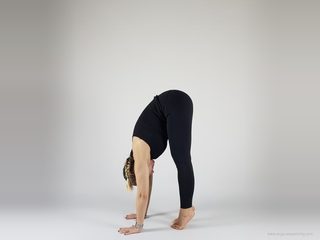
Establish wide-legged forward fold
- 2
Walk hands back between legs
- 3
Thread right arm under right leg
- 4
Reach right hand toward left hip
- 5
Thread left arm under left leg
- 6
Reach left hand toward right hip
- 7
Clasp hands or fingers behind back
- 8
Fold deeper into the bind
- 9
Let head hang toward floor
- 10
Breathe steadily
- 11
Hold for 3-5 breaths
- 12
Release bind carefully and rise slowly
Alignment Cues
- Arms thread from outside to inside
- Hands reach around toward back
- Bind at fingers, wrists, or forearms
- Shoulders roll back despite fold
- Legs stay engaged
- Breath remains steady
- No forcing or strain
Benefits
- Deep shoulder opening through bind
- Maximum inner thigh and hamstring stretch
- Creates sense of integration
- Advances practice over time
- Combines multiple challenging elements
- Profound release when accessible
- Demonstrates dedicated practice
- Unique sensation of wholeness
Modifications
- Use strap between hands
- Hold opposite wrists instead
- Practice half bind first
- Work toward full bind gradually
Variations
- Different bind depths
- Adding twist to bind
- Head to floor in bind
- Moving in and out of bind
Cautions & Contraindications
Cautions
- Requires significant preparation
- Never force the bind
- Shoulder health is essential
- Progress gradually over years
- Use props to learn the pattern
Avoid this pose if you have:
- Shoulder injuries
- Hip or hamstring injuries
- Back problems
- Insufficient flexibility
Quick Facts
Primary Focus
shouldersSecondary Focus
Suggested Hold
30 seconds
Tags
Equipment