
Standing Forward Fold
Uttanasana
About This Pose
This Standing Forward Fold variation explores different expressions of Uttanasana, allowing practitioners to find the version that best serves their body on any given day. While the foundational fold remains the same—hinging at the hips to stretch the entire back body—variations in arm position, depth, and focus create different experiences. Some days a gentle fold with bent knees and swaying arms feels right; other days, a deeper fold with hands wrapped around the ankles calls. Understanding variations helps practitioners adapt the pose to their current needs while maintaining its essential benefits for the hamstrings, spine, and nervous system.
Muscles Worked in Standing Forward Fold
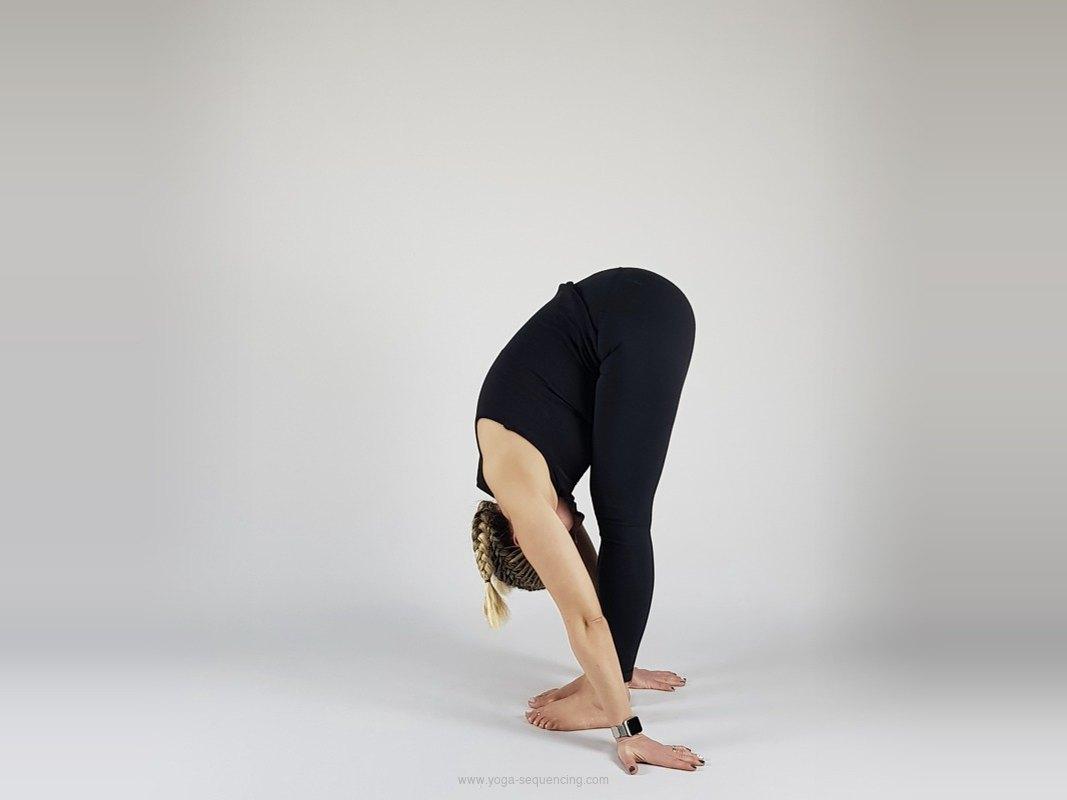
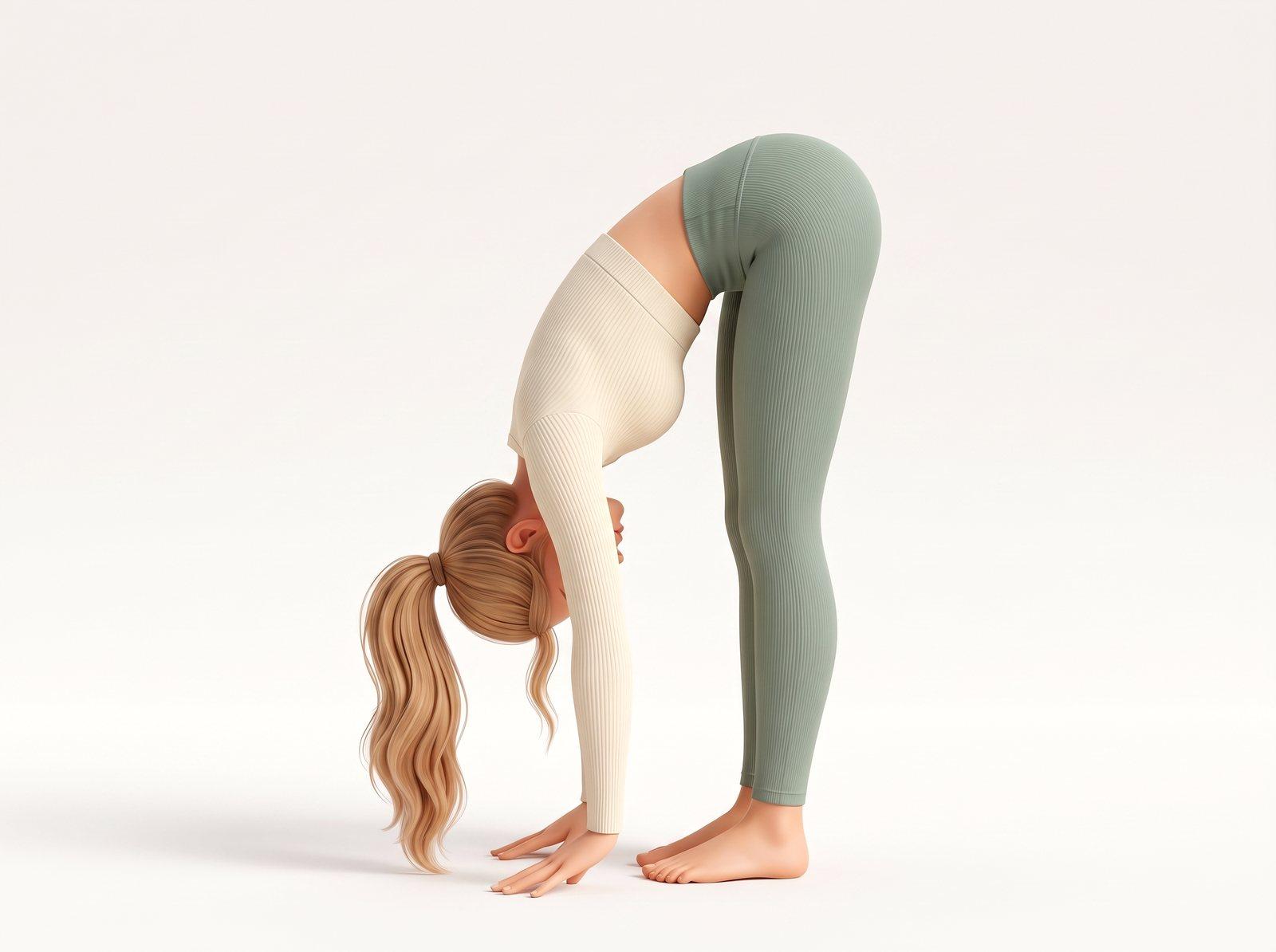
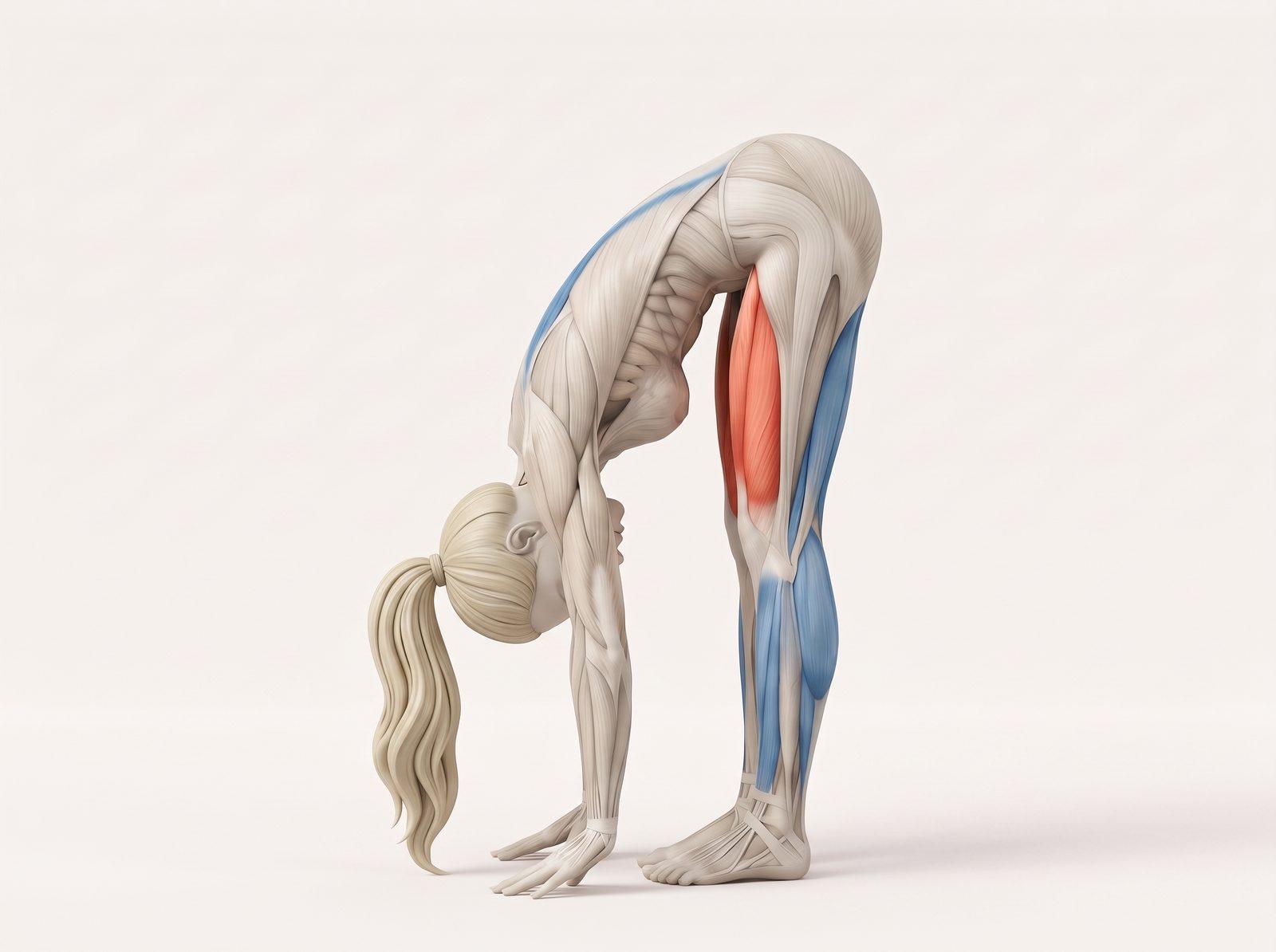
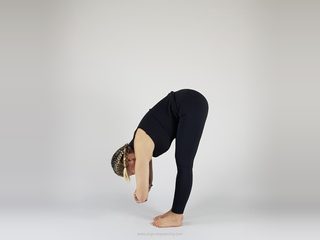
The photo shows Standing Forward Fold (Uttanasana) with straight legs and the fingertips touching the floor beside the feet, the head hanging. The hamstrings and calves get the main stretch.
Working
- Quadriceps (quadriceps femoris, keeping the knees straight)
Stretching
- Hamstrings (biceps femoris, semitendinosus, semimembranosus)
- Calves (gastrocnemius, soleus)
- Back muscles (erector spinae)
Also holding you steady: your the muscles of your feet and ankles and hip flexors, drawing the torso toward the legs.
Variations and joint actions
- Blocks: Hands on blocks bring the floor closer when the hamstrings are tight.
- Bent knees: Bending the knees lets the belly rest on the thighs and protects the lower back.
- Hips deep flexion
- Knees extension
- Spine flexion, hanging
- Shoulders flexion, arms reaching to the floor
Roles are qualitative — this section does not measure how hard any muscle works. References: Leslie Kaminoff & Amy Matthews, Yoga Anatomy (Human Kinetics); Ray Long, The Key Muscles of Yoga (Bandha Yoga).
Step-by-Step Instructions
- 1
Stand in Mountain Pose
- 2
Exhale and fold forward from the hips
- 3
Choose your arm variation: hands to floor, holding elbows, or clasped behind
- 4
Adjust knee bend to your hamstring flexibility
- 5
Let the head hang completely
- 6
Breathe into the stretch
- 7
Hold for 5-10 breaths
- 8
Rise mindfully
Alignment Cues
- Fold from the hips, not the waist
- Spine stays long initially
- Allow natural rounding as you deepen
- Head and neck completely release
- Weight shifts forward slightly
- Knees can bend freely
Benefits
- Stretches hamstrings and entire back body
- Calms the nervous system
- Offers adaptable options for different days
- Releases tension in neck and shoulders
- Improves flexibility over time
- Reduces stress and anxiety
- Decompresses the spine
- Stimulates abdominal organs
Modifications
- Generous knee bend
- Hands on blocks or shins
- Practice against wall
- Use a chair for support
Variations
- Ragdoll with swaying
- Hands clasped behind back
- Ankle or toe hold
- Arms wrapped around legs
Cautions & Contraindications
Cautions
- Choose the variation that serves you today
- Don't force depth
- Keep knees soft
- Rise slowly
- Breathe steadily
Avoid this pose if you have:
- Back injuries
- Low blood pressure
- Eye conditions
- Pregnancy (later stages)
Quick Facts
Primary Focus
hamstringsSecondary Focus
Suggested Hold
30 seconds
Tags
Equipment
Related Poses
Sequences with this pose
Teacher-written sequences that use Standing Forward Fold.
A Yoga Sequence for Tight Hamstrings That Lengthens Without Forcing
40 min · 11 poses · all-levels
A Yoga Sequence That Treats Your Knees Like the Hinges They Are
30 min · 14 poses · all-levels
A hatha sequence built around the holds, not the transitions
75 min · 18 poses · all-levels
Ashtanga Yoga Primary Series Sequence
90 min · 16 poses · advanced