Tree Pose (Low Foot)
Vrksasana Variation
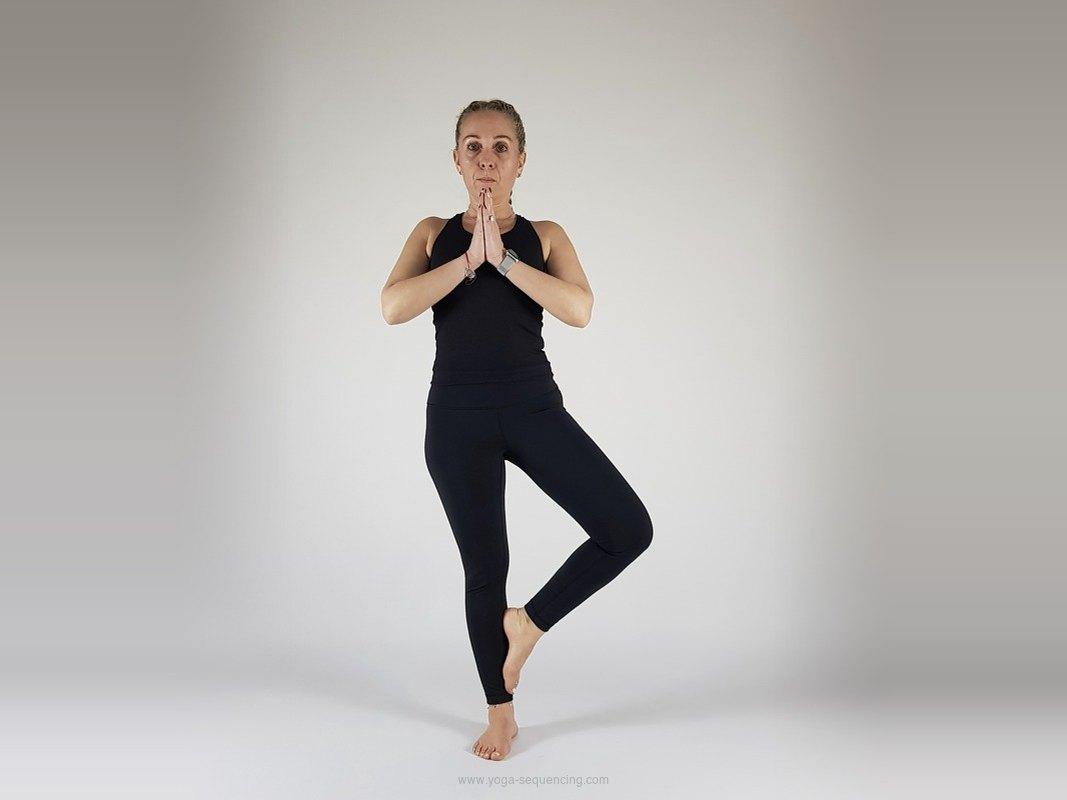
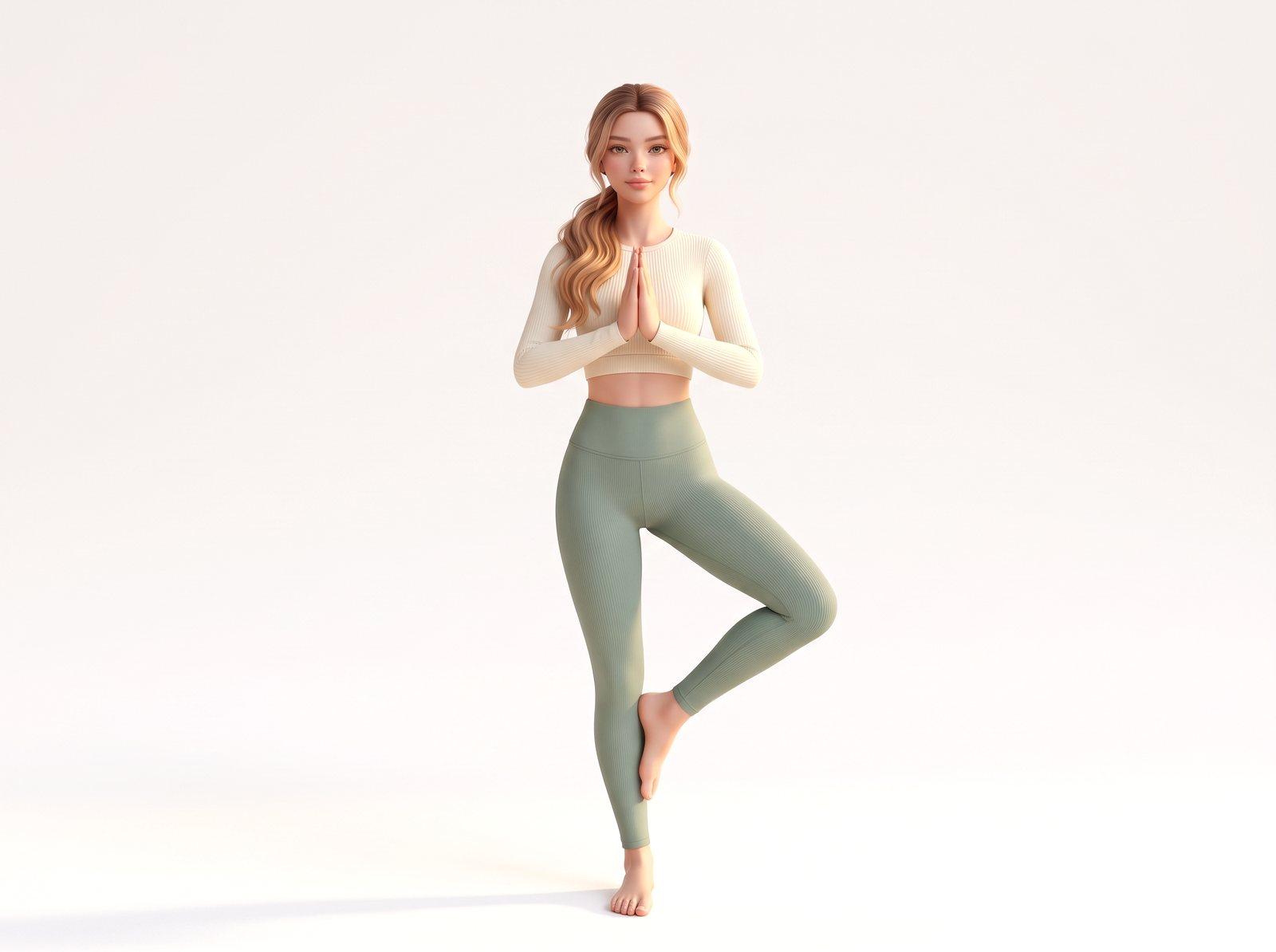
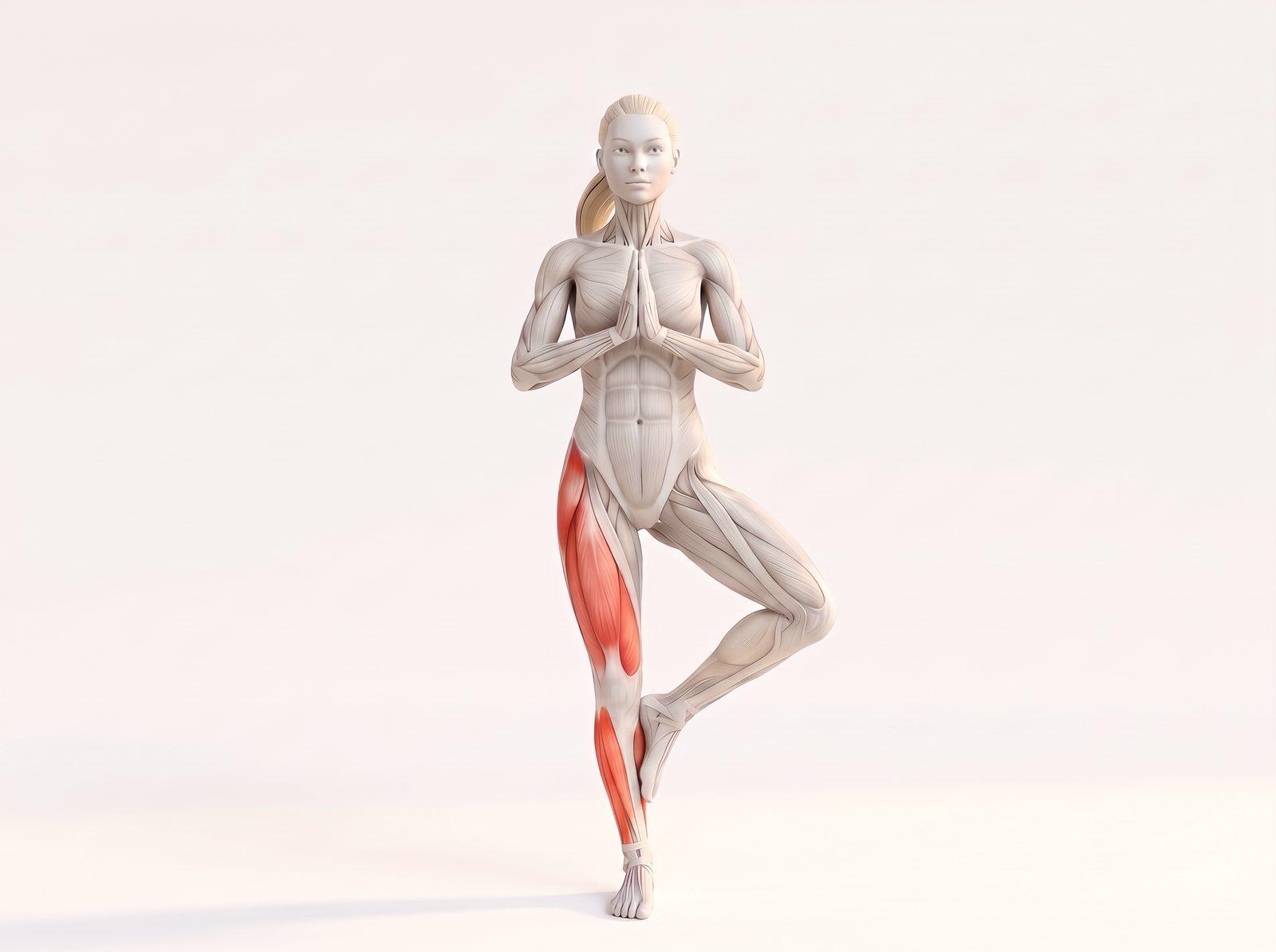
Working: Standing-leg hip stabilisers, Standing-leg quadriceps, Standing-leg calf
Full muscle breakdown ↓About This Pose
Tree Pose Low Foot (Vrksasana Variation) provides a stable foundation for balance practice by placing the lifted foot low on the standing leg—either at the ankle with heel lifted or just above the ankle bone. This variation emphasizes the grounding and alignment principles of Tree Pose while minimizing the balance challenge. It is particularly valuable for those new to yoga, recovering from injury, or anyone who wants to focus on the meditative and alignment aspects without worrying about falling. The low foot position also makes this variation safe for those with knee concerns, as it places no pressure near the knee joint. Despite its accessibility, this pose still cultivates focus, strengthens the standing leg, and opens the hip of the lifted leg.
Muscles Worked in Tree Pose (Low Foot)
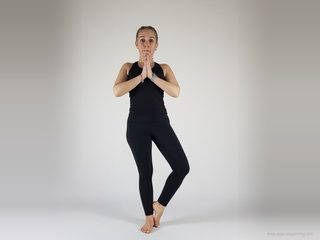
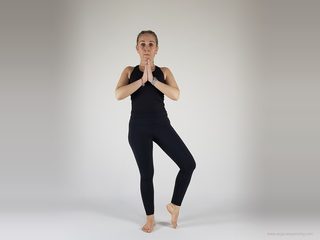
Tree Pose (Vrksasana) in its easiest form: the heel rests against the inside of the standing ankle with the toes on the floor like a kickstand, knee turned out, palms together at the chest. The standing-leg hip stabilisers and foot do most of the balancing.
Working
- Standing-leg hip stabilisers (gluteus medius, gluteus minimus)
- Standing-leg quadriceps (quadriceps femoris)
- Standing-leg calf (gastrocnemius, soleus)
Stretching
With the foot this low there is no real stretch; the pose is about balance.
Also holding you steady: your core, the muscles along your spine, the muscles of your feet and ankles and bent-leg hip rotators, which turn the knee out.
Variations and joint actions
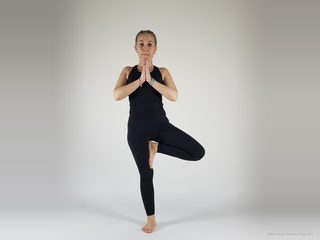
- Foot on the calf: Lifting the foot to the calf takes the toes off the floor and asks more of the balance.
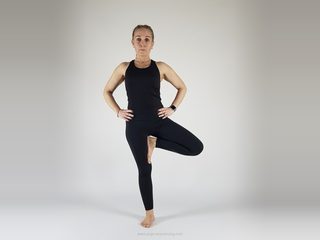
- Foot on the inner thigh: The full pose; press foot and thigh into each other and never into the side of the knee.
- Standing hip and knee extension
- Bent-leg hip slight flexion, abduction and external rotation
- Bent-leg knee flexion, heel at the standing ankle
- Elbows flexion, palms together at the chest
- Spine upright, neutral
Roles are qualitative — this section does not measure how hard any muscle works. References: Leslie Kaminoff & Amy Matthews, Yoga Anatomy (Human Kinetics); Ray Long, The Key Muscles of Yoga (Bandha Yoga).
Step-by-Step Instructions
- 1
Stand in Mountain Pose with feet together or slightly apart
- 2
Ground firmly through the left foot
- 3
Shift your weight fully onto the left leg
- 4
Lift the right heel and place it above the left ankle bone
- 5
The right toes can rest lightly on the floor for extra stability
- 6
Open the right knee out to the side
- 7
Bring hands to prayer position at the heart
- 8
Find a focal point at eye level
- 9
Engage the core and lengthen the spine
- 10
Breathe smoothly for 5-10 breaths
- 11
Lower the foot gently and switch sides
Alignment Cues
- Press the heel into the ankle and the ankle back
- Keep both hips level and facing forward
- Stack the spine tall from tailbone to crown
- Relax the shoulders away from the ears
- Soften the standing knee slightly
- Engage the abdominals gently
- Keep the gaze soft but steady
Benefits
- Provides a safe entry to balance practice
- Strengthens the standing leg gradually
- Opens the hip gently without strain
- Develops focus and concentration
- Builds confidence for more challenging poses
- Improves posture and alignment awareness
- Calms the mind and reduces stress
- Accessible for practitioners of all levels
Modifications
- Keep toes on the floor for maximum stability
- Practice with back against a wall
- Use a chair for hand support
- Keep hands on hips if prayer is uncomfortable
Variations
- Lift the toes off the floor when stable
- Raise arms overhead gradually
- Close eyes briefly to challenge balance
- Progress to calf placement when ready
Cautions & Contraindications
Cautions
- Keep the foot below the knee at all times
- Maintain a soft standing knee
- Use wall support if needed
- Focus on alignment rather than duration
Avoid this pose if you have:
- Severe ankle injury in either foot
- Extreme balance disorders
- Acute vertigo
Quick Facts
Primary Focus
legsSecondary Focus
Suggested Hold
30 seconds
Tags
Equipment