Standing Open-Knee Balance
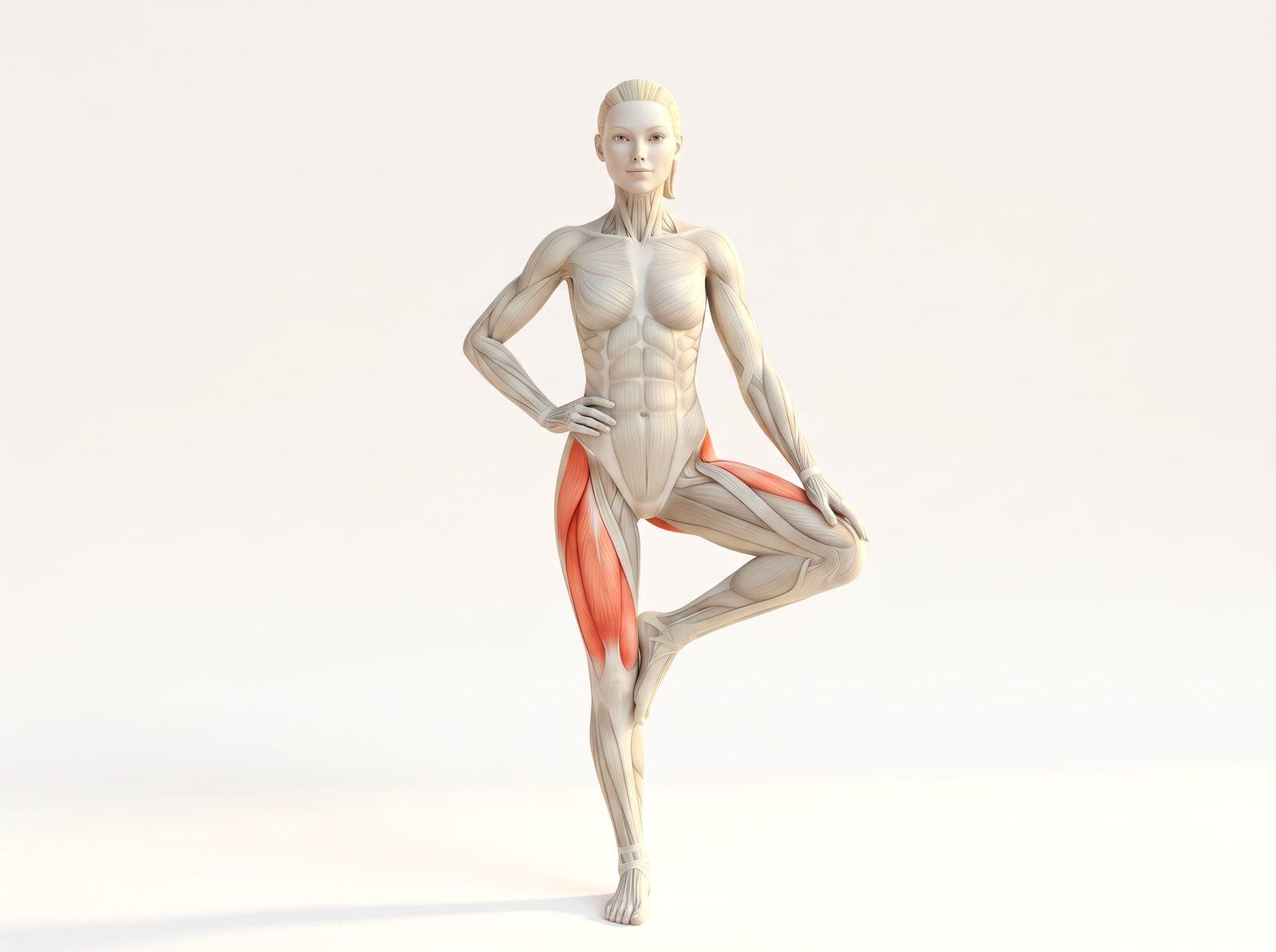
Working: Standing-leg glutes, Standing-leg quadriceps, Lifted-leg hip flexors
Full muscle breakdown ↓About This Pose
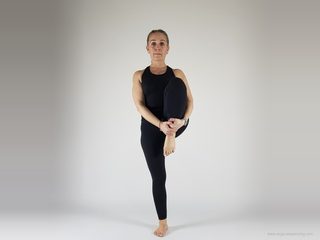
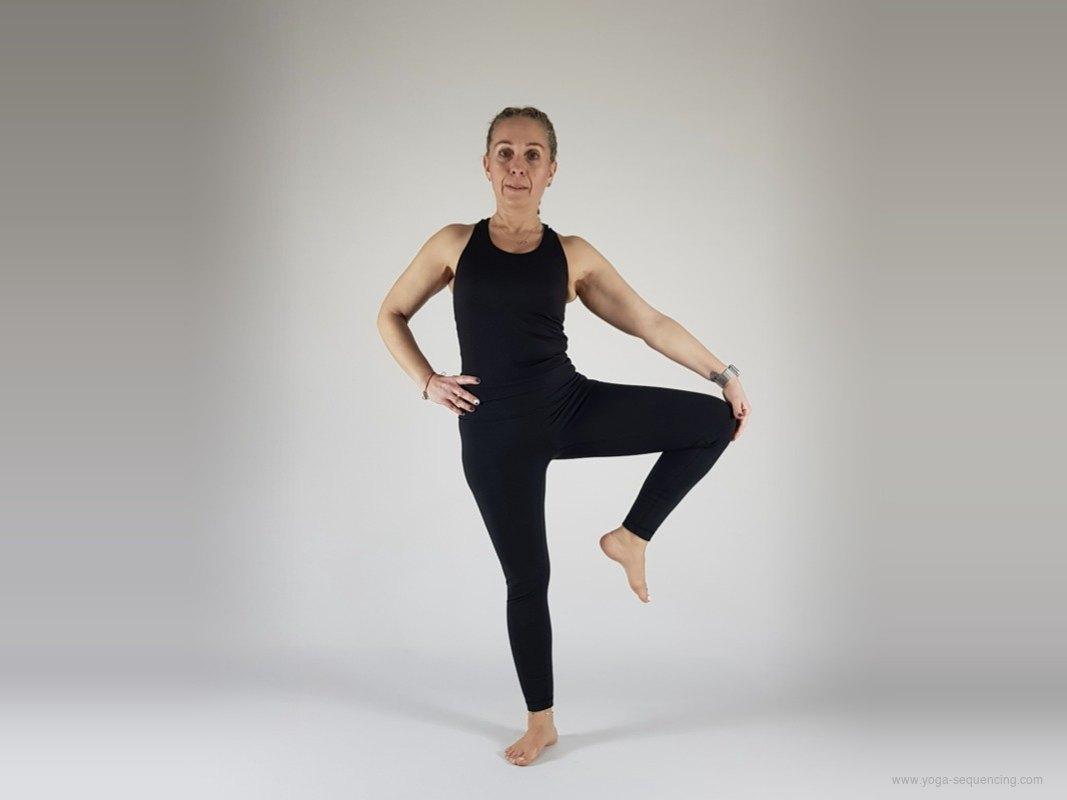
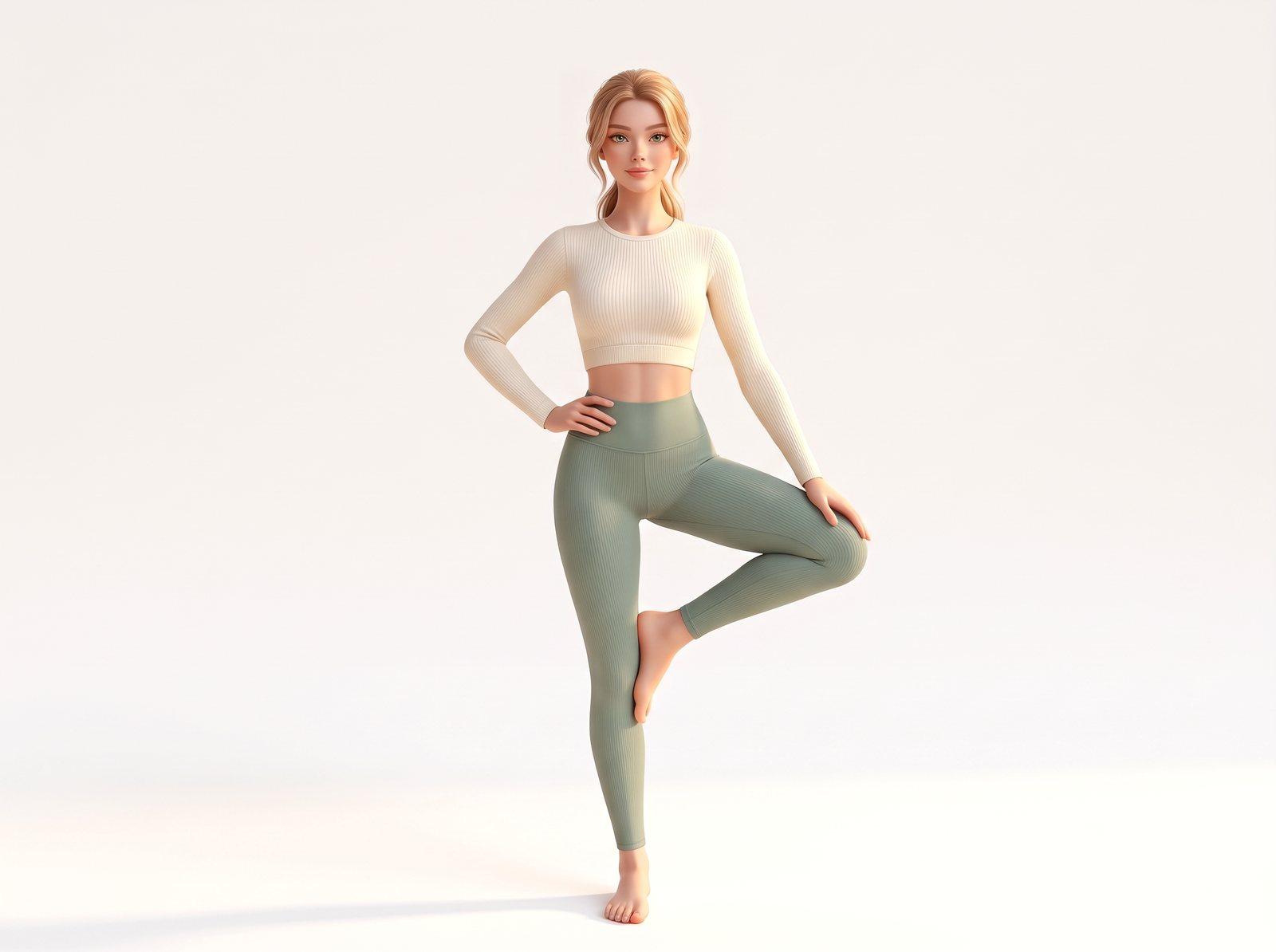
Standing Open-Knee Balance lifts one knee to hip height and rotates it out to the side while you balance on the other leg. One hand rests on the lifted knee and the other on the hip. The hip flexors lift the thigh, the deep hip rotators turn it out, and the glutes of the standing leg keep the pelvis level. It is a useful step toward Tree Pose and Extended Hand-to-Big-Toe Pose for students who cannot yet place the foot on the standing leg.
Muscles Worked in Standing Open-Knee Balance
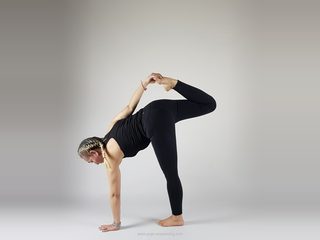
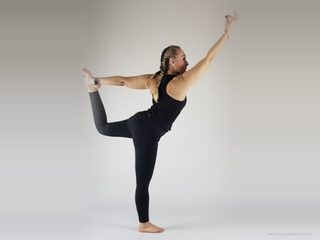
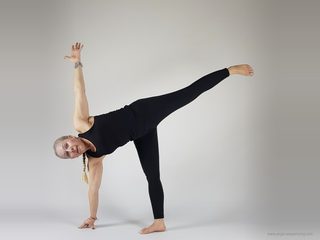
The photo shows a standing balance with one knee lifted, bent and turned out to the side, one hand on the lifted knee and the other on the hip — a prep for Tree Pose rather than the full pose. The standing-leg glutes and quadriceps hold the balance and the lifted-leg hip flexors raise the knee.
Working
- Standing-leg glutes (gluteus medius, gluteus maximus)
- Standing-leg quadriceps (quadriceps femoris)
- Lifted-leg hip flexors (iliopsoas)
Stretching
Mainly a balance — the lifted-leg inner thigh opens only a little.
Also holding you steady: your the muscles of your feet and ankles, core and lifted-leg deep hip rotators, which turn the knee out.
Variations and joint actions
- Toes on the floor: Resting the lifted foot's toes beside the standing ankle keeps the balance easy.
- Full Tree Pose: Placing the sole on the inner thigh or calf (not the knee) progresses into Vrksasana.
- Standing hip neutral
- Standing knee extension
- Lifted hip flexion, abduction and external rotation
- Lifted knee flexion, foot hanging
- Spine upright, neutral
Roles are qualitative — this section does not measure how hard any muscle works. References: Leslie Kaminoff & Amy Matthews, Yoga Anatomy (Human Kinetics); Ray Long, The Key Muscles of Yoga (Bandha Yoga).
Step-by-Step Instructions
- 1
Stand in Mountain Pose with the weight in the left foot
- 2
Place the left hand on the left hip
- 3
Lift the right knee toward hip height
- 4
Place the right hand on the outside of the right knee
- 5
Rotate the right knee out to the side, keeping the pelvis facing forward
- 6
Let the right foot hang relaxed below the knee
- 7
Hold for 5 breaths, lower the foot and repeat on the other side
Alignment Cues
- Standing foot roots evenly
- Pelvis stays level and facing forward
- Spine tall, chest open
- Gaze on a fixed point ahead
Benefits
- Builds single-leg balance
- Strengthens the hip flexors and hip rotators of the lifted leg
- Strengthens the glutes and ankle of the standing leg
- Improves hip external rotation
- Accessible step toward Tree Pose
Modifications
- Keep the toes of the lifted foot on the floor
- Hand on a wall or chair
- Lift the knee lower
- Keep the knee forward instead of opening it
Variations
- Tree Pose
- Standing Knee Hug
- Extended Hand-to-Big-Toe Pose (Side)
Cautions & Contraindications
Cautions
- Keep the pelvis level; do not hike the lifted hip
- Keep a soft bend in the standing knee
- Use a wall for balance if needed
- Open the knee only as far as the pelvis stays square
Avoid this pose if you have:
- Acute ankle, knee or hip injury
- Severe balance disorders or vertigo
Quick Facts
Breath Cue
Breathe evenly; on each inhale lengthen up through the crown, on each exhale root the standing foot.
Primary Focus
hipsSecondary Focus
Suggested Hold
30 seconds
Tags
Equipment