Side Angle Pose Variation
Utthita Parsvakonasana
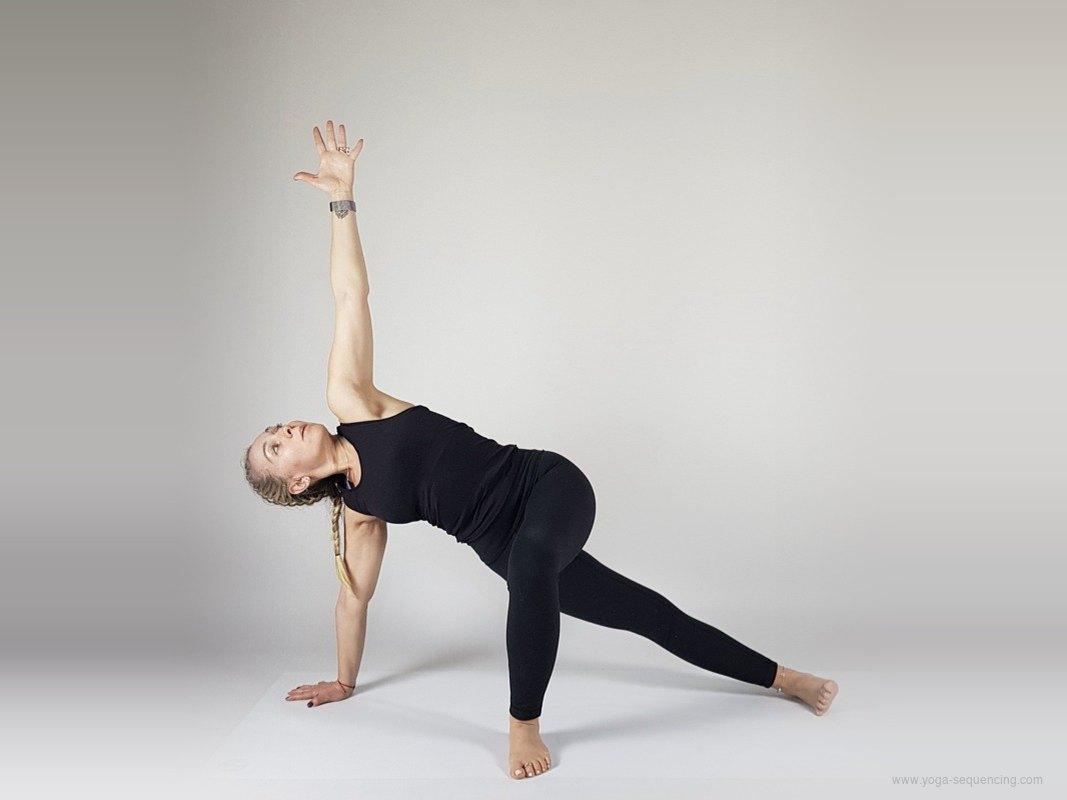
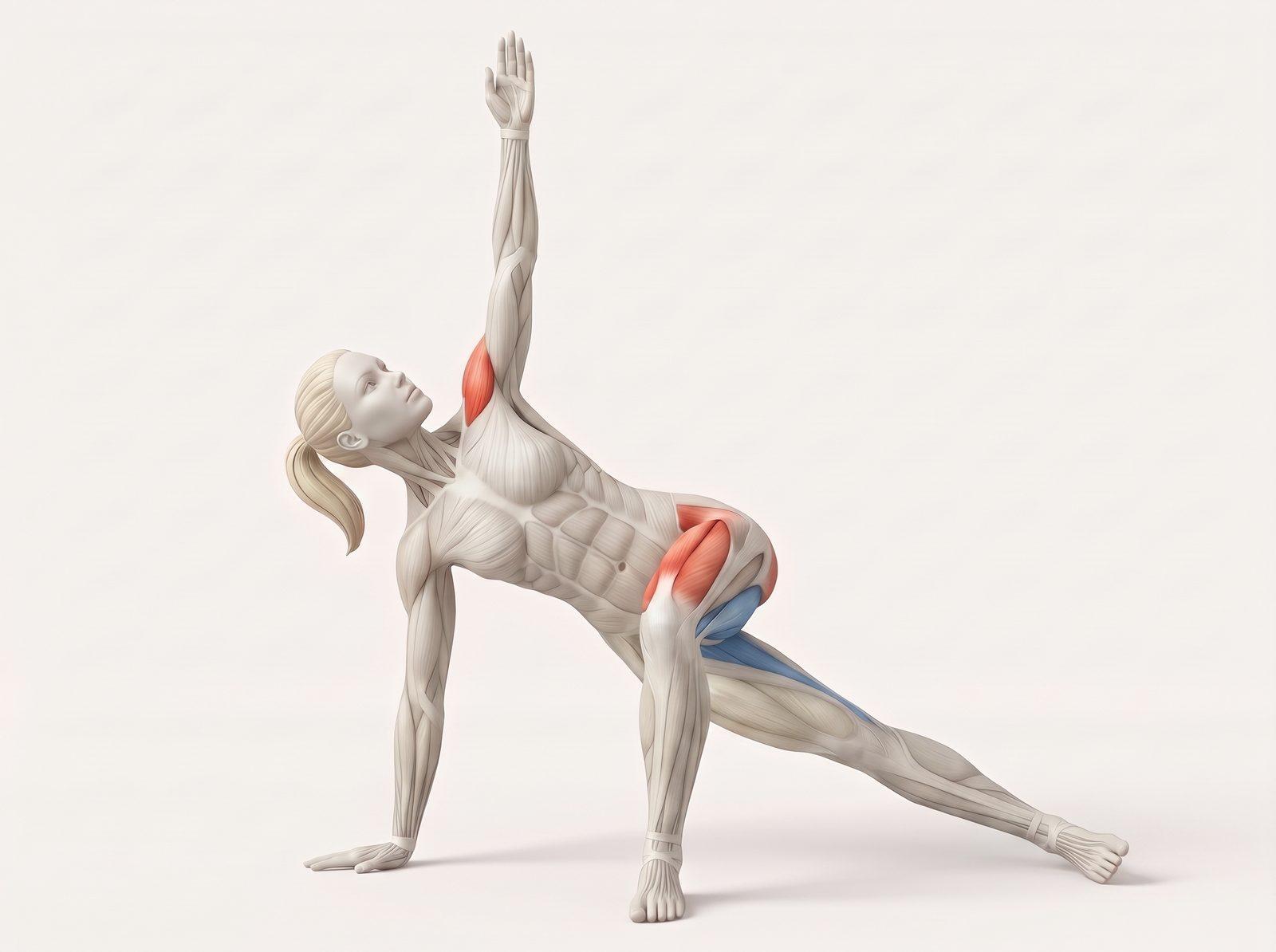
Working: Front-leg quadriceps, Front-leg glutes, Raised-arm shoulder
Stretching: Inner thighs
Full muscle breakdown ↓About This Pose
Side Angle Pose Variation offers an accessible approach to the Extended Side Angle family by placing the forearm on the front thigh rather than reaching to the floor. This modification makes the pose available to practitioners still developing the flexibility for the full expression while maintaining all the strengthening and opening benefits. The elbow-on-thigh position provides stable support for exploring the side body stretch and chest opening. This variation is particularly useful in flow classes where practitioners need quick access to the pose without props. The positioning encourages proper alignment by preventing the common mistake of collapsing the torso toward the floor. As flexibility develops, practitioners can gradually work toward the full expression of the pose.
Muscles Worked in Side Angle Pose Variation
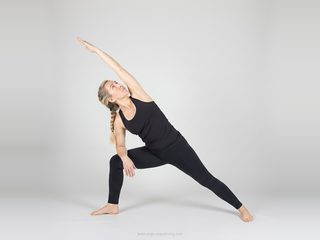
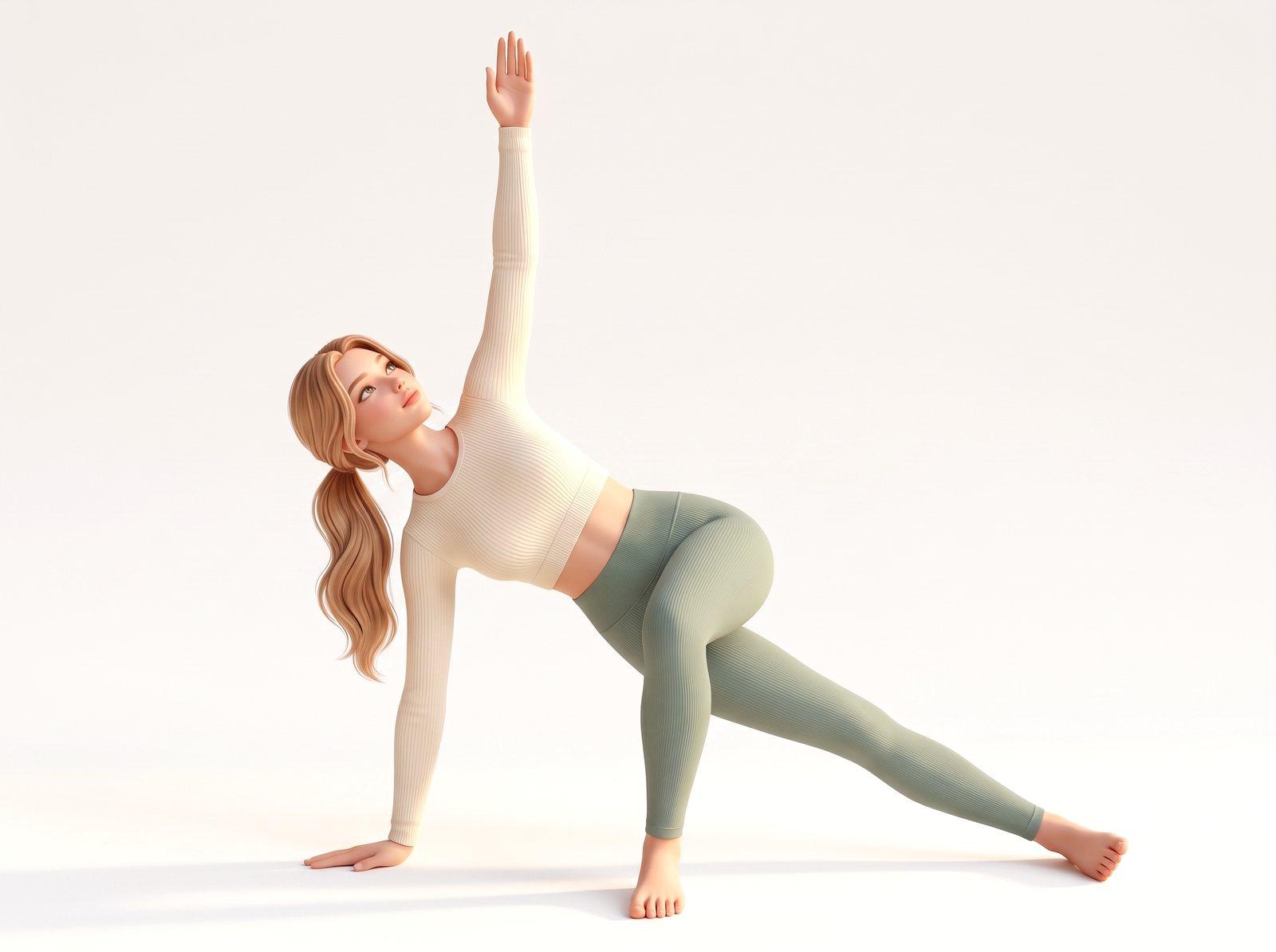
Extended Side Angle (Utthita Parsvakonasana) with the bottom hand on the floor, the top arm reaching straight up and the gaze lifted. The front-leg quadriceps and glutes hold the lunge and both inner thighs stretch.
Working
- Front-leg quadriceps (quadriceps femoris)
- Front-leg glutes (gluteus maximus, gluteus medius)
- Raised-arm shoulder (deltoids)
Stretching
- Inner thighs (adductors)
Also holding you steady: your core, obliques, turning the chest open, back-leg quadriceps, keeping the back knee straight and the muscles of your feet and ankles.
Variations and joint actions
- Forearm on the thigh: Resting the forearm on the front thigh lightens the load on the legs and keeps the chest open.
- Hand on a block: A block under the bottom hand keeps the side body long instead of collapsing.
- Front hip flexion, abduction and external rotation
- Front knee flexion, about 90°
- Back hip abduction
- Back knee extension, foot flat
- Spine lateral flexion with rotation open
- Raised shoulder abduction, arm vertical
Roles are qualitative — this section does not measure how hard any muscle works. References: Leslie Kaminoff & Amy Matthews, Yoga Anatomy (Human Kinetics); Ray Long, The Key Muscles of Yoga (Bandha Yoga).
Step-by-Step Instructions
- 1
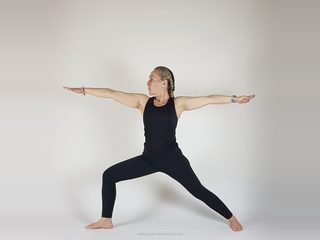
Start in Warrior II position
- 2
Front knee bent at 90 degrees
- 3
Place front elbow on front thigh
- 4
Extend back arm over ear
- 5
Create diagonal line from back foot to fingertips
- 6
Rotate chest open toward ceiling
- 7
Stack shoulders vertically
- 8
Gaze up at extended arm
- 9
Press firmly through back foot
- 10
Engage core to support spine
- 11
Hold for 5-8 breaths
- 12
Rise up and switch sides
Alignment Cues
- Front knee tracks over ankle
- Elbow light on thigh not heavy
- Chest rotating toward ceiling
- Top arm extending with energy
- Back leg straight and strong
- Side body long not compressed
Benefits
- Makes side angle accessible
- Strengthens legs and core
- Opens chest and shoulders
- Stretches side body effectively
- Builds toward full expression
- Maintains proper alignment
- Suitable for flow sequences
- Develops hip flexibility
Modifications
- Hand on hip instead of overhead
- Look forward if neck is strained
- Use block under lower hand
Variations
- Lower hand to floor
- Bind behind back
- Straighten front leg
Cautions & Contraindications
Cautions
- Avoid dumping weight onto thigh
- Keep front knee aligned
- Maintain torso rotation
Avoid this pose if you have:
- Severe knee injuries
- Acute shoulder problems
- High blood pressure
Quick Facts
Primary Focus
legsSecondary Focus
Suggested Hold
40 seconds
Tags
Equipment