Low Lunge High Reach
Anjaneyasana
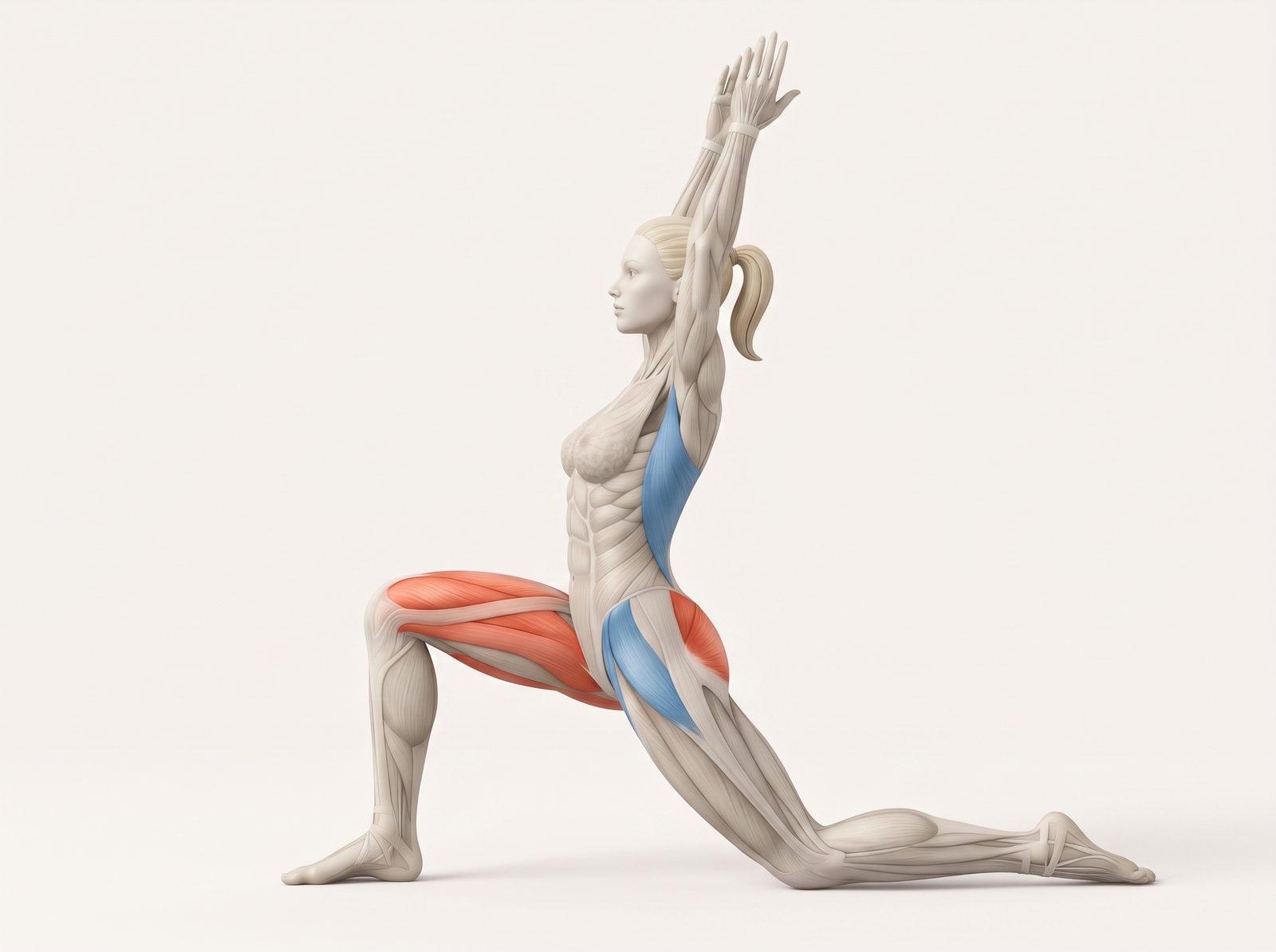
Working: Front-leg quadriceps, Front-leg glutes
Stretching: Back-leg hip flexors, Raised-arm lats
Full muscle breakdown ↓About This Pose
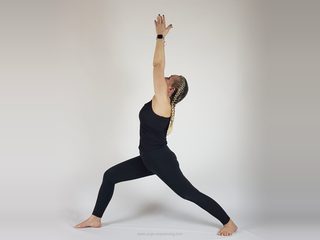
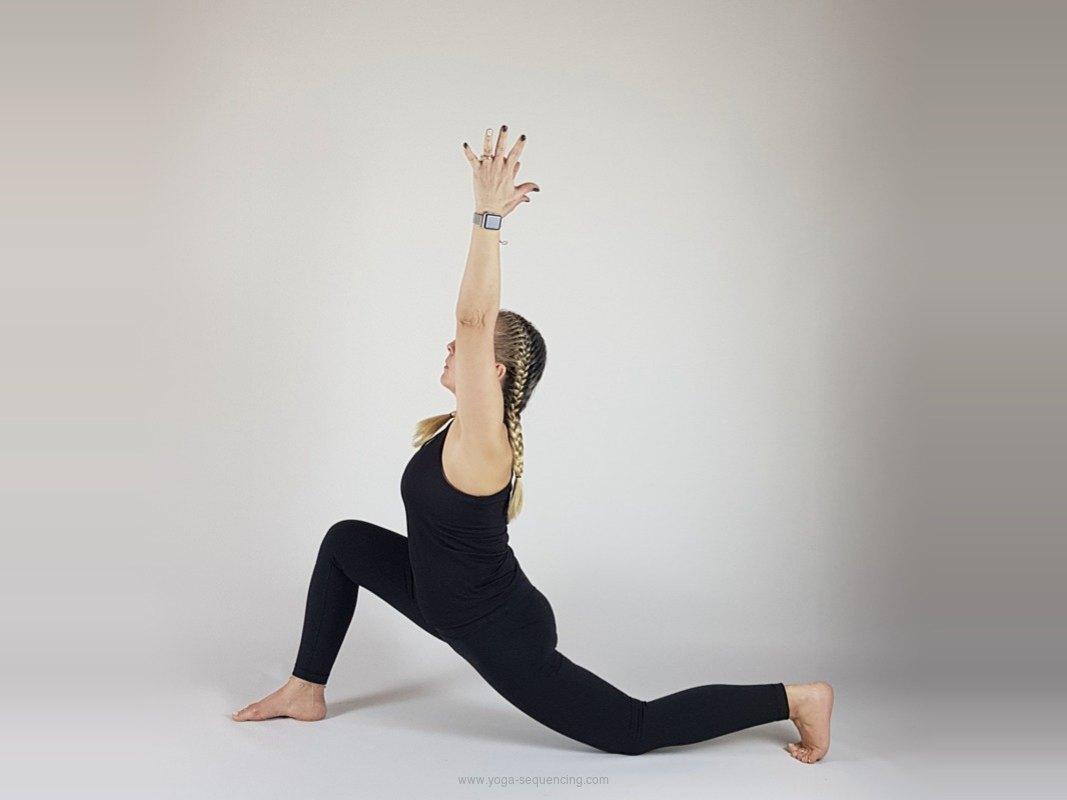
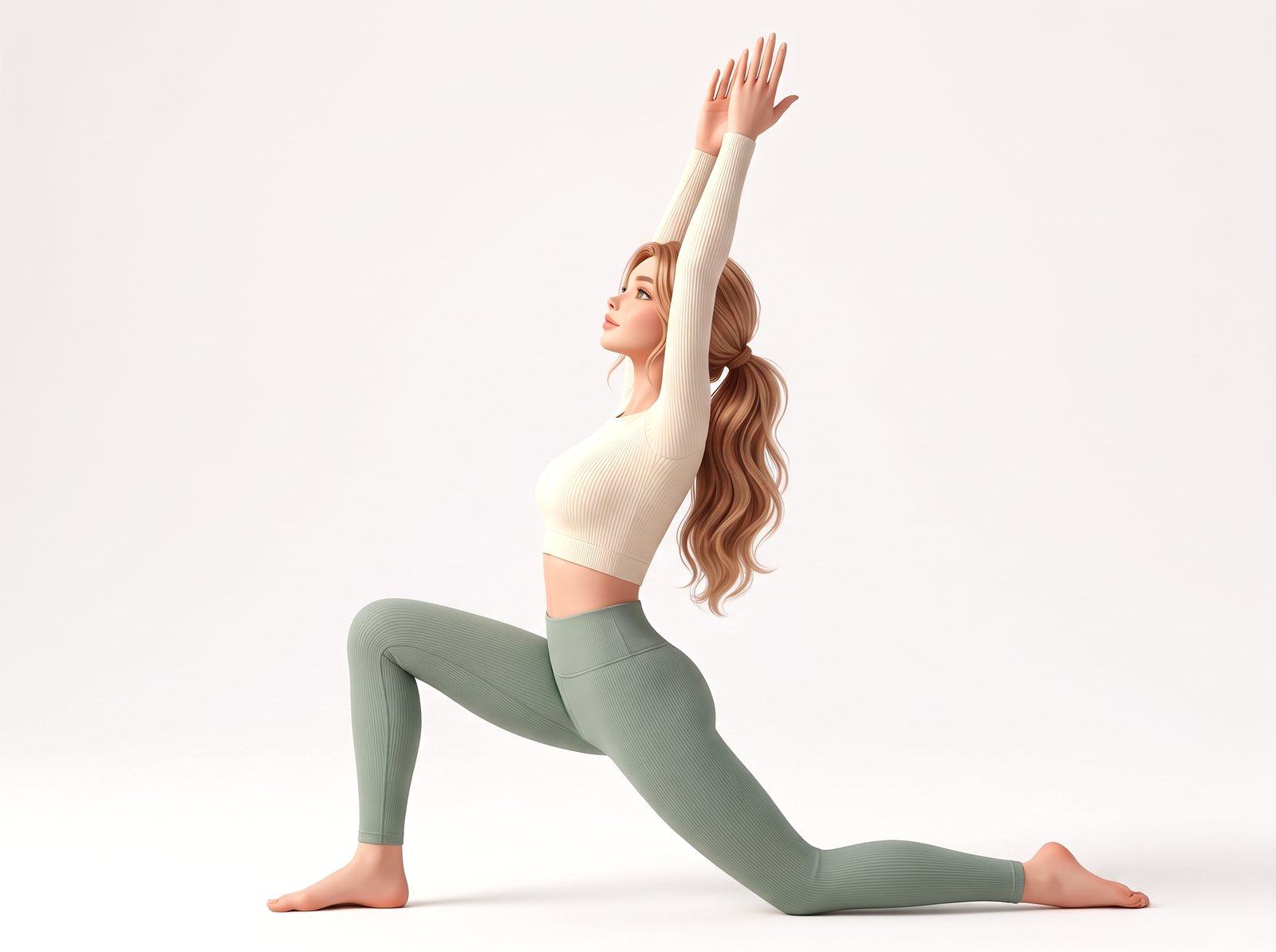
Low Lunge High Reach emphasizes maximum vertical extension through the arms and torso while maintaining the grounded foundation of a low lunge. This dynamic variation creates a powerful line of energy from the back knee through the fingertips. The high reach encourages deeper engagement of the core muscles to maintain stability while reaching upward with intention. Practitioners often feel a sense of expansion and openness through the entire front body. This variation is excellent for building energy and heat in a practice while maintaining the hip-opening benefits of the lunge position. The energetic quality of the upward reach can help shift mindset from grounded to elevated.
Muscles Worked in Low Lunge High Reach
This lunge bends the front knee over the ankle with the back leg long, back knee hovering just above the floor on tucked toes, and one arm reaching straight up. The front-leg quadriceps and glutes carry the weight while the back-leg hip flexors and the raised-arm side stretch.
Working
- Front-leg quadriceps (quadriceps femoris)
- Front-leg glutes (gluteus maximus)
Stretching
- Back-leg hip flexors (iliopsoas, rectus femoris)
- Raised-arm lats (latissimus dorsi)
Also holding you steady: your core, hip stabilisers (gluteus medius), back-leg quadriceps, keeping the back knee lifted and the muscles of your feet and ankles.
Variations and joint actions
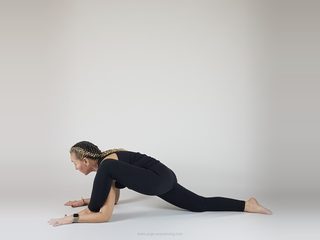
- Back knee down: Lowering the back knee onto a blanket turns this into a supported Low Lunge (Anjaneyasana).
- Both arms up: Raising both arms makes it a full High Lunge and evens out the stretch on both sides.
- Front hip flexion
- Front knee flexion, over the ankle
- Back hip extension
- Back knee near-full extension, just off the floor
- Spine long, slight extension
- Raised shoulder full flexion, arm overhead
Roles are qualitative — this section does not measure how hard any muscle works. References: Leslie Kaminoff & Amy Matthews, Yoga Anatomy (Human Kinetics); Ray Long, The Key Muscles of Yoga (Bandha Yoga).
Step-by-Step Instructions
- 1
Begin in Low Lunge position
- 2
Ground firmly through front foot and back knee
- 3
Engage core and draw tailbone down
- 4
Inhale deeply and sweep arms overhead
- 5
Reach fingertips toward ceiling energetically
- 6
Create length through entire spine
- 7
Draw shoulders down and back
- 8
Keep neck long and gaze forward
- 9
Maintain hip alignment while reaching
- 10
Feel energy line from knee to fingertips
- 11
Hold for 5-8 breaths
- 12
Lower arms and switch sides
Alignment Cues
- Arms reaching with intention
- Energy extending through fingertips
- Core strongly supporting spine
- Hips continuing to sink down
- Shoulders integrating down back
- Chest open and lifted
Benefits
- Creates full body extension and energy
- Deeply opens front body
- Strengthens core significantly
- Builds heat and energy
- Improves posture and alignment
- Stretches intercostal muscles
- Develops balance and stability
- Enhances breathing capacity
Modifications
- Reach arms at diagonal if shoulders tight
- Keep slight bend in elbows
- Reduce arm height as needed
Variations
- Add slight backbend
- Clasp hands and point index fingers
- Pulse arms higher with breath
Cautions & Contraindications
Cautions
- Maintain core engagement while reaching
- Keep shoulders down from ears
- Avoid compressing lower back
Avoid this pose if you have:
- Shoulder injuries or impingement
- High blood pressure
- Vertigo or dizziness
Quick Facts
Primary Focus
hipsSecondary Focus
Suggested Hold
35 seconds
Tags
Equipment