Low Lunge Deep Hold
Anjaneyasana
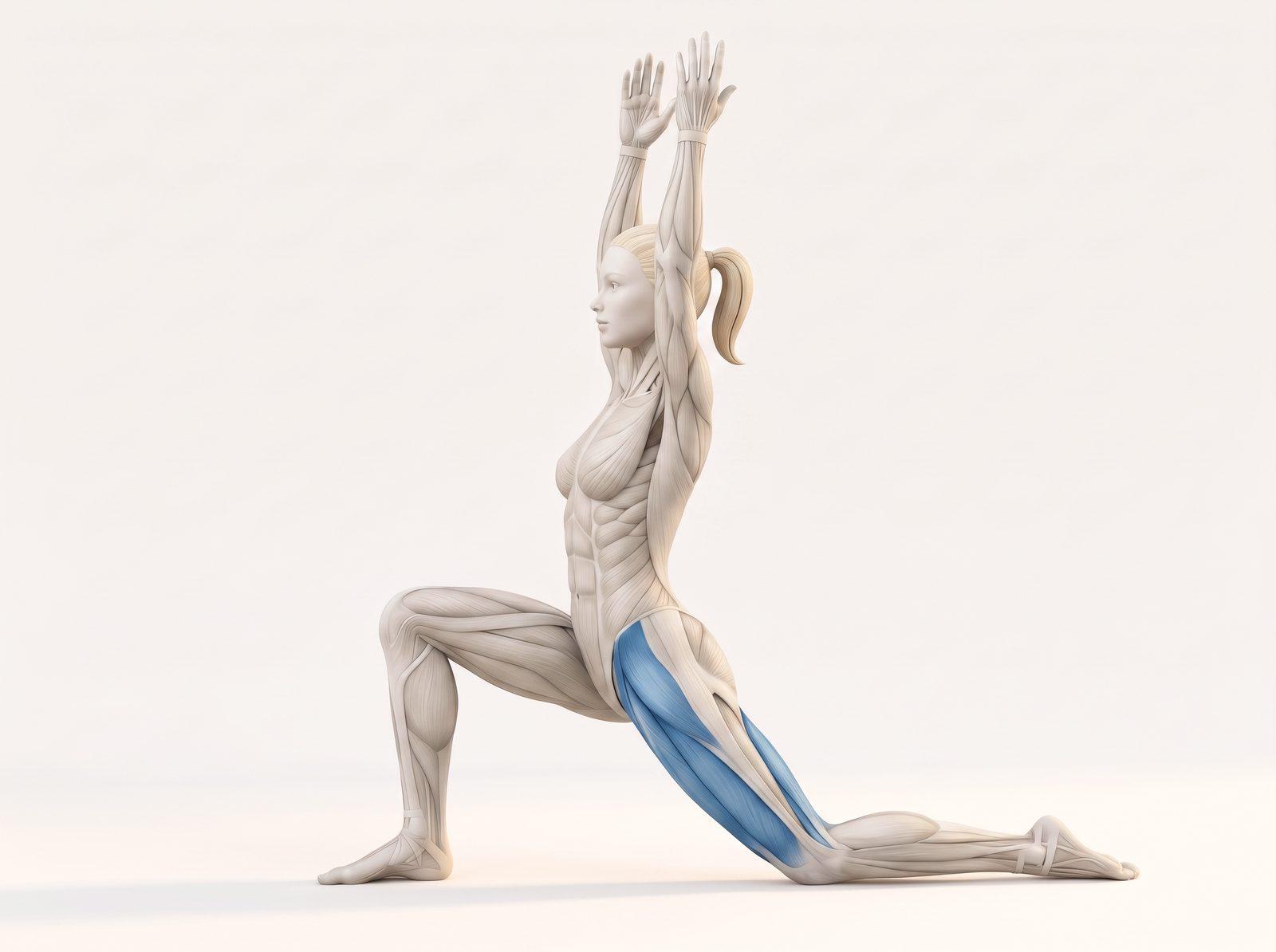
Stretching: Back-leg hip flexors
Full muscle breakdown ↓About This Pose
Low Lunge Deep Hold takes the foundational low lunge and extends the duration to allow for deeper tissue release in the hip flexors and surrounding muscles. This variation emphasizes patience and surrender, allowing gravity and time to work together to release chronic tension patterns. The extended hold accesses the fascia and connective tissues that require longer duration to respond. Practitioners often experience a progressive deepening as the body gradually releases resistance. This pose is particularly beneficial for athletes, runners, and anyone who sits for extended periods. The meditative quality of the long hold creates an opportunity to observe sensations and cultivate mindful awareness of the breath and body.
Muscles Worked in Low Lunge Deep Hold
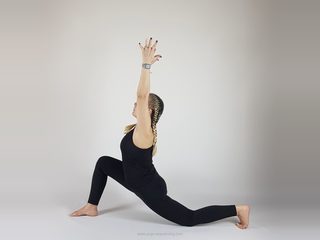
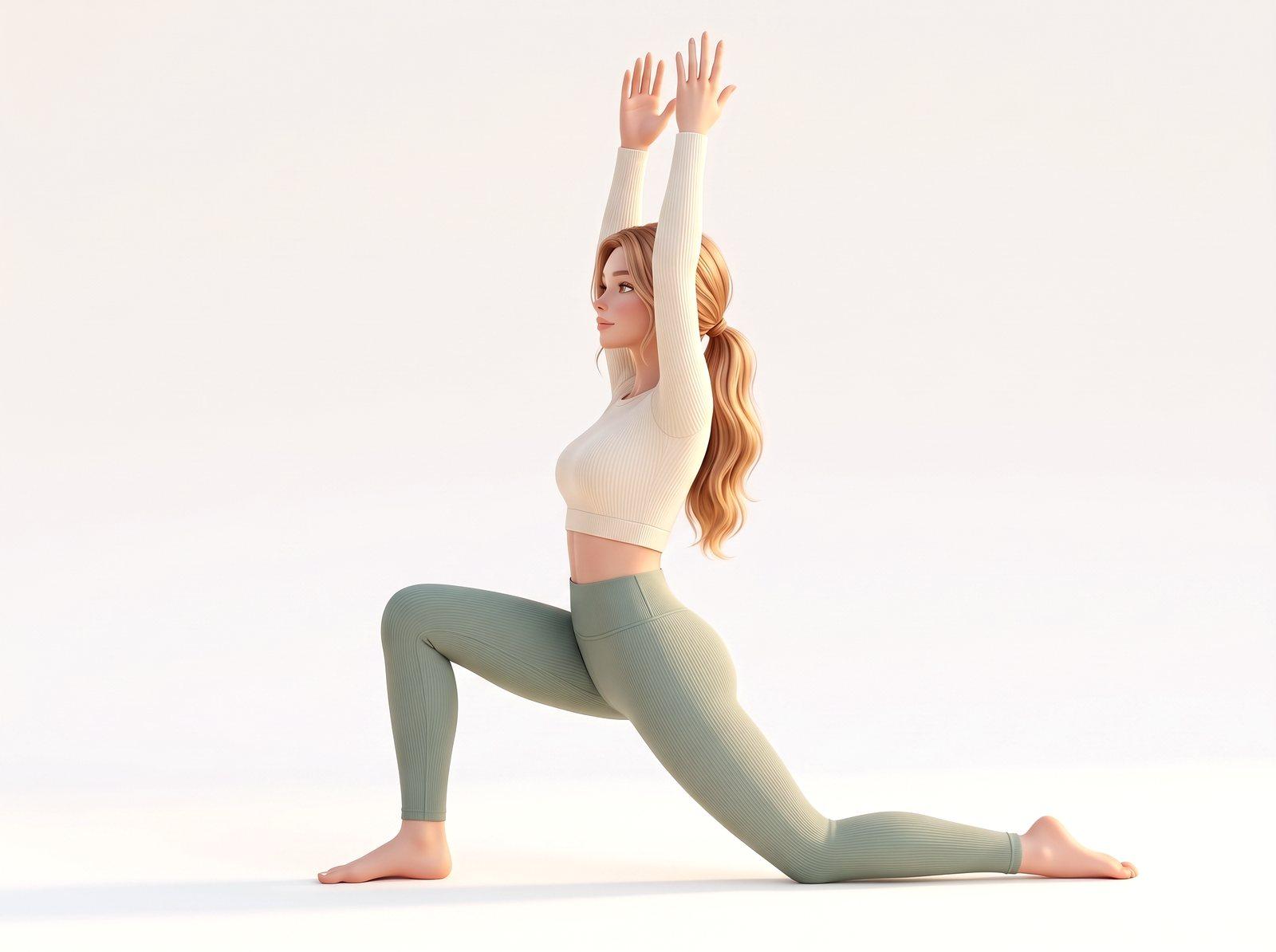
Low Lunge Deep Hold is a long, passive stretch for the hip flexors of the back leg as the hips settle forward and down. Resting the hands on the front thigh or blocks keeps the muscle work low so the tissues can release.
Working
A long passive hold — the aim is to let muscles release, not work.
Stretching
- Back-leg hip flexors (iliopsoas, rectus femoris)
Also holding you steady: your core.
Variations and joint actions
- Back knee lifted: Turns the passive hold into an active lunge: the front-leg quadriceps and glutes and the back-leg quadriceps start working.
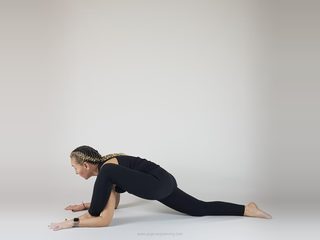
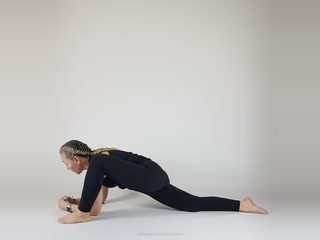
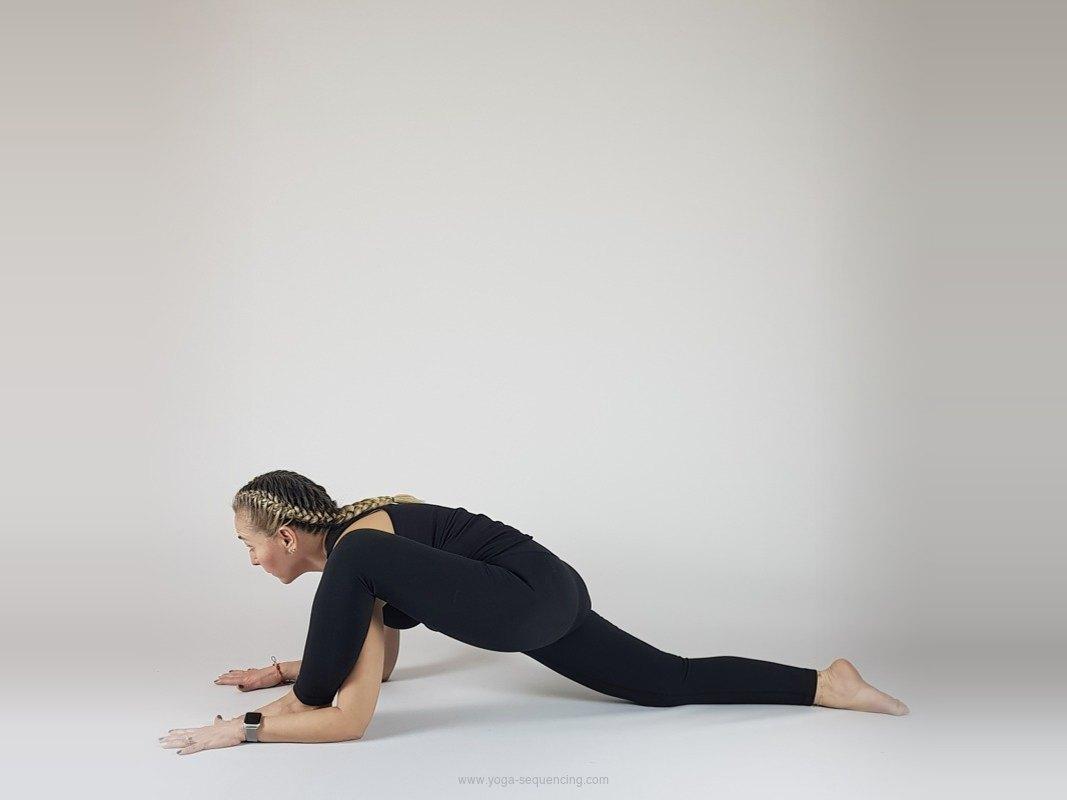
- Forearms down (Lizard): A deeper front-hip fold that adds an inner-thigh stretch.
- Front hip flexion
- Front knee flexion
- Back hip extension
- Back knee flexion, resting on the floor
- Spine long, upright or slightly forward
Roles are qualitative — this section does not measure how hard any muscle works. References: Leslie Kaminoff & Amy Matthews, Yoga Anatomy (Human Kinetics); Ray Long, The Key Muscles of Yoga (Bandha Yoga).
Step-by-Step Instructions
- 1
Enter Low Lunge with right foot forward
- 2
Place padding under left knee
- 3
Settle hips forward and down
- 4
Find a sustainable edge in the stretch
- 5
Rest hands on front thigh or blocks
- 6
Soften facial muscles and jaw
- 7
Breathe slowly and deeply
- 8
Allow body to gradually release
- 9
Notice sensations without forcing
- 10
Maintain steady breathing throughout
- 11
Hold for 2-5 minutes
- 12
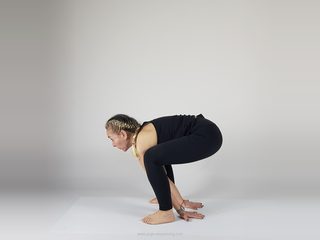
Exit slowly and mindfully
- 13
Rest in neutral before other side
Alignment Cues
- Find sustainable depth not maximum
- Allow gravity to do the work
- Keep breath slow and steady
- Relax muscles around the stretch
- Maintain gentle core engagement
- Let shoulders soften down
Benefits
- Accesses deep fascial release in hip flexors
- Releases chronic tension patterns
- Improves hip mobility significantly
- Creates space in psoas muscle
- Develops patience and mental focus
- Prepares for advanced hip openers
- Counteracts effects of prolonged sitting
- Enhances body awareness and mindfulness
Modifications
- Use bolster under hips for support
- Place hands on blocks
- Reduce hold time as needed
Variations
- Add gentle rocking movements
- Incorporate breath visualization
- Rest torso on bolster for yin version
Cautions & Contraindications
Cautions
- Build up hold time gradually
- Exit slowly to avoid dizziness
- Use props for extended comfort
Avoid this pose if you have:
- Acute hip or knee injuries
- Circulation problems in legs
- Pregnancy without modifications
Quick Facts
Primary Focus
hipsSecondary Focus
Suggested Hold
180 seconds
Tags
Equipment