Half Moon Pose (Hand to Floor)
Ardha Chandrasana
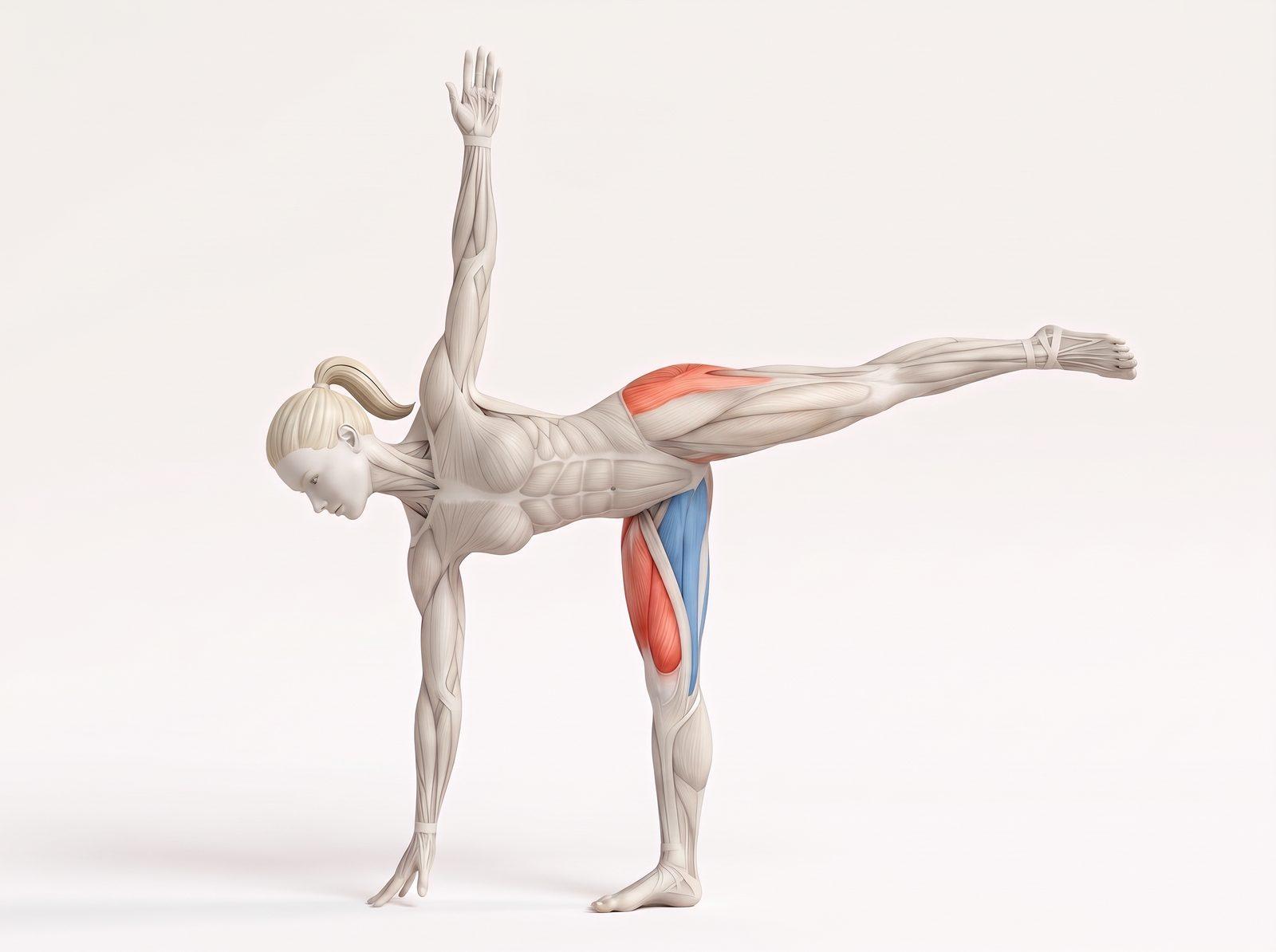
Working: Standing-leg glutes, Standing-leg quadriceps, Lifted-leg glutes
Stretching: Standing-leg hamstrings and inner thigh
Full muscle breakdown ↓About This Pose
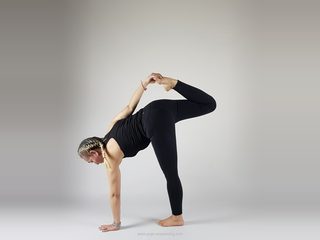
Half Moon Pose (Ardha Chandrasana) with the hand to the floor is the full standing balance: one leg roots down, the other lifts to hip height or higher, the bottom hand rests on the floor in front of the standing foot, and the top arm reaches toward the ceiling. The glutes of the standing leg do most of the stabilising work while the lifted leg's hip opens. Most students meet this shape on a block first; with the hand on the floor the hamstrings of the standing leg need to be long enough to keep the spine from rounding.
Muscles Worked in Half Moon Pose (Hand to Floor)
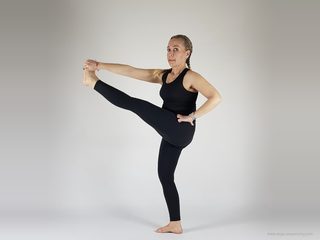
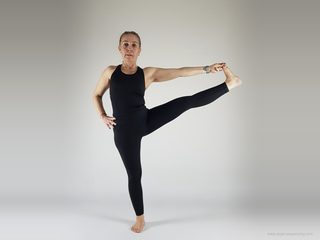
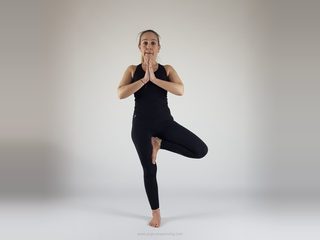
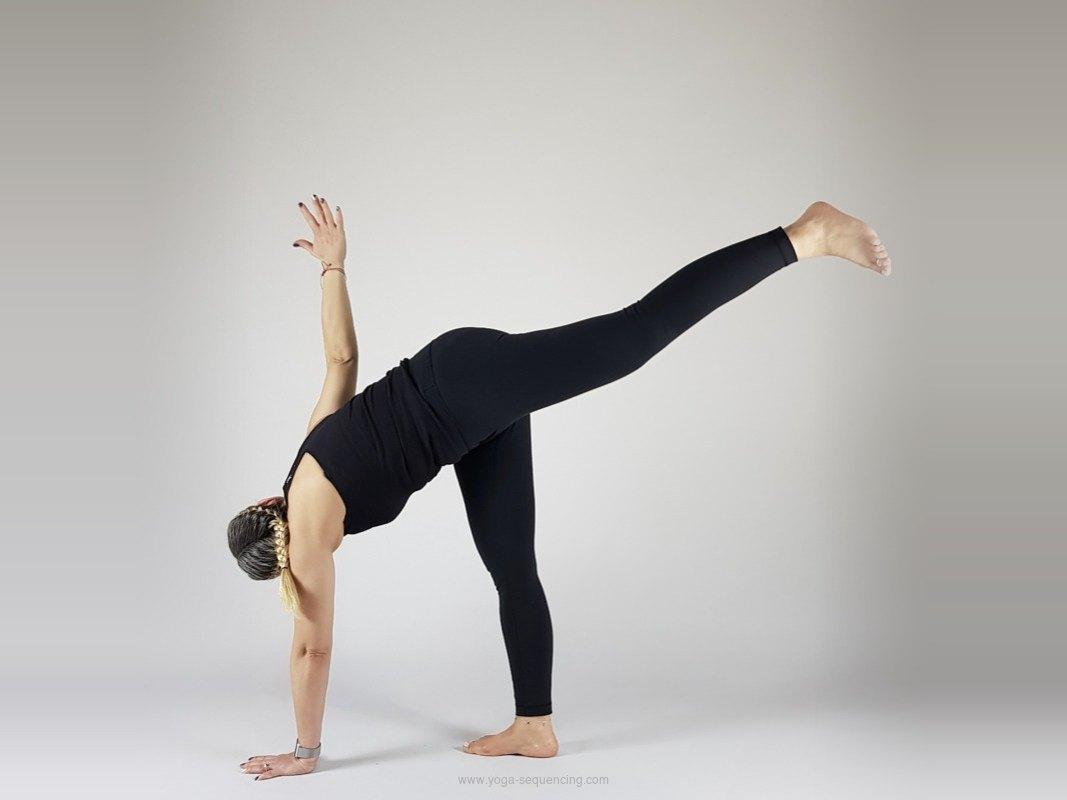
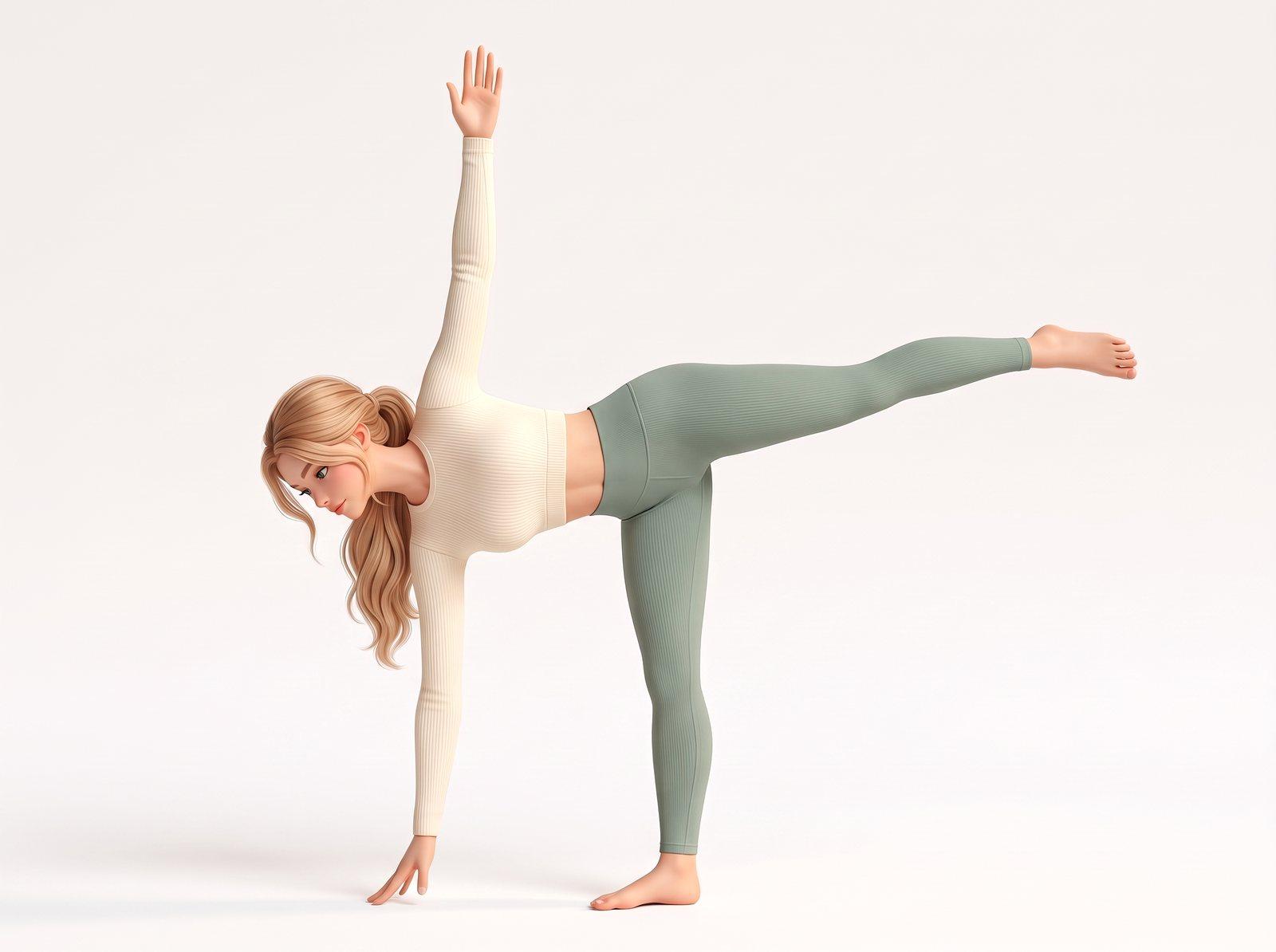
The photo shows the full Half Moon Pose (Ardha Chandrasana): balanced on one straight leg with the bottom hand on the floor, the other leg lifted parallel to the floor and the top arm reaching up. The standing-leg glutes and quadriceps and the lifted-leg glutes do the work.
Working
- Standing-leg glutes (gluteus medius, gluteus maximus)
- Standing-leg quadriceps (quadriceps femoris)
- Lifted-leg glutes (gluteus maximus, gluteus medius)
Stretching
- Standing-leg hamstrings and inner thigh (hamstrings, adductors)
Also holding you steady: your core, the muscles along your spine, the muscles of your feet and ankles and rotator cuff.
Variations and joint actions
- Block under the hand: A block under the bottom hand lifts the chest and helps the balance.
- Back against a wall: Leaning the back on a wall takes the balance out so you can find the alignment.
- Standing hip flexion and abduction
- Standing knee extension
- Lifted hip abduction and extension
- Lifted knee extension
- Spine neutral, torso sideways
- Shoulders abduction, arms in one line
Roles are qualitative — this section does not measure how hard any muscle works. References: Leslie Kaminoff & Amy Matthews, Yoga Anatomy (Human Kinetics); Ray Long, The Key Muscles of Yoga (Bandha Yoga).
Step-by-Step Instructions
- 1
Begin in Triangle Pose with the right foot forward
- 2
Bend the right knee and place the right fingertips on the floor about 30 cm ahead of the right foot
- 3
Shift the weight into the right foot and lift the left leg
- 4
Straighten the right leg as the left leg reaches hip height
- 5
Stack the left hip over the right and turn the chest to the side
- 6
Reach the left arm toward the ceiling
- 7
Hold for 5 breaths, then bend the standing knee and step back to Triangle
- 8
Repeat on the second side
Alignment Cues
- Bottom hand sits slightly ahead of the standing foot, under the shoulder
- Standing leg is strong with a soft knee
- Lifted foot flexes, toes pointing to the side
- Top arm stacks over the bottom arm
Benefits
- Strengthens the standing leg, ankle and glutes
- Trains single-leg balance and proprioception
- Opens the hip and front of the chest
- Stretches the hamstrings of the standing leg
- Builds lateral core strength
Modifications
- Block under the bottom hand
- Top hand on the hip
- Back against a wall
- Gaze down at the floor
Variations
- Half Moon Pose Prep with hand on block
- Sugar Cane Pose (Ardha Chandra Chapasana)
- Revolved Half Moon
Cautions & Contraindications
Cautions
- Use a block under the hand if the floor is far away
- Keep a micro-bend in the standing knee; do not lock it
- Look down if turning the head strains the neck
- Exit by bending the standing knee and stepping back with control
Avoid this pose if you have:
- Recent ankle, knee or hip injury on the standing side
- Low blood pressure or vertigo
- Acute low-back injury
Quick Facts
Breath Cue
Inhale to lengthen from the lifted heel through the crown; exhale to root the standing foot.
Primary Focus
hipsSecondary Focus
Suggested Hold
20 seconds
Tags
Equipment