Goddess Twist
Parivrtta Utkata Konasana
About This Pose
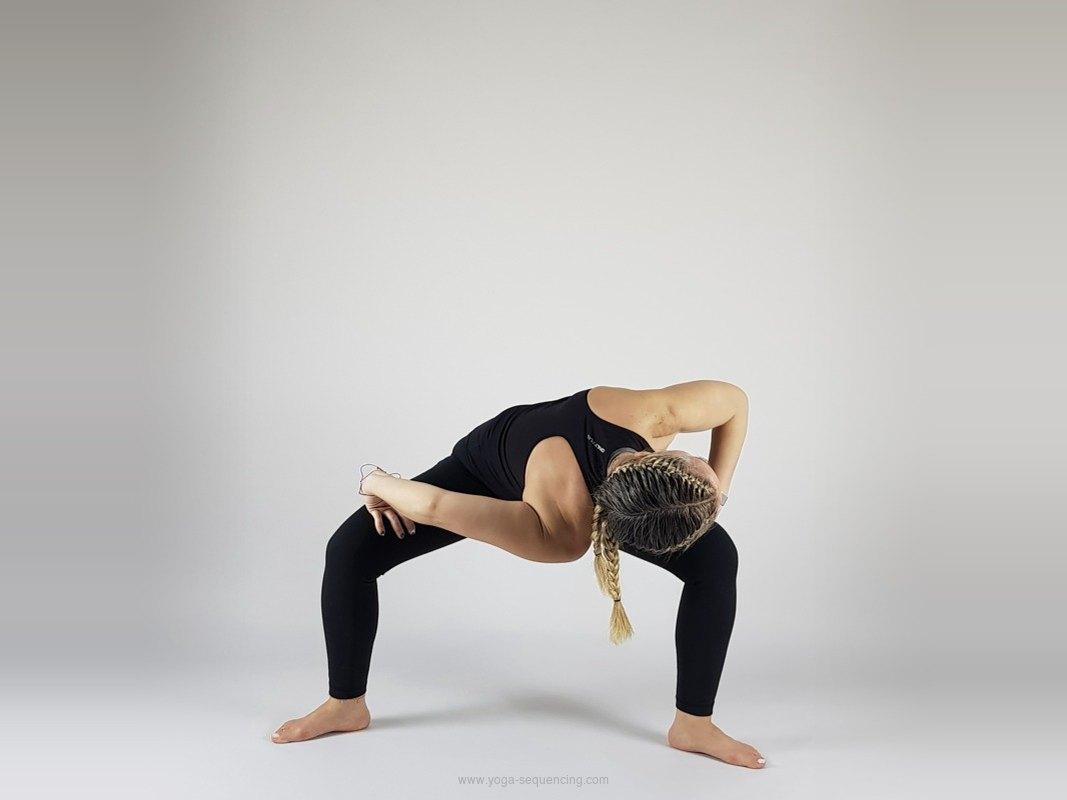
Goddess Twist (Parivrtta Utkata Konasana) adds spinal rotation to the already powerful Goddess Pose stance. Standing with feet wide and toes turned out, knees bent in a deep squat, the torso rotates while maintaining the strong foundation of the lower body. This combination builds tremendous leg strength—particularly in the inner thighs, glutes, and quadriceps—while also creating spinal mobility and core engagement. The twist adds the detoxifying benefits of rotational movement to the strength-building power pose. Goddess Twist embodies the fierce, powerful energy of the divine feminine while demanding focus and determination. It is commonly used in Power Yoga and strength-focused sequences.
Muscles Worked in Goddess Twist
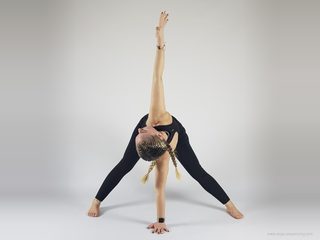
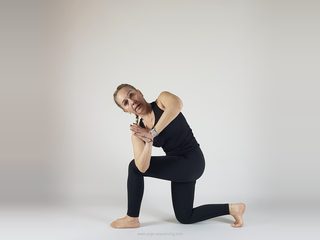
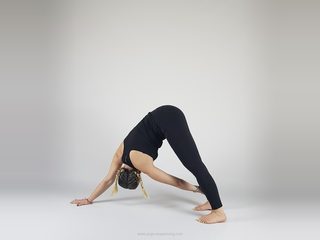
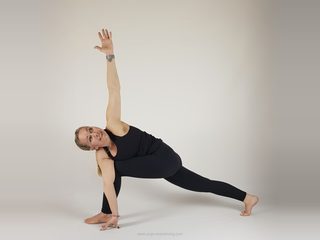
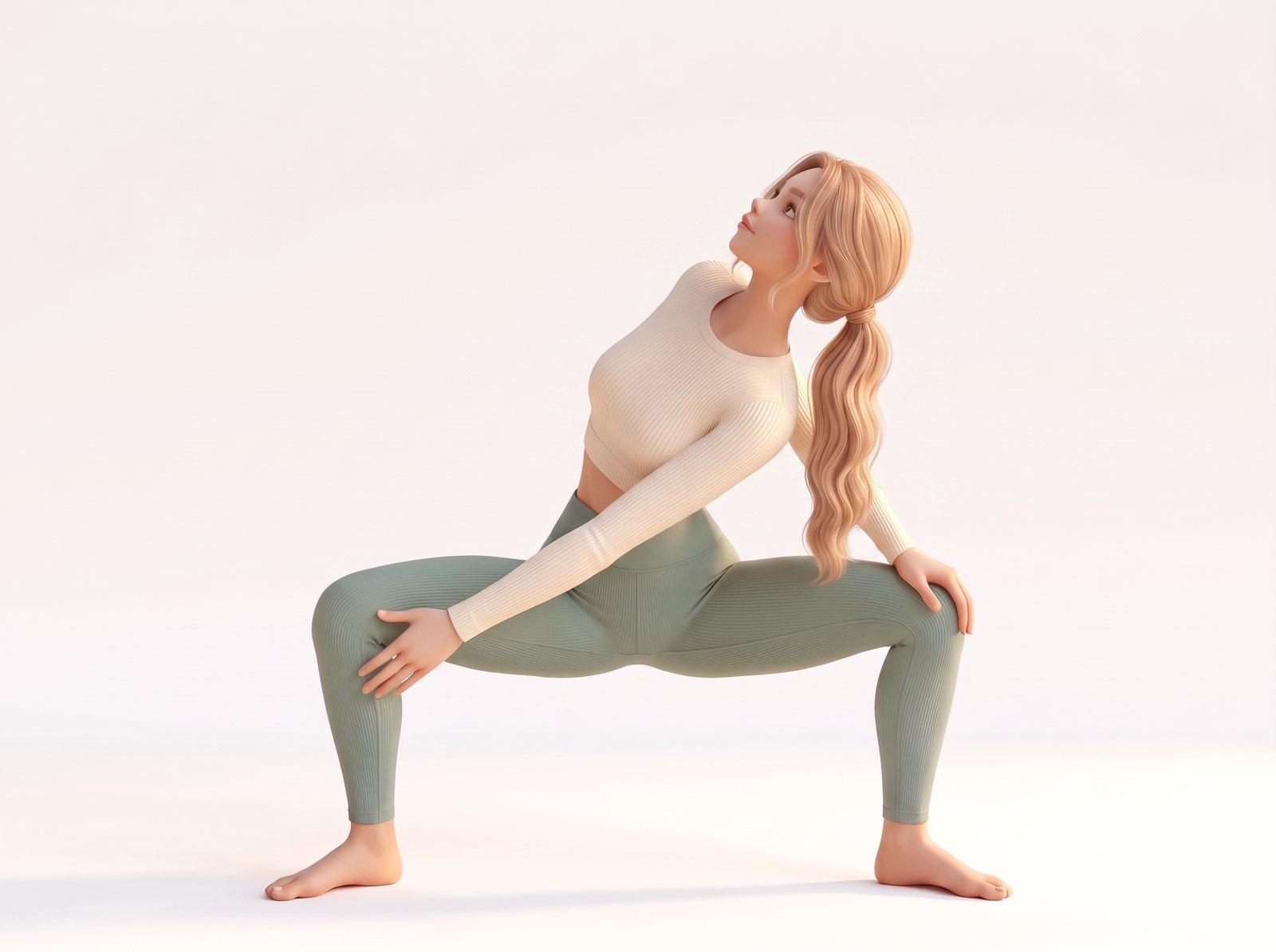
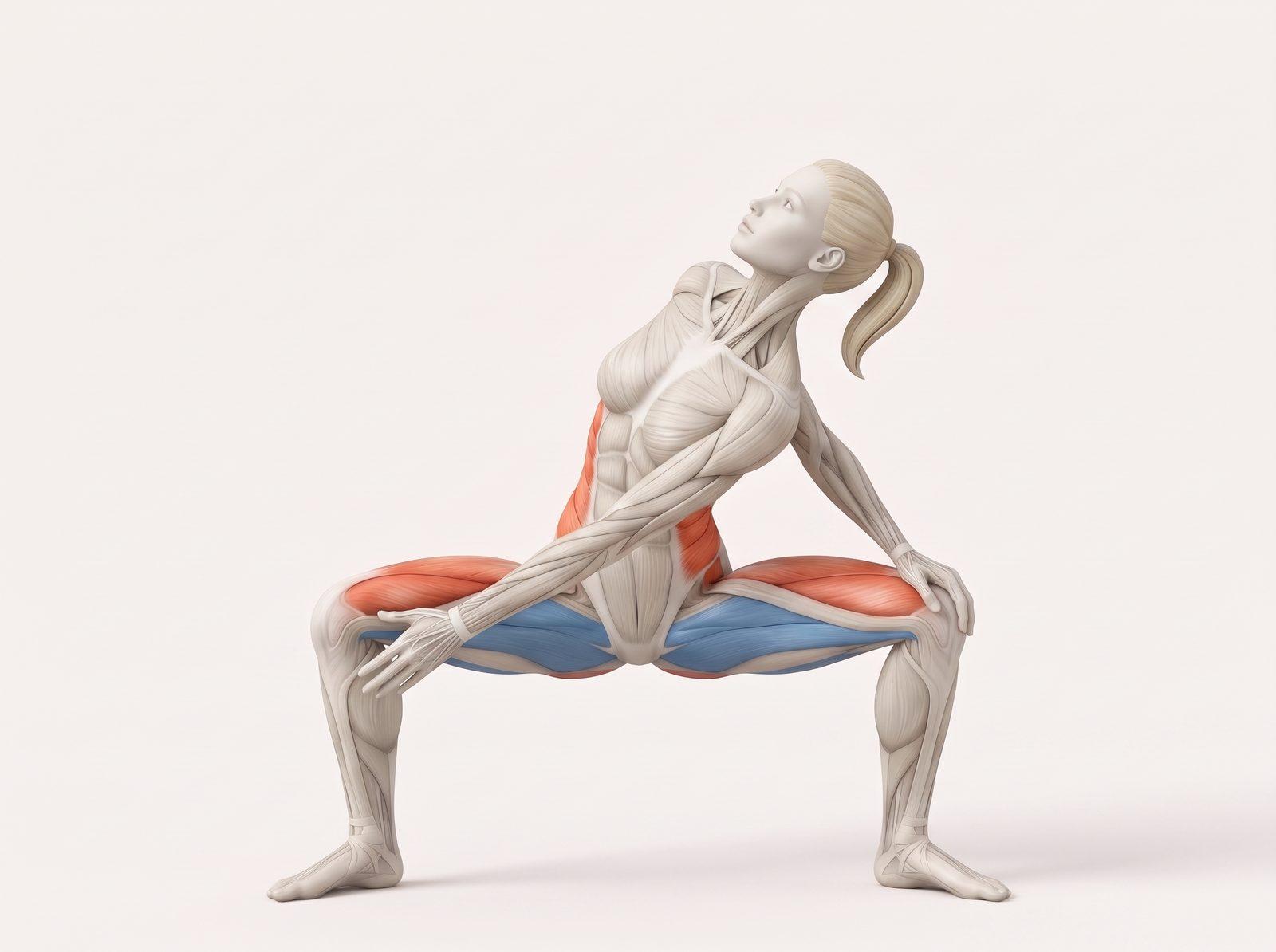
Goddess Twist in the photo holds a wide, deep squat with the knees out over the toes, one hand pressing the near knee while the other arm reaches down to the opposite thigh, turning the chest and lifting the gaze. The quadriceps and glutes hold the squat and the obliques turn the torso, while the inner thighs stretch.
Working
- Quadriceps (quadriceps femoris)
- Glutes (gluteus maximus)
- Obliques (external and internal obliques, turning the torso)
Stretching
- Inner thighs (adductors)
Also holding you steady: your deep hip rotators, which keep the knees turned out, the muscles of your feet and ankles and the muscles along your spine.
Variations and joint actions
- Shoulder dip: Straightening both arms on the knees and dipping one shoulder forward turns the twist into a stretch for the upper back.
- Higher squat: Keeping the thighs above parallel makes the hold lighter on the knees.
- Hips flexion, wide abduction and external rotation
- Knees flexion, about 90°, over the toes
- Ankles dorsiflexion, feet turned out
- Spine axial rotation with slight extension
- Shoulders one arm reaching down across the body, the other pressing the knee
- Neck rotation and extension, gaze up
Roles are qualitative — this section does not measure how hard any muscle works. References: Leslie Kaminoff & Amy Matthews, Yoga Anatomy (Human Kinetics); Ray Long, The Key Muscles of Yoga (Bandha Yoga).
Step-by-Step Instructions
- 1
Stand with feet wide apart, about 3-4 feet
- 2
Turn toes out to 45 degrees
- 3
Bend knees deeply, sinking into a wide squat
- 4
Keep knees tracking over the middle toes
- 5
Place hands on thighs or bring to prayer at heart
- 6
Inhale to lengthen the spine
- 7
Exhale and rotate the torso to the right
- 8
If hands are on thighs, press into the left thigh for leverage
- 9
Keep the hips low throughout the twist
- 10
Hold for 5 breaths
- 11
Return to center and twist to the other side
Alignment Cues
- Feet wider than hip-width, toes turned out
- Knees bent deeply, tracking over toes
- Thighs parallel to the floor if possible
- Spine stays long and tall before and during twist
- Hips remain low—don't rise up to twist
- Shoulders stay level
- Twist initiates from the thoracic spine
Benefits
- Builds strength in thighs, glutes, and inner thighs
- Creates spinal rotation and mobility
- Opens the hips and groin
- Strengthens the core through rotational stability
- Builds heat and energy in the body
- Improves balance and focus
- Combines strength work with flexibility
- Empowering and energizing
Modifications
- Don't squat as deep if knees are sensitive
- Keep hands on thighs for support
- Reduce the twist rotation
- Practice against a wall
Variations
- Add arms overhead in the twist
- Pulse in the squat while twisted
- Add a side bend to the twist
- Flow between both sides dynamically
Cautions & Contraindications
Cautions
- Keep knees tracking over toes
- Don't let knees collapse inward
- Maintain the squat depth while twisting
- Keep the spine long before rotating
- Avoid if knees are bothered by wide squats
Avoid this pose if you have:
- Knee injuries
- Hip injuries
- Spinal disc problems
- Low blood pressure
- Groin strains
Quick Facts
Primary Focus
legsSecondary Focus
Suggested Hold
30 seconds
Tags