
Extended Side Angle Variation
Utthita Parsvakonasana
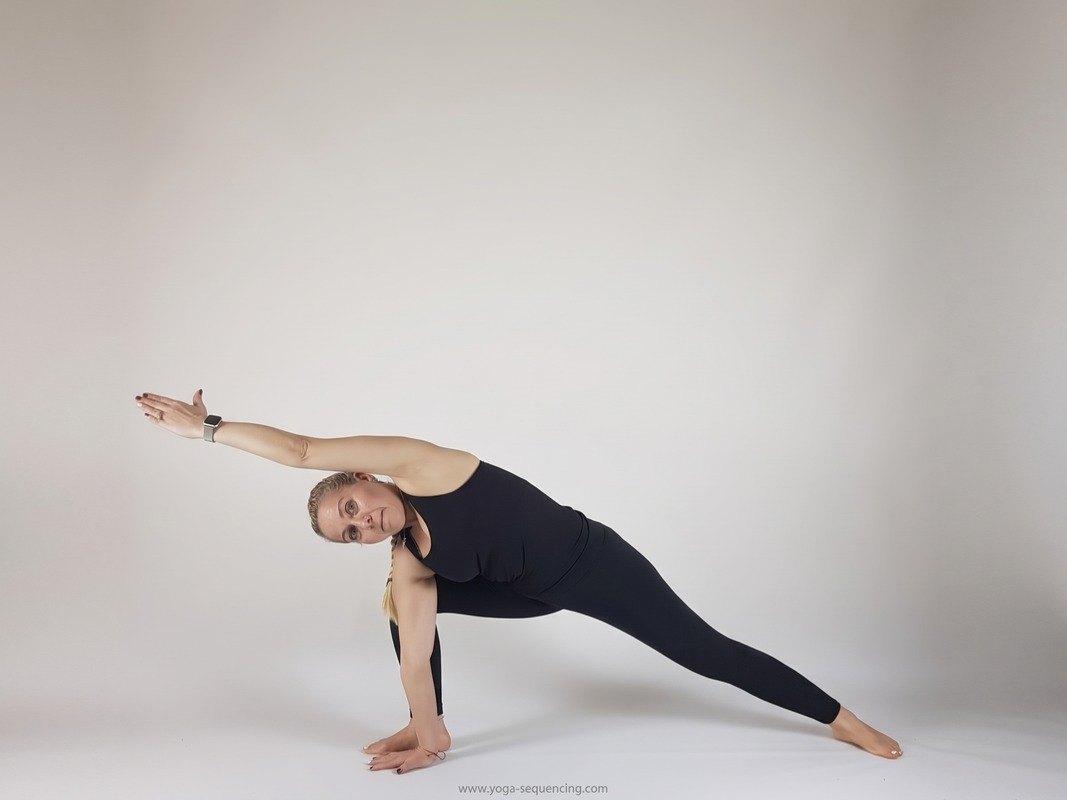
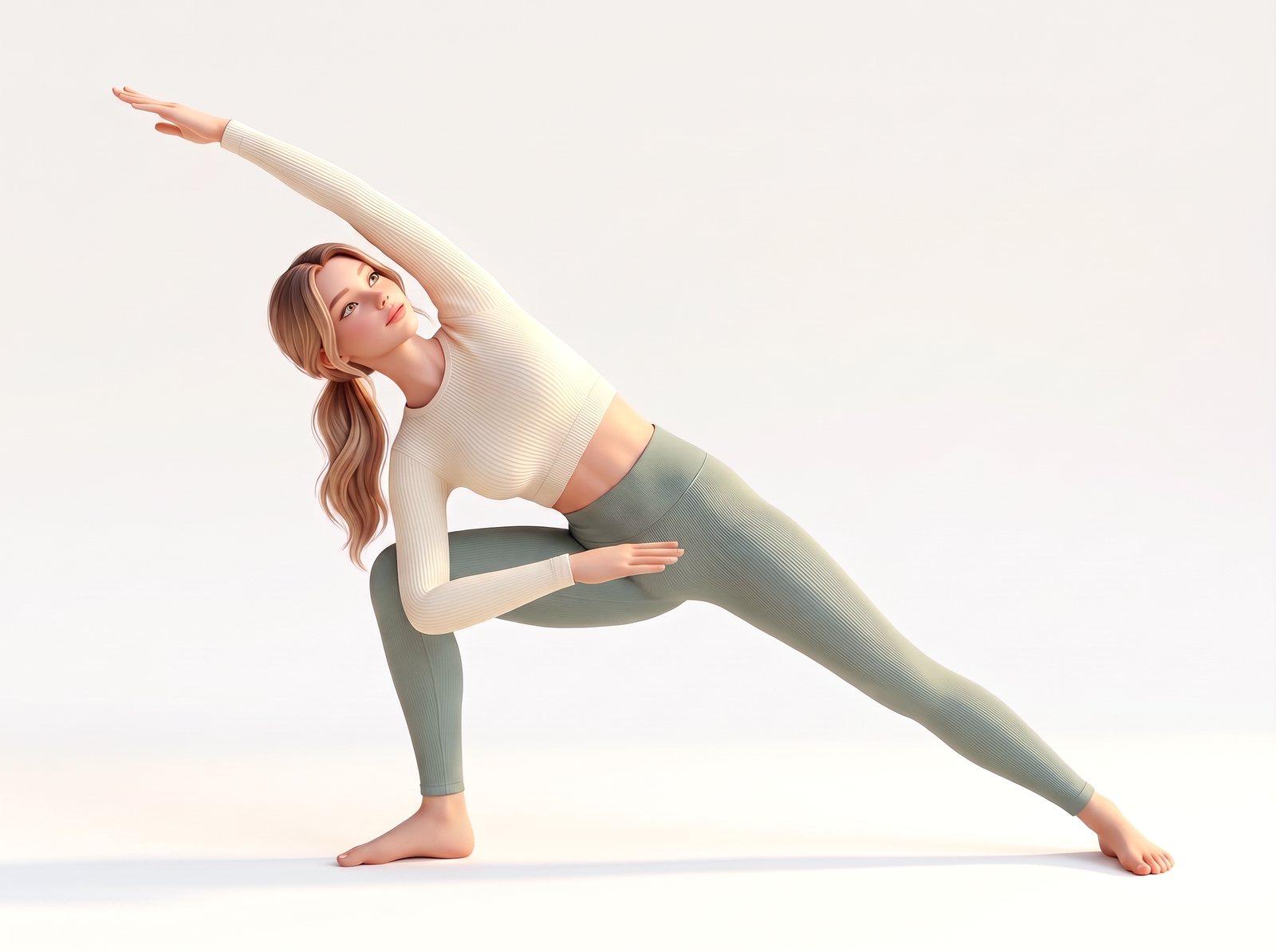
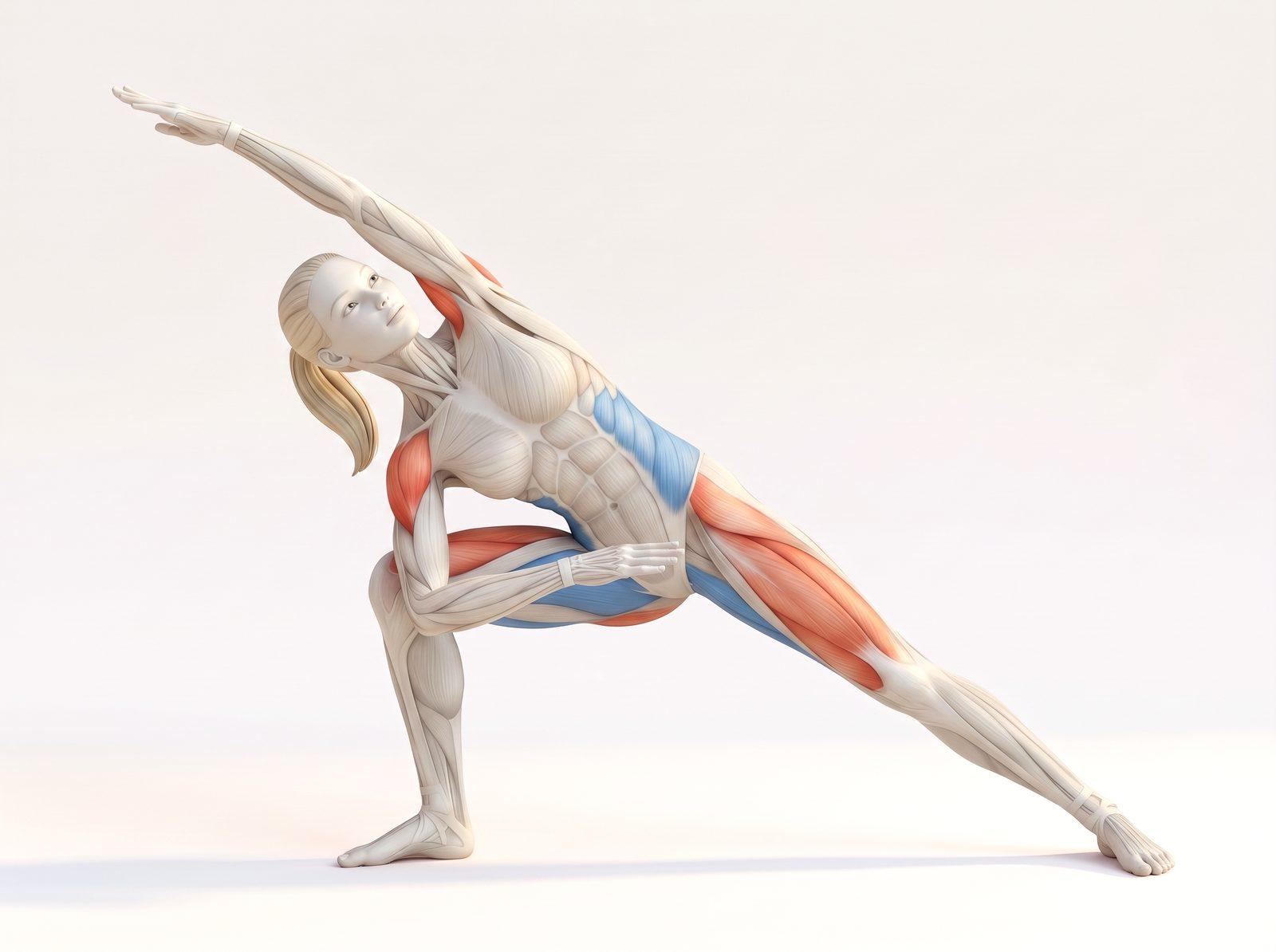
Working: Front-leg quadriceps, Front-leg glutes, Back-leg quadriceps, Top-arm shoulder
Stretching: Inner thighs, Top-side waist, Top-side lats
Full muscle breakdown ↓About This Pose
Extended Side Angle Variation explores different expressions of Utthita Parsvakonasana, one of yoga's fundamental standing poses. The classic pose creates a long line from the outer edge of the back foot through the extended fingertips, opening the entire side body. Variations might include forearm on thigh instead of hand to floor, bound variations, or modified arm positions. These options make the pose accessible to practitioners at different levels while allowing more advanced students to explore greater depth. Understanding variations helps practitioners find the expression that best serves their body.
Muscles Worked in Extended Side Angle Variation
This Extended Side Angle, with the bottom hand on the floor, works the quadriceps and glutes of the bent front leg and the back-leg quadriceps, while it stretches the inner thighs and the whole top side of the body from the waist through the lats to the fingertips.
Working
- Front-leg quadriceps (quadriceps femoris)
- Front-leg glutes (gluteus maximus)
- Back-leg quadriceps (quadriceps femoris)
- Top-arm shoulder (deltoids)
Stretching
- Inner thighs (adductors)
- Top-side waist (obliques)
- Top-side lats (latissimus dorsi)
Also holding you steady: your core, the muscles along your spine, deep hip rotators, which keep the front knee in line and the muscles of your feet and ankles.
Variations and joint actions
- Forearm on the front thigh: The classic entry: less depth in the front hip and less stretch along the top side.
- Hand on a block: Raises the floor so the chest can stay open without collapsing toward the front leg.
- Front hip deep flexion and external rotation
- Front knee flexion, over the ankle
- Back hip abduction
- Back knee extension
- Spine long, tilted sideways
- Top shoulder flexion, arm reaching past the ear
Roles are qualitative — this section does not measure how hard any muscle works. References: Leslie Kaminoff & Amy Matthews, Yoga Anatomy (Human Kinetics); Ray Long, The Key Muscles of Yoga (Bandha Yoga).
Step-by-Step Instructions
- 1
From Warrior II, lean torso toward front leg
- 2
Choose arm variation: forearm on thigh, hand to floor, or block
- 3
Extend top arm overhead, creating long line
- 4
Open chest toward ceiling
- 5
Ground through back foot
- 6
Keep front knee tracking over ankle
- 7
Reach actively through top arm
- 8
Hold for 5-8 breaths
- 9
Press down to rise
- 10
Switch sides
Alignment Cues
- Front knee at 90 degrees
- Bottom hand or forearm provides support
- Top arm extends overhead
- Chest rotates toward ceiling
- Back foot firmly grounded
- One long line from foot to fingertip
- Core engaged
Benefits
- Stretches the entire side body
- Strengthens legs and core
- Opens hips and groin
- Builds stamina and endurance
- Improves balance
- Accessible at multiple levels
- Creates length from foot to fingertip
- Energizing and opening
Modifications
- Forearm on thigh instead of hand to floor
- Use a block under bottom hand
- Keep top hand on hip
- Shorten stance
Variations
- Hand to floor inside or outside foot
- Bound variation
- Adding twist
- Half bind
Cautions & Contraindications
Cautions
- Keep front knee over ankle
- Don't collapse into bottom shoulder
- Maintain long spine
- Keep back foot grounded
- Choose variation appropriate for your body
Avoid this pose if you have:
- Knee injuries
- Hip injuries
- Shoulder injuries
- High blood pressure
Quick Facts
Primary Focus
hipsSecondary Focus
Suggested Hold
30 seconds
Tags
Equipment
Related Poses
Sequences with this pose
Teacher-written sequences that use Extended Side Angle Variation.
A Yoga Sequence That Treats Your Knees Like the Hinges They Are
30 min · 14 poses · all-levels
A vinyasa flow you can actually teach on Tuesday night
60 min · 15 poses · intermediate
A hatha sequence built around the holds, not the transitions
75 min · 18 poses · all-levels
Ashtanga Yoga Primary Series Sequence
90 min · 16 poses · advanced