Extended Leg Balance
Utthita Pada Asana
About This Pose
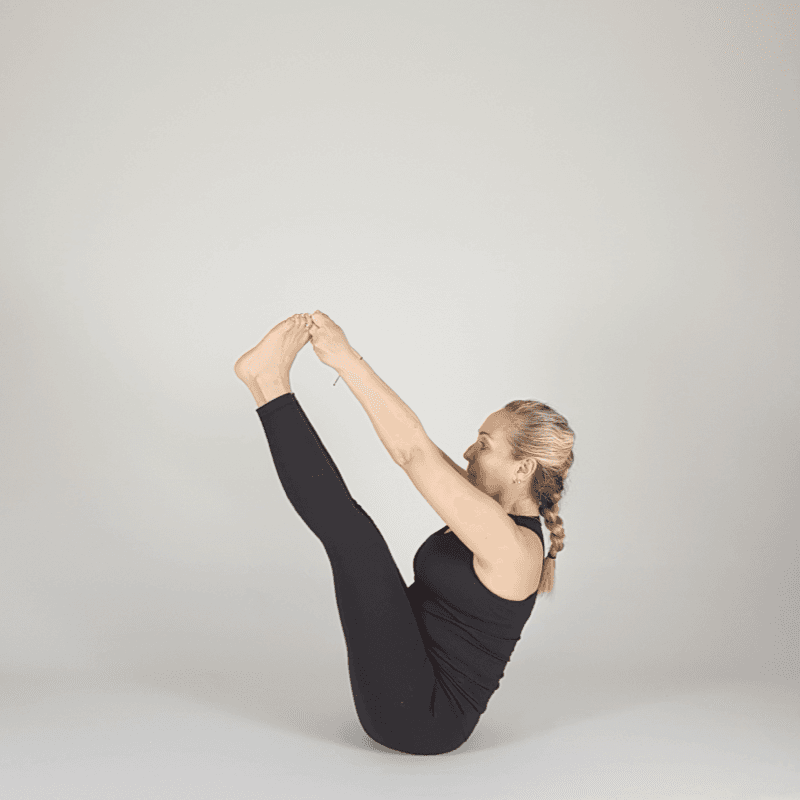
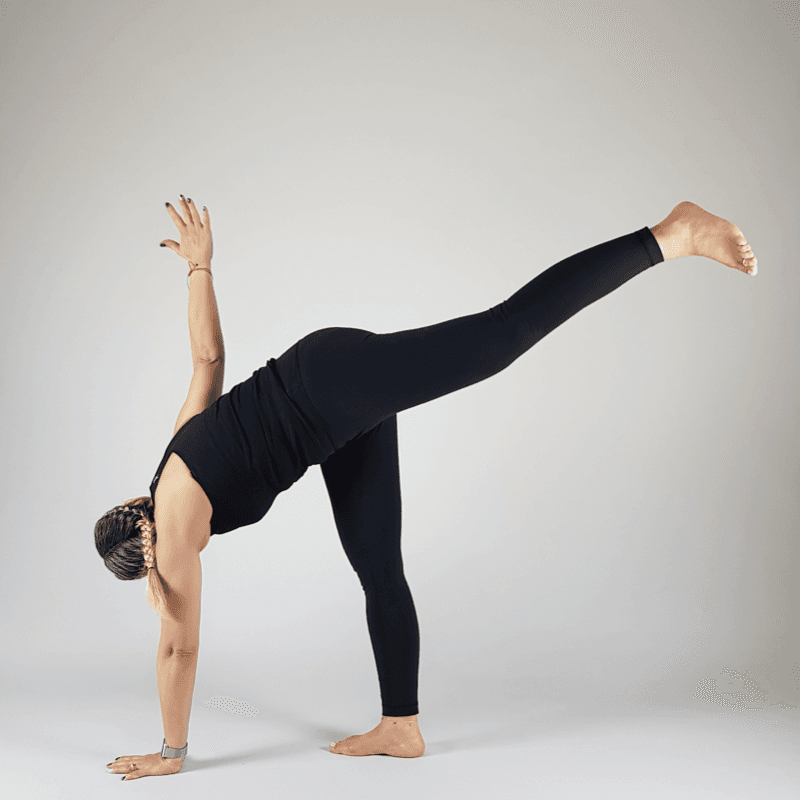
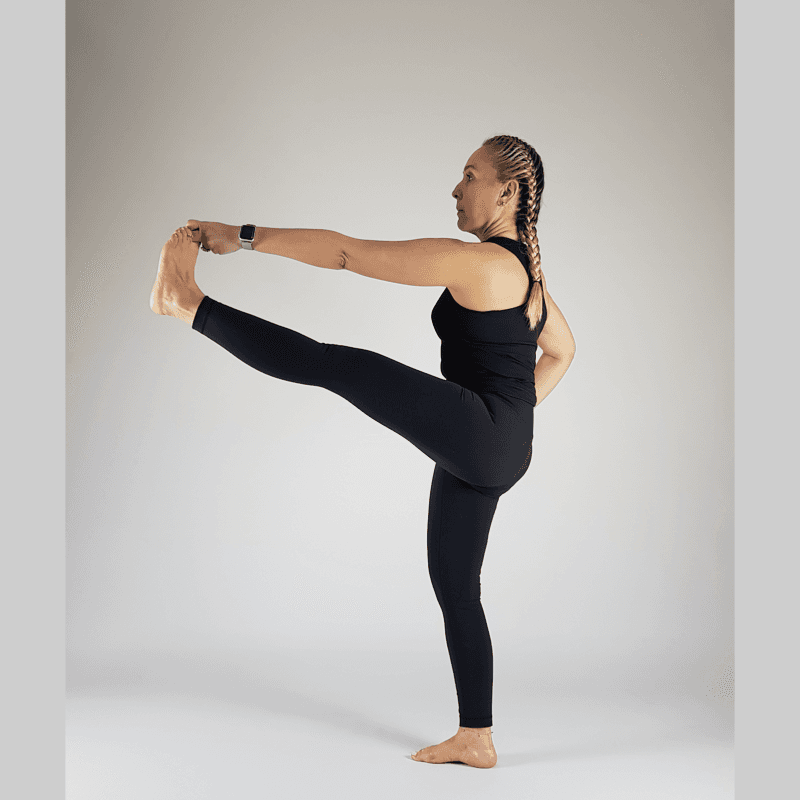
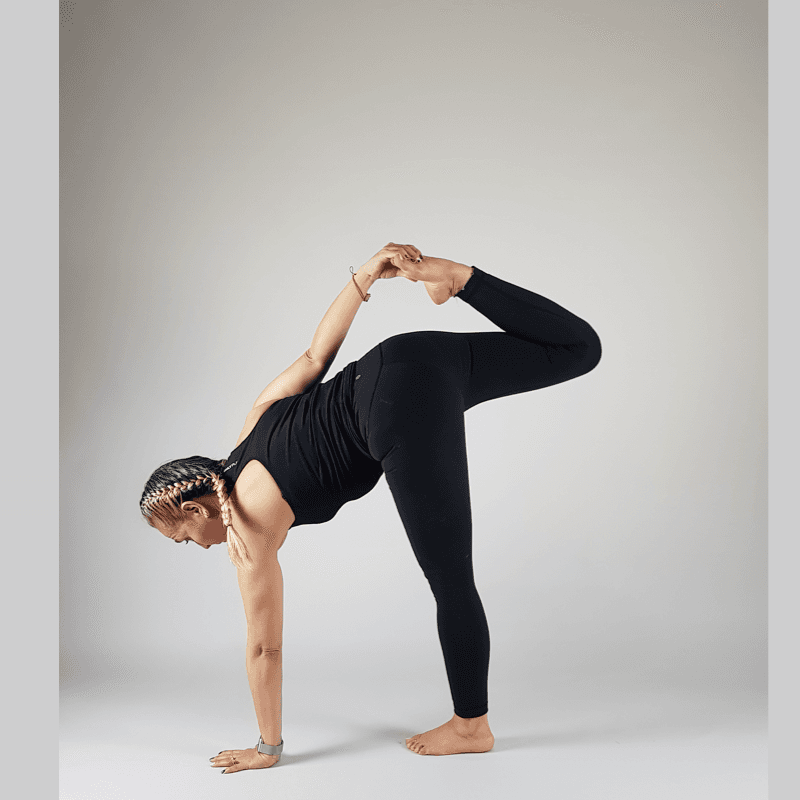
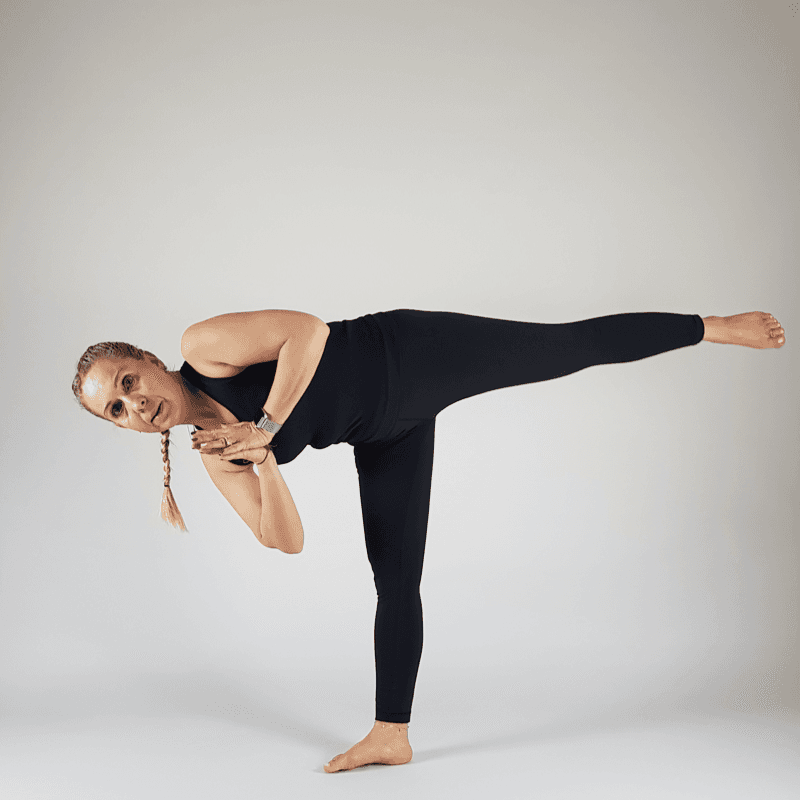
Extended Leg Balance (Utthita Pada Asana) is a foundational standing balance that extends one leg forward while the arms provide counterbalance. Unlike the hand-to-toe variations, this pose often does not involve holding the foot, making it more accessible while still challenging balance and building leg strength. The pose develops the hip flexor strength needed to hold the leg elevated, core stability to maintain alignment, and standing leg endurance. It serves as an excellent preparatory pose for more complex balances and is valuable in its own right for building functional strength. The simplicity of the shape allows practitioners to focus purely on the fundamentals of balance—grounding, alignment, and breath.
Step-by-Step Instructions
- 1
Begin in Mountain Pose with feet hip-width apart
- 2
Shift your weight onto the left foot
- 3
Engage the left thigh by lifting the kneecap
- 4
Lift the right knee toward the chest
- 5
Extend the right leg forward, keeping it at hip height or below
- 6
Flex the right foot, reaching through the heel
- 7
Extend the arms forward at shoulder height for balance
- 8
Keep the spine tall and chest lifted
- 9
Fix your gaze on a steady point ahead
- 10
Hold for 5-10 breaths
- 11
Lower the leg slowly with control
- 12
Repeat on the second side
Alignment Cues
- Ground firmly through all four corners of the standing foot
- Keep the standing leg strong with a micro-bend
- Maintain level hips—don't let the lifted hip drop
- Keep the spine vertical and elongated
- Engage the hip flexor to hold the leg elevated
- Keep arms active and reaching forward
- Relax the shoulders down away from the ears
Benefits
- Builds hip flexor strength and endurance
- Strengthens the standing leg and ankle
- Improves core stability and engagement
- Develops balance and proprioception
- Stretches the hamstrings of the lifted leg gently
- Prepares the body for more complex balances
- Improves posture and body awareness
- Builds mental focus and concentration
Modifications
- Keep the knee bent if hip flexors are weak
- Lower the leg height to maintain good form
- Hold onto a wall or chair for balance
- Practice with the back against a wall
- Place hands on hips instead of extending forward
Variations
- Arms overhead for increased challenge
- Eyes closed for advanced balance work
- Pulse the leg up and down to build strength
- Add ankle circles while holding the position
- Progress to holding the toe or using a strap
Cautions & Contraindications
Cautions
- Keep the standing knee soft—avoid locking
- Only lift the leg as high as you can with good form
- Maintain an upright torso—don't lean back
- Engage the core to support the lower back
- Practice near a wall initially if needed
Avoid this pose if you have:
- Acute hip flexor strain
- Knee injuries in the standing leg
- Severe balance disorders
- Lower back pain
- Ankle instability
Quick Facts
Primary Focus
coreSecondary Focus
Suggested Hold
30 seconds
Tags
Equipment