Extended Hand to Big Toe Pose (Side B)
Utthita Hasta Padangusthasana C
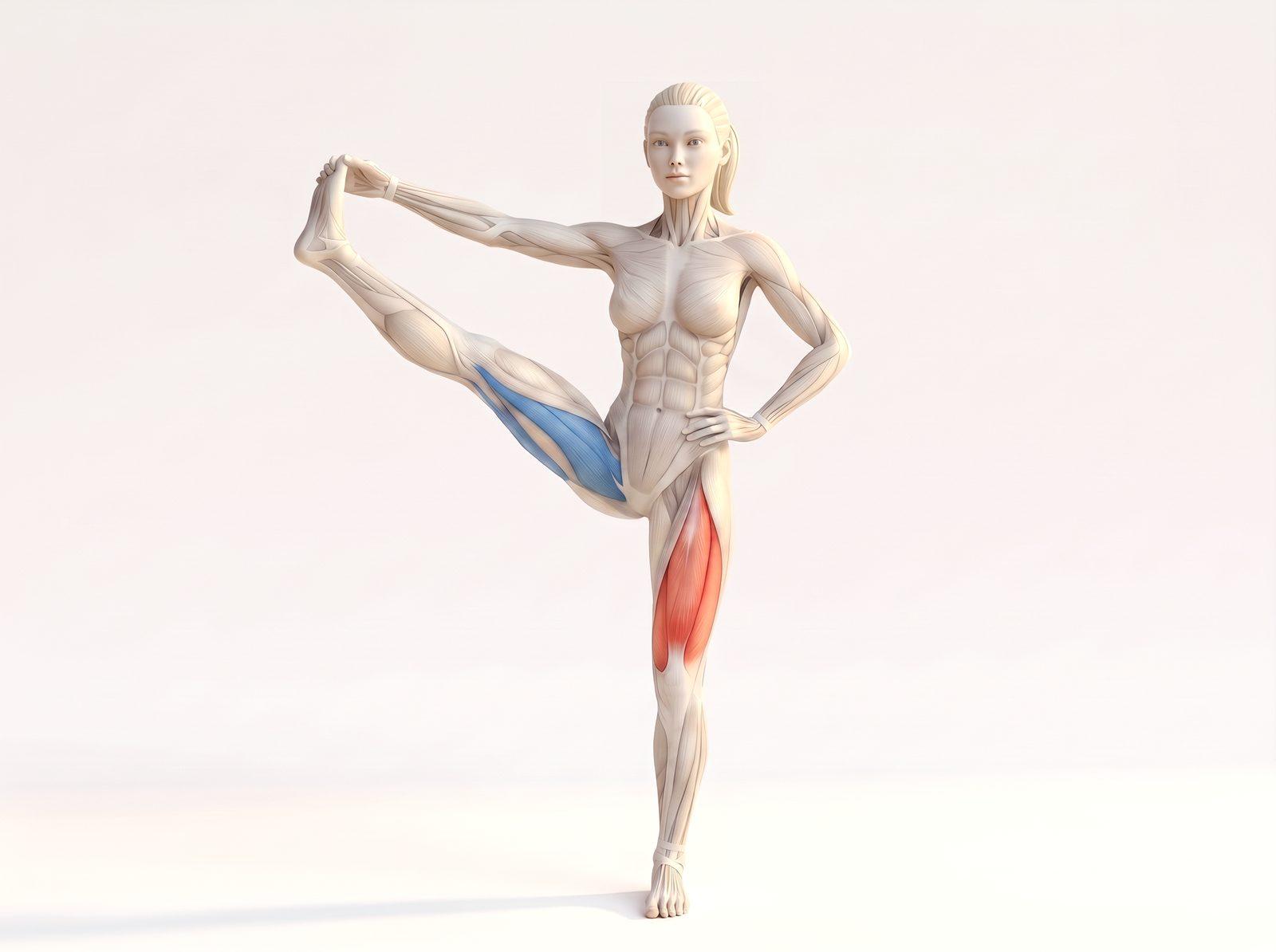
Working: Standing-leg quadriceps, Standing-leg glutes
Stretching: Lifted-leg inner thigh, Lifted-leg hamstrings
Full muscle breakdown ↓About This Pose
Extended Hand to Big Toe Pose Side B (Utthita Hasta Padangusthasana C) adds a spinal twist to the side-extended leg position, creating a complex pose that challenges balance, flexibility, and coordination simultaneously. With the leg open to one side and the torso rotating in the opposite direction, this variation requires exceptional body awareness and control. The twist adds therapeutic benefits for the spine while the leg position continues to open the hips and stretch the inner thigh. This pose represents the culmination of the Extended Hand to Big Toe series, demanding mastery of the previous variations. It teaches practitioners to find stability and grace even in complex, multi-directional positions.
Muscles Worked in Extended Hand to Big Toe Pose (Side B)
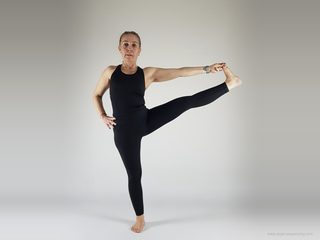
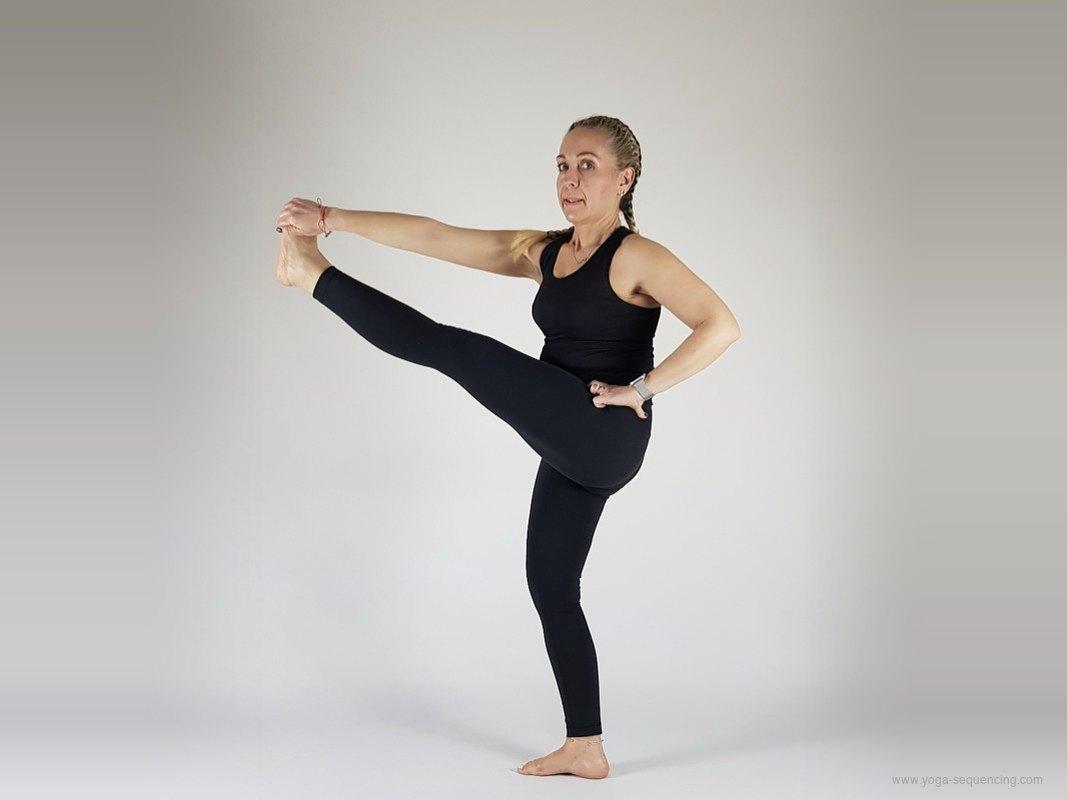
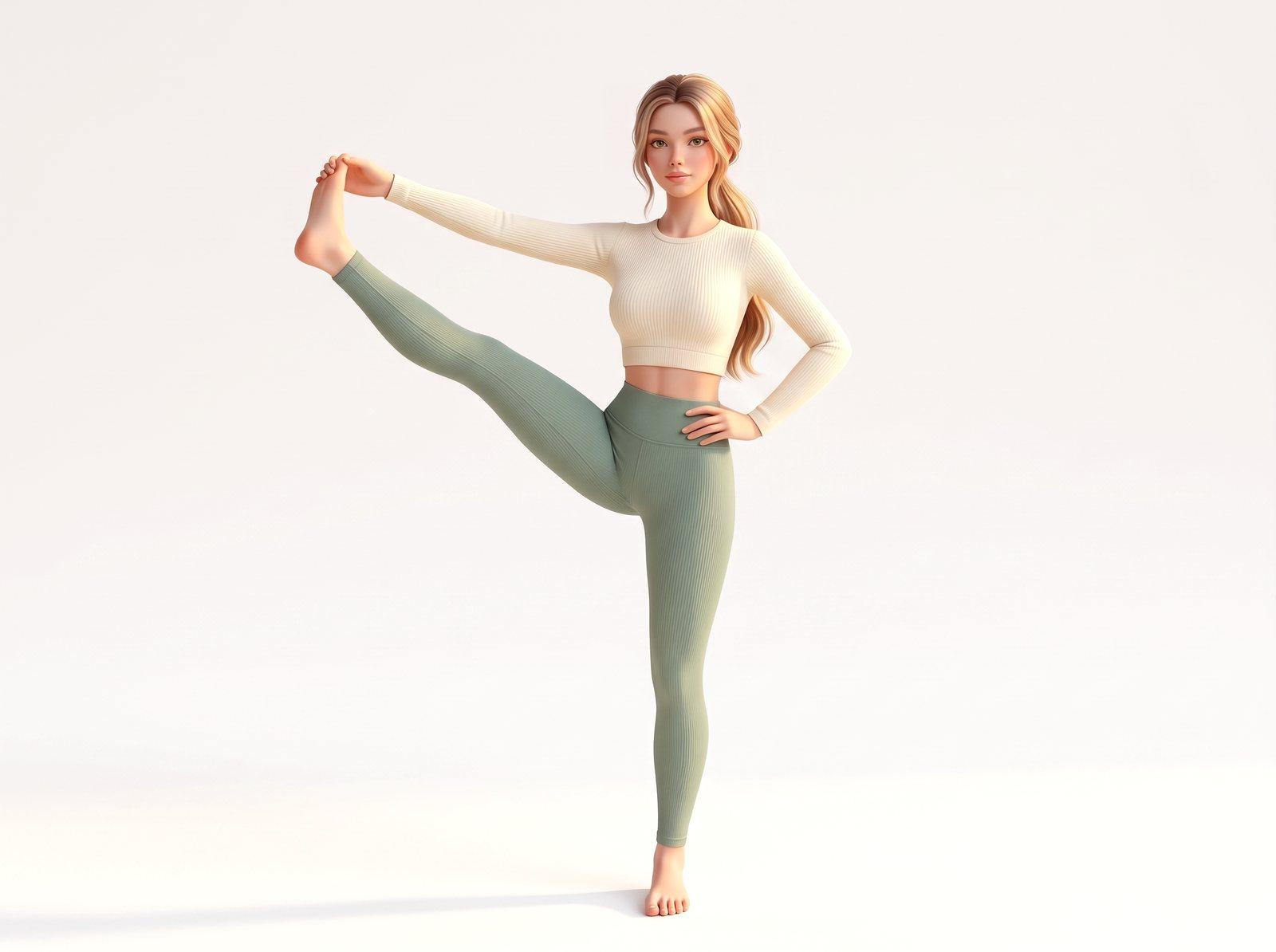
The photo shows the side version of Extended Hand-to-Big-Toe Pose (Utthita Hasta Padangusthasana B): standing on one leg, the other leg straight out to the side held at the big toe, free hand on the hip. The standing leg and hip stabilisers do the work while the lifted-leg inner thigh and hamstrings stretch.
Working
- Standing-leg quadriceps (quadriceps femoris)
- Standing-leg glutes (gluteus medius, gluteus maximus)
Stretching
- Lifted-leg inner thigh (adductors)
- Lifted-leg hamstrings (biceps femoris, semitendinosus, semimembranosus)
Also holding you steady: your core, the muscles of your feet and ankles and holding-arm shoulder.
Variations and joint actions
- Strap: A strap around the foot keeps the spine upright when the hamstrings are tight.
- Bent knee: Holding the bent knee out to the side keeps the hip opening without the hamstring load.
- Standing hip neutral, pelvis level
- Standing knee extension
- Lifted hip abduction, flexion and external rotation
- Lifted knee extension
- Holding shoulder abduction, arm out to the side
Roles are qualitative — this section does not measure how hard any muscle works. References: Leslie Kaminoff & Amy Matthews, Yoga Anatomy (Human Kinetics); Ray Long, The Key Muscles of Yoga (Bandha Yoga).
Step-by-Step Instructions
- 1
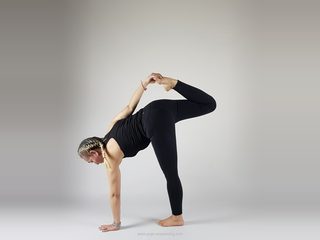
Begin in Extended Hand to Big Toe Pose Side A (leg open to the side)
- 2
Ensure you are stable with the leg extended to the right
- 3
Keep holding the right toe with the right hand
- 4
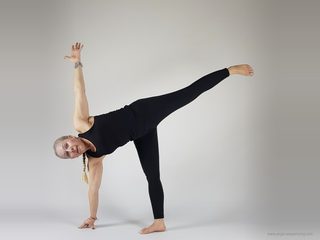
Begin to rotate the torso to the left (toward the standing leg)
- 5
Extend the left arm behind you or place it on the left hip
- 6
Turn the gaze over the left shoulder
- 7
Keep both hips as level as possible
- 8
Maintain the height of the extended leg
- 9
Hold for 3-5 breaths
- 10
Unwind the twist before releasing the leg
- 11
Return to center and repeat on the second side
Alignment Cues
- Keep the extended leg at hip height or slightly below
- Initiate the twist from the thoracic spine, not the lower back
- Maintain level hips despite the rotation
- Keep the standing leg strong and grounded
- Engage the core to support the twist
- Keep both shoulders drawing down away from ears
- Breathe into the twist to create more space
Benefits
- Combines hip opening with spinal rotation
- Stretches the hamstrings, adductors, and spine
- Builds exceptional balance and coordination
- Strengthens the standing leg and core
- Improves spinal mobility and rotation
- Develops mental focus and body awareness
- Enhances proprioception in complex positions
- Creates space between the vertebrae
Modifications
- Keep the twist minimal until balance is stable
- Use a strap around the foot
- Practice against a wall for support
- Keep the extended knee bent
- Skip the gaze rotation if it affects balance
Variations
- Deepen the twist by reaching the back arm further
- Release the toe and maintain the leg and twist unsupported
- Flow through A, B, and C variations with breath
- Add a bind by wrapping the back arm around the waist
Cautions & Contraindications
Cautions
- Master Side A before adding the twist
- Keep the twist gentle—don't force rotation
- Maintain stability before deepening the twist
- Keep the standing knee soft throughout
- Exit slowly and with control
Avoid this pose if you have:
- Spinal injuries or disc issues
- Acute hamstring or hip injuries
- Severe balance disorders
- SI joint dysfunction
- Pregnancy
- Recent abdominal surgery
Quick Facts
Primary Focus
hipsSecondary Focus
Suggested Hold
25 seconds
Tags
Equipment