Extended Hand to Big Toe Pose A
Utthita Hasta Padangusthasana A
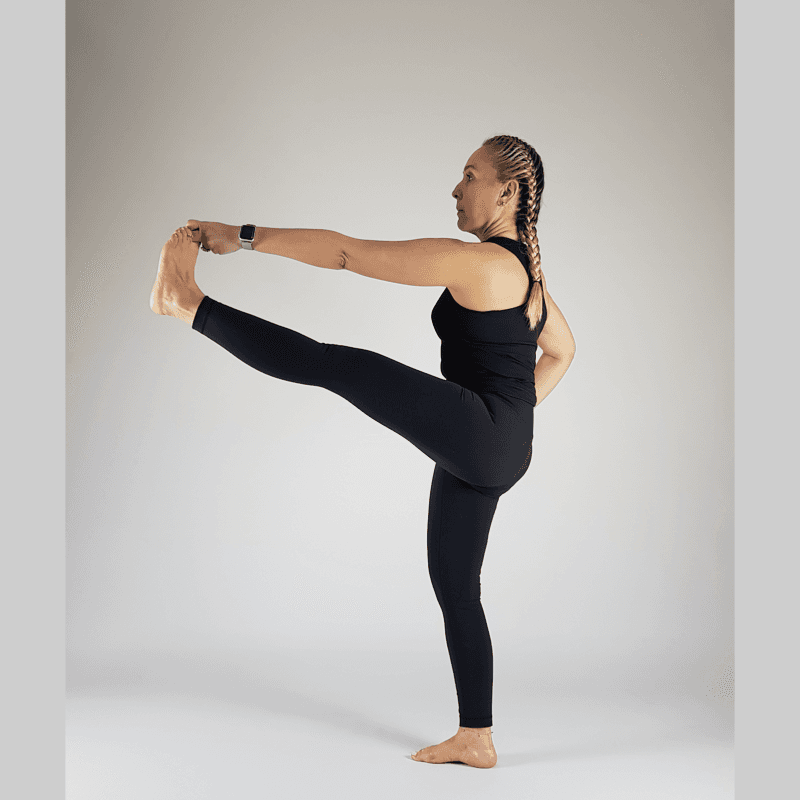
About This Pose
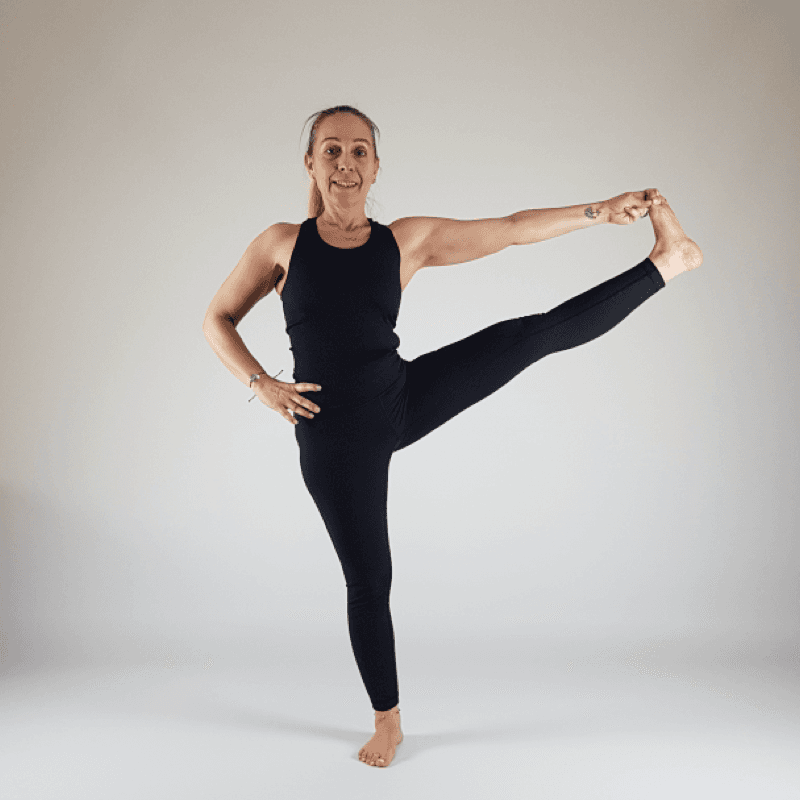
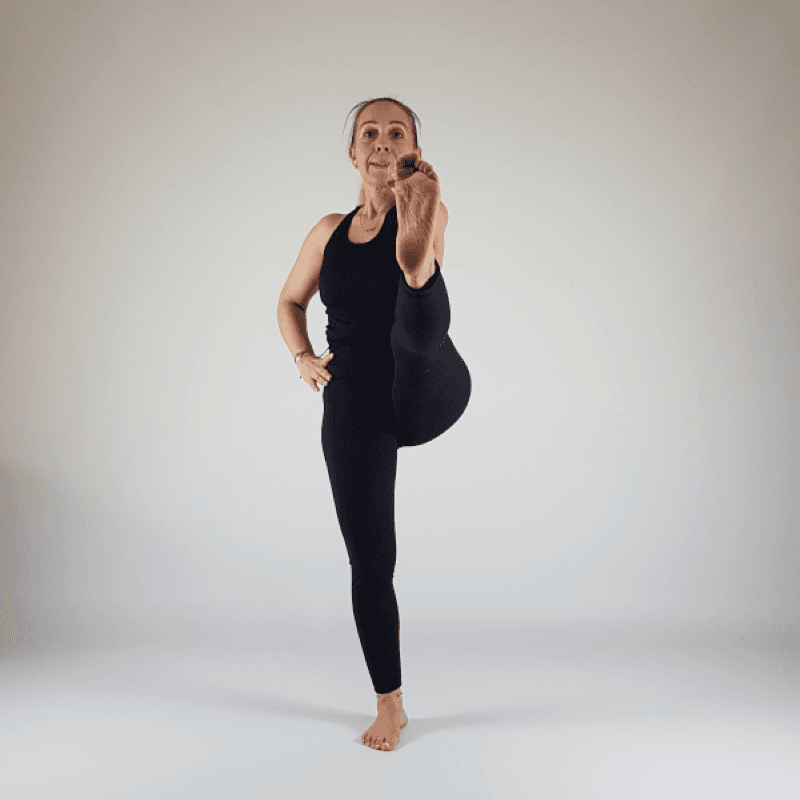
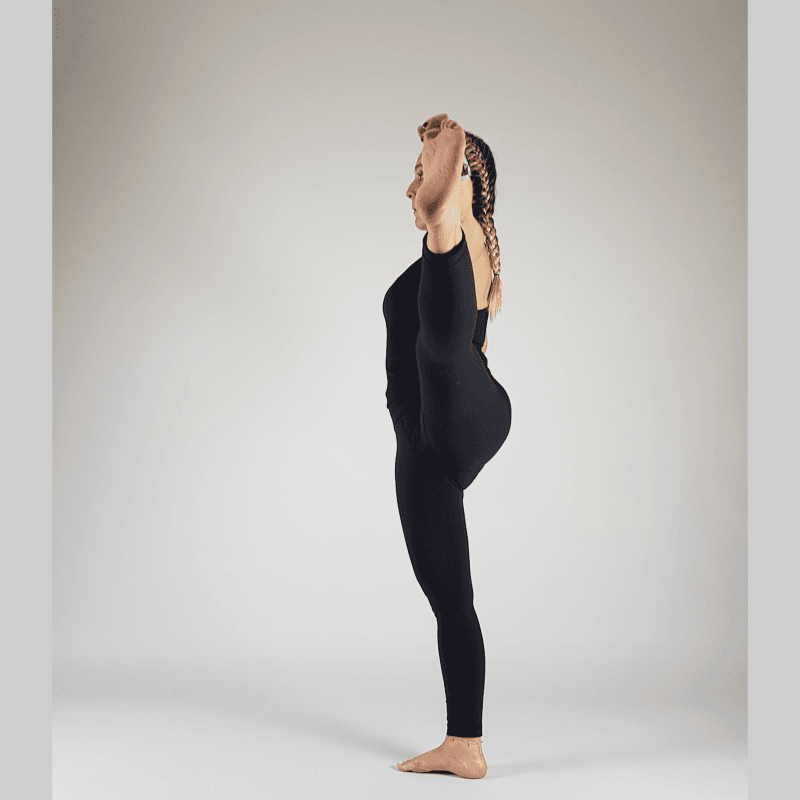
Extended Hand to Big Toe Pose (Utthita Hasta Padangusthasana) is a demanding standing balance that tests flexibility, strength, and concentration simultaneously. The Sanskrit name combines "Utthita" (extended), "Hasta" (hand), "Pada" (foot), "Angustha" (big toe), and "Asana" (pose). In this variation (A), the leg extends forward while holding the big toe, deeply stretching the hamstrings and hip flexors while strengthening the standing leg. The pose develops remarkable focus and mental steadiness—if concentration wavers, balance is immediately challenged. Beyond physical benefits, this pose increases stamina, endurance, and perception of your body's center line. It improves balance not only physically but also emotionally, teaching practitioners to find stability even in challenging situations.
Step-by-Step Instructions
- 1
Begin in Mountain Pose (Tadasana), grounding firmly through the left foot
- 2
Shift your weight onto the left leg, engaging the quadriceps to lift the kneecap
- 3
Lift your right knee toward your chest, keeping the spine tall
- 4
Hook your right big toe with the first two fingers and thumb of your right hand (yogi toe lock)
- 5
Place your left hand on your left hip for stability
- 6
On an inhale, begin to extend your right leg forward, straightening as much as possible
- 7
Keep the spine upright and chest open—avoid rounding forward
- 8
Flex the extended foot and reach through the heel
- 9
Fix your gaze on a point ahead (drishti) to maintain balance
- 10
Hold for 5-8 breaths, then release the leg with control
- 11
Return to Mountain Pose and repeat on the second side
Alignment Cues
- Keep the standing leg strong with a micro-bend—don't lock the knee
- Maintain level hips; avoid letting the lifted hip hike up
- Keep the spine vertical and tall, not leaning back or rounding forward
- Draw the upper arm bone into the shoulder socket to stabilize
- Flex the lifted foot and reach through the heel
- Engage the core to support spinal alignment
- Keep both shoulders level and drawing down away from the ears
Benefits
- Deeply stretches the hamstrings, calves, and hip flexors
- Strengthens and stabilizes the standing leg, ankle, and foot
- Improves balance, concentration, and mental focus
- Develops core strength and stability
- Opens the hips and improves hip flexor flexibility
- Lengthens the spine and improves posture
- Burns lower body fat and tones the legs
- Increases stamina and builds mental endurance
- Improves proprioception and body awareness
Modifications
- Use a yoga strap around the foot if you can't reach the toe
- Keep the knee bent while holding the toe or strap
- Hold the knee or shin instead of the toe for a gentler version
- Practice with the back against a wall for balance support
- Rest the lifted foot on a chair or barre at hip height
Variations
- Utthita Hasta Padangusthasana B: Take the leg out to the side
- Revolved variation: Twist the torso toward the lifted leg
- Arms-free variation: Release the toe and keep the leg lifted without holding
- Reclined variation (Supta Padangusthasana): Practice lying on your back
- Dynamic flow: Move between A (forward) and B (side) positions
Cautions & Contraindications
Cautions
- Prioritize spinal alignment over leg height—keep the spine long
- Keep a soft bend in the standing knee to protect the joint
- Don't sacrifice alignment by pulling the leg higher than flexibility allows
- Keep the hips level; avoid pushing the outer hip of the standing leg out
- Use a strap if you can't reach the toe while maintaining alignment
Avoid this pose if you have:
- Acute hamstring strain or injury
- Ankle injury or instability in the standing leg
- Severe lower back pain or disc issues
- Pregnancy in later stages (balance challenges)
- Severe vertigo or balance disorders
- Hip joint injuries or recent hip surgery
- High blood pressure (challenging balance can elevate BP)
Quick Facts
Primary Focus
hamstringsSecondary Focus
Suggested Hold
30 seconds
Tags
Equipment