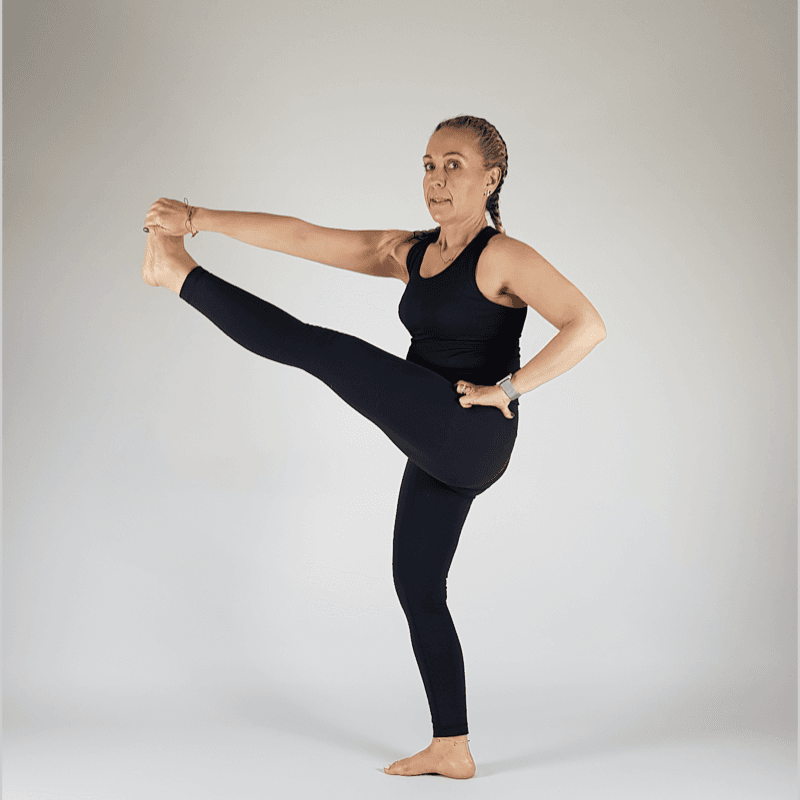
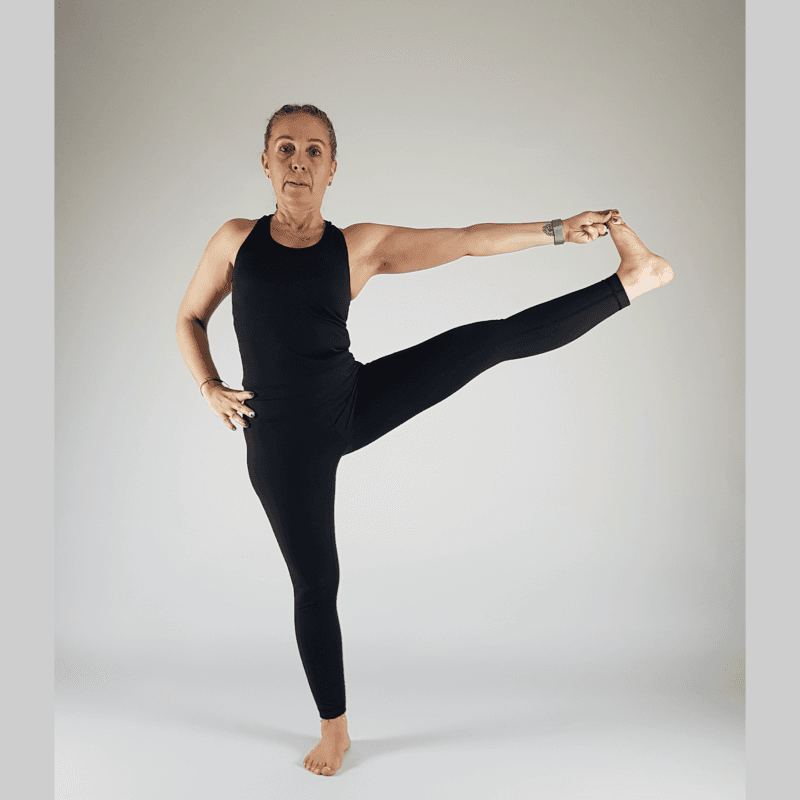
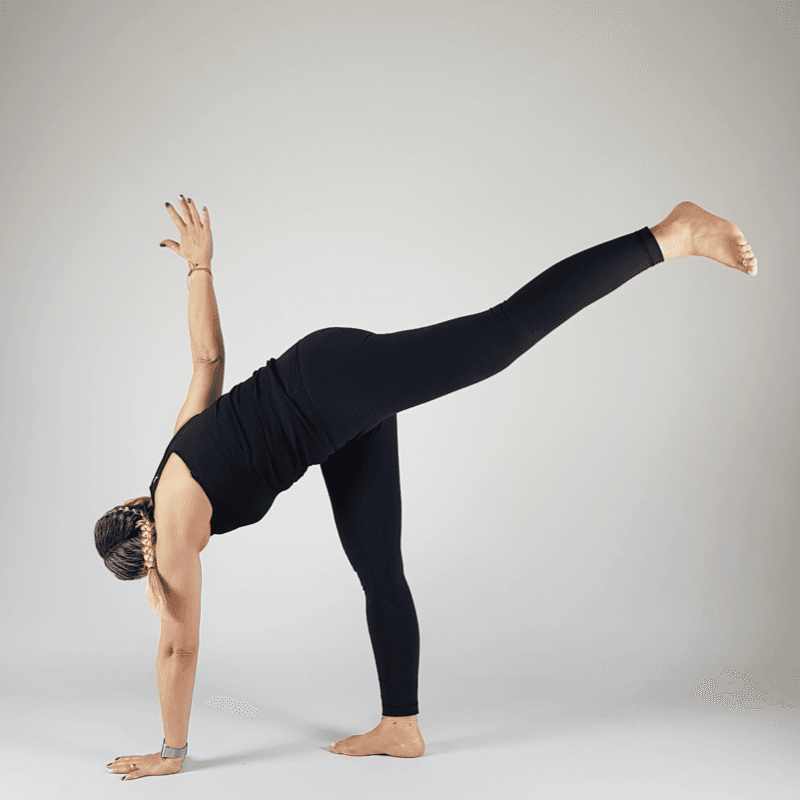
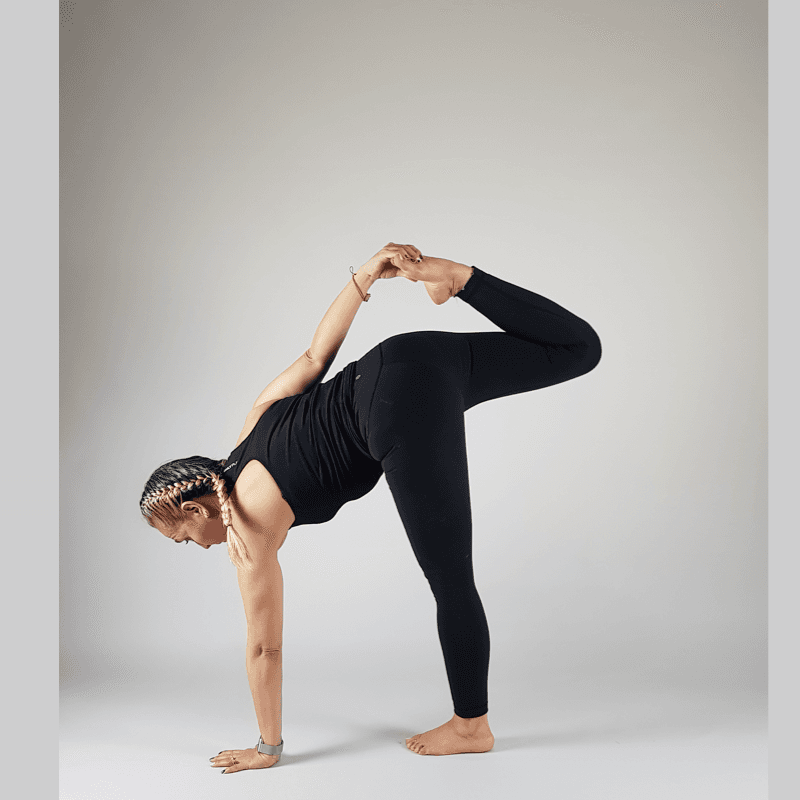
Dancer Pose
Natarajasana
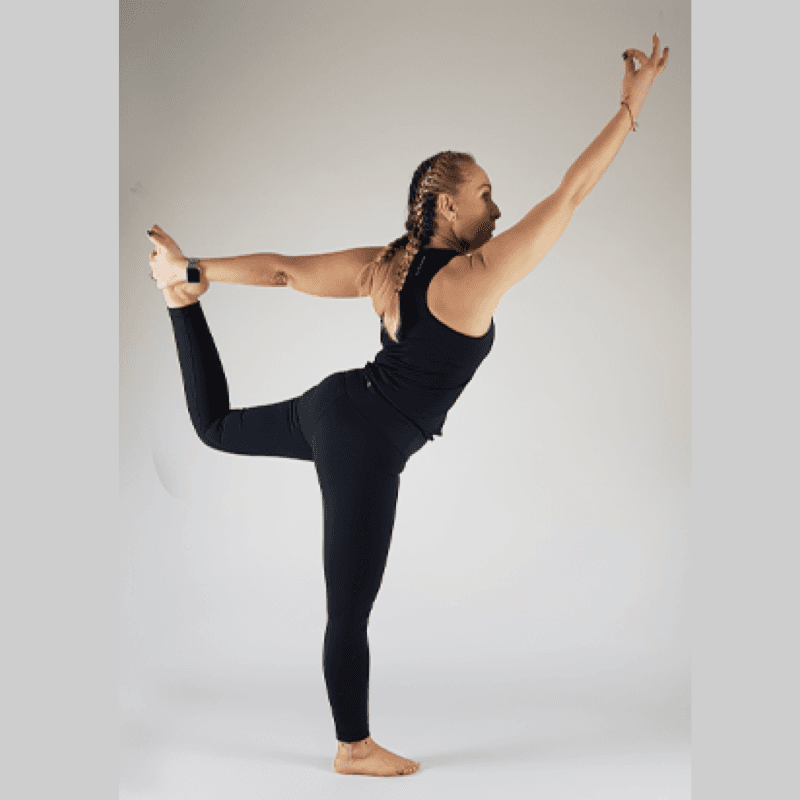
About This Pose
Dancer Pose (Natarajasana), also known as Lord of the Dance Pose, is named after Nataraja, a depiction of Lord Shiva as the cosmic dancer who performs the divine dance to destroy a weary universe and prepare for its renewal. This beautiful and challenging posture combines a deep backbend with a standing balance, requiring flexibility in the shoulders, hip flexors, and quadriceps alongside strength in the standing leg and core. The pose embodies grace, strength, and focused determination—qualities associated with the divine dancer. Natarajasana opens the entire front body while building concentration and emotional steadiness. The energetics of this pose are uplifting, leaving practitioners feeling graceful and elegant like a dancer. It's often used as a peak pose in yoga sequences due to its demanding nature and beautiful expression.
Step-by-Step Instructions
- 1
Begin in Mountain Pose (Tadasana), grounding firmly through the left foot
- 2
Shift weight onto the left leg, engaging the thigh muscles to stabilize the knee
- 3
Bend your right knee and bring your right heel toward your glutes
- 4
Reach back with your right hand and grasp the inside of your right ankle or foot
- 5
Externally rotate your right shoulder so the elbow points up toward the ceiling
- 6
Extend your left arm forward at shoulder height for balance and energy
- 7
Inhale to lengthen the spine; exhale and begin tipping the torso slightly forward
- 8
Press your right foot firmly into your right hand, lifting the leg higher behind you
- 9
Continue reaching the crown of your head forward as the leg rises
- 10
Find the balance point where torso and lifted leg create one beautiful line
- 11
Hold for 5-8 breaths, gazing at a fixed point ahead
- 12
Slowly release back to Mountain Pose and repeat on the second side
Alignment Cues
- Ground down through all four corners of the standing foot; lift the inner arch
- Engage the standing leg's quadriceps by lifting the kneecap without locking
- Keep hips squared as much as possible—avoid rotating the lifted hip open
- Draw the tailbone down to avoid excessive lumbar compression
- Kick the lifted foot into the hand to create lift through the back leg
- Keep the chest open and reaching forward, not collapsing
- Maintain a long neck in line with the spine; gaze forward, not up
Benefits
- Deeply stretches the shoulders, chest, hip flexors, and quadriceps
- Strengthens the legs, glutes, ankles, and core muscles
- Improves balance, stability, and full-body coordination
- Opens the heart center and encourages better posture
- Stimulates the abdominal organs and aids digestion
- Builds mental focus, concentration, and determination
- Reduces stress and anxiety through focused breath and movement
- Develops grace and elegance in the body
- Increases flexibility in the spine and hip flexors over time
Modifications
- Use a yoga strap looped around the foot if you can't reach it with your hand
- Practice with one hand on a wall or chair back for balance support
- Keep the lifted leg lower and focus on alignment before going deeper
- Practice the leg lift without the backbend first to build strength
- Try the pose lying prone (belly down) to feel the shape without balance challenge
Variations
- Full Natarajasana: Both hands reach back to grasp the foot overhead
- King Dancer (Rajakapotasana variation): Deep backbend with foot approaching head
- Dancer with forward fold: Hinge deeper at hips for horizontal torso
- Dancing Warrior flow: Move between Warrior III and Dancer dynamically
- Supported Dancer: Use wall or barre for balance while developing flexibility
Cautions & Contraindications
Cautions
- Warm up thoroughly with hip flexor and shoulder stretches before attempting
- Keep the standing knee soft with a micro-bend—never lock it
- Avoid overarching the lower back; engage core and lengthen tailbone down
- Move into the pose gradually; don't force depth before you're ready
- If balance is unstable, practice near a wall or with one hand on support
Avoid this pose if you have:
- Chronic or acute lower back pain or spinal injuries
- Recent or acute knee injuries, especially in the standing leg
- Shoulder injuries or rotator cuff issues
- High blood pressure (the backbend and balance are demanding)
- Severe vertigo or balance disorders
- Pregnancy (balance challenges and deep backbend)
- Ankle instability in the standing leg
Quick Facts
Breath Cue
Inhale to lengthen the spine and lift the chest; exhale to deepen the backbend while maintaining balance.
Primary Focus
hipsSecondary Focus
Suggested Hold
30 seconds
Tags
Equipment