Crescent Lunge Backbend
Anjaneyasana Variation
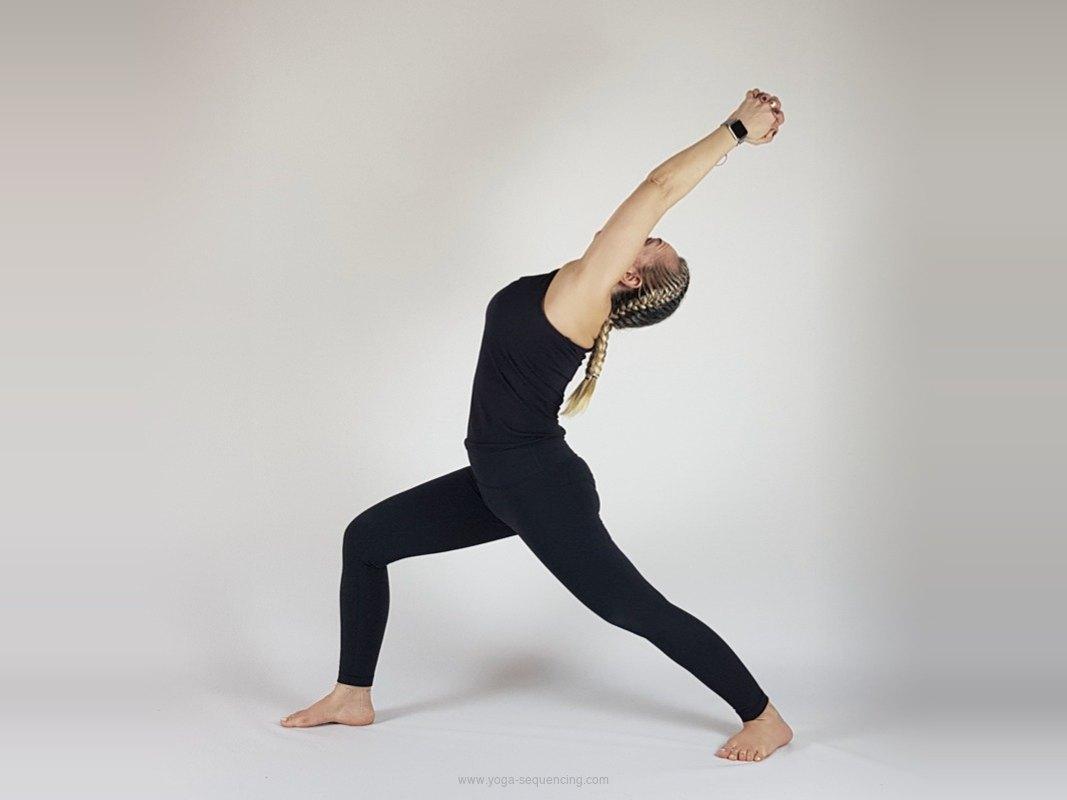
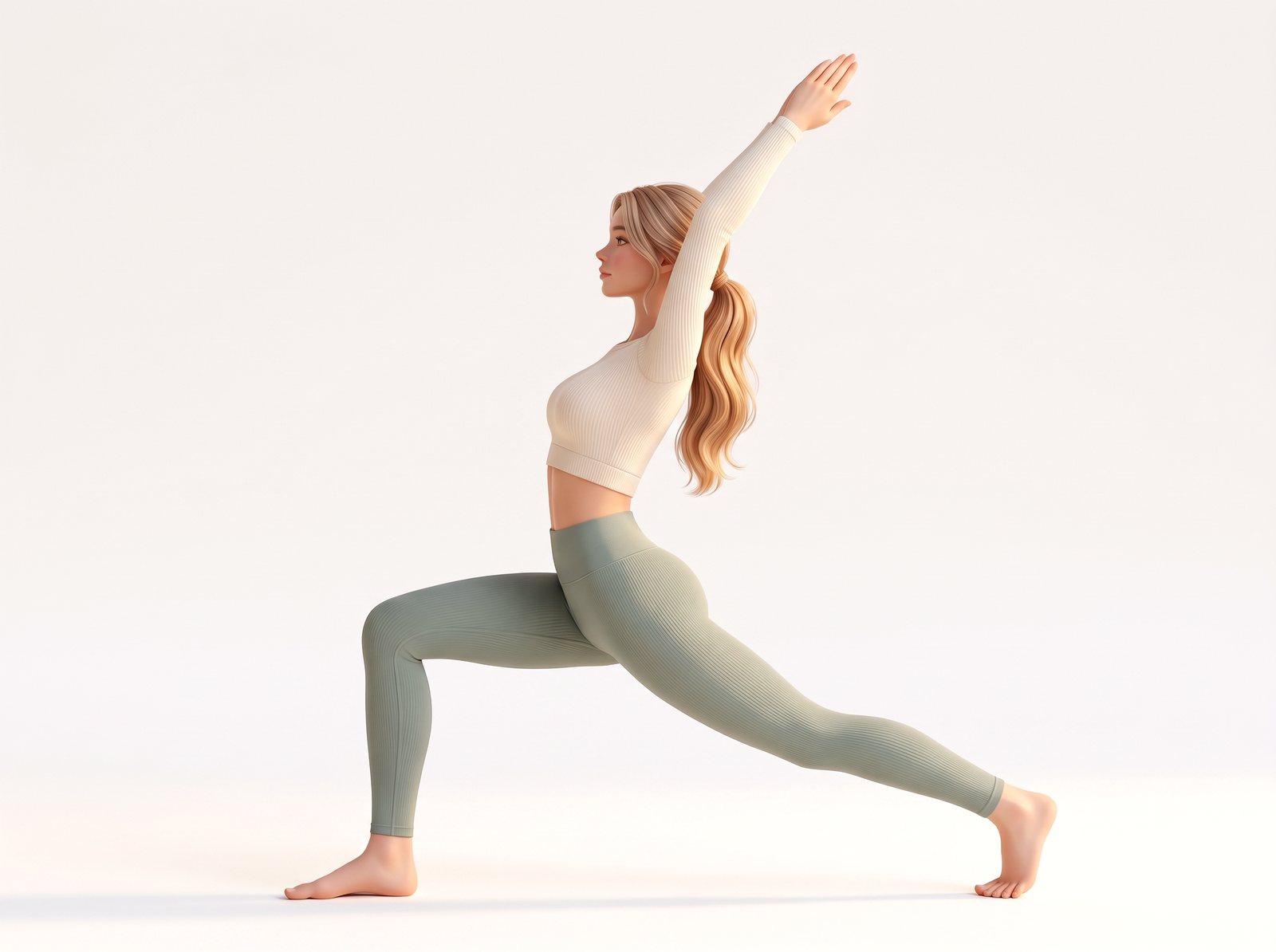
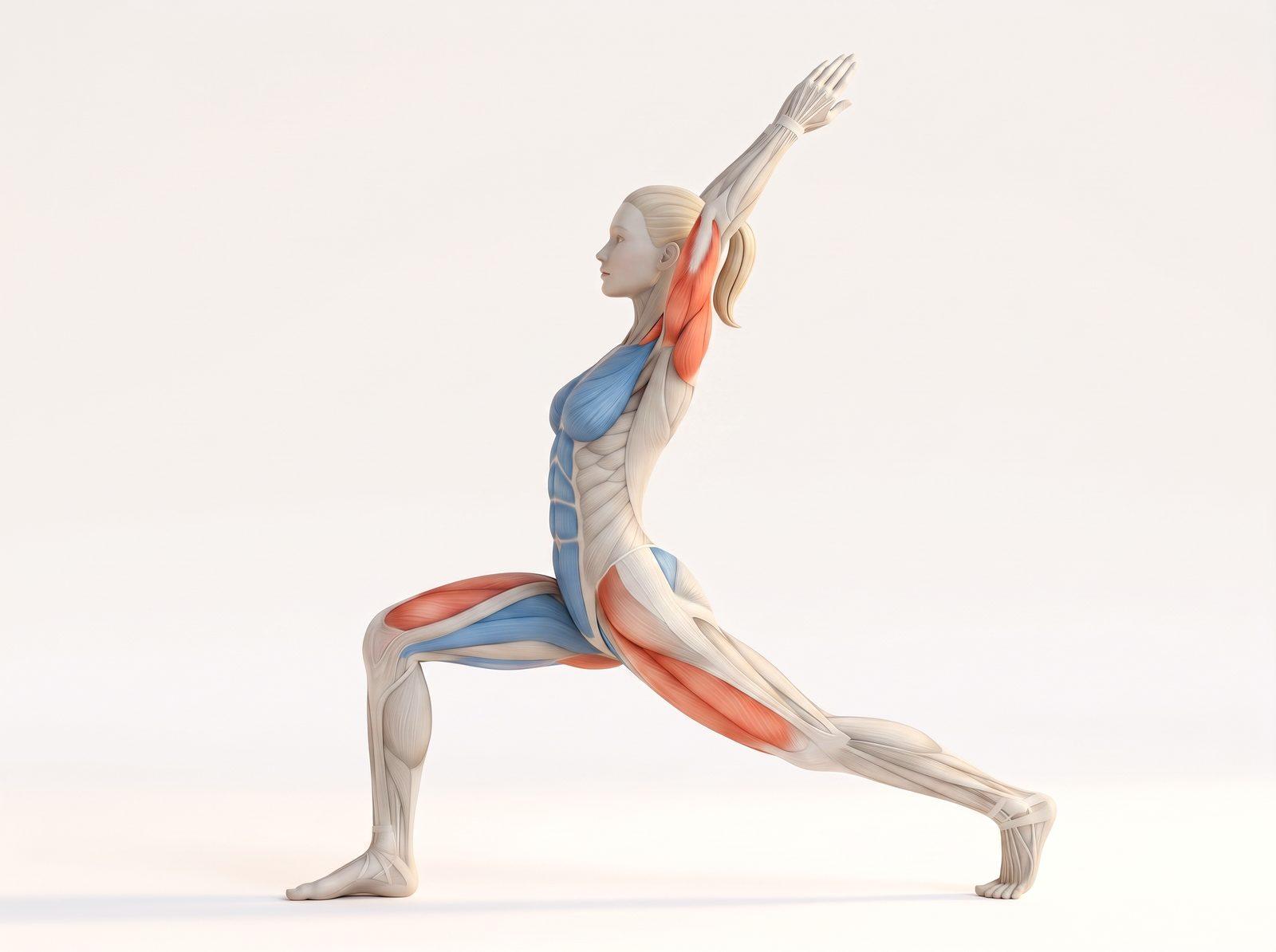
Working: Front-leg glutes, Front-leg quadriceps, Back-leg quadriceps, Shoulders
Stretching: Back-leg hip flexors, Abdominals, Chest
Full muscle breakdown ↓About This Pose
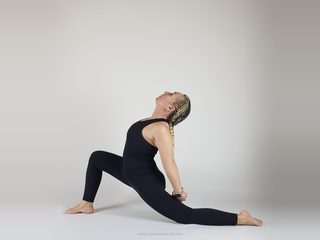
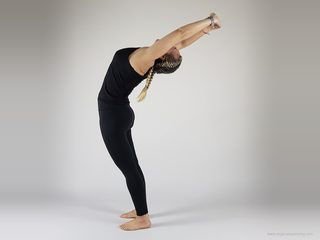
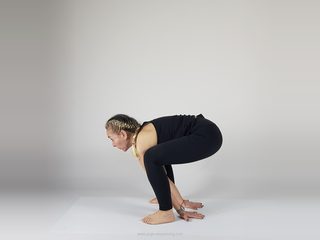
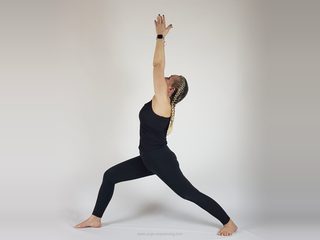
Crescent Lunge Backbend (Anjaneyasana Variation) combines the powerful leg engagement of a high lunge with the heart-opening benefits of a backbend. This dynamic pose stretches the hip flexors of the back leg while strengthening the front thigh and building stability through the entire body. The backbend component opens the chest, shoulders, and front body, counteracting the forward-hunching posture common in modern life. Named after Anjaneya, another name for Hanuman, this pose embodies the devotion and strength of the monkey god. The combination of strength and opening makes this pose energizing yet accessible, suitable for building heat in a flow sequence or as a standalone heart opener.
Muscles Worked in Crescent Lunge Backbend
Crescent Lunge Backbend works the front-leg glutes and quadriceps, the back-leg quadriceps and the shoulders, while it stretches the hip flexors of the back leg, the abdominals and the chest as the upper back arches.
Working
- Front-leg glutes (gluteus maximus)
- Front-leg quadriceps (quadriceps femoris)
- Back-leg quadriceps (quadriceps femoris)
- Shoulders (deltoids)
Stretching
- Back-leg hip flexors (iliopsoas, rectus femoris)
- Abdominals (rectus abdominis)
- Chest (pectoralis major)
Also holding you steady: your core, the muscles along your spine, hip stabilisers (gluteus medius) and the muscles of your feet and ankles.
Variations and joint actions
- Back knee down: Lowering the back knee (Low Lunge) takes the work out of the back leg and makes balance easier.
- Hands on hips: Keeping the hands on the hips takes load off the shoulders and makes the backbend easier to control.
- Front hip flexion
- Front knee flexion, over the ankle
- Back hip extension
- Back knee extension
- Spine extension, mostly in the upper back
- Shoulders flexion, arms overhead
Roles are qualitative — this section does not measure how hard any muscle works. References: Leslie Kaminoff & Amy Matthews, Yoga Anatomy (Human Kinetics); Ray Long, The Key Muscles of Yoga (Bandha Yoga).
Step-by-Step Instructions
- 1
From Downward Dog, step the right foot forward between the hands
- 2
Align the right knee directly over the right ankle
- 3
Keep the back leg straight and strong, heel lifted
- 4
Inhale and rise up, bringing the torso vertical
- 5
Reach the arms overhead, palms facing each other
- 6
Engage the core and draw the tailbone down
- 7
On an inhale, begin to lift the chest toward the ceiling
- 8
Allow a gentle arch through the upper back
- 9
Keep the neck long—gaze up only if comfortable
- 10
Hold for 5-8 breaths
- 11
Release hands down and step back to Downward Dog
- 12
Repeat on the second side
Alignment Cues
- Front knee stays at 90 degrees, directly over ankle
- Back leg is straight and engaged, heel reaching back
- Hips are squared forward as much as possible
- Core engages to support the lumbar spine
- Backbend initiates from the thoracic spine, not lower back
- Arms reach up and slightly back
- Shoulders draw down away from ears
Benefits
- Deeply stretches hip flexors and psoas
- Strengthens the quadriceps and glutes
- Opens the chest, shoulders, and front body
- Improves balance and stability
- Builds heat and energy in the body
- Counteracts poor posture from sitting
- Stretches the abdomen gently
- Cultivates strength and openness simultaneously
Modifications
- Lower the back knee to the ground for support
- Keep hands on hips instead of overhead
- Skip the backbend and stay upright
- Use blocks under hands for support
Variations
- Add a side bend by reaching over to one side
- Cactus arms: bend elbows to 90 degrees
- Hands in prayer at heart for less intensity
- Deeper backbend with hands reaching toward back foot
Cautions & Contraindications
Cautions
- Keep the front knee tracking over the ankle
- Engage the core to protect the lower back
- Don't force the backbend—let it unfold
- Keep the back leg strong and engaged
- Breathe steadily throughout
Avoid this pose if you have:
- Acute knee injuries
- Severe lower back pain
- High blood pressure (arms overhead variation)
- Heart conditions
- Neck injuries (keep head neutral)
Quick Facts
Primary Focus
hipsSecondary Focus
Suggested Hold
30 seconds
Tags
Equipment