Chair Eagle Pose
Garudasana Variation
Working: Standing-leg quadriceps, Standing-leg glutes, Inner thighs, Shoulders
Stretching: Top-leg outer hip
Full muscle breakdown ↓About This Pose
Chair Eagle Pose (Garudasana Variation) combines the lower body strength demands of Chair Pose (Utkatasana) with the shoulder-opening arm wrap of Eagle Pose (Garudasana). This powerful combination pose builds tremendous heat in the body while simultaneously stretching the upper back and shoulders. The pose challenges practitioners to maintain the deep squat of Chair Pose while adding the coordination and focus required for Eagle arms. It's commonly used in Vinyasa and Power Yoga flows to build both strength and flexibility. The compression in the legs combined with the arm bind creates a full-body engagement that demands presence and concentration. This variation is particularly beneficial for those who want the shoulder stretch of Eagle but find the full leg wrap challenging.
Muscles Worked in Chair Eagle Pose
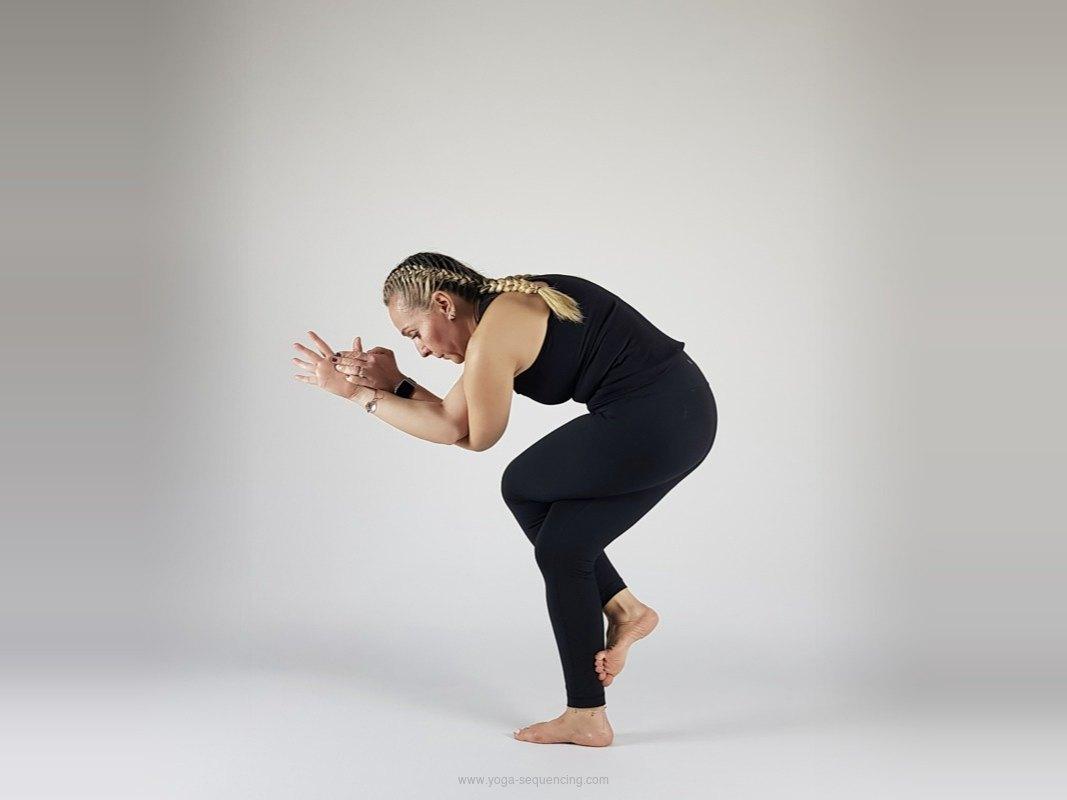
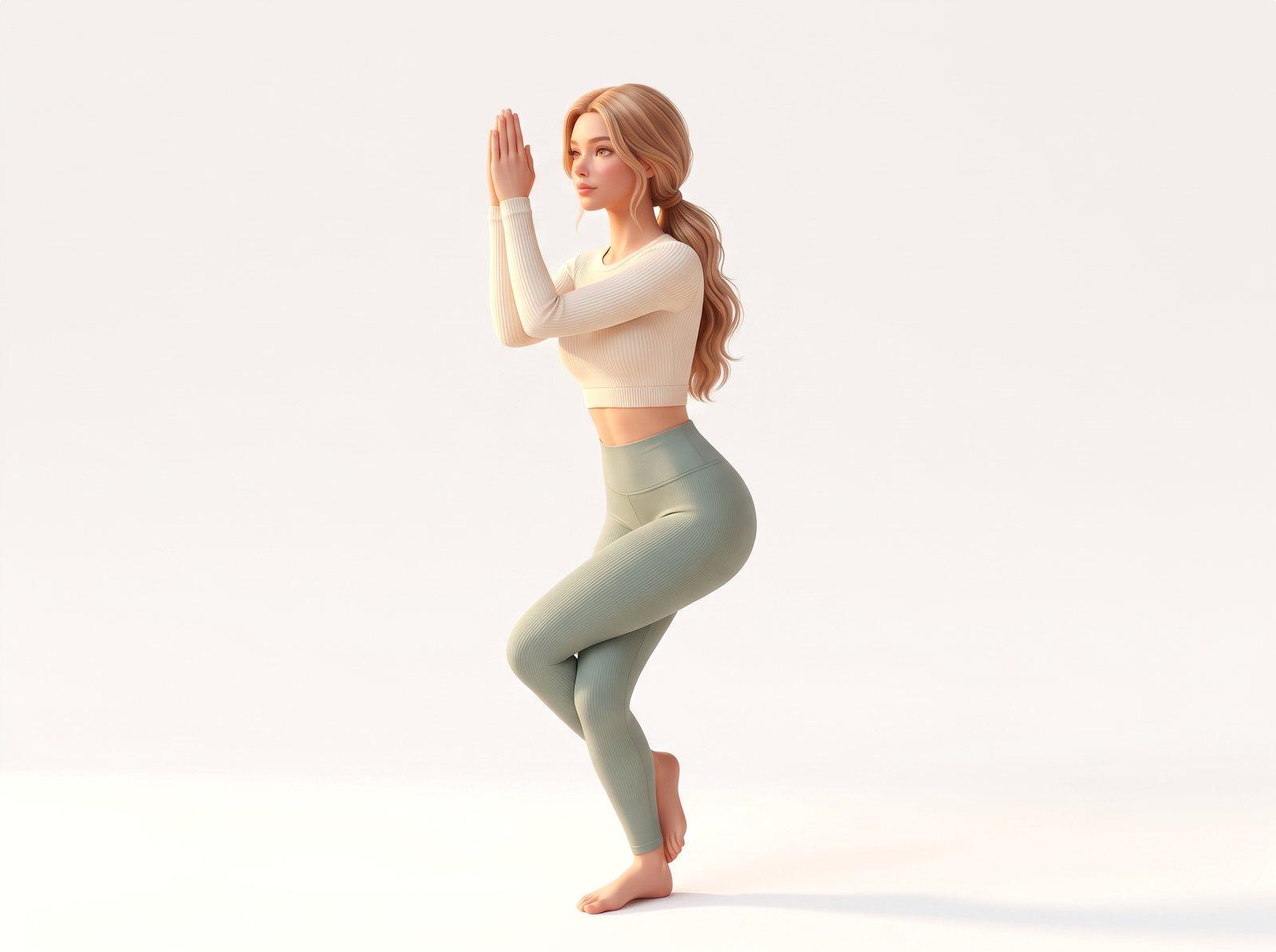
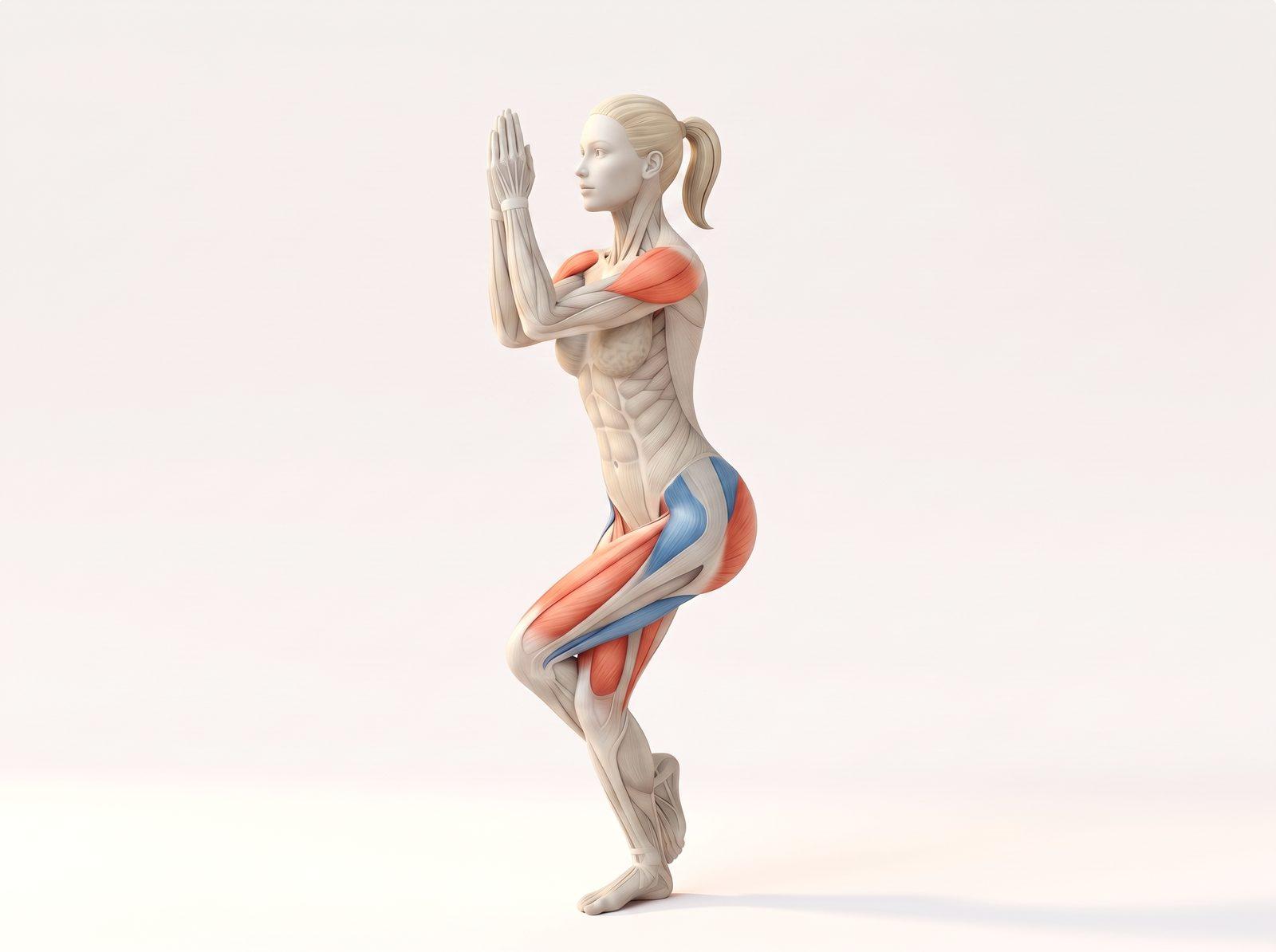
Chair Eagle Pose in the photo sits back into a Chair Pose squat on one leg with the other thigh crossed over it and the toes resting beside the standing foot, the palms pressed together in front of the face. The standing-leg quadriceps and glutes hold the squat, the inner thighs squeeze and the shoulders hold the arms up, while the top-leg outer hip stretches.
Working
- Standing-leg quadriceps (quadriceps femoris)
- Standing-leg glutes (gluteus maximus)
- Inner thighs (adductors, squeezing the legs together)
- Shoulders (anterior deltoids, holding the arms up)
Stretching
- Top-leg outer hip (piriformis, deep hip rotators, gluteus medius)
Also holding you steady: your standing-leg hip stabilisers (gluteus medius), the muscles of your feet and ankles and core.
Variations and joint actions
- Full Eagle: Hooking the top foot behind the standing calf and wrapping the arms makes it full Eagle Pose.
- Eagle arms: Wrapping one arm under the other adds a stretch across the upper back and rear shoulders.
- Standing hip flexion
- Standing knee flexion
- Standing ankle dorsiflexion
- Top hip flexion, adduction and internal rotation, thigh crossed over
- Top knee flexion, toes resting on the floor
- Spine neutral, leaning slightly forward
- Shoulders flexion, palms together in front of the face
- Elbows flexion
Roles are qualitative — this section does not measure how hard any muscle works. References: Leslie Kaminoff & Amy Matthews, Yoga Anatomy (Human Kinetics); Ray Long, The Key Muscles of Yoga (Bandha Yoga).
Step-by-Step Instructions
- 1
Begin in Mountain Pose (Tadasana) with feet together or hip-width apart
- 2
Bend your knees deeply and sit back into Chair Pose (Utkatasana)
- 3
Sink your hips back as if sitting in an imaginary chair
- 4
Keep your weight in your heels—you should be able to lift your toes
- 5
Extend your arms forward at shoulder height
- 6
Cross the left arm over the right at the elbows
- 7
Bend the elbows and bring the palms together (or backs of hands)
- 8
Lift the elbows to shoulder height while keeping shoulders down
- 9
Hold for 5-8 breaths, maintaining the depth of the squat
- 10
Release the arms and slowly stand up
- 11
Repeat with the opposite arm crossing
Alignment Cues
- Keep knees bent to approximately 90 degrees if possible
- Ensure knees track over the second and third toes
- Shift weight back into the heels—don't let knees go past toes
- Maintain a neutral spine; avoid rounding forward
- Lift the elbows while drawing shoulders down
- Engage the core to support the lower back
- Keep the chest lifted despite the arm wrap
Benefits
- Builds strength in the thighs, glutes, and calves
- Deeply stretches the shoulders, upper back, and rhomboids
- Improves focus and concentration
- Builds heat and stimulates metabolism
- Strengthens the core and improves stability
- Releases tension in the neck and shoulders
- Develops mental resilience and determination
- Improves posture by strengthening postural muscles
Modifications
- Don't squat as deeply if knees are sensitive
- Place hands on opposite shoulders if arms won't fully wrap
- Keep feet hip-width apart for more stability
- Practice against a wall for back support
- Use a block between thighs for alignment feedback
Variations
- Add Eagle leg wrap while in Chair for full Eagle Pose
- Tip forward into a flying variation
- Add a twist by bringing wrapped elbows toward one knee
- Pulse up and down in the chair position
- Flow between Chair and Chair Eagle with breath
Cautions & Contraindications
Cautions
- Keep knees tracking over ankles—don't let them collapse inward
- Avoid forcing the arm wrap if shoulders are tight
- Maintain a neutral spine; avoid excessive forward lean
- Keep breathing steady despite the intensity
- Come out of the pose if you feel sharp pain in knees or shoulders
Avoid this pose if you have:
- Acute knee injuries or chronic knee pain
- Shoulder injuries or rotator cuff issues
- Low blood pressure (the deep squat may cause dizziness)
- Ankle injuries
- Heart conditions (the pose is cardiovascularly demanding)
- Pregnancy (balance and intensity considerations)
Quick Facts
Primary Focus
legsSecondary Focus
Suggested Hold
30 seconds
Tags
Equipment