Yogi Squat
Malasana
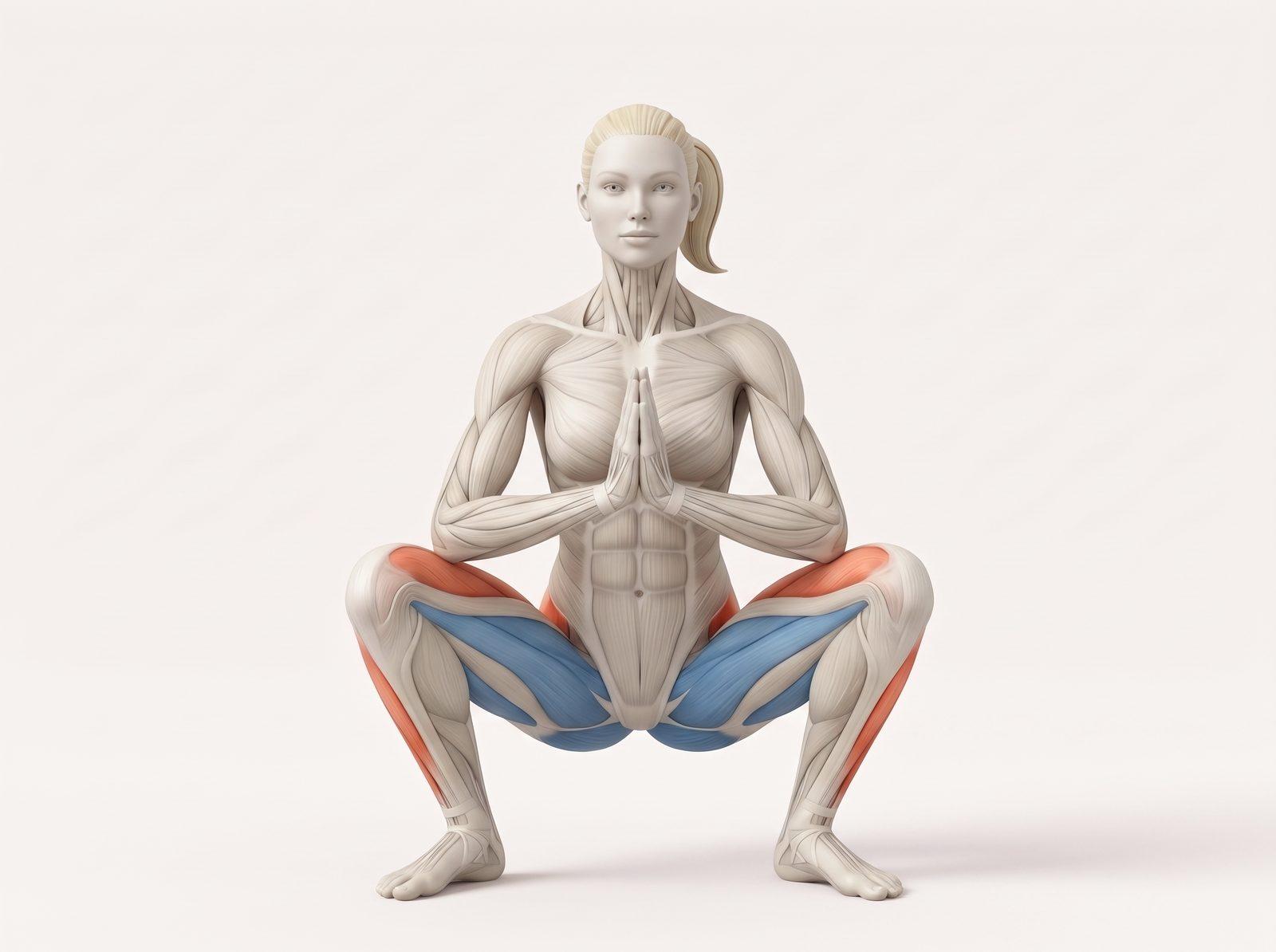
Working: Back muscles, Fronts of the shins, Outer hips
Stretching: Inner thighs, Calves, Glutes, Lower back
Full muscle breakdown ↓About This Pose
Yogi Squat (Malasana) is a fundamental resting position that deeply opens the hips, stretches the lower back, and strengthens the ankles. This primal squatting position was once common in daily life before chairs became prevalent and remains a comfortable resting pose in many cultures. The pose creates space in the pelvis, stretches the groin and inner thighs, and provides gentle compression that supports digestive health. While challenging for those with tight hips or ankles, consistent practice progressively increases accessibility. Yogi Squat grounds the first chakra and creates a sense of connection to the earth. The pose serves as both a hip opener and a moment of grounded rest within practice.
Muscles Worked in Yogi Squat
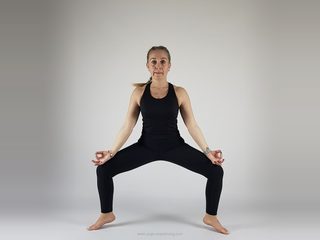
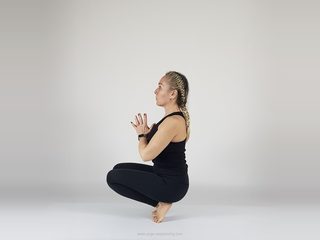
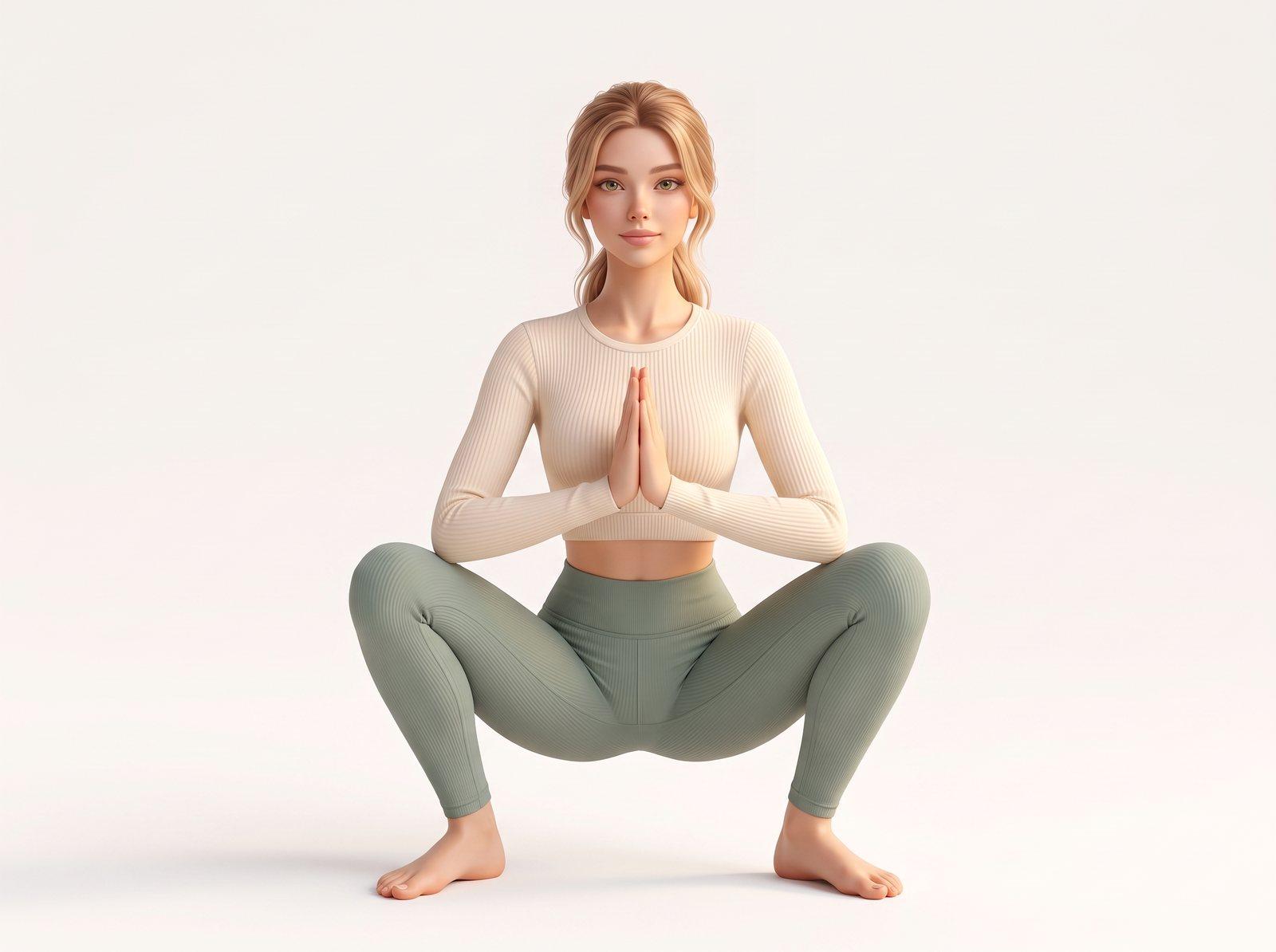
The photo shows Yogi Squat (Malasana) from the front: a deep squat with the feet apart and heels down, the knees wide, the torso upright between the thighs and the hands together in prayer. The inner thighs, the calves and the lower back get the stretch while the hip and back muscles keep the chest lifted.
Working
- Back muscles (erector spinae)
- Fronts of the shins (tibialis anterior)
- Outer hips (deep hip rotators, gluteus medius, keeping the knees wide)
Stretching
- Inner thighs (adductors)
- Calves (soleus, ankles deeply bent)
- Glutes (gluteus maximus)
- Lower back (erector spinae)
Also holding you steady: your the muscles of your feet and ankles, core and chest and arms, pressing the palms together.
Variations and joint actions
- Blanket under the heels: A rolled blanket under the heels makes the squat possible with tight ankles.
- Sit on a block: A block under the hips turns it into a restful hold for the knees.
- Ankles deep dorsiflexion, heels down
- Knees deep flexion
- Hips deep flexion, abduction and external rotation
- Spine long and upright
- Shoulders hands in prayer at the chest
Roles are qualitative — this section does not measure how hard any muscle works. References: Leslie Kaminoff & Amy Matthews, Yoga Anatomy (Human Kinetics); Ray Long, The Key Muscles of Yoga (Bandha Yoga).
Step-by-Step Instructions
- 1
Stand with feet mat-width apart
- 2
Turn toes out slightly
- 3
Bend knees and lower hips
- 4
Descend into full squat
- 5
Bring palms together at heart
- 6
Press elbows against inner knees
- 7
Use arms to open hips wider
- 8
Lengthen spine upward
- 9
Lift chest and sternum
- 10
Keep weight in heels if possible
- 11
Relax shoulders away from ears
- 12
Hold for 5-10 breaths
Alignment Cues
- Heels grounded or supported
- Knees wide and tracking over toes
- Spine lengthening not rounding
- Chest lifting toward chin
- Tailbone descending
- Core gently engaged
Benefits
- Opens hips and groin deeply
- Stretches lower back
- Strengthens ankles and feet
- Improves digestive function
- Grounds first chakra
- Increases hip flexibility
- Builds ankle mobility
- Creates sense of grounding
Modifications
- Block or bolster under sit bones
- Rolled blanket under heels
- Hold sturdy object for support
Variations
- Hands on floor in front
- Twist with one hand down
- Forward fold in squat
Cautions & Contraindications
Cautions
- Support heels if they lift
- Avoid rounding lower back excessively
- Use props as needed
Avoid this pose if you have:
- Knee injuries or surgery
- Severe ankle problems
- Late pregnancy without guidance
Quick Facts
Primary Focus
hipsSecondary Focus
Suggested Hold
45 seconds
Tags
Equipment