Three-Legged Downward Dog Split
Tri Pada Adho Mukha Svanasana
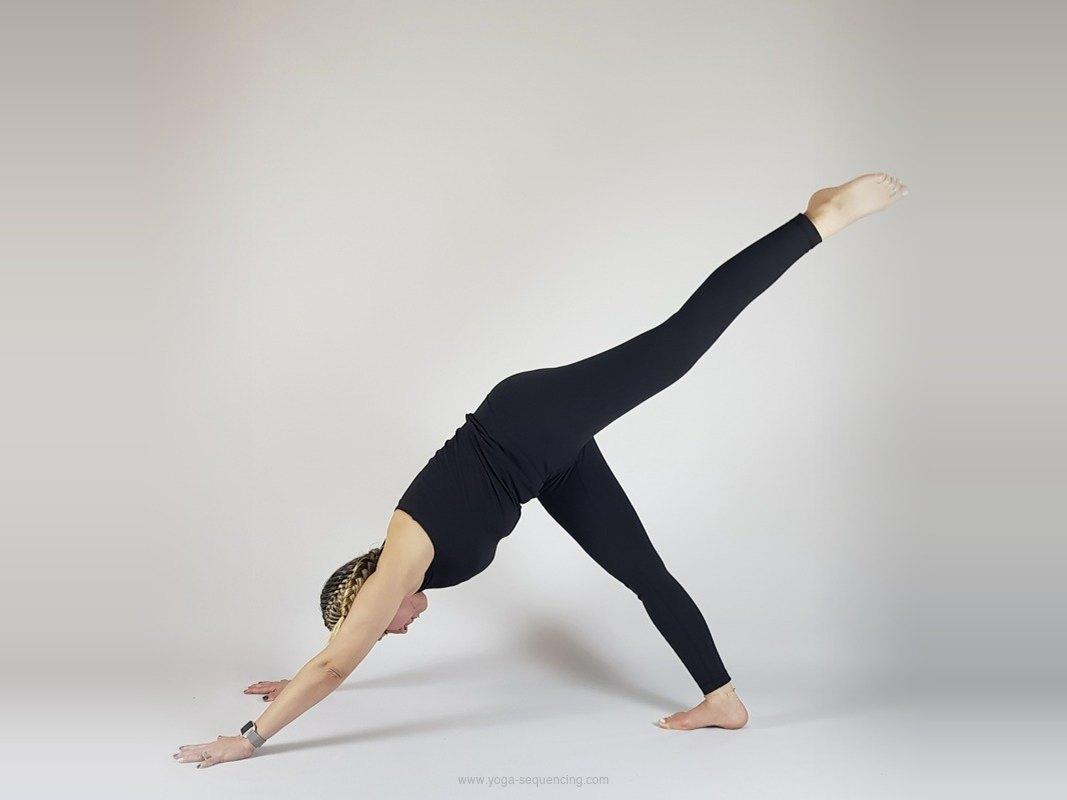
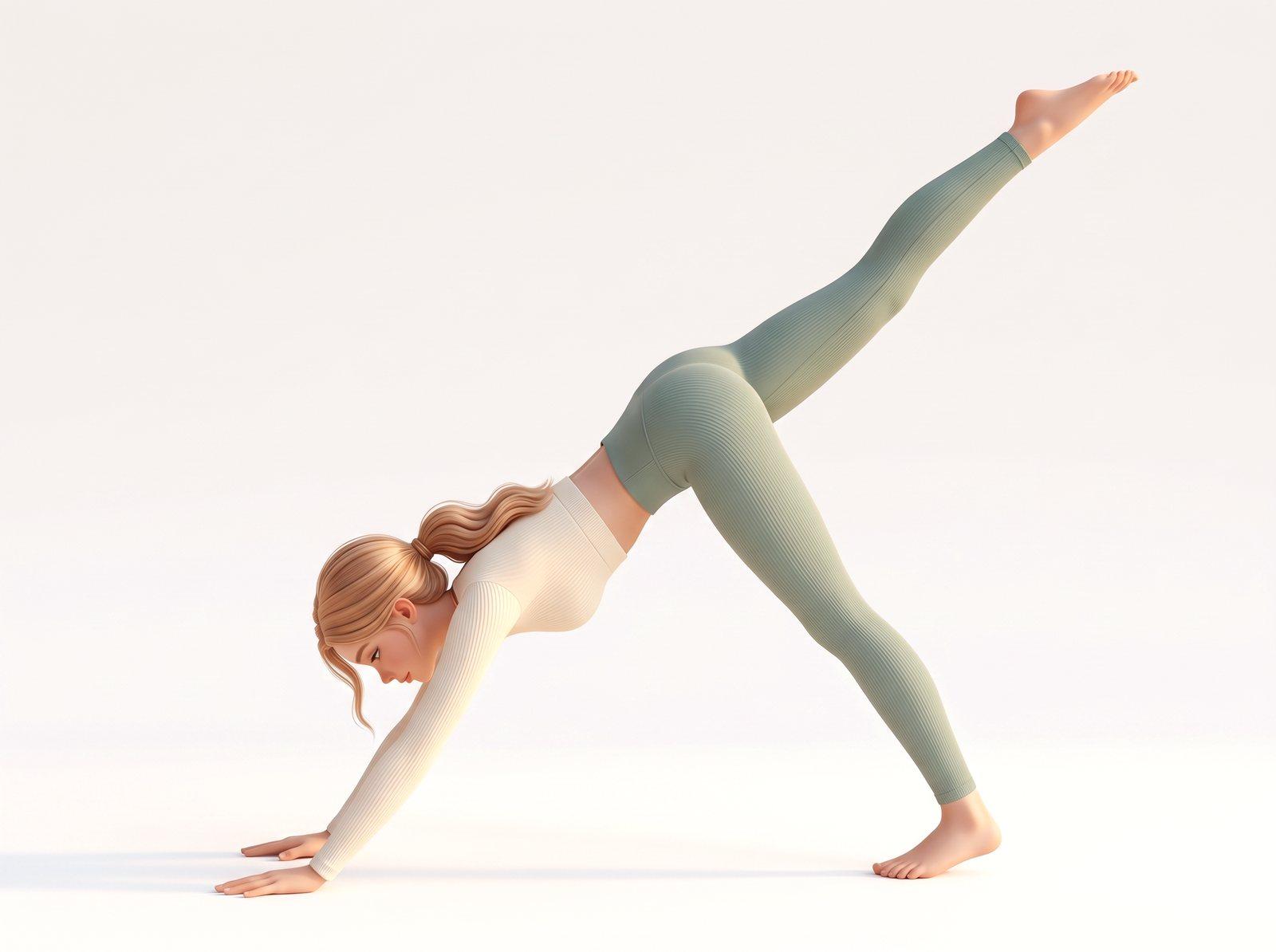
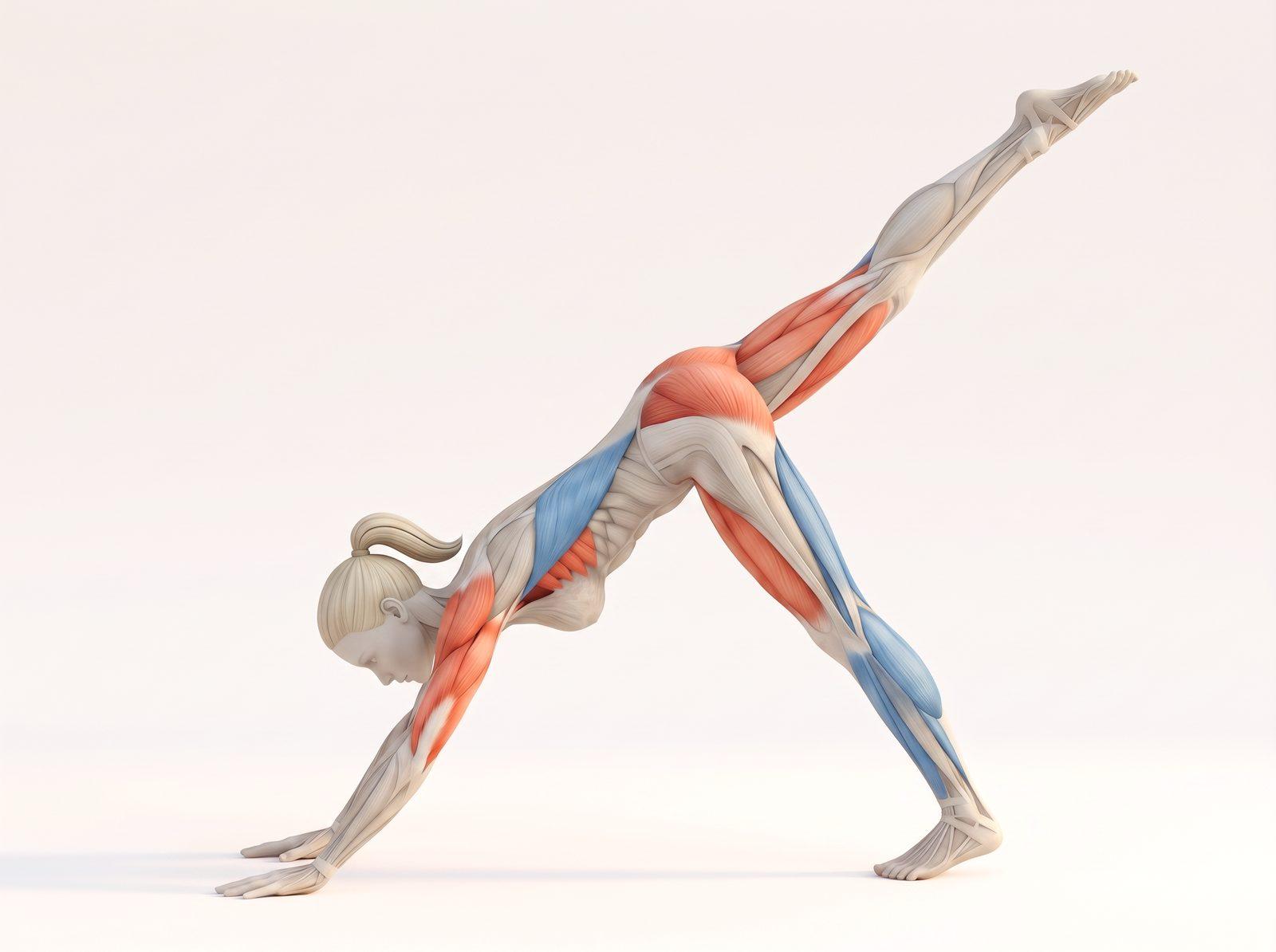
Working: Shoulders, Serratus anterior, Triceps, Standing-leg quadriceps, Lifted-leg glutes, Lifted-leg hamstrings
Stretching: Standing-leg hamstrings, Standing-leg calf, Lats
Full muscle breakdown ↓About This Pose
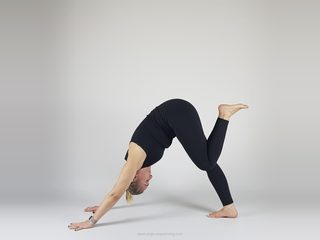
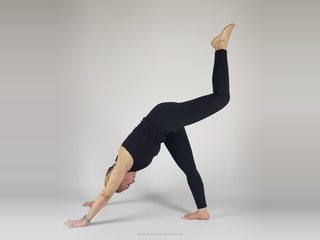
Three-Legged Downward Dog Split takes the foundational Down Dog and adds a vertical leg extension, creating a standing split in inversion. Unlike the hip-open variation, this version emphasizes keeping the hips square while lifting the leg as high as possible. This alignment maximizes the hamstring stretch in the lifted leg while building strength in the arms, standing leg, and core. The pose serves as both a strengthening posture and a transition into standing poses, arm balances, and other inversions. The squared-hip position teaches the discipline of maintaining alignment even when the body wants to compensate by opening.
Muscles Worked in Three-Legged Downward Dog Split
Three-Legged Downward Dog strengthens the shoulders, serratus anterior and triceps, the standing-leg quadriceps and the glutes and hamstrings that lift the back leg high, while it stretches the standing-leg hamstrings and calf and the lats.
Working
- Shoulders (deltoids)
- Serratus anterior
- Triceps (triceps brachii)
- Standing-leg quadriceps (quadriceps femoris)
- Lifted-leg glutes (gluteus maximus)
- Lifted-leg hamstrings (biceps femoris, semitendinosus, semimembranosus)
Stretching
- Standing-leg hamstrings (biceps femoris, semitendinosus, semimembranosus)
- Standing-leg calf (gastrocnemius, soleus)
- Lats (latissimus dorsi)
Also holding you steady: your core, rotator cuff and standing-leg hip stabilisers (gluteus medius).
Variations and joint actions
- Hip opened, knee bent: Stacking the lifted hip and bending the knee (Three-Legged Dog Hip Open) adds a stretch for the lifted-leg hip flexors and inner thigh.
- Lower leg lift: Lifting the leg only to hip height keeps the hips square and puts more weight in the standing leg than in the hands.
- Shoulders full flexion
- Elbows extension
- Standing hip flexion
- Standing knee extension, heel toward the mat
- Lifted hip extension
- Lifted knee extension
- Spine long
Roles are qualitative — this section does not measure how hard any muscle works. References: Leslie Kaminoff & Amy Matthews, Yoga Anatomy (Human Kinetics); Ray Long, The Key Muscles of Yoga (Bandha Yoga).
Step-by-Step Instructions
- 1
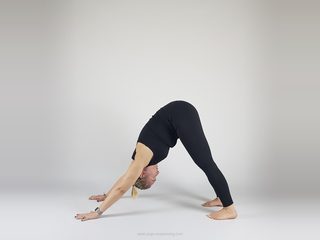
Begin in Downward Facing Dog
- 2
Ground firmly through both hands
- 3
Shift weight slightly into the left foot
- 4
Inhale and lift the right leg toward the ceiling
- 5
Keep the leg straight and foot flexed
- 6
Keep both hips level—don't open the hip
- 7
Reach actively through the lifted heel
- 8
Press evenly through both palms
- 9
Keep the standing heel reaching down
- 10
Hold for 5 breaths
- 11
Lower with control and switch sides
Alignment Cues
- Hips remain squared to the mat
- Lifted leg in line with the spine
- Both hip points face downward
- Weight equal in both hands
- Standing leg strong and engaged
- Spine long and neutral
- Shoulders level and broad
Benefits
- Deeply stretches hamstrings of both legs
- Strengthens arms, shoulders, and core
- Builds stability in the standing leg
- Improves balance and body awareness
- Prepares for standing splits and transitions
- Teaches alignment discipline
- Increases hip flexor strength
- Provides mild inversion benefits
Modifications
- Keep the lifted leg lower
- Focus on square hips over leg height
- Bend the standing knee slightly
- Practice at a wall
Variations
- Open the hip for hip opener variation
- Bend the lifted knee toward shoulder
- Add a twist by reaching for opposite ankle
- Flow into Warrior I or lunge
Cautions & Contraindications
Cautions
- Keep hips level and squared
- Don't sacrifice alignment for height
- Maintain even weight in both hands
- Keep the standing leg engaged
- Avoid dumping into one shoulder
Avoid this pose if you have:
- Wrist or shoulder injuries
- Hamstring strains
- High blood pressure
- Late pregnancy
- Carpal tunnel syndrome
Quick Facts
Primary Focus
hamstringsSecondary Focus
Suggested Hold
20 seconds
Tags