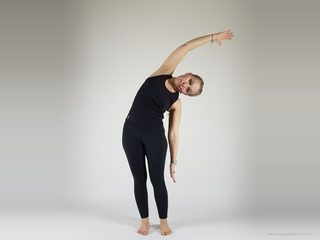
Standing Side Stretch
Parsva Tadasana
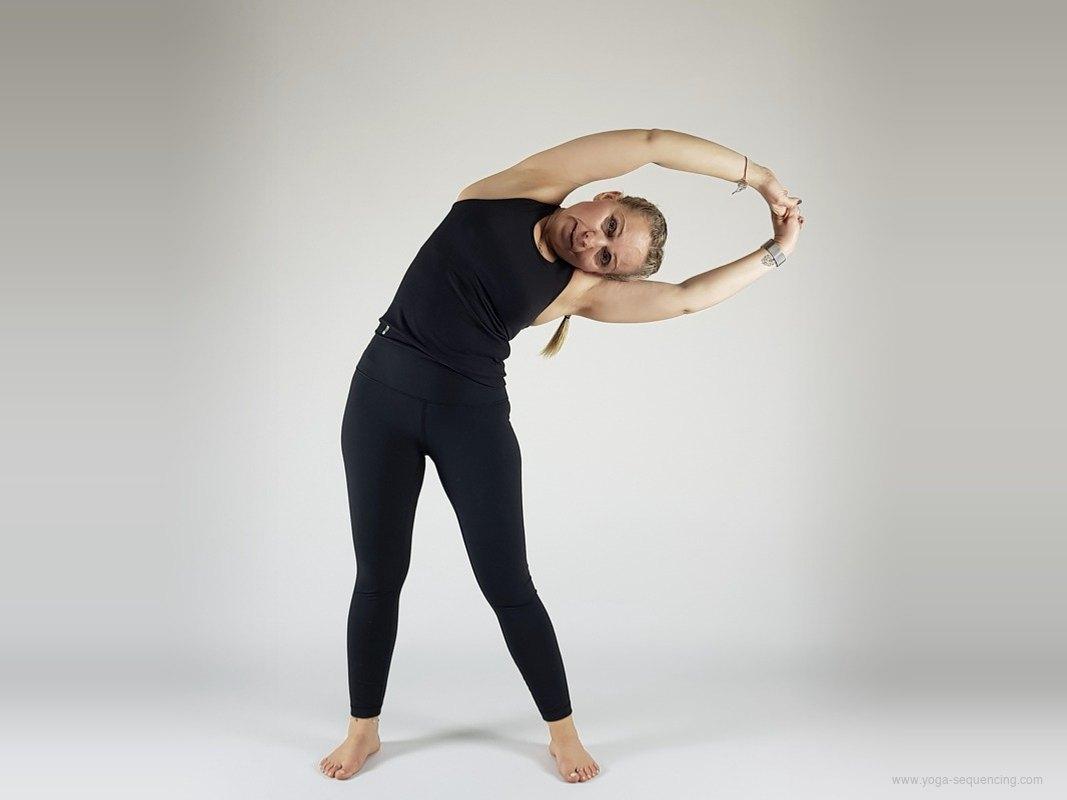
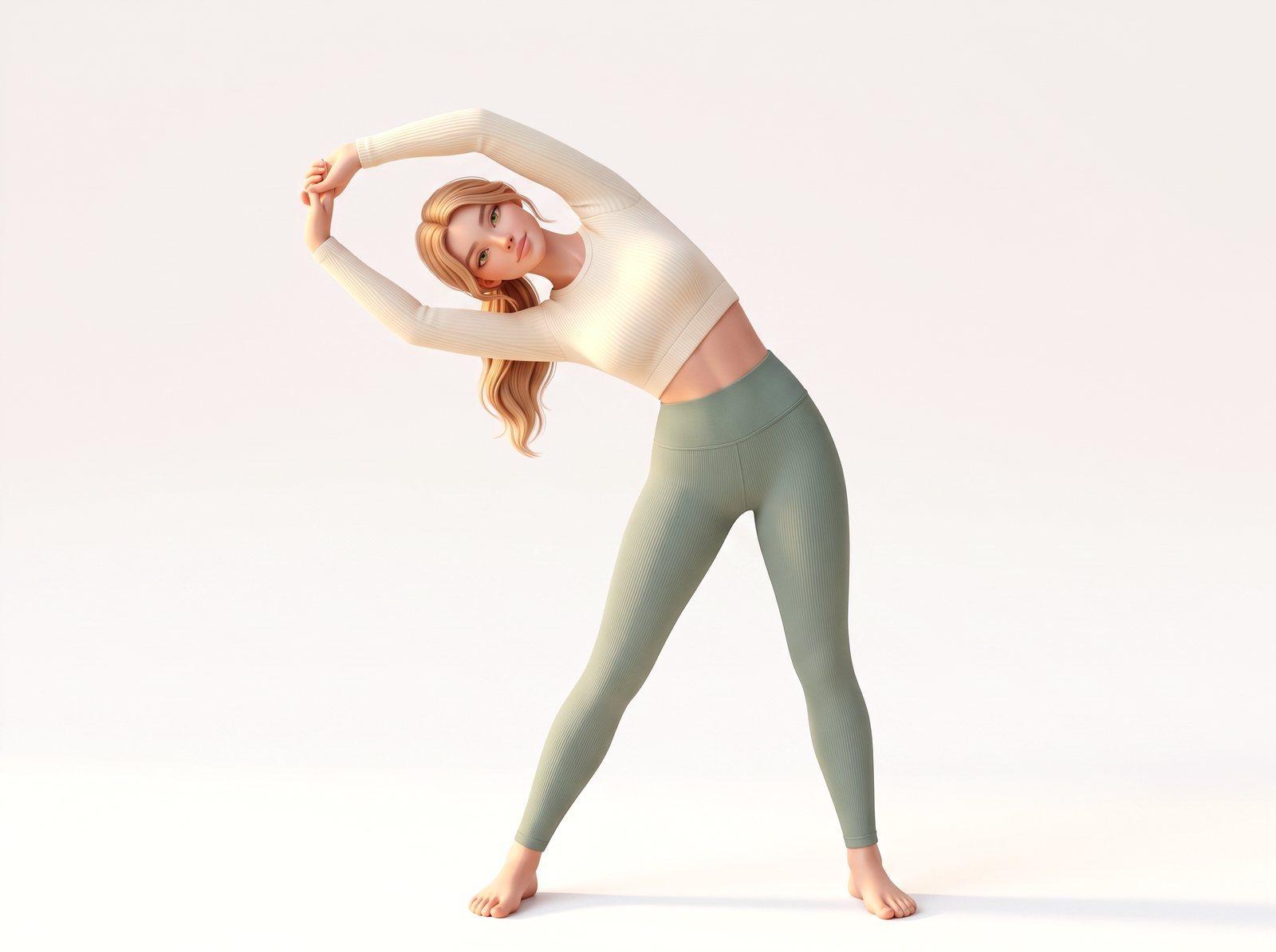
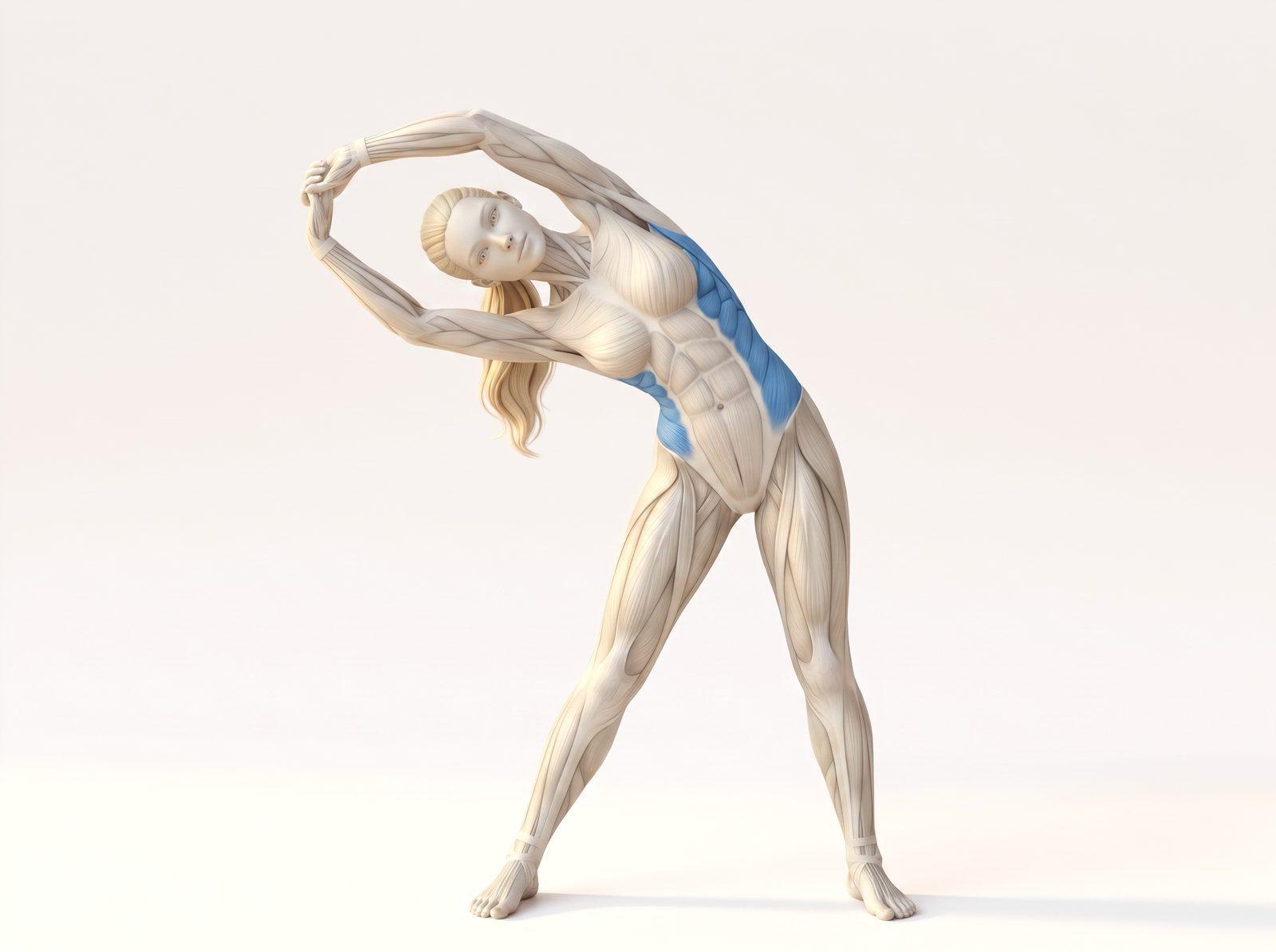
Stretching: Top-side lats, Top-side obliques, Top-side lower back
Full muscle breakdown ↓About This Pose
Standing Side Stretch extends Mountain Pose into a graceful lateral bend that opens the intercostal muscles, obliques, and entire side body. This accessible pose creates space between the ribs, improving breathing capacity and releasing tension that accumulates from daily activities. The reach overhead followed by a side bend lengthens muscles from hip to fingertips in one continuous stretch. Regular practice helps correct postural imbalances and creates more symmetry in the body. The pose can be practiced first thing in the morning to awaken the body or throughout the day to release accumulated tension. Standing Side Stretch demonstrates how significant opening can be achieved through simple, accessible movements.
Muscles Worked in Standing Side Stretch
Standing Side Stretch bends the upper body to one side with the feet apart and both arms overhead, one hand holding the other wrist. It stretches the whole top side — lats, obliques and the muscles between the ribs and pelvis — while the legs and core hold the base steady.
Working
A gentle stretch — the legs and core hold the stance, and the bottom-side waist muscles work only lightly to control the bend.
Stretching
- Top-side lats (latissimus dorsi)
- Top-side obliques (external and internal obliques)
- Top-side lower back (quadratus lumborum)
Also holding you steady: your core, the muscles of your feet and ankles, hip stabilisers (gluteus medius) and Shoulders.
Variations and joint actions
- One arm up: Keeping the bottom hand on the hip supports the bend and makes it easier to stop the chest from tipping forward.
- Feet together: A narrower base asks more of the feet and hips but changes the stretch very little.
- Spine lateral flexion away from the top side
- Shoulders flexion overhead, one hand holding the other wrist
- Elbows slight flexion
- Hips and knees extension, feet about hip-width or wider
Roles are qualitative — this section does not measure how hard any muscle works. References: Leslie Kaminoff & Amy Matthews, Yoga Anatomy (Human Kinetics); Ray Long, The Key Muscles of Yoga (Bandha Yoga).
Step-by-Step Instructions
- 1
Stand in Mountain Pose
- 2
Inhale and reach arms overhead
- 3
Interlace fingers or hold wrist
- 4
Press feet firmly into floor
- 5
Exhale and lean to the right
- 6
Keep hips level and centered
- 7
Reach through fingertips
- 8
Open chest toward ceiling
- 9
Breathe into left side ribs
- 10
Keep shoulders relaxed
- 11
Hold for 5-8 breaths
- 12
Return to center and switch
Alignment Cues
- Both feet rooted evenly
- Hips staying centered
- Length before lateral bend
- Chest open not collapsed
- Shoulders down from ears
- Neck in line with spine
Benefits
- Opens entire side body
- Stretches intercostal muscles
- Improves breathing capacity
- Releases tension in obliques
- Corrects postural imbalances
- Creates spinal flexibility
- Awakens and energizes
- Accessible for all levels
Modifications
- Hand on hip instead of overhead
- Smaller range of motion
- Practice near wall
Variations
- Cross ankles for deeper stretch
- Arms free not interlaced
- Add slight rotation
Cautions & Contraindications
Cautions
- Keep both feet grounded
- Avoid twisting while bending
- Maintain length before bending
Avoid this pose if you have:
- Rib injuries
- Acute spinal conditions
- Severe shoulder problems
Quick Facts
Primary Focus
spineSecondary Focus
Suggested Hold
35 seconds
Tags
Equipment