Chair Pose (Side View)
Utkatasana
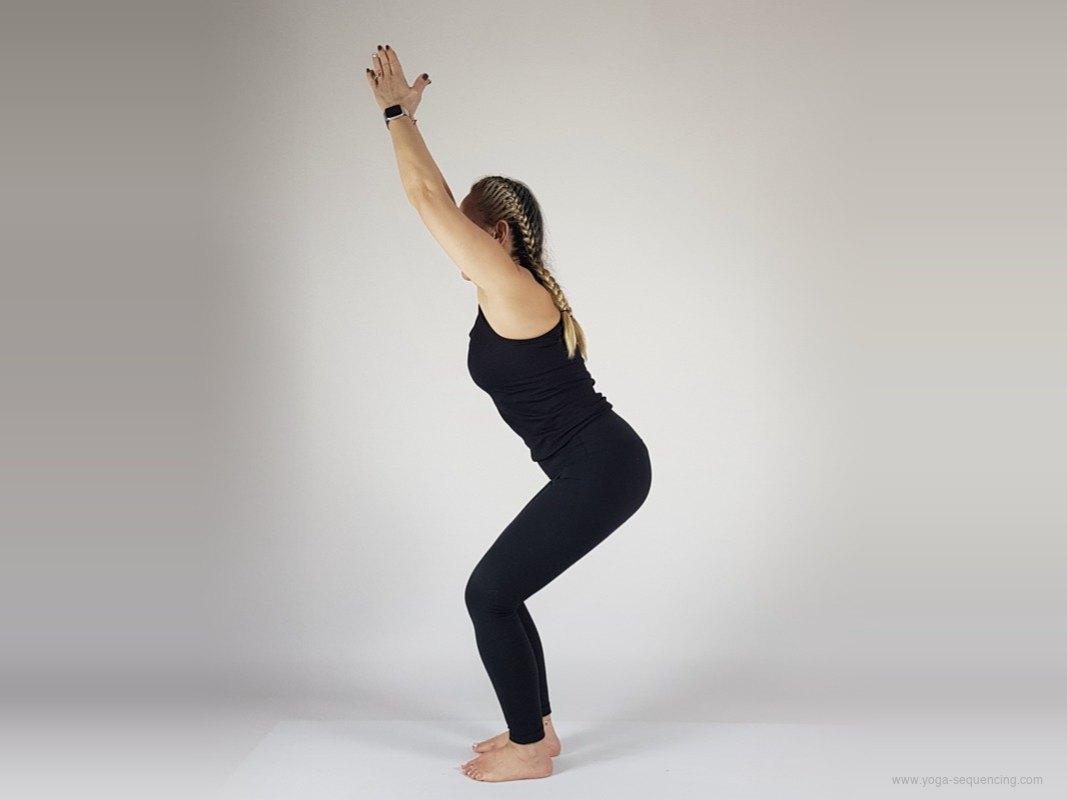
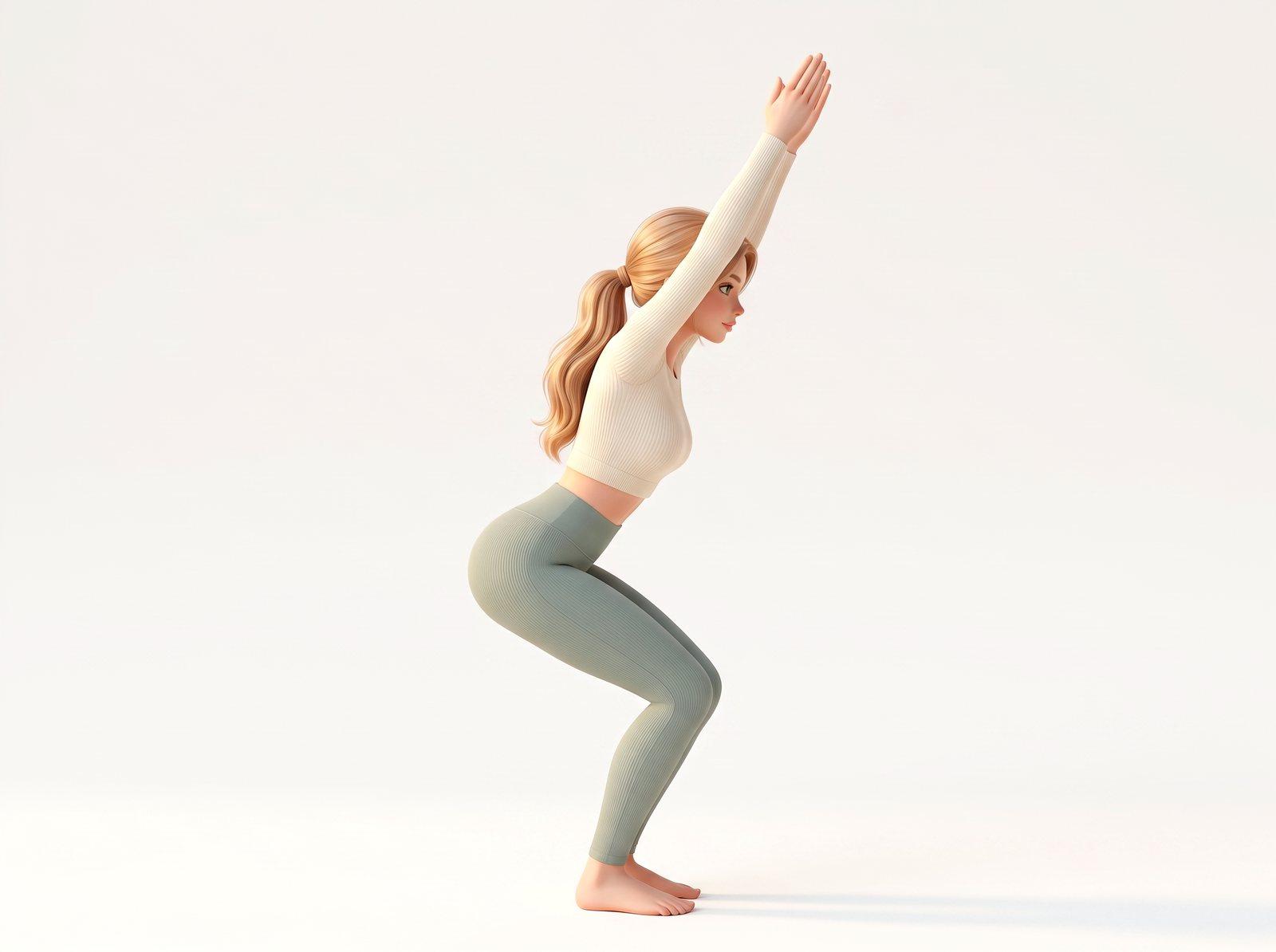
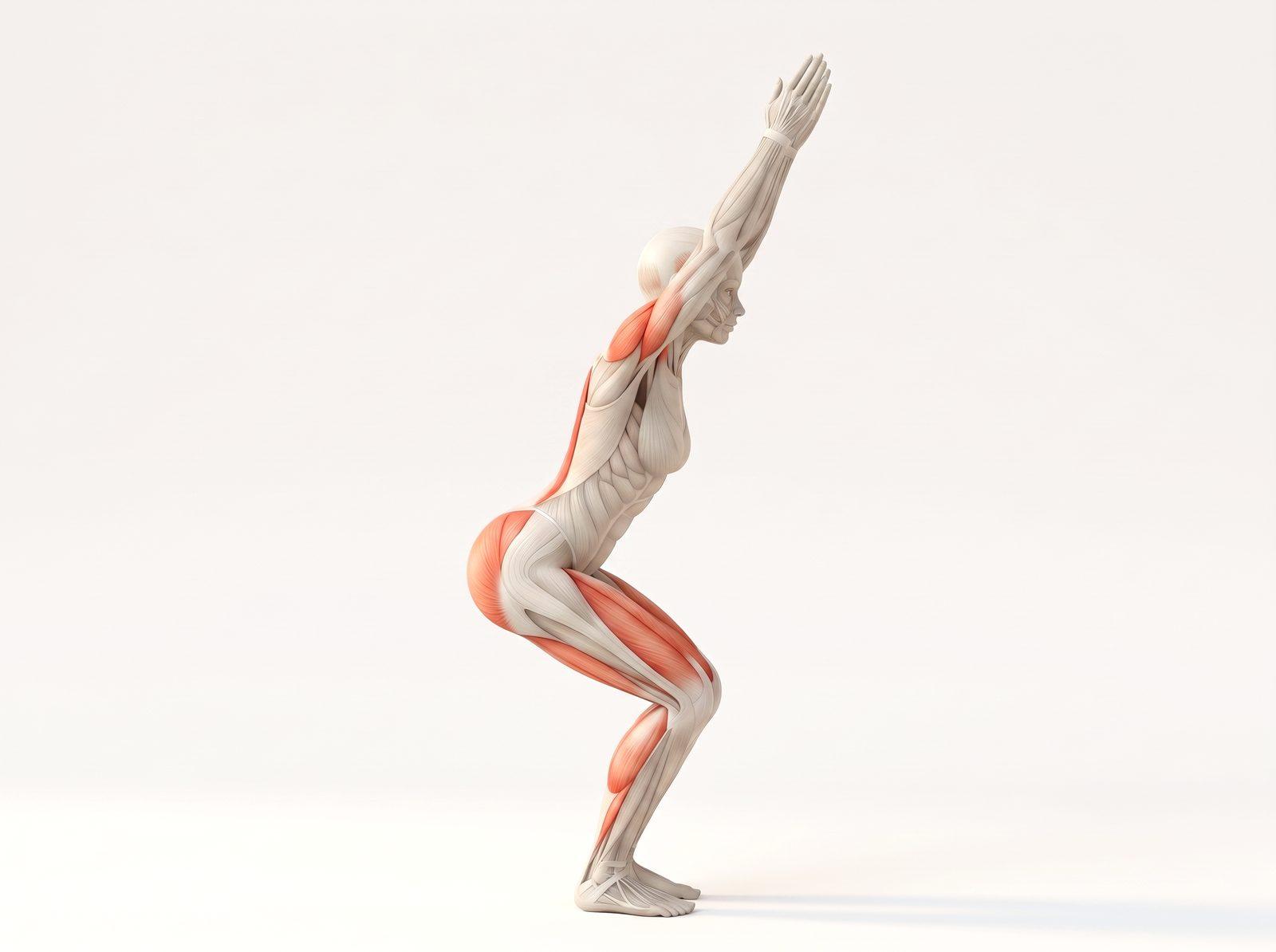
Working: Quadriceps, Glutes, Back muscles, Calves, Shoulders
Full muscle breakdown ↓About This Pose
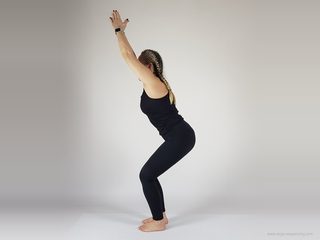
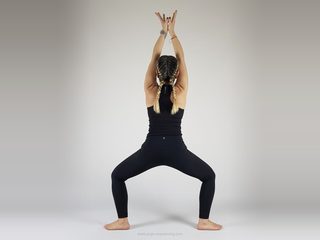
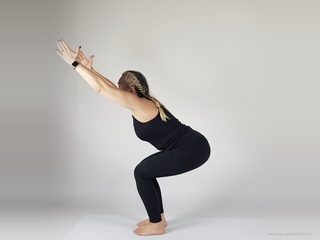
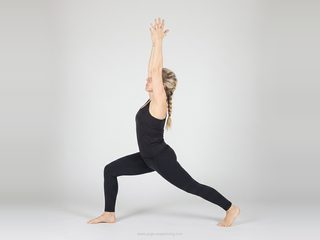
Chair Pose Side View provides a lateral perspective on Utkatasana, revealing crucial alignment details often missed from the front. From the side, practitioners can see the relationship between the spine, pelvis, and legs—how the torso should angle forward slightly while the spine stays long, how the knees bend without going past the toes, and how the arms create a line with the torso. This view helps practitioners and teachers identify common misalignments like excessive lower back arching or forward knee travel. Understanding the pose from this angle improves overall Chair Pose practice.
Muscles Worked in Chair Pose (Side View)
Chair Pose bends the knees and sends the hips back with the arms reaching overhead. The quadriceps and glutes hold the squat, the back muscles keep the torso long and the shoulders hold the arms up.
Working
- Quadriceps (quadriceps femoris)
- Glutes (gluteus maximus)
- Back muscles (erector spinae)
- Calves (gastrocnemius, soleus)
- Shoulders (deltoids)
Stretching
Chair is a strength pose; the arms overhead give the lats only a light stretch.
Also holding you steady: your core, the muscles of your feet and ankles, Serratus anterior and inner thighs, which keep the knees together.
Variations and joint actions
- Hands at the heart: Prayer hands take the load off the shoulders; better for shoulder pain.
- Feet hip-width: A wider stance is more stable and easier on the knees.
- Back to a wall: Sliding down a wall supports the back. With knee pain, bend the knees less.
- Hips flexion, hips back
- Knees flexion, legs together
- Ankles dorsiflexion
- Spine long, torso inclined forward
- Shoulders full flexion, arms overhead
- Elbows extension
Roles are qualitative — this section does not measure how hard any muscle works. References: Leslie Kaminoff & Amy Matthews, Yoga Anatomy (Human Kinetics); Ray Long, The Key Muscles of Yoga (Bandha Yoga).
Step-by-Step Instructions
- 1
Stand with feet together or hip-width
- 2
Raise arms overhead on an inhale
- 3
Exhale, bend knees, and sit back
- 4
Check side view: spine long, slight forward lean
- 5
Knees stay behind or over toes
- 6
Weight firmly in heels
- 7
Tailbone reaches down
- 8
Arms continue the line of the torso
- 9
Hold and breathe steadily
- 10
Rise on an inhale
Alignment Cues
- Torso angles forward slightly
- Spine creates one long line
- No excessive lower back arch
- Knees behind or over ankles
- Hips sit back, not down
- Arms extend in line with torso
- Head neutral or slight lift
Benefits
- Reveals proper spinal alignment
- Shows ideal knee-to-ankle relationship
- Demonstrates torso angle
- Helps identify common misalignments
- Strengthens legs and core
- Builds heat and endurance
- Improves body awareness
- Teaching tool for alignment
Modifications
- Shallower squat depth
- Arms at shoulder height
- Use mirror or partner for feedback
- Practice against wall
Variations
- Deeper squat
- Arms in different positions
- Adding backbend
- On tiptoes
Cautions & Contraindications
Cautions
- Watch for excessive lumbar curve
- Ensure knees don't pass toes
- Maintain long spine
- Keep weight in heels
- Avoid overarching neck to look up
Avoid this pose if you have:
- Knee injuries
- Low blood pressure
- Back injuries
Quick Facts
Primary Focus
legsSecondary Focus
Suggested Hold
30 seconds
Tags