Chair Pose with Forward Reach
Utkatasana
About This Pose
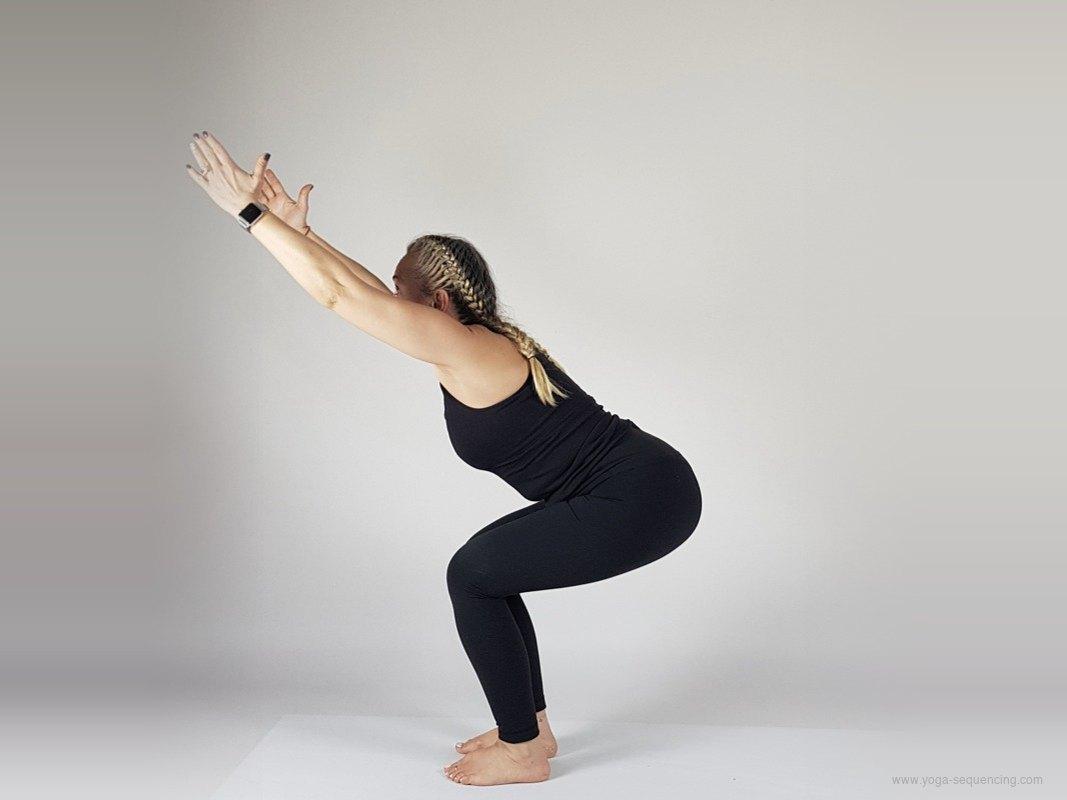
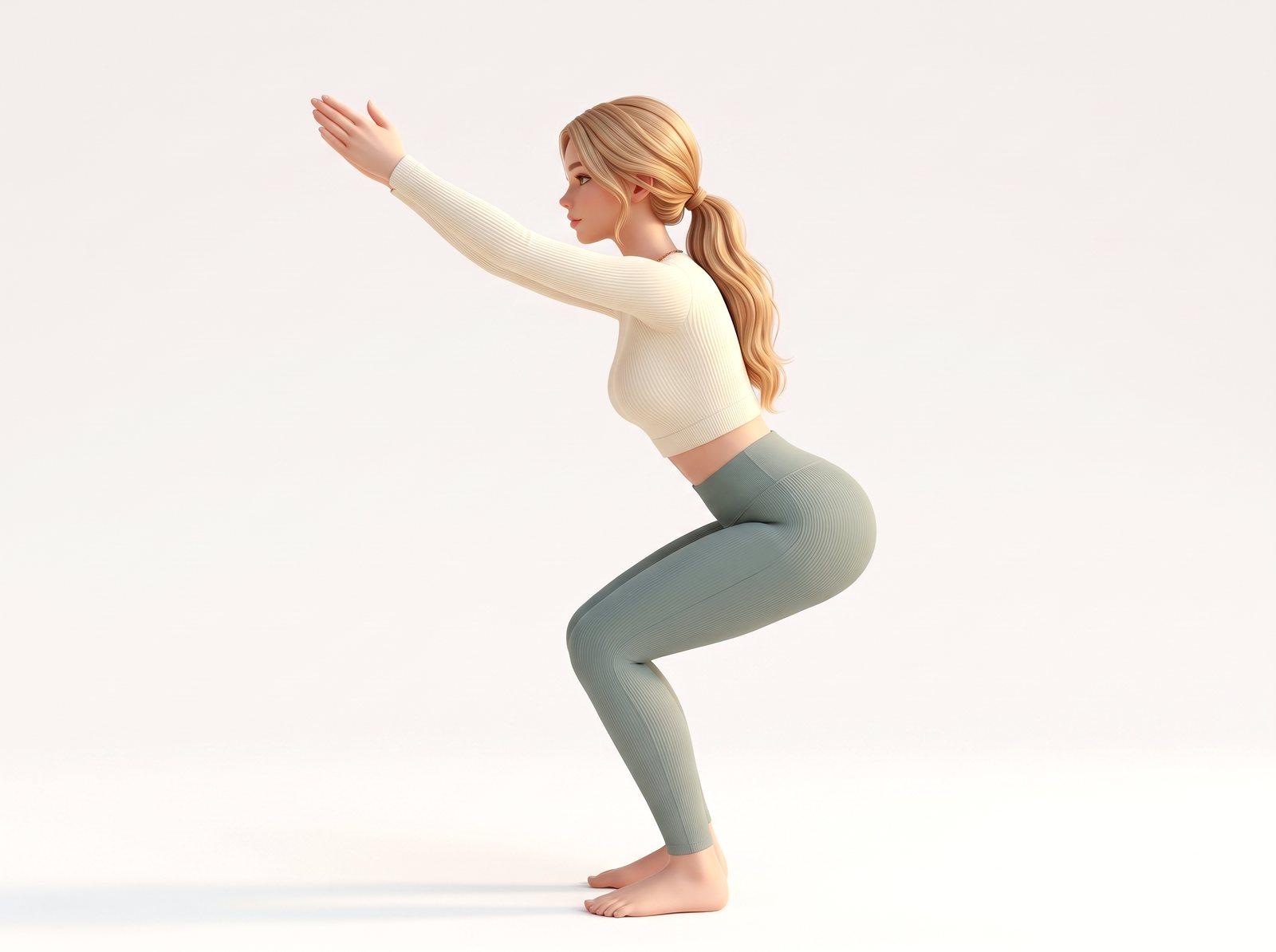
Chair Pose with Forward Reach modifies the classic Utkatasana by extending the arms forward at shoulder height instead of overhead. This arm position serves multiple purposes: it creates a counterbalance that allows for a deeper squat, reduces shoulder strain for those with limited overhead mobility, and increases core engagement as the body works to maintain the forward reach. This variation is particularly accessible for beginners while still providing the strengthening benefits of Chair Pose. The forward reach also encourages proper weight distribution into the heels.
Muscles Worked in Chair Pose with Forward Reach
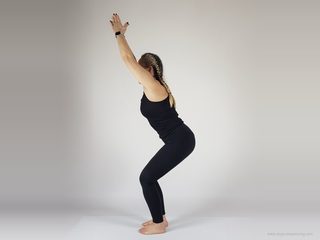
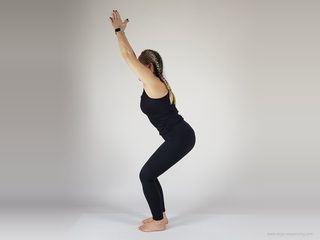
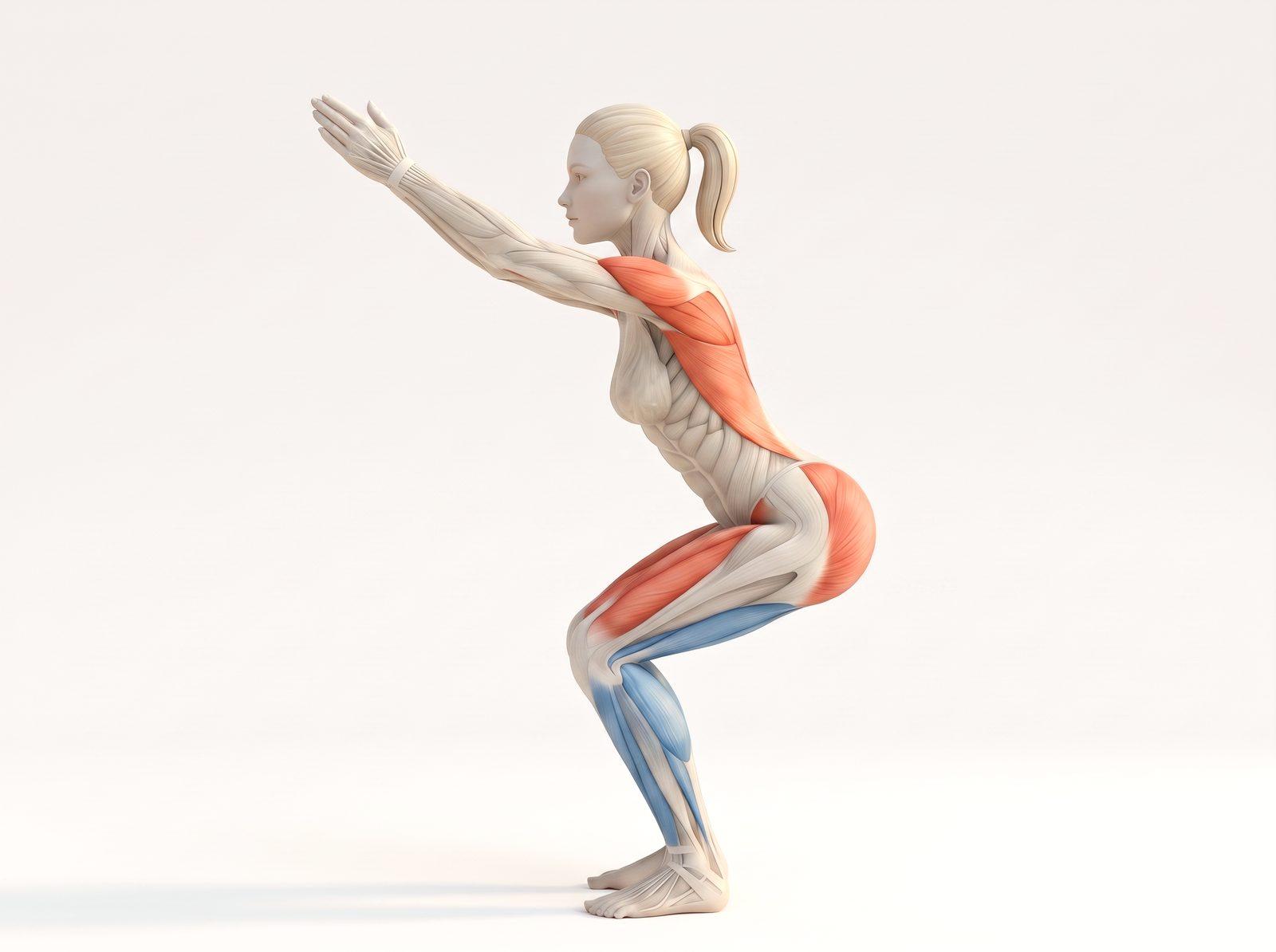
The photo shows Chair Pose (Utkatasana) with the knees bent deeply, the hips sitting back and the arms reaching forward and up at about 45°. The quadriceps and glutes carry the body weight while the shoulders hold the arms up.
Working
- Quadriceps (quadriceps femoris)
- Glutes (gluteus maximus)
- Back muscles (erector spinae)
- Shoulders (deltoids)
Stretching
- Calves (soleus, ankles deeply bent)
Also holding you steady: your core, inner thighs and the muscles of your feet and ankles.
Variations and joint actions
- Hands at the heart: Prayer hands take the shoulder work out and suit stiff shoulders.
- Higher seat: Bending the knees less makes it easier on the knees and thighs.
- Ankles dorsiflexion
- Knees flexion, deep
- Hips flexion, hips back
- Spine long, torso leaning forward
- Shoulders flexion, arms forward and up
Roles are qualitative — this section does not measure how hard any muscle works. References: Leslie Kaminoff & Amy Matthews, Yoga Anatomy (Human Kinetics); Ray Long, The Key Muscles of Yoga (Bandha Yoga).
Step-by-Step Instructions
- 1
Stand in Mountain Pose
- 2
Extend arms forward at shoulder height
- 3
Palms face down or toward each other
- 4
Exhale and bend knees into squat
- 5
Use arm position as counterbalance
- 6
Sit deeper into the pose
- 7
Keep chest lifted despite forward reach
- 8
Hold for 5-10 breaths
- 9
Straighten legs to rise
Alignment Cues
- Arms at shoulder height, reaching forward
- Shoulders stay down and back
- Core engages strongly
- Chest stays lifted
- Knees track over toes
- Weight in heels
- Spine long
Benefits
- Allows deeper squat through counterbalance
- More accessible for shoulder limitations
- Increases core engagement
- Encourages proper weight distribution
- Strengthens legs and glutes
- Builds functional squatting strength
- Less strain on shoulders
- Good entry to Chair Pose
Modifications
- Shallower squat
- Hands at heart
- Against wall
- Feet wider
Variations
- Pulsing in position
- Adding twists
- Single leg lifts
- Dynamic squatting
Cautions & Contraindications
Cautions
- Maintain core engagement
- Keep knees tracking properly
- Don't round the upper back
- Keep shoulders down, not shrugged
- Weight stays in heels
Avoid this pose if you have:
- Knee injuries
- Balance disorders
- Low blood pressure
Quick Facts
Primary Focus
legsSecondary Focus
Suggested Hold
30 seconds
Tags